



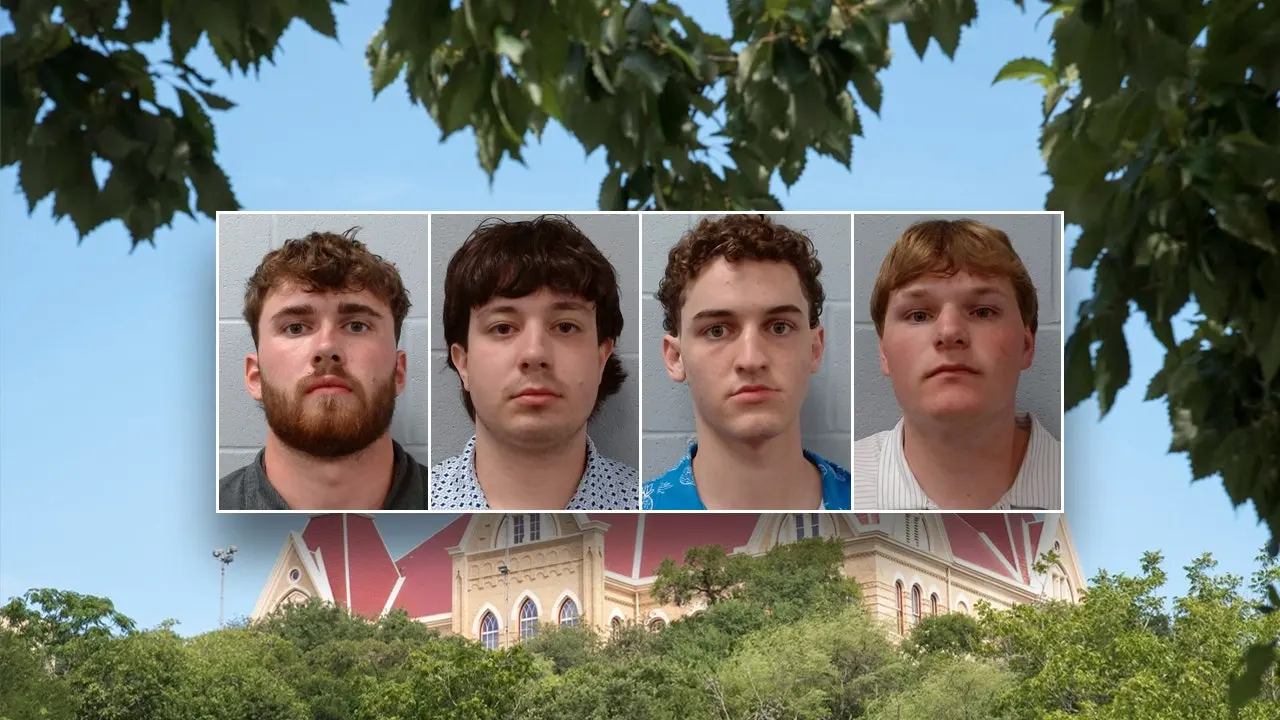
It was just after 10:40 on a Tuesday night in San Marcos, Texas, when the quiet calm of the evening was broken by a series of worried phone calls. People in the area reported seeing something unsettling: a group of young men appearing to force another young man into a blue pickup truck. What made it even more disturbing were the sounds coming from that truck. According to a probable cause affidavit later filed by law enforcement, the 18-year-old inside had duct tape over his mouth and was screaming for help, desperate to be let go. The calls weren’t just a passing concern; they were the kind of urgent, heart-in-throat moments neighbors hope they never witness. Police officers arrived quickly, and the reports led them to a vehicle matching the description at the Arba Apartments in San Marcos. There, authorities found the truck and began unraveling a situation that would soon cast a shadow over a longtime fraternity chapter at Texas State University. The scene was not a random kidnapping or a violent crime in the traditional sense, but rather an alleged hazing ritual tied to a fraternity initiation. Still, for the 18-year-old in the back of that truck, the terror was real. His mouth taped, his voice muffled, his freedom gone, he was caught in a moment that should never be part of becoming a brother.
When police arrived at the Arba Apartments and started asking questions, the picture became clearer. This wasn’t a stranger abduction, but it was a deeply troubling fraternity-related incident involving the Texas State University chapter of Phi Delta Theta. Four young men were taken into custody: William Oldner, 19, Noah Lara, 20, Tyler Fogg, 18, and Wyatt Carr, 18. All four were pledges, meaning they were seeking membership in the fraternity and allegedly participating in initiation activities. The 18-year-old who had been forced into the truck, according to court documents, was not a pledge but an active member of the fraternity. He was not physically injured, but the emotional whiplash of being taped, shoved, and driven away while crying out for help is something that doesn’t show up on a medical chart. The young men involved told officers that the whole episode was part of a tradition, something passed down as part of their initiation. But tradition, in this case, crossed a line. Police spokesman Russell Wilde confirmed that those involved described it as a tradition, and all four were ultimately arrested on misdemeanor hazing charges. The charge may be a misdemeanor, but the weight of what happened that night is far heavier. A tradition meant to build bonds instead left a young man terrified, a community shaken, and four college students facing a legal and personal reckoning that could follow them long after their college years are over.
The backstory here is familiar to anyone who has followed the ongoing national conversation about fraternity culture. Hazing is not new, but it keeps resurfacing in ever more alarming forms, from alcohol-fueled rituals to physical abuse, emotional degradation, and in worst-case scenarios, death. In this case, the alleged hazing involved a certain level of theatrical fear, the kind of rite of passage that seems designed to test obedience and loyalty. But who exactly does it serve? The young man in the truck was an active member, not a newcomer, which raises questions about the pressure to participate in these rituals even after gaining membership. Maybe he was helping with the initiation, or maybe he was swept into a performance he didn’t fully consent to. The details from the affidavit suggest he was not a willing participant, at least not in the moment. His mouth was taped, and he was yelling to be let go. That is not a harmless prank. That is a person asking for help and not being heard. The four pledges now face not only legal consequences but the potential loss of their place in the fraternity, their school standing, and their reputations. They are young men, barely out of high school in some cases, who made a disastrous choice in the name of belonging. That doesn’t excuse the behavior, but it does humanize them as more than just villains in a news story. They are also someone’s sons, classmates, and friends, standing in a courtroom, trying to explain how a tradition went so wrong.
Phi Delta Theta’s national headquarters responded quickly, issuing a statement that it was aware of the alleged incident and was cooperating fully with the university and local law enforcement. The statement emphasized that the fraternity holds the safety of every member and the broader community in the highest regard and does not support or condone behavior that jeopardizes the safety of others. That language is standard in these situations, but the real test lies in what happens next. Will the chapter face suspension? Will national leadership step in with meaningful reforms? Will the university launch its own investigation? These are the questions that matter, not just for this chapter but for fraternity life everywhere. Texas State University, like many schools across the country, has been through this before. Hazing is illegal in Texas, and the state’s law is clear, but the fact that it keeps happening suggests that legal consequences alone are not enough. There is a cultural dimension, a code of silence, a fear of being ostracized, that often keeps people from speaking up before things go too far. The neighbors who called the police that night did the right thing. They saw something wrong and intervened. If they hadn’t, the situation could have escalated even further. Their calls are a reminder that the community outside the fraternity house has a role to play in breaking the cycle.
This incident is also part of a larger, troubling pattern in American college life. In recent years, there have been hazing allegations involving alcohol, burns, hospital trips, and even deaths at universities across the country. Whistleblowers have spoken about a “code of silence” within fraternities, where members are taught not to rat on each other, no matter how dangerous or degrading the behavior becomes. That code is powerful, and it often prevents victims from coming forward, prevents witnesses from calling for help, and prevents leaders from stepping in. The fact that four pledges were arrested in this case is significant because it shows that law enforcement is no longer willing to look the other way. But it also raises a sobering question: How many hazing incidents happen every year that never get reported? How many young people are taped, blindfolded, forced to drink, or left alone in the dark, all in the name of brotherhood? The word “brotherhood” is supposed to mean trust, respect, and mutual care. Instead, it is sometimes twisted into a weapon of control, where the people who want to belong are the ones most at risk. The 18-year-old in the truck was lucky. He survived, he wasn’t physically injured, and he had people around him who cared enough to call the police. But his experience is a warning, a small window into a world that too often gets hidden behind closed doors.
As the dust settles in San Marcos, the real work begins. There will be court dates for the four young men, likely a university judicial process, and probably some soul-searching within the Texas Mu Chapter of Phi Delta Theta. The fraternity’s national leadership has said it is gathering information and will cooperate fully, but words are cheap. What matters is whether this incident becomes a genuine turning point, not just for this chapter but for the entire culture around Greek life. For the 18-year-old victim, there may be lingering trauma, even if he says he’s fine. For the pledges arrested, there is the weight of a mistake that may define their young lives. For the community, there is a reminder that vigilance can make a difference. Hazing is often framed as harmless fun or an ancient tradition, but this is what it can actually look like: a young man with duct tape over his mouth, screaming to be let go, and four other young men thinking that this is somehow an acceptable way to build a bond. It is not. It is dangerous, it is illegal, and it is deeply, profoundly human in all the wrong ways. Growing up and finding a place to belong is hard enough without being terrorized. The hope is that this incident will prompt conversations among students, parents, and university leaders, not just about punishment, but about prevention. If we can teach young people that true brotherhood never requires fear, and that genuine belonging never demands humiliation, then maybe no one else will have to spend a night in the back of a truck, begging for someone to listen. The sirens sounded, the officers responded, and for one night at least, someone was heard. The challenge now is making sure that the lesson doesn’t fade with the headlines.