


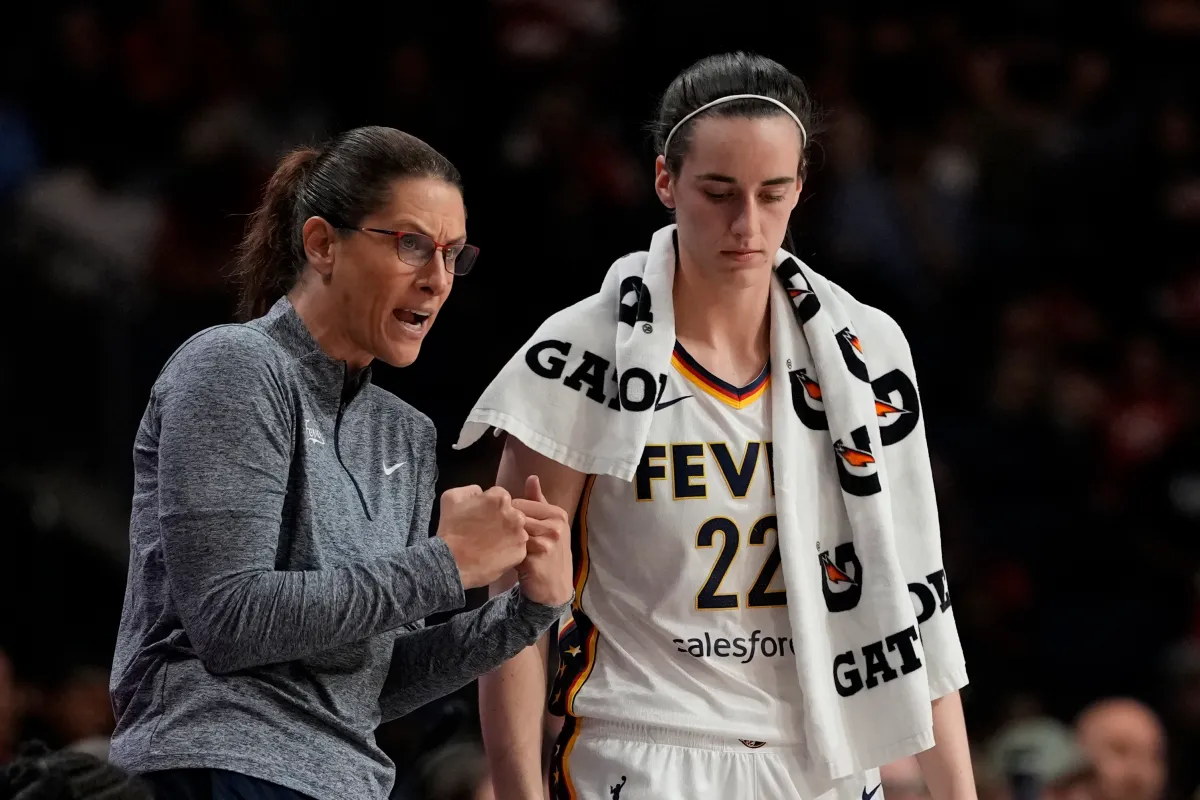
For a long time, the Indiana Fever seemed willing to wait. They had young stars, a devoted fan base, and a belief that history would eventually smile on them. But after Friday’s stunning front-office shakeup, it became unmistakably clear that the franchise is finished with waiting, and even more finished with accepting early playoff exits as some kind of inevitable fate. The Fever, powered by the transcendent talent of Caitlin Clark and the anchoring presence of Aliyah Boston, boast one of the most gifted rosters in the entire WNBA. On paper, they should be competing for championships, not packing their bags after the first round. Yet that is exactly what has happened, and the frustration has reached a boiling point. The team’s decision to part ways with president Kelly Krauskopf was not simply a routine administrative change; it was a declaration. It told the league, the players, and the fans that the Fever recognize their window is now, not someday, and that the culture surrounding the team must shift before it can truly contend. There is a human side to this story too, one that goes beyond box scores and playoff brackets. There are real people behind the headlines, players trying to build something meaningful, executives carrying the weight of expectations, and fans who genuinely love this team and want to see it succeed. Friday’s news hit all of them differently, but it spoke to all of them at once: the Fever are entering a new era, and nobody in Indiana should feel comfortable with the status quo anymore.
The centerpiece of that new era, at least on the court, remains the dynamic pairing of Clark and Boston, but the team’s immediate future is clouded by a far more pressing question: what happens with Kelsey Mitchell? Mitchell, the explosive guard who finished second in the entire league in scoring this season with 24.7 points per game, has become as essential to the Fever’s identity as any player on the roster. She is more than a stat sheet filler; she is a veteran presence, a cold-blooded scorer, and a player who has endured the difficult years in Indiana and helped shepherd the franchise back into relevance. Watching her play alongside Clark has been one of the true joys of this Fever resurgence, a backcourt partnership that seemed built to last. But now Mitchell is an unrestricted free agent, and there is genuine uncertainty about whether she will return. For her, this is not just a business decision; it is a personal one. She has to decide where she feels valued, where she feels safe, and where she believes she can finally chase a championship. Meanwhile, the organization is facing uncomfortable questions about the environment that has grown up around Gainbridge Fieldhouse. Over the past year, a number of the WNBA’s top players have openly admitted to feeling uneasy, and in some cases outright unsafe, when visiting Indiana. That perception has hung over the franchise like a dark cloud, undermining the team’s on-court success and making it harder for the Fever to paint themselves as a destination for free agents. It has also placed a spotlight on the behavior of a small but vocal segment of the fan base, whose treatment of opposing players has drawn national criticism and forced the organization to reckon with its own culture.
That reckoning feels personal for everyone involved. For opposing players, the arena should be an environment of fierce competition, not genuine fear. Hearing athletes say they dread visiting Indiana, that they worry for their physical safety and their emotional wellbeing, is a deeply troubling indictment of the atmosphere that has been allowed to fester in Indianapolis. It is not just about sports anymore; it is about basic human dignity. For the Fever players themselves, this uncomfortable reality creates a strange and painful contradiction. They love their home crowd and feed off the energy in the building, but they also know that the same arena has become a source of distress for their colleagues and opponents. It is a heavy burden to carry, and it makes every home game feel complicated. And for the fans who are not part of that toxic minority, there is a profound sense of embarrassment. Many long-time Fever supporters have watched their team struggle for years, and they do not want to be associated with the handful of people whose actions have tarnished the franchise’s reputation. They want to cheer loud and proud, not apologize for the behavior of others. This complicated emotional landscape is part of why Krauskopf’s resignation resonates so deeply. It suggests that the organization understands the problem extends beyond the basketball court. If the Fever are going to convince top players that Indiana is a place where careers can flourish and legacies can be built, they need to prove that the hostility and toxicity that have been allowed to creep into the arena experience will no longer be tolerated.
Kelly Krauskopf’s departure is particularly poignant because she did not fail on the court. During her remarkable tenure, she built the Fever from the ground up, led the franchise to three WNBA Finals appearances, and delivered the team its first and only championship. Her nearly three decades with Pacers Sports and Entertainment were filled with trailblazing moments, as she helped open doors for women across professional basketball and established herself as one of the most respected executives in the sport. She was not just a president; she was an architect, a mentor, and the heart of a franchise that owed much of its identity to her vision. Her farewell statement, in which she expressed deep gratitude to owner Herb Simon and the organization, was gracious and full of dignity, yet it also carried the unmistakable weight of what might have been. Stepping away from something you have poured your life into is never easy, and there is no doubt this decision was made with heavy emotion. But the Fever announced that she would step down, and even in the respectful language of the official release, one could sense that this was bigger than any one person. The franchise is signaling that it can no longer afford to be defined by nostalgia or past achievements. It must evolve, and evolution often requires painful goodbyes. For Krauskopf, this moment is not about her résumé, which will always shine brightly, but about recognizing when a chapter has ended. She laid the foundation; now someone else has to build the house the Fever were always meant to live in.
Analysts have been saying for weeks that the Fever need a cultural reset if they want to attract premier free agents to play alongside Clark and Boston. It is one thing to have two stars; it is another to build an environment where other star players genuinely want to join. The WNBA is a small, interconnected league, and players talk. They share experiences. They warn each other about what it feels like to walk into a hostile arena where the energy feels less like sportsmanship and more like menace. When respected players express fear for their safety, that travels through the league like wildfire. It becomes part of the narrative, part of the calculus, and part of why a free agent might choose to go somewhere else, even if the Fever offer a better basketball situation. That is a painful truth for Indiana, but it is also an urgent call to action. The front-office upheaval on Friday should be understood as an admission that basketball talent alone is not enough. The Fever need to create a team culture that extends beyond the court, one where players feel supported, respected, and genuinely excited to put on the jersey. That means confronting uncomfortable realities, listening to the voices of athletes who have been marginalized or frightened, and making hard decisions about what kind of organization Indiana wants to be. It means recognizing that the fans are part of the team too, and that the behavior of a few can undermine the work of many. The new era of Fever basketball cannot be built on talent alone; it must be built on trust.
Looking ahead, the Fever still have an enormous opportunity. Caitlin Clark is a generational player, the kind of athlete who changes the trajectory of a franchise and draws attention from people who never thought they would care about women’s basketball. Aliyah Boston is a growing superstar in her own right, a defensive anchor and emotional leader who represents the future of the league. If the Fever can find a way to keep Kelsey Mitchell, they will have one of the most potent and exciting offensive trios in WNBA history. But the decisions ahead go beyond the roster. The team must choose a new president, someone who can balance the pressure of winning with the responsibility of fostering a humane and welcoming environment. They must decide whether they are willing to make uncomfortable compromises to fix the fan culture and rebuild relationships with players across the league. And they must prove, with actions rather than words, that the lessons of this season have been learned. For the players, the wait is over. For the fans, the hope is renewed. For the franchise, the road forward is both exciting and daunting. Indiana has the pieces to win, but the true victory lies in creating a place where people want to be, where competitors feel safe, where respect is non-negotiable, and where the first round is just the beginning of something far greater. The time for patience has passed. The time for transformation is here, and the Fever have finally signaled that they are ready to embrace it, no matter how difficult the journey may be.