

Holding Through the Fire: Murad’s Trillion-Dollar Memecoin Vision at TOKEN2049 Singapore
A Debate That Refuses to Die
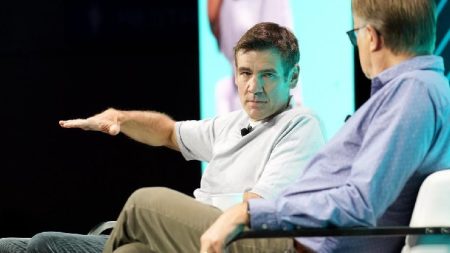
At TOKEN2049 Singapore, one of the most closely watched crypto conferences of the year, the conversation turned to an uncomfortable question: Are memecoins dead, or are they just getting started? It was Oct. 7, and the stage was set for a panel with a title strong enough to serve as a dare. “Memecoins: Dead or Just Getting Started?” drew an audience that had spent months watching billions of dollars in paper value disappear from token charts. For many, such a drawdown would have been enough to declare the sector finished. For Murad, a crypto commentator known for his belief in community-driven tokens, it was something else entirely. The losses were not proof of failure. They were a test. Holding through a reported collapse in paper wealth, he argued, shows conviction in what comes next. He was not denying the pain. He was trying to turn it into a story about patience, nerve, and long-term belief.
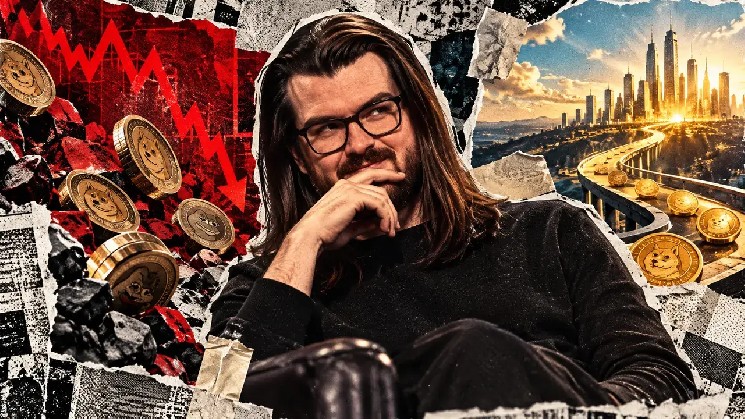
His comments did not end with the panel. On Oct. 22, TOKEN2049 promoted the full conversation and highlighted Murad’s separate prediction that a memecoin would eventually reach a trillion dollars. The renewed attention gave his argument a harder edge. It was one thing to say memecoins were resilient. It was another to sit in front of a live audience, look at a market that had already punished so many holders, and still connect the current drawdown to a valuation that would rival some of the largest corporations on Earth. To supporters, that sounded like vision. To skeptics, it sounded like a refusal to accept what the charts were saying. The truth may lie somewhere in between, but there was no question that Murad had made himself the center of a debate that crypto could not seem to escape. The question of whether memecoins are dead is not new, but his answers felt different. He did not talk about the next ninety days or the next quarter. He talked about years, about culture, about what happens when a community decides that short-term pain is the price of admission for something bigger. That was the message he brought to the stage, and it was not one that the market had heard in quite that form before.
‘Extreme Levels of Diamond Handedness’
Before Murad made his way to trillion-dollar targets, he spent time on the necessary conditions for building something “bigger than Dogecoin.” It was not better tokenomics, a more exotic use case, or a roadmap with more checkboxes. It was, in his own words, “extreme levels of diamond handedness,” combined with a culture of holding and belief. In the vocabulary of crypto, “diamond hands” means refusing to sell no matter how loud the storm gets. The phrase has been borrowed, quoted, and memed until it has become a kind of cliché. But Murad was not using it as decoration. He was making it the foundation of his entire approach. He wanted to build a community that did not jump at the first sign of trouble. He wanted people who could look at a falling chart and see opportunity rather than disaster. That kind of patience, he suggested, is rare, and it is exactly why it is valuable.
The emphasis on community over fundamentals puts Murad at odds with many of the more cautious voices in the industry. But it also offers an explanation for why memecoins continue to survive. They are not powered by earnings reports or product launches. They are powered by attention, emotion, and a shared sense of mission. In that world, the ability to hold through a crash is not just a virtue. It is a competitive advantage. When weak hands sell, strong hands are left with more influence over the direction of the project. That dynamic may not comfort people who want to see balance sheets, but it is how the memecoin market actually works. Murad was not trying to apologize for it. He was making the case that the people who understand it will be the ones who benefit when the cycle turns. In his mind, the question was never whether memecoins could survive. The question was who would still be holding when they did.
Leading by Example, Even Through Paper Losses
Murad did not ask his audience to take a risk he was unwilling to take himself. Just before the exchange that later ignited social media, he said he had to “lead by example.” His own plan, he explained, was to hold for another “six, seven, eight years,” a horizon that stretches far beyond the 2025 levels many traders keep watching as a marker of recovery. For Murad, remaining invested is not just a personal strategy. It is part of the leadership role. By refusing to sell through the reported drawdown, he thinks he can show everyone else what real commitment looks like. He is not the sort of figure who sits on the sidelines and offers advice. He is the kind of figure who ties his name and his portfolio to the same outcome he is asking others to imagine.
That approach makes Murad vulnerable to criticism from both directions. If the market does not recover, his public confidence will look like stubbornness. But if the market is already quietly forming a base, his willingness to stand firm may be remembered as the moment when the tide began to turn. He seems comfortable with that risk. He has said before that his wallets will eventually reach billions. That claim does not establish that they will, and it does not provide a timetable for recovery. The financial case rests entirely on a future outcome, which makes it as much a matter of faith as of analysis. Still, there is power in showing up and saying the quiet part out loud. Many investors believe in long-term returns, but few are willing to put their own holdings on display and tell a crowded room that they expect to be rewarded in a decade or more. Murad did exactly that. Whether that makes him a visionary or a gambler is not for the market to decide quickly. It may take years to settle the debate, and Murad appears more than willing to wait.
SPX6900, Utility, and the Soul of the Memecoin
Later in the panel, Murad described himself as “a huge supporter” of SPX6900. At the time, the token was trading at roughly $0.36 on Oct. 22, about 84 percent below its all-time high. It was a striking endorsement, not because Murad had ever hidden his enthusiasm, but because of the numbers staring back at him from the charts. SPX6900 has become one of the more visible members of the belief-driven corner of the memecoin market, and Murad’s support fits neatly into that story. But it also throws the utility debate into sharp relief. In April 2025, Shibtoshi, the founder of SquidGrow, argued that utility and an organic community were needed to sustain value. Murad’s remarks, by contrast, emphasize holding and belief, even when the paper value falls sharply. Those two positions represent one of the central fault lines in modern crypto.
The utility camp argues that tokens need real-world functions if they are going to survive the hype cycle. They point to payment systems, digital identity, dev tools, and other infrastructure projects as examples of how crypto can grow up. The belief camp, which Murad represents, sees things differently. In that view, a memecoin is not a placeholder for some future use case. It is already doing its job. It is creating a shared culture, a sense of belonging, and a reason for people to talk about it. The token’s price becomes a kind of scoreboard, and the community’s enthusiasm becomes its own form of utility. Shibtoshi’s warning is not the only challenge to that vision. There are regulators, exchange policies, and plain old market fatigue. But Murad is not trying to answer every critic. He is choosing to hold up SPX6900 as an example of what he believes. The token has fallen far from its peak, and that is precisely the point. If a community can keep the faith through such a steep drawdown, then the next recovery, whenever it comes, will have something solid to build on. To outside observers, that logic may seem circular. To the holders, it is exactly what makes the experiment worth taking part in.
Visionaries Don’t Wait for Confirmation
On the same day TOKEN2049 was pushing the panel into wider circulation, Murad published another short post that captured his philosophy in a single line: “Visionaries don’t wait for ‘confirmation.’” The placement was not accidental. The conversation around his trillion-dollar prediction was already building, and the post read like an answer to every skeptic who wanted proof before belief. By putting “confirmation” in quotation marks, Murad was signaling that what others call proof is really just after-the-fact noise. The chart confirms what has already happened. It cannot tell the future. In Murad’s world, waiting for confirmation is a trap. By the time something is confirmed, the opportunity has already moved on. The people who build memorable projects, he suggests, are the ones who act on what they believe before the market catches up to that belief.
That kind of language is familiar on crypto social media, where bold declarations are part of the atmosphere. But in the context of memecoins, it carries a particular weight. These assets are not held together by earnings calls or product roadmaps. They are held together by narrative, momentum, and perception. When Murad says visionaries do not wait for confirmation, he is saying that price action is not the most important signal. The community’s conviction matters more. The danger, of course, is that belief without evidence can become a trap of its own. If no amount of market data can change a thesis, then the thesis is not really an investment strategy. It is an act of faith. Murad seems comfortable with that. He is not asking for permission to dream. He is asking people to join him in treating the dream as a plan. In a market where everyone is searching for certainty, there is something magnetic about a person who says, with a straight face, that he already knows where the story is going.
An $81 Million Moment and a Target Beyond the Charts
The most theatrical moment of the panel came when an attendee named Neuner put $81 million on the line. The exact terms of the exchange were not fully clear, but the symbolism was unmistakable. Neuner said he was willing to back Murad with a sum that would change most people’s lives, Murad said yes without hesitation, and then he turned his gaze to an even larger target. “Billions” was the number floating in the air, and beyond that sat the trillion-dollar prediction that had already given the panel its most shareable moment. On stage, the contrast needed no extra commentary. A market in pain had somehow produced a scene of extravagant confidence. Two people were willing to put an enormous sum on a vision that most of the industry had not yet accepted. That is the memecoin ecosystem in a single snapshot: noisy, theatrical, and completely unapologetic.
None of this means the uncertainty has disappeared. Murad’s prediction remains a forecast, not a guarantee. His holding plan covers years of volatility and no confirmed exit point. The utility advocates, including Shibtoshi, will keep making the case that organic communities and real-world use are the only routes to meaningful value. Murad’s answer is not an argument against utility. It is an argument that belief is its own kind of utility. In a market built on narratives, his decision to hold through a reported crash is itself a piece of communication. It says the thesis is still alive. It says the people who sold were early, not wrong. It says the next chapter is still being written. Whether the market will eventually agree with him is an open question. But at TOKEN2049 Singapore, in the middle of a debate about whether memecoins were finished, Murad made one thing clear: he is not leaving the stage, and he is not selling the token. For a market that survives on conviction, that may be the strongest signal of all.