

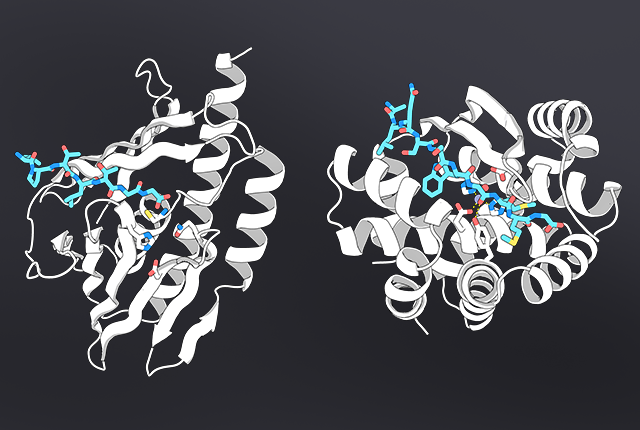
On an October morning in Seattle, when the clouds hung low over Puget Sound and the coffee shops were already buzzing with early commuters, a small group of researchers at the UW Medicine Institute for Protein Design posted an announcement that would ripple far beyond their lab benches. The institute released RFD4-Proteina, an open-source artificial intelligence model for designing proteins with functions specified by the user. The timing was deliberate. The team had spent months refining the system, testing it on everything from enzymes that break down pesticides to molecules that might one day become drugs. They wanted to get it right. What made this release historic was the name on the author list: for the first time, the institute had co-developed an AI model with Nvidia, the world’s leading maker of the computer chips that power modern machine learning. RFD4-Proteina was not just another incremental update. It was a bridge between two enormously influential worlds—academic biology and industrial-scale computing. The name itself tells that story: “RFD” comes from RFdiffusion, the institute’s celebrated earlier model for creating proteins, while “Proteina” borrows from Nvidia’s own family of computational biology models. Together, they represented a fusion of ideas, resources, and ambition. In the words of David Baker, the institute’s director and a 2024 Nobel laureate in chemistry, the model would open doors to new solutions in medicine, sustainability, materials, and biotechnology. But for the scientists who had poured themselves into the work, the release was also a very personal milestone—a culmination of sleepless nights, endless debugging sessions, and the quiet thrill of watching a machine dream up molecular structures no one had ever imagined. The news was delivered in characteristically understated academic fashion: a blog post, a few technical details, a link to download the model. But the weight of it was enormous. Proteins are the workhorses of life, and the ability to design them from scratch—rather than rely on evolution’s slow trial and error—has been a dream of biology for decades. With this release, that dream came closer to the fingertips of every researcher with a laptop and a question.
Of course, an algorithm is only as good as the machine it runs on. For protein design, the computational demands are staggering. Modeling the ways a chain of amino acids folds into a three-dimensional shape, then sampling millions of possible configurations to find one that performs a desired function, can turn a world-class supercomputer into a gasping, overheating workhorse. That is why the release of RFD4-Proteina came on the heels of a major infusion of resources. Earlier this month, the institute announced that Nvidia CEO Jensen Huang and his wife, Lori Huang, through their foundation, had provided a large grant of computing power. The gift was aimed at sustaining the institute for a year, allowing its researchers to run the kind of large-scale simulations that were previously out of reach. Since June, the institute had been accessing Nvidia graphics processing units, or GPUs, through the cloud company CoreWeave. For the researchers, it was like being handed the keys to a Ferrari after years of driving a reliable but creaky sedan. The grant, Baker told GeekWire, had been “transformational” for the institute’s work. The word was not hyperbole. GPU clusters are the lifeblood of deep learning, and access to them determines how quickly a lab can test ideas, fail, learn, and try again. With CoreWeave’s cloud infrastructure, scientists no longer had to wait weeks for a turn on a shared supercomputer. They could spin up resources on demand, run dozens of experiments in parallel, and iterate at a pace that would have been unthinkable a few years ago. The Nvidia partnership was not just a corporate sponsorship; it was a recognition that the future of biology would be written in lines of code as much as in pipettes and petri dishes. The release of RFD4-Proteina, then, was a direct product of that partnership—a first tangible fruit of the collaboration. And it signaled that the era of protein design by deep learning had moved from the early exploratory phase to something closer to a production system.
RFD4-Proteina did not emerge from an empty room. It stood on the shoulders of a family of tools that the Institute for Protein Design had been building for years. The first major breakthrough was RoseTTAFold, a deep-learning system for predicting the shapes that proteins fold into naturally—a problem that had haunted biology for half a century. Knowing a protein’s shape is essential to understanding what it does, because form determines function. But the institute’s ambitions did not stop at prediction. With RFdiffusion, the team had begun to invert the process: instead of asking “what shape does this sequence make?”, they asked “what sequence will make this shape?” That opened the door to designing proteins from scratch. RFD4-Proteina pushes those ideas much further. According to the team, it is “a considerable improvement over previous methods,” running faster and requiring significantly less computational power. For researchers, that means less time waiting for a model to churn through possibilities and more time actually testing candidates in the lab. It also means that labs with modest computing budgets—outside wealthy institutions, in universities and startups in developing countries—can participate in cutting-edge protein design. The model’s design also incorporates ideas from Nvidia’s Proteina-Complexa, a computational framework for understanding how proteins interact with one another. That is crucial, because proteins rarely work alone. They bind to other molecules, form complexes, catalyze reactions, and assemble into tiny machines. To design a protein that is truly useful, you need to understand not just its own shape but how it fits into the busy, crowded world of a cell. RFD4-Proteina, with its enhanced speed and lower resource demands, made that task feel almost routine. The researchers described it not as a new button on an existing tool, but as a new kind of workshop—one where the machinery of life could be imagined, drafted, and prototyped in days rather than months.
All the technical marvels would mean little if they did not lead to things people actually need. But the potential applications are profound and deeply human. Proteins are already at the heart of modern medicine: antibodies, enzymes, vaccines, and therapeutic hormones are all proteins. The ability to design new ones on demand means researchers can craft molecules that zero in on a disease with precision, or that can break down environmental pollutants in ways natural proteins never evolved to do. RFD4-Proteina is designed to expand that capability. The institute’s spinout companies offer a glimpse of what the future might look like. Icosavax, for example, is developing vaccines using protein nanoparticles, while Archon Biosciences is working on protein design for applications ranging from therapeutics to materials. These are not abstract research projects; they are companies built on the idea that designed proteins can quietly re-engineer the world. The list now includes eleven such ventures, each one an attempt to translate the lab’s discoveries into products that improve health, agriculture, or the environment. For the researchers, the most exciting examples are often the most specific. Imagine an enzyme that can chew up a toxic chemical spilling from an industrial pipe, turning it into harmless waste. Or a protein that can latch onto a cancer cell and mark it for destruction with little collateral damage. Or a filament that can be woven into a new class of biodegradable plastic. RFD4-Proteina is not the end of that story—it is a scaffold upon which those stories can be built. The model lowers the barrier to entry, which means more minds, from more places, can contribute ideas. And because it is open-source, the knowledge spreads instead of being locked away in a corporate vault. In a field where hundreds of millions of dollars are often spent bringing a single drug to market, the idea of freely sharing the fundamental design tool is almost radical. But for the scientists at the institute, it is simply the way they have always worked—collaboration as a kind of moral commitment.
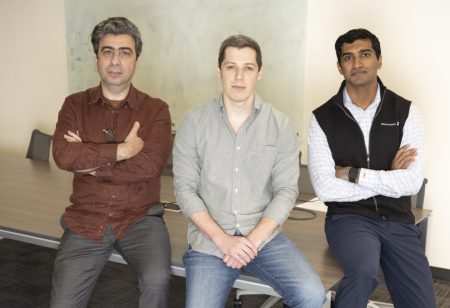
For the humans behind the headlines, the impact has been visceral. Seth Woodbury, a UW bioengineering predoctoral candidate, has spent years wrestling with enzymes. Last year, he published a paper in Nature on enzyme research, and he knows how tough it is to design a protein that actually does what you want. In the past, his best enzyme-design efforts took months of painstaking trial and error, with each failed variant teaching him a little more about the invisible rules of molecular biology. Then he tried RFD4-Proteina. “In just a few days we designed a pesticide-degrading enzyme that performs many fold better than my previous best, which took months to design,” he said. The words are matter-of-fact, but the meaning is staggering. What used to take a season now takes a long weekend. That acceleration is not just about convenience; it changes what scientists choose to attempt. When the cost of failure drops, you aim higher. The work on RFD4-Proteina itself was led by a team of early-career researchers, a point of pride for the institute. UW doctoral students Nathaniel Corley, Maxwell Kazman, and Rafi Brent, along with Kieran Didi, a visiting student from the University of Oxford, were the names behind the model. They belong to a generation that grew up with deep learning and thought nothing of treating the boundaries between biology and computer science as imaginary. For them, releasing the model under an open Berkeley Software Distribution license was not a sacrifice; it was the only obvious choice. The gift of open-source science is that it lets other people build on your work, remix it, and push it in directions you never imagined. The young team understood that the real measure of their success would not be the number of downloads, but the number of discoveries that RFD4-Proteina made possible in labs they would never visit. In this way, the project felt less like handing out a finished tool and more like planting a seed in a shared garden.
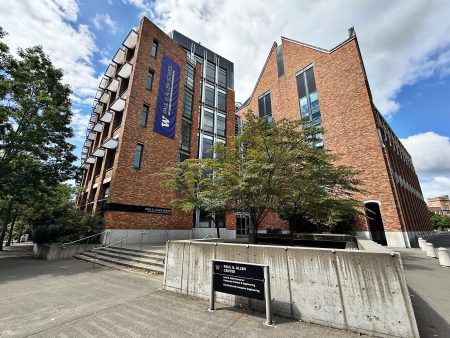
Where does this leave us? The release of RFD4-Proteina is a reminder that grand scientific advances are never isolated events. They grow out of decades of fundamental research, institutional patience, and collaborations that reach across industries. It also points to a future in which the digital and biological worlds are increasingly intertwined. Nvidia, a company best known for powering video games and self-driving cars, is now helping to design molecules that might one day cure a neglected disease or make plastic waste vanish. The University of Washington, a public institution proud of its role as a land-grant university, is ensuring that these tools remain in the public domain. David Baker’s Nobel Prize, awarded in 2024, recognized the importance of protein design; RFD4-Proteina is one more reason that prize was well deserved. But the most meaningful audience for this release may be the graduate student sitting in a cramped office, trying to solve a problem that has defeated everyone else. For that student, the new model is not a headline. It is a set of keys. It lets them test a hypothesis tomorrow morning instead of next winter. It gives them permission to be more ambitious, to chase ideas that once seemed too expensive or too difficult. The models at the Institute for Protein Design have allowed researchers to design proteins never imagined before—molecules with the precision of antibodies, the catalytic power of enzymes, and the stability of industrial materials. With RFD4-Proteina, that capacity is no longer confined to a handful of elite labs. It is freely available, continuously improvable, and capable of running on the kind of computing power that is increasingly available everywhere. The announcement on that October morning was brief. But in the quiet folds of that understated moment lay a genuinely open door—to a new medicine, a cleaner planet, a smarter material, or perhaps just a deeper understanding of the fundamental machinery of life. The door is open. All that remains is for curious people to walk through it.