

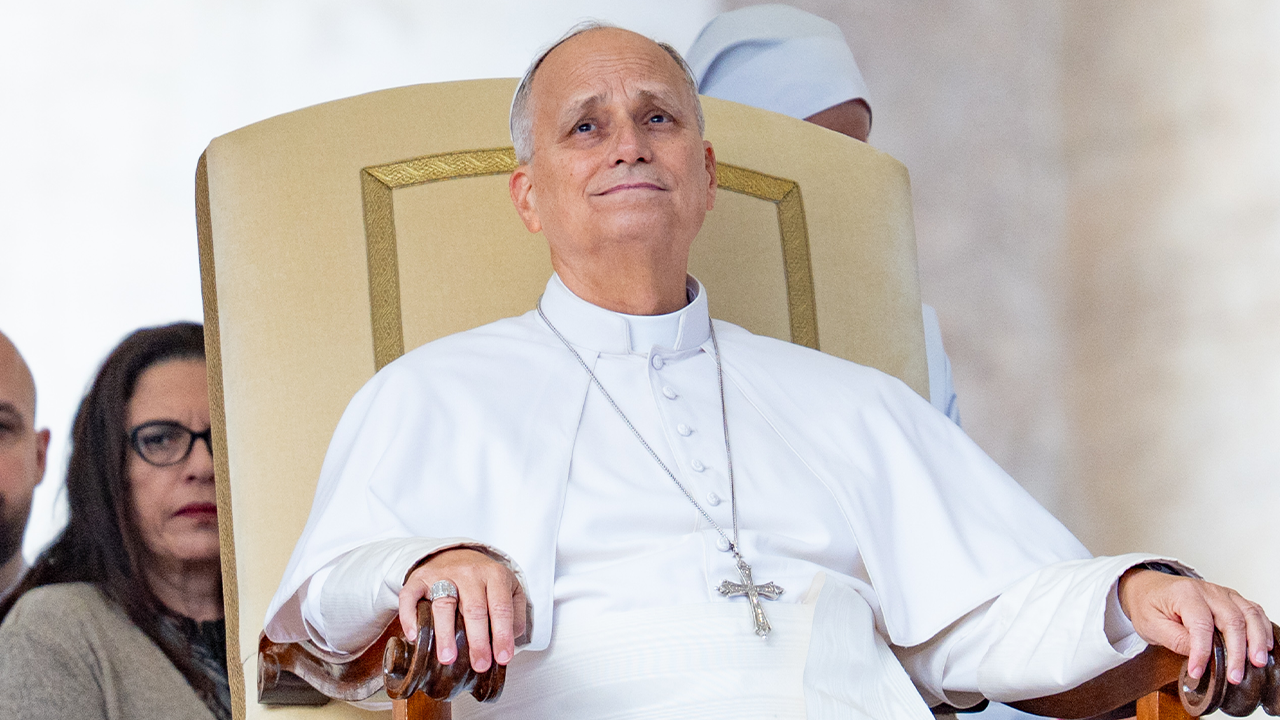
In a moment of profound relief and quiet gratitude, the world learned Wednesday that Pope Leo XIV will not require further treatment for lung cancer, as final medical tests confirmed that the disease had remained completely localized. The announcement, delivered by his personal physicians Dr. Luigi Carbone and Professor Stefano Margaritora, came just over a week after surgeons successfully removed a tumor from the pontiff’s right lung during a delicate operation at Rome’s Gemelli Hospital. The doctors explained that the final histopathology and molecular testing reports on the tissue removed during the surgery had been issued that day, and the results were unequivocal: the tumor was a lung adenocarcinoma, and the disease had not spread beyond its original site. A subsequent oncological assessment further confirmed that no additional treatment would be necessary, allowing the pope and his faithful to breathe a collective sigh of relief. For a leader whose health had been a subject of intense prayer and worry across the globe, this news felt like an answered prayer, a testament to the power of modern medicine, the support of countless well-wishers, and the remarkable resilience of a man who has dedicated his life to service.
The surgical journey began on October 13, under the careful hands of a skilled medical team at the Gemelli Hospital, a facility the pope knows well from previous stays. The operation lasted about ninety minutes, with the Holy Father spending roughly three hours in the operating room, a detail shared by the Holy See press office to reassure the public about the procedure’s precision and care. According to the official statement, the surgery was successful and there were no complications, offering immediate comfort to those who had been praying for the pontiff since news of his condition emerged. After the operation, Pope Leo awoke normally and returned to his hospital room following a brief observation period, a sign of his steady recovery. The Vatican News report painted a picture of a patient who, despite the seriousness of thoracic surgery, remained calm and cooperative, surrounded by a team of doctors and nurses who were deeply attentive to his every need. The following days were spent in cautious optimism, with the pope resting, receiving visitors, and beginning the slow process of healing. His doctors monitored his vital signs closely, and the absence of any postoperative complications was viewed as a remarkable blessing, especially given the inherent risks of surgery in a man of his age. The careful coordination between surgical, oncological, and pastoral communications reflected a broader desire to keep the faithful informed while also respecting the private nature of the pope’s recovery.
Pope Leo’s discharge from the hospital on Saturday was a moment of pure celebration, as thousands of supporters gathered outside the Gemelli Hospital, their voices rising in unison with shouts of “Papa!” The atmosphere was electric, a mixture of joy, relief, and affection for a spiritual leader who has become a symbol of hope for millions. Before departing, the pope took a meaningful detour to the children’s oncology ward, a gesture that moved everyone present and underscored his heartfelt connection to those who suffer. During his hospital stay, the young patients had sent him letters, and the pope clearly wanted to thank them personally, offering his presence, his blessing, and his gentle smile to children who were themselves battling serious illnesses. This quiet act of compassion spoke volumes about his character, reminding the world that even as a patient recovering from cancer surgery, he remained a pastor first and foremost, always turning outward to comfort others. The image of the pope, still fragile from an operation, taking the time to visit children with cancer touched hearts far beyond the hospital walls. It was a tender reminder that leadership, especially spiritual leadership, is not just about grand declarations but about small, personal gestures of love and humanity.
One of the most poignant moments to emerge from the pope’s stay in the hospital was a letter from a girl named Eleonora, a young patient who had been treated for cancer and whose words were released by Vatican News. “Pope Leo, our prayers are for you,” she wrote, her simple yet powerful message resonating with people of all ages and faiths. “May God, the Most Holy Virgin, and the guardian angels always protect you,” she continued, before adding a profoundly moving testimony: “Faith moves mountains. God has heard our prayers.” Eleonora’s mother told the pope that her daughter was now healthy, and the exchange between the sick pope and the recovered child became a symbol of shared vulnerability and mutual hope. The letter was not just a message from a child to a pope; it was a conversation between two people who understood, in deeply personal ways, the frightening reality of a cancer diagnosis and the miraculous relief of a good report. The pope’s decision to respond to the children’s letters, and his visit to their ward, demonstrated that he saw himself in them and them in himself. Their prayers were interwoven with his, and their healing became a part of his own story. This beautiful interplay of faith and medicine, of children and a pope, reminded everyone that illness does not discriminate, and neither does grace.
Beyond the immediate medical bulletin, the pope’s diagnosis has sparked broader conversations about cancer risk, particularly for individuals who have never smoked. The article referenced the provocative question surrounding the Pope’s lung adenocarcinoma, raising awareness that lung cancer can strike anyone, regardless of smoking history. Experts have noted that while smoking remains the leading cause of lung cancer, a significant percentage of cases occur in nonsmokers, often driven by genetic mutations, environmental factors, or other underlying conditions. The Pope’s experience serves as a powerful reminder that vigilance is crucial, and that early detection can make all the difference. His localized disease, which required no further treatment, speaks to the importance of regular checkups and timely medical intervention. Moreover, just days after his surgery, the Pope was already urging Russian President Vladimir Putin to agree to a ceasefire in a Russian-held Ukrainian city, demonstrating that his pastoral mission and his commitment to peace have not been diminished by his own physical trial. Even while recovering, he continued to use his voice for the voiceless, advocating for an end to suffering in war-torn regions. That combination of personal fragility and global concern is a hallmark of his papacy, showing that even in his own moment of vulnerability, he was thinking of others, praying for peace, and encouraging the world to see beyond individual pain.
As the pope now returns to his daily life at the Vatican, his recovery from lung cancer will be measured not just in medical scans but in the rhythm of his responsibilities. The confirmation that no further treatment is necessary brings not only an end to the immediate anxiety but also the beginning of a season of renewed hope. He will continue his rehabilitation, gradually regaining strength, while the prayers of the faithful will continue to surround him. The story of Pope Leo’s surgery and recovery is not merely a medical report; it is a human story of courage, community, and faith. It reminds us that even the most powerful leaders are vulnerable, that sickness touches every life, and that hope can be found in the most unexpected places. It also reminds us of the profound connection between the pastor and his people, a connection that is strengthened in times of suffering. The pope’s journey is now intertwined with the stories of children like Eleonora, who prayed for him and reminded him that faith truly does move mountains. As he resumes his duties, he carries with him not only the skill of his surgeons and the care of his doctors but also the love of millions who never stopped praying. In the end, the news that no further treatment is necessary is a gift, but so too is the outpouring of support that accompanied him through the darkest days. Pope Leo XIV will continue to lead, to bless, and to remind the world that even in the face of illness, the human spirit, buoyed by faith, can overcome the deepest fears.