


I still remember the night my college roommate announced she was making “Gigi Hadid Pasta” for dinner. I braced myself for something revolutionary, a carb-free miracle or a supermodel secret that would change the way I thought about food forever. Instead, she served a perfectly ordinary plate of ziti tossed in vodka sauce, topped with a few lonely flakes of red pepper. No hidden ingredient. No celebrity twist. Just pasta with a famous name attached, as if the label alone could turn a weeknight dinner into a cultural event. At the time, I laughed it off. But years later, I keep coming back to that moment because it perfectly captures the strange, exhausting loop of internet culture. We take the most mundane parts of daily life, slap a recognizable name on them, and suddenly treat them as groundbreaking. Gigi Hadid filmed herself cooking that basic dish during the early pandemic lockdowns, and social media lost its collective mind, praising a glob of jarred sauce as though it were a Michelin-starred breakthrough. This wasn’t an isolated moment of collective silliness. It’s the foundation of how we consume content now. Long-practiced behaviors get repackaged with star-studded branding, and because we’re all chronically online, we convince ourselves that something is fresh and important when it’s really just routine. I’m twenty-two years old. TikTok is my search engine for everything from outfit inspiration to dinner recipes on a twenty-dollar budget. But every time a new trend floods my feed claiming to be brand-new, I can’t help asking: hasn’t this always been a thing?
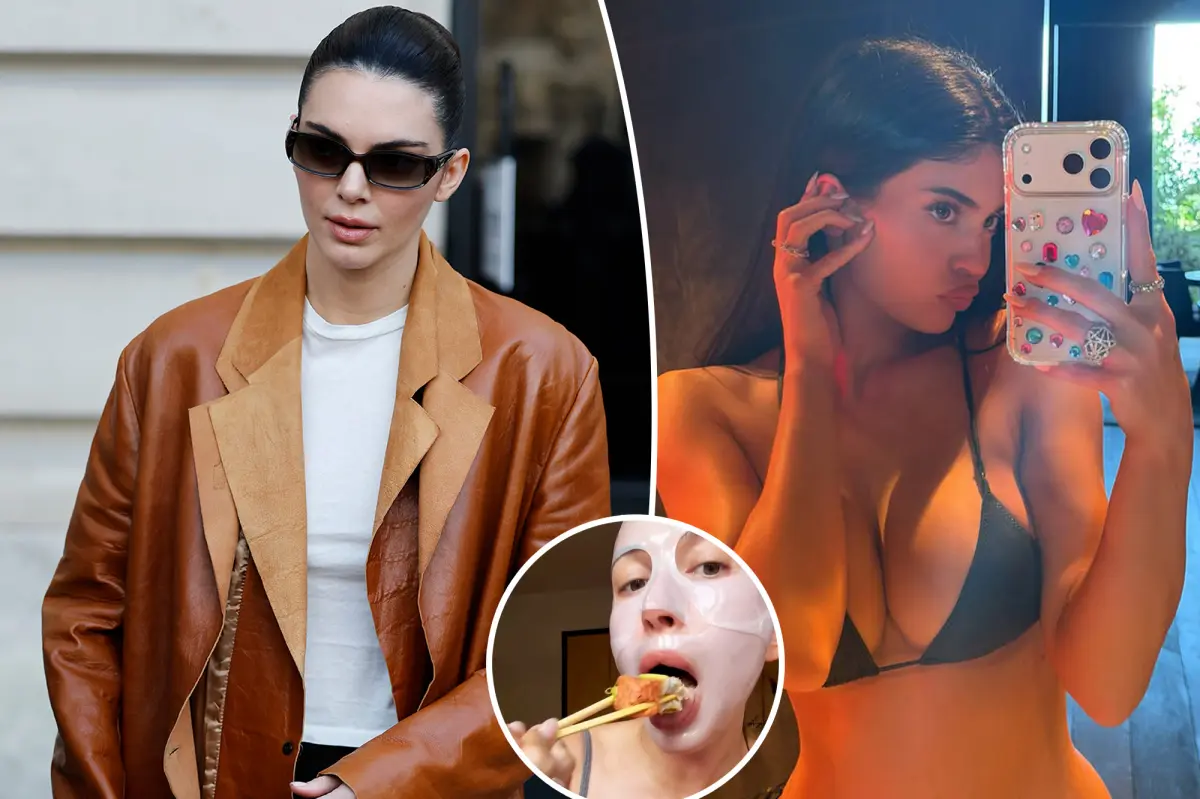
The answer, more often than not, is yes. And I hate to admit that my Gen X parents might actually be right when they say my generation has no originality. To them, every song sounds the same, every fashion cycle is a recycled memory, and every viral trend is something they already did in the nineties. They’re not wrong. Take the “partless slickback” that Kylie Jenner wore to a Knicks game in August. It was a standard ponytail, the exact hairstyle my mom brushed into my hair for every elementary school picture day. But TikTok exploded with “get-the-look” tutorials, calling the lip kit mogul iconic for wearing her hair back. A ponytail. The same ponytail that has existed for as long as hair has existed. Sofia Richie had an almost identical moment when she posted a tutorial for a “sleek lazy girl bun,” pulling her hair back tight into a knot. The clip racked up nearly forty-three million views and inspired a viral bridal trend, with stylists reporting that the sleek, low-slung bun had become their most requested wedding look. I understand wanting to look like Sofia Richie. She’s beautiful, she’s married to a billionaire’s heir, and her life looks like a soft-focus dream. But calling a basic bun a breakthrough says less about Sofia and more about how influencer obsession has warped our perception of ordinary life. We’ve reached a point where a hairstyle that takes thirty seconds to create becomes a movement, simply because an impossibly pretty, incalculably rich person did it first on camera. That’s not innovation. That’s just a famous face doing a normal thing while we all clap.
The absurdity gets even better with Hailey Bieber, the definitive Gen Z “it girl,” who once posted a video snacking on sushi while wearing a sheet mask. That’s it. She ate lunch and did skincare at the same time. Fans lost their minds. They started posting videos trying to replicate the exact moment, struggling to eat sushi through a slippery mask, and calling Bieber a trendsetter for managing to multitask. People begged her to launch a “sushi-friendly” face mask line, as if you can’t already grab a California roll while practicing self-care. Some commenters tried to explain the logistics: “Queens, Hailey makes it look easy because you need to let the mask soak in a bit before eating.” Another added, “She did it so effortlessly BECAUSE her mask already started to set on her face, you can see it on her chin.” The whole thing was so painfully ordinary, and yet it became a viral phenomenon, proof that we are now assigning genius-level status to basic human activities if they’re performed by the right person. I’m not standing on a moral high ground here. I have bought Hailey Bieber’s twenty-five-dollar lip gloss. I’m a chronic internet consumer, and I’m as guilty as anyone of getting swept up in the fantasy. But we are doing these successful women a disservice by calling them pioneers for eating sushi. We’ve thrown around the word “iconic” so much that it has lost all meaning. Putting influencers on a pedestal should require higher criteria, but instead we’ve lowered the bar to floor level and started calling it a high jump.
This tendency doesn’t stop at celebrity influencers. Everyday social media trends exist independently of famous names, and it’s no coincidence that 2020 marked the rise of “romanticizing your life,” a phrase used to describe treating ordinary routines with more intention and creativity. On its surface, that’s lovely. Taking a moment to enjoy your morning coffee or lighting a candle while you cook is a small, beautiful act of self-care. But online culture pushed the impulse so far that even taking a routine outdoor stroll was rebranded into a viral phenomenon called the “hot girl walk.” TikTok creator Mia Lind coined the phrase during the pandemic to describe a simple daily walk around the block. The concept exploded, inspiring young women everywhere to organize group walks with friends. Then Lind trademarked the term, and her legal team began sending cease-and-desist letters to creators hosting “hot girl walk” events, or even using the title on Spotify playlists. Trademarking the concept of stepping outside for fresh air turned a simple, healthy habit into a commodified trend. Promoting walking is inherently positive, but turning it into a branded product feels almost dystopian. Around the same time, romanticizing life took another strange turn, hijacking language around real fashion trends to describe burned bread. “Turns out toast is kinda chic,” captioned one TikTok user, showing a completely normal breakfast of toast and eggs. The video accumulated over 632,000 likes, and one commenter dryly dubbed her “the boy who cried chic.” Ridiculous as it was, the “kinda chic” trend launched anyway, with users framing simple habits like taking a coffee break at work or practicing basic self-care as stylish statements. Even running influencer Brett Chody secured a brand deal for her viral “dessert bowl,” which involved putting different combinations of salty and sweet snacks into a bowl. I guess if you’ve never heard of trail mix, that is pretty revolutionary. The trend blew up so much that Pop Up Bagels, the viral bagel shop known for its specialty butters, created a bagel spread with chocolate pretzels, Oreos, and M&Ms. Delicious? Absolutely. Innovative? Come on.
The deeper problem is that influencers aren’t even trying to market these concepts. Their audience does the heavy lifting for them, voluntarily spending time and money to copy plain behavior and then naming it after the influencer who happened to film it. The click-to-buy snake is eating itself. We’ve built an entire culture where a ponytail becomes a Kylie Jenner moment, a bun becomes a Sofia Richie trend, and a bowl of snacks becomes a Brett Chody creation. We’re giving older generations endless ammunition to hate on social media and on the very idea of being an influencer. And honestly, they’re right to be annoyed. Gen Z’s originality is being suppressed by how loud a viral video with thousands of comments feels. We’re so busy trying to keep up with the next micro-trend that we forget most of these trends are just ordinary life dressed up in hashtags. Labeling simple skincare or minimal makeup as devotion to a “clean girl” aesthetic, or spending a lazy day resting and calling it “bed rotting,” is weird. We don’t need to turn daily life into a forced category. We should be able to simply exist without having to live inside a hashtag. The creativity that social media and influencers can genuinely spread is buried under the billionaires’ focus on the ordinary and basic. Tying your hair back or eating pasta doesn’t require an influencer’s permission. You don’t need a celebrity to validate your breakfast, your walk, or your ponytail. The best parts of life are the unglamorous, unmarked moments that aren’t performance pieces. The more we turn everything into content, the less we actually experience it.
So maybe the quiet rebellion now is to resist the urge to name everything. Let a bun just be a bun. Let toast be toast. Let a walk around the block be a walk around the block. There’s even an online phrase for this kind of resistance — “touching grass” — and so far, no Hadids, Biebers, or Jenners have turned it into a TikTok core. But give it time. The internet will eventually find a way to commodify even that, because that’s what it does. It takes the human, messy, ordinary business of living and polishes it into a trend, then sells it back to us with a celebrity face attached. The only way out is to remember that we don’t have to participate. We can watch the videos, laugh at the absurdity, maybe even buy the lip gloss, but we should stop pretending that a supermodel’s pasta is anything more than pasta. We can be inspired by influencers without treating them as pioneers of the mundane. We can enjoy a slick-back bun without calling it revolutionary. And we can absolutely eat sushi in a sheet mask if we want to, because it turns out that’s just something humans can do, no permission required. The internet may have convinced us that ordinary life needs to be branded, named, and trademarked before it counts for anything. But the quiet truth is that the most valuable things — a meal with a friend, a hair tie, a walk outside, a bowl of snacks — were already ours before anyone gave them a hashtag.