

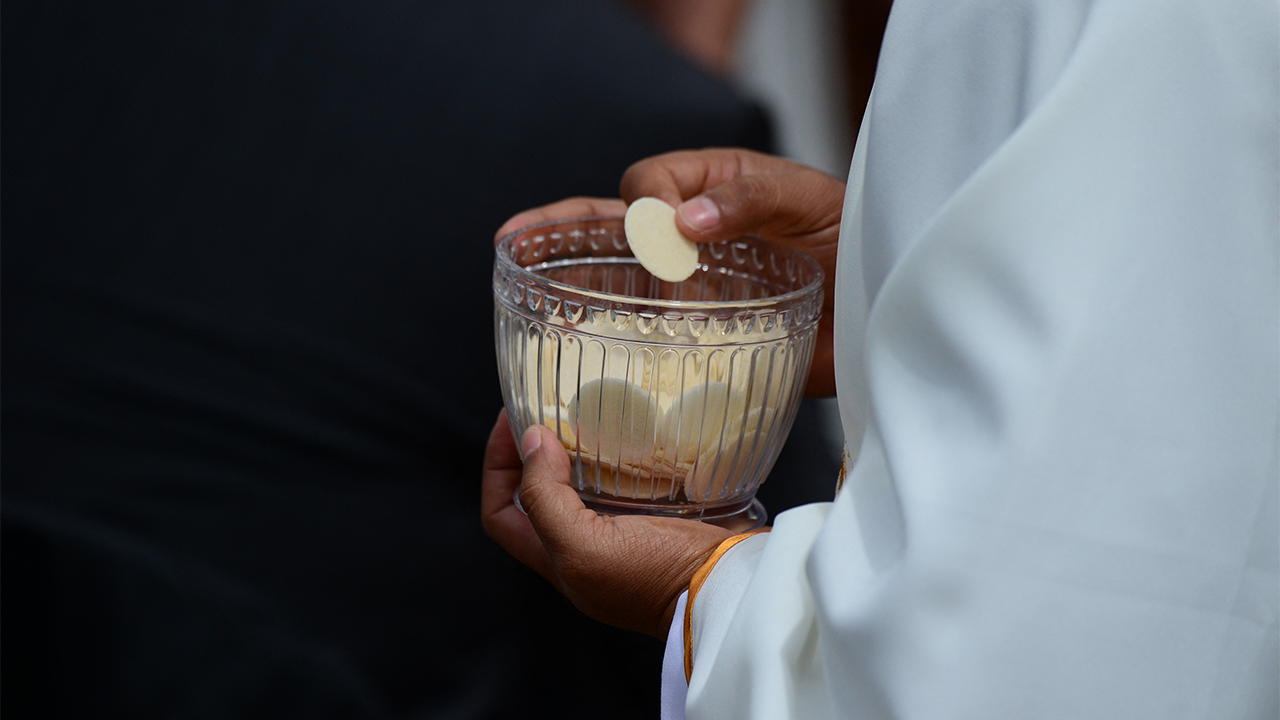
It was supposed to be a moment of quiet reverence, a sacred pause in the middle of a livestreamed Mass, when the faithful gathered around the altar of Nuestra Señora del Perpetuo Socorro Church in Guayaquil, Ecuador, to share in the mystery of the Eucharist. Instead, in a heartbeat, worship turned into chaos. Father Patricio Alfredo Sánchez Molinari stood at the altar, leading his congregation through the liturgy, when the large wooden crucifix mounted behind him suddenly lurched forward and fell, striking him with terrible force. The camera, still rolling, captured the scene: the priest collapsing, the sudden movement of the heavy object, and then the screams that erupted from the pews. What had been a moment of prayerful attention became a frantic rush to reach a man who had been, only seconds before, the calm center of the service. People ran toward him, their voices rising in panic, pleading for someone to call an ambulance, desperately trying to do something, anything, to help. The shocking reality of the accident is difficult to process: a symbol meant to represent divine love and sacrifice had become, in an inexplicable instant, the cause of a shepherd’s death, leaving a community to grapple with a grief that feels both profoundly spiritual and deeply human.
The video of the incident is heartbreaking to witness, not because it is graphic, but because it captures the raw helplessness of ordinary people confronted with sudden tragedy. In the audio, a woman’s voice cuts through the chaos, shouting, “Father, Father … call an ambulance,” as others cluster around the fallen priest, their hands reaching out in a desperate effort to revive him. For those inside the church, the line between faith and fear dissolved in seconds. The Archdiocese of Guayaquil later confirmed the devastating news in a Facebook statement, identifying Father Sánchez as the parish priest of Perpetuo Socorro Church in its Central Vicariate and announcing that he had “departed to the Father’s House to enjoy His presence and His glory.” The statement, written in Spanish and ending with the ancient Latin prayer, “Eternal rest grant unto him, O Lord. And let perpetual light shine upon him. May he rest in peace. Amen,” offered a formal, theological framework for a loss that felt anything but orderly. Yet perhaps the cruelest detail is the timing: just one day earlier, the archdiocese had congratulated Father Sánchez on the anniversary of his ordination, a celebration of his years of service and devotion. To go from receiving congratulations to receiving prayers for the dead in less than twenty-four hours is a reminder of how thin the veil between joy and sorrow truly is, and how quickly life can change in ways no one could have predicted.
But Father Patricio Alfredo Sánchez Molinari was more than a name in a news report or a face in a livestream. He was a priest who had dedicated his life to the Congregation of the Most Holy Redeemer, the religious order commonly known as the Redemptorists, a community founded to preach the Gospel to the poor and to bring hope to those on the margins. Before serving in Guayaquil, he had spent several years as the parish priest at San Lorenzo in Vinces, a town in Ecuador’s Los Ríos province, where he was not just a minister but a neighbor, a counselor, and a friend to the people he served. When news of his death spread, his former parishioners mourned him publicly, posting tributes on social media that remembered the dedication and pastoral love he had brought to their community. Those tributes, reported by El Universo, speak to the kind of priest he was: one who knew people by name, who walked with them through their joys and their sorrows, who was present not only at the altar but in the everyday moments of life. To humanize him is to imagine him as he was before that Saturday morning—laughing with parishioners after Mass, offering counsel to the anxious, blessing a child, sitting quietly in a confessional, preparing a homily. He was a man who had answered a call, who had given up the ordinary comforts of life to serve something greater, and who had evidently done so with a love that left a lasting mark on the hearts of those who knew him.
There is something deeply unsettling about the nature of this tragedy, and it is worth sitting with that discomfort rather than rushing past it. The crucifix is the central symbol of the Christian faith, the image of Christ’s suffering and resurrection, a reminder that love is stronger than death and that even the worst evil can be transformed into redemption. For centuries, Catholics have looked upon crucifixes in their churches, homes, and schools as signs of hope, comfort, and protection. And yet here, in this small church in Guayaquil, a wooden crucifix became an instrument of death, falling upon a priest who had spent his life preaching the very message it represented. The paradox is almost too much to bear: the symbol of salvation striking down a man who was celebrating the sacrament of unity, in front of his flock, on a day that should have been ordinary and holy. How do the faithful reconcile this? How do they look at a crucifix again without remembering the sound of it crashing down, without seeing their beloved pastor falling beneath its weight? There is no easy answer. Grief is not logical, and faith is not a shield against tragedy. What remains is a community holding onto each other, weeping, praying, and trying to make sense of something that resists explanation.
The cause of the crucifix’s fall remained unclear on Sunday, and church officials had not publicly provided an explanation for the collapse. Perhaps it was a structural failure, an aging mount, an unnoticed flaw in the wood, or some combination of small circumstances that led to a catastrophic outcome. In the days ahead, investigators may examine the site, study the footage, and offer a technical account of what happened. But no explanation, however precise, will undo the pain of that moment or fill the emptiness left by Father Sánchez’s death. The livestream, once a tool for connecting distant worshippers to the life of the parish, is now a record of loss, a video that no one will want to watch but that many will not be able to forget. For the parishioners of Nuestra Señora del Perpetuo Socorro, the coming weeks will be a time of mourning, of funeral rites, of trying to rebuild a sense of safety in a place where safety was so violently disrupted. They will need to grieve not only for their priest but also for the innocence of that space, for the way a church is supposed to feel like a refuge. And yet, even in the midst of that grief, the ancient rhythms of faith continue. The prayers are still prayed. The Mass, in some form, will still be offered. The community, though shaken, will gather together, because that is what communities do, and because their shepherd, even in death, would not want them to abandon the hope he preached.
In the end, the story of Father Patricio Alfredo Sánchez Molinari is a story about the fragility of life and the mystery of faith. It is a reminder that tragedy can strike anywhere, even in the holiest of places, and that no amount of devotion makes us immune to the accidents of a broken world. But it is also, perhaps, a reminder that the cross—even a falling crucifix—is not the final word. For Christians, the cross is always followed by the resurrection, and death, no matter how sudden or senseless, does not have the last say. The Archdiocese of Guayaquil’s words, “He has departed to the Father’s House to enjoy His presence and His glory,” are more than a formula; they are an act of faith, a declaration that Father Sánchez is not lost but found, not destroyed but transformed. His former parish in Vinces, his current parish in Guayaquil, his fellow Redemptorists, and all who loved him will carry the weight of this tragedy for the rest of their lives. But they will also carry the memory of a man who served with pastoral love, who gave his life to the Gospel, and who died, in a strange and terrible way, in the shadow of the very symbol that gave his life meaning. As they pray for his soul, they will also pray for their own strength, for the courage to keep believing, and for the grace to see, even through tears, that the light of perpetual life still shines upon him. Amen.