

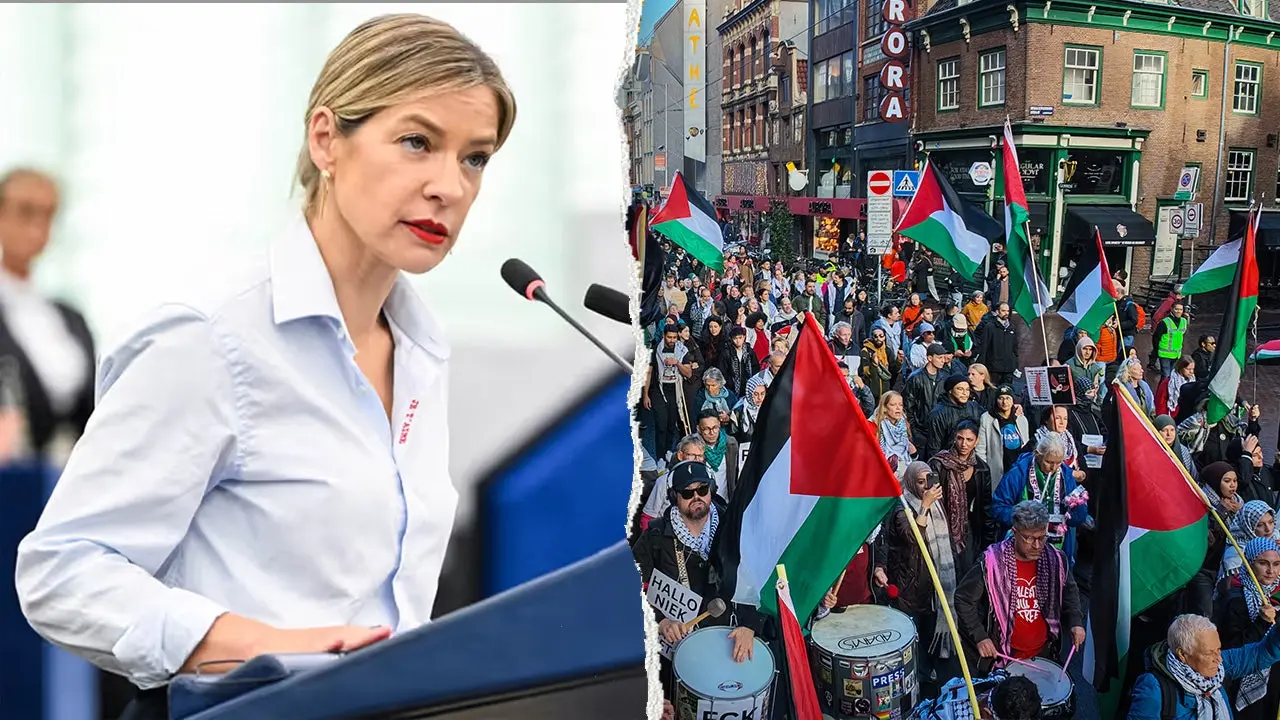
In a decisive break with years of institutional hesitation, the European Parliament has voted overwhelmingly to condemn the Muslim Brotherhood, marking what many see as a turning point in Europe’s long and troubled struggle to confront radical Islamism. The move follows the Trump administration’s earlier sanctioning of foreign Muslim Brotherhood groups, signaling that the threat posed by the transnational Islamist network is no longer being ignored on either side of the Atlantic. For decades, the Muslim Brotherhood has operated across Europe through a complex web of charities, cultural associations, and political advocacy groups, often presenting itself as a moderate religious and social movement. But a growing number of European lawmakers and security experts argue that this image is dangerously misleading. They describe the organization as an entryist force that seeks to infiltrate democratic institutions, reshape societal values, and undermine the very freedoms that allow it to operate. The resolution, sponsored by French European Parliament member Céline Imart, was not merely a symbolic gesture. It was a forceful declaration that Europe is finally waking up to a threat that has been quietly growing from within. Imart called the vote “a historic victory because it is a European first. For the first time, Europe has voted on a text that tackles Islamist entryism and the Muslim Brotherhood.” Her words carried the weight of someone who understood that the continent had crossed a threshold. Writing on X, she reflected on the significance of the moment, saying she had “broken a taboo that Europe has been dragging around like a chain.” She framed the vote as a major doctrinal shift, one that transcended partisan divides on an issue vital to the future of European societies and their youth. The resolution passed with an overwhelming majority, a clear indication that the political winds in Europe are shifting. Yet the path to this moment was neither quick nor easy, and the battle over how to respond to the Muslim Brotherhood is far from over.
The resolution was spearheaded by the European People’s Party, or EPP, the center-right coalition that holds the largest number of seats in the European Parliament. The EPP’s leadership on this issue reflects a broader and growing consensus across Europe, particularly among conservative and center-right parties, that the time for passive observation has ended. Lorenzo Vidino, director of the program on extremism at George Washington University, told Fox News Digital that the resolution was the culmination of years of advocacy by certain member states. “This is something that the French and the Austrian governments have been pushing for almost a decade,” he said, noting that the political climate in Europe has gradually evolved to the point where action is no longer seen as controversial but necessary. However, the vote also laid bare the deep ideological divisions that continue to shape European politics. Vidino observed that the right voted almost entirely in favor of the resolution, while a significant portion of the left, with some notable exceptions, voted against it. This partisan split is telling. It reveals that the Muslim Brotherhood, and the broader question of political Islam, is still being viewed through the lens of domestic political battles rather than as a genuine security challenge. Imart herself made a point of publicly thanking her collaborators from other political groups while explicitly excluding the socialists and the far left, who boycotted the text. The boycott, she implied, was a refusal to confront an uncomfortable truth. Vidino echoed this sentiment, warning that the Brotherhood remains a subject that is too often filtered through ideological predispositions. “The Brotherhood remains something that is seen through the political lenses of our own political debates, where it shouldn’t be,” he said, “because it’s a challenge to our societies.” That challenge, he explained, is not simply a matter of law enforcement or counterterrorism. It is a subtler and more insidious threat, one that operates within legal boundaries while working to erode the foundational principles of open, democratic societies.
The language of the resolution itself was strikingly direct. It described Islamist entryism as a strategy that targets “democratic institutions, the rule of law, equality between women and men and fundamental freedoms.” It emphasized that protecting Muslim citizens from discrimination is a “democratic obligation,” but it also issued a stern warning against treating organized Islamist networks as representative interlocutors for Muslim communities. This distinction is crucial. The resolution rejects the idea that self-appointed Islamist organizations speak for all Muslims, a notion that has often led European governments to engage with groups whose values are fundamentally at odds with liberal democracy. The text insisted that while Europe must remain free, open, and faithful to its principles, it can “no longer fund, consult or legitimize networks that use its language, procedures and funding to weaken its values from within.” It also stressed that anti-discrimination policies must not be weaponized to shield Islam from criticism or to legitimize organized Islamist networks. This was a direct rebuttal to the argument, often made by advocacy groups, that any criticism of Islamist organizations is inherently Islamophobic. Unsurprisingly, the resolution provoked fierce backlash from certain quarters. The European Network Against Racism, or ENAR, a pan-European anti-racism network, released a statement condemning the resolution in the strongest possible terms, calling it “racist and Islamophobic.” ENAR specifically objected to the resolution’s targeting of its organization and its members, including the Muslim youth group FEMYSO, which ENAR said was falsely associated with the Muslim Brotherhood. The network described the resolution as “a stain on the European Parliament” and “a profoundly shameful day in Europe’s history,” accusing the Parliament of giving “institutional legitimacy to a racist politics of suspicion that casts Muslim communities, Muslim-led civil society, organizations combating Islamophobia, and those who defend their rights as inherently suspect.” The strong language from ENAR highlights the intensity of the debate and the degree to which the issue has become a cultural and political battleground. For supporters of the resolution, however, the backlash is predictable and even telling. They argue that accusations of Islamophobia have long been used as a shield to protect Islamist networks from scrutiny, and that the resolution is a necessary corrective to years of misplaced tolerance.
Edmund Fitton-Brown, a senior fellow at the Foundation for Defense of Democracies and a former UK ambassador to Yemen, offered a stark assessment of the threat that the resolution seeks to address. In comments to Fox News Digital, he described the vote as “where the pushback begins against Islamist entryism in Europe,” adding that the text was “admirably clearly worded.” But he cautioned that the real work lies ahead. “The task of converting it into binding legislation begins now and will be difficult,” he said. Fitton-Brown’s warning is grounded in a deep understanding of how Islamist movements operate. He argued that Europe has long made a dangerous mistake in distinguishing between “legal” and “non-violent” Islamism on the one hand, and violent Islamist terrorism on the other. This distinction, he said, is false and dangerous. “It is not a gateway to it, it creates the climate for it, and the two are pursuing the same goals, only via different tactics,” he said. In his view, the Muslim Brotherhood and groups like it are not a moderate alternative to extremism but rather the ideological foundation upon which more violent movements are built. He also criticized Europe’s broader approach to the threat, arguing that the continent has failed to prioritize subversion in the same way it did during the Cold War. “Europe regularly imagines that ‘legal,’ ‘non-violent’ Islamism is in conflict with, and a potential antidote to, violent Islamist terrorism. It is not,” he said. He accused Europe of seeking to appease Islamist entryism by adopting hostile policies toward Israel and by passing laws that restrict speech in the name of combating Islamophobia. These measures, he argued, are counterproductive. They do not protect Muslim communities; instead, they harm liberal Muslims who are trying to escape the constraints of their communities and enjoy Western freedoms. His analysis points to a deeper problem: Europe’s tendency to view the Muslim Brotherhood through a lens of post-colonial guilt and misplaced cultural relativism, rather than as a sophisticated political movement with a clear agenda. The resolution, in his view, is an important first step, but it must be followed by sustained political will and a willingness to challenge entrenched assumptions.
The debate over how to handle the Muslim Brotherhood also highlights the differences between European and American approaches. In the United States, the Trump administration took the more aggressive step of designating the Muslim Brotherhood and four of its branches as terrorist organizations. This designation carries significant legal consequences, including sanctions and travel bans. Europe, by contrast, has traditionally adopted a more cautious and nuanced approach. Vidino explained that Europe sees the Muslim Brotherhood “mostly through the lenses of entryism, of subversion, of a group that destroys the fabrics of society.” It is viewed as a threat to democracy, he said, but many of the Brotherhood’s activities are legal when considered individually. This distinction makes it harder to justify outright bans and designations in the European legal context. The resolution reflects this complexity. It does not call for an immediate terrorist designation but instead asks the European Council to assess whether entities or individuals linked to the Muslim Brotherhood should be added to the EU’s list of terrorist organizations. It also calls for full traceability of EU funding and a comprehensive overview of EU funds awarded to people or entities suspected of links to the Muslim Brotherhood or political Islam more broadly. These measures are designed to cut off the financial lifeblood of Islamist networks without necessarily resorting to the blunt instrument of terrorist designation. The resolution also welcomes initiatives by member states to draw up national lists of hate preachers and calls for the creation of such a list at the EU level. It demands stronger scrutiny of foreign funding and transnational partnerships, particularly those involving actors linked to Qatar or Turkey, and calls for greater use of Schengen tools and EU databases to track the movement of individuals associated with extremist networks.
Despite the historic nature of the vote, Vidino remains cautious about its practical impact. “I’m a bit skeptical on whether this resolution would have a major tangible impact,” he admitted. His skepticism is rooted in the adaptability and resilience of Islamist groups. “Islamist groups are very good at camouflaging their activities,” he said. There is, he noted, “no organization that calls itself Muslim Brotherhood in Europe.” The network operates through a labyrinth of front organizations, charities, and legal entities, making it difficult to target without risking legal challenges and accusations of discrimination. Vidino predicted that if and when the EU moves to pull funding from Islamist organizations, those groups will not go quietly. “They will make a fuss… They fight back,” he said. They have the ability to leverage a crisis and turn it to their advantage by playing the victim card and the Islamophobia card. This is a familiar pattern. Whenever European governments have attempted to scrutinize Islamist networks, they have been met with accusations of racism and religious intolerance. These accusations, while often baseless, have proven effective at intimidating politicians and slowing the pace of reform. Nevertheless, the resolution sends an important signal. It sets the tone and gives a political push, Vidino said. It may make governments and security services feel more legitimized in viewing the Brotherhood in negative terms and taking action against its networks. As part of the resolution, the European Commission and the European Council are now expected to take concrete steps. Imart made it clear that she will hold them to account. “This vote is a victory, but it is also a starting point,” she said. “The Commission and the Council must now take action, and I will make sure they do.” Her determination, combined with the growing political momentum across Europe, suggests that the conversation about the Muslim Brotherhood is only beginning. Whether it will lead to meaningful change, or become another well-intentioned but ineffective declaration, remains to be seen. But for the first time in years, Europe has taken a clear and public stand against a network that has long operated in the shadows of its democracies. That, in itself, is a significant achievement.