



For eight and a half years, Bonnie Lou Gower lay down each night beside a man she thought she knew better than her own reflection. He was her husband, her constant, the person who was supposed to feel safe. But after the truth crashed into her life, that shared bed became a place of haunting disbelief. The man sleeping next to her, Richard “Marc” Evonitz, had been living in a shadow world, a world of violence and murder. Gower didn’t know that while she was visiting family, while she was living ordinary days, he was taking the lives of young girls. When the FBI finally told her, she didn’t ask them for gruesome details. She asked them the question that had already begun to claw at her sanity: “How could I not have known?” She had asked herself the same thing, and other people asked it too. The implication was painful: You must have known. You were there. But the FBI assured her that no one could have known what Evonitz was hiding. Looking back, Gower could see cracks, small irregularities she had written off as stress or work. He never came with her when she traveled to see her family, because he said he had to work. Later she learned he had taken those days off. But at the time, she didn’t think to question it; she was just going home to visit family. Now she questions everything, everyone, all words and actions. The trust she once placed so easily has been replaced by a suspicion that colors every interaction. She was only 16 when he first asked her out, and 17 when she married him. He was eight years older, and she was a sheltered, trusting girl who took everything at face value. She would later understand that he could see that vulnerability, and he used it. “You think you know who you are when you’re 17, but I really don’t think I did,” she said. That admission carries the weight of a life rearranged by a terrible truth.
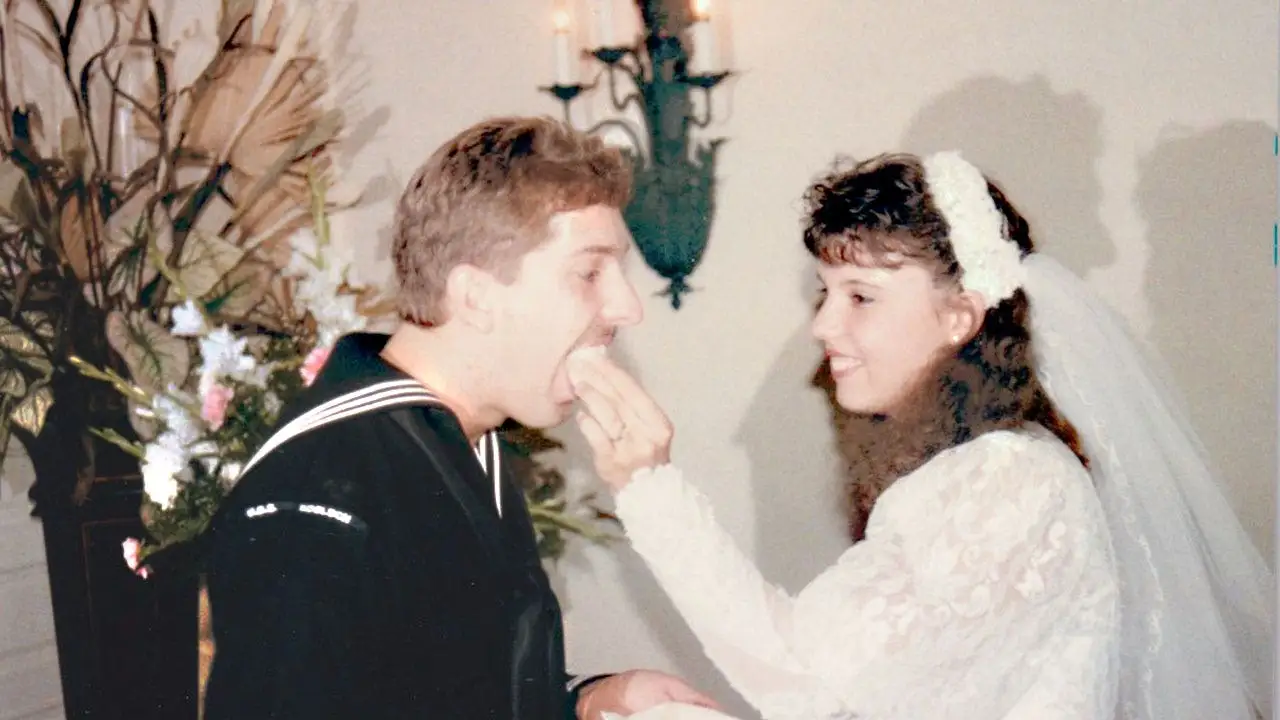
Their story should have been unremarkable. Gower met Evonitz in South Carolina, where he was the older brother of a friend. He was in the Navy, and whenever he came home on leave, she felt herself drawn to him. She did not fall in love so much as she was chosen, and at 17 she became his wife in August 1988. The marriage took them from Maine to San Diego to Virginia, each move severing another tie to the people who knew her best. In hindsight, the isolation wasn’t accidental. Evonitz slowly built a wall around her, small enough that she didn’t notice it closing in. There were moments when she suspected he was being unfaithful, and he told her it was all in her head. She chose to believe him, because the alternative felt unbearable. But the alternative wasn’t just an affair. It was murder. After Evonitz left the Navy, the pressures of life seemed to crack something inside him. He became moody, prone to rages, and endlessly critical of her weight. Behind their closed doors, Gower was also uneasy about his growing interest in bondage, though she didn’t name it as a warning sign at the time. She thought perhaps the marriage was just failing, like so many do. She never once thought she was in danger. When she finally decided to leave, her fear was for him, not herself. He threatened to kill himself with a gun, and she felt a wrenching concern for a man who had already stopped showing her affection. She left believing she had no real reason, just a quiet unhappiness that had become impossible to ignore. “I felt like I was leaving for no real good reason,” she said later. But she left anyway. That instinct, the one she distrusted, turned out to be the truest thing she felt. She walked away from a marriage that ended in 1997, with the divorce finalized in 1998. She had no idea that the man she’d left had already crossed a line from which there was no return.
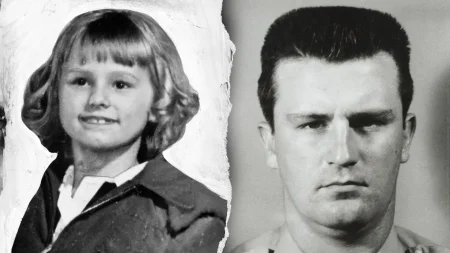
Years later, the truth came out not as a confession, but as a horror story unfolding on the evening news. On June 24, 2002, Kara Robinson Chamberlain, a 15-year-old girl in South Carolina, was outside a friend’s house when Evonitz pulled into the driveway. He approached her with pamphlets, asking if her parents were home. Before she could process the strangeness of the encounter, he pressed a gun to her neck and threatened to kill her if she screamed. He forced her into a dark storage container in his car and took her to his apartment, where she was sexually assaulted and restrained to a bed. For 18 hours, she endured torture. But she did not surrender. She freed one hand from the handcuffs with her teeth, unclipped a leather leg restraint, and ran into the night the moment he fell asleep. Two men found her and took her to a police station. She led officers back to the apartment, but Evonitz was gone. He was tracked to Sarasota, Florida, where he died by suicide as police closed in. He was 38. Then the depth of his secret surfaced. Evidence from his apartment, his Virginia home, and his car linked him to three unsolved murders. Sofia Silva was 16 when she was abducted from the front steps of her home in Spotsylvania County, Virginia, in September 1996; her body was found five weeks later. In May 1997, sisters Kristi Lisk, 15, and Kati Lisk, 12, disappeared after returning from school. They were sexually assaulted and strangled, their bodies found in the South Anna River. Gower read these details and couldn’t make them fit the man she had once held. “It felt like it wasn’t real at all,” she said. It was the stuff of movies, not her life. He had never hit her, never physically abused her. How could this be part of the same person? Her shock was not denial; it was the impossible collision of two versions of a man. But one of those versions was just a mask, and the other had been there all along.
Today, two survivors—one of marriage and one of kidnapping—are bound together by the same predator, and they are determined to find out just how many lives he touched. In Investigation Discovery’s docuseries “The Serial Killer Connection,” Bonnie Lou Gower meets Kara Robinson Chamberlain, and together they revisit the past not only to understand Evonitz, but to search for other victims who may never have been identified. Gower has pored over old calendars, helped construct a timeline of their marriage, and given investigators dates and locations that might mean nothing—or everything. “Of course, he wasn’t always where I thought he was,” she admitted. Every missing hour, every unexplained day, now carries a terrible potential. Chamberlain has been doing her own detective work, examining unsolved cases from the 1980s and tracing Evonitz’s movements during his Navy years and the decades before her abduction. She sees a pattern that alarms her: an escalation from indecent exposure to murder. Three homicides occurred in approximately nine months, and then there was a break before he took her. “I genuinely think that there is a level of escalation that we see between an indecent exposure [incident] and then three homicides in approximately nine months and then a break before me that is unexplainable to me,” she said. She is careful not to make false accusations. “Everything’s possible and nothing has been confirmed,” she stressed. But she refuses to stop searching, because the alternative—that he stopped on his own—seems almost impossible to her. Meeting Gower has added a new layer to Chamberlain’s mission. She sees in Gower a woman who was also victimized, though in a different way. Chamberlain noted that Gower had once expressed the fear that the worst thing her husband could have been doing was having an affair. “No one ever thinks that their significant other is going to be a serial killer,” Chamberlain said. Evonitz kept that part of himself tightly controlled, hidden from the people closest to him. That control, that concealment, is exactly why they both still feel the need to keep digging. They are not simply seeking closure; they are seeking justice for nameless victims.
One of the most promising threads lies in DNA. While working on the docuseries, Chamberlain learned a startling fact: Evonitz’s DNA profile is not in CODIS, the FBI’s national DNA database. That means his genetic material cannot be automatically compared against evidence from unsolved rapes and murders across the country. But authorities in Spotsylvania County, Virginia, still have a blood sample from Evonitz, and that sample could be provided to law enforcement agencies that want to test it against evidence in their cold cases. Chamberlain hopes the profile will eventually be entered into CODIS, allowing it to be compared with a much broader universe of unsolved crimes. Without that step, there may be countless families living with unanswered questions that could be resolved in an instant. Gower and Chamberlain both believe Evonitz did not simply stop. “I genuinely believe that there’s no way he only murdered three girls and kidnapped me,” Chamberlain said. “I don’t think that there’s a world in which that’s true.” The conviction is rooted in the pattern of his behavior, the escalation, the years of mobility, the fact that he was never where Gower thought he was. For Gower, one discovery during the filming of the series hit particularly close to home. She learned that Evonitz had kept a photograph of her when she was just 11 years old, taken years before they ever dated, hidden behind another framed picture of her. She had not brought that photograph with her when she left home, and she never knew he had it. “It’s disturbing enough that he would have 11-year-old me in a picture behind something,” she said. The image feels like an invasion that reaches all the way back into her childhood, suggesting that she was not simply a wife he acquired in his twenties, but perhaps someone he was watching long before. It raises questions she may never be able to answer. But it also reinforces why this work matters. Evidence that has been sitting untouched for decades may be the only way to find the truth.
Decades after the truth finally surfaced, Bonnie Lou Gower is still trying to make sense of a life that will never be neatly explained. “I don’t think you ever make sense of it,” she said. “There’s no tidy little box to put it in to make it make sense.” She is still grappling, still processing, and she has learned to live with a question that has no satisfying answer: How could she have known? The answer is that she couldn’t, not from where she stood. The man she married wore his mask so well that even after years of sharing his bed, she never glimpsed what lay beneath. That is not her failure; it is his deception. What she can do now is share what she knows, reconstruct the timeline, and help others see the pieces that might have been missed. She and Chamberlain have formed an unlikely alliance, two women whose worlds were shattered by the same predator. They are not asking for pity. They are asking for answers. They are asking law enforcement to look again at unsolved cases, to use the DNA sample, to connect the dots that may lead to other victims. Their collaboration is a powerful reminder that behind every cold case is a human being, and behind every serial killer are the survivors who outlived him. The story of Richard Marc Evonitz is not just a story of murder and escape; it is a story of what happens after the horror, when ordinary people try to rebuild their lives and somehow find the courage to face the darkness. For Gower, that courage has come slowly, in bits and pieces, in conversations she never imagined having. For Chamberlain, it is the refusal to look away, even when the answers are slow and painful. Together, they have turned their pain into purpose, and they have made it clear that the search is not over. The truth is still out there, waiting for someone to find it. And with her hand on the timeline and her voice raised in memory of the girls who never made it home, Gower is determined to keep looking—not just for herself, but for every victim whose name has yet to be spoken.