


In the latest twist of a case that has already gripped the nation, Bryan Kohberger’s newly appointed attorney, Greg Rauch, is making another aggressive push to remove the Idaho judge who sentenced his client to life in prison, arguing that the judge’s own words have poisoned any chance of a fair post-conviction review. Rauch filed a new 12-page response accusing Latah County prosecutors of simply “regurgitating” standard legal rules instead of confronting the real issue: whether Judge Steven Hippler can be impartial after calling Kohberger a “faceless coward” and saying he “slithered” into the home of four sleeping college students before committing one of the most horrifying crimes in Idaho history. The judge’s comments, made during sentencing after Kohberger pleaded guilty to the 2022 murders of Madison Mogen, Kaylee Goncalves, Xana Kernodle, and Ethan Chapin, were unusually personal and searing. But Rauch argues the problem is not merely the harshness of the words; it’s how those words reveal a deep-seated belief about Kohberger’s character, his truthfulness, and his capacity for remorse—questions that are now central to the very legal fight Kohberger has launched to undo his plea. “The question is not whether someone might criticize the Court,” Rauch wrote, “but whether an informed, reasonable observer could question its impartiality in light of this connected record.” It is a nuanced legal argument, but at its core it is a human one: How can a judge who has already declared a man beyond redemption fairly weigh whether that man deserves another day in court?
The heart of Rauch’s motion is not a single insult or an unfavorable ruling, but what he calls the “extraordinary convergence” of statements and decisions that together paint a picture of a judge who has already made up his mind. During sentencing, Hippler did more than condemn the crime; he expressed profound skepticism about Kohberger’s very ability to tell the truth. “Even if I could force him to speak, which legally I cannot, how could anyone ever be assured that what he speaks is the truth?” the judge asked. “Do we really believe, after all of this, he is capable of speaking the truth, or of giving up something of himself to help the very people whose lives he destroyed? Rather, I suspect the so-called reason would be dished out in enticing self-serving and aggrandizing untruthful bits, leaving people wanting more information, more insight, and thus enhancing even further the power he seeks to hold.” Rauch argues that these words matter immensely because post-conviction proceedings are not about guilt or innocence anymore—they are about whether Kohberger’s guilty plea was truly voluntary, intelligent, and knowing. The judge, Rauch says, would now be asked to evaluate claims from a man he has already branded as inherently untruthful. And while Rauch acknowledges that judges can deny defense motions, condemn terrible crimes, and still preside over later proceedings, he insists this case is different because of the deeply personal nature of Hippler’s remarks. “Of course” a judge can be stern, Rauch wrote, but an informed observer reading the entire record would reasonably wonder whether Hippler can separate his obvious contempt for Kohberger from the legal questions that remain.
The dispute stretches back further than the sentencing itself, touching on a scheduling order that was issued just days before Kohberger shocked the country by pleading guilty. In late June, Hippler denied a request from Kohberger’s previous defense attorney, Anne Taylor, for more time to prepare, describing her complaints about discovery as “ultimately empty” and suggesting she was simply trying to delay the trial. Then, at the change-of-plea hearing six days later, Hippler asked Taylor directly: “Have you been able to do all the discovery you feel necessary?” She answered, “Yes, Your Honor.” Rauch has pointed to this exchange as one of the many pieces of a larger puzzle—one in which the judge repeatedly questioned the preparation and motives of the defense while simultaneously pressuring the case toward a conclusion. Prosecutors, however, see it very differently. In their earlier opposition to the disqualification motion, outgoing Latah County Prosecuting Attorney Bill Thompson and Deputy Prosecuting Attorney Keith Scholl argued that Kohberger had failed to show Hippler is biased. They wrote that the judge’s sentencing remarks were not unusual or out of line given the horrific nature of the crimes, and that the “required showing of perceived bias cannot be tied to this Court’s capacity to fairly adjudicate” the post-conviction claims. In fact, they argued, Hippler is in the “best position” to handle those claims because of his deep familiarity with the case. But Rauch fired back in his latest filing, insisting that the state’s response “does not resolve this motion by repeating the ordinary rule, supplying concessions Petitioner never made, or calling the disputed statements routine.” He accused the prosecutors of mischaracterizing his initial motion and ignoring arguments they found inconvenient, a familiar battle in a case that has become as much about legal procedure as about the brutal murders themselves.
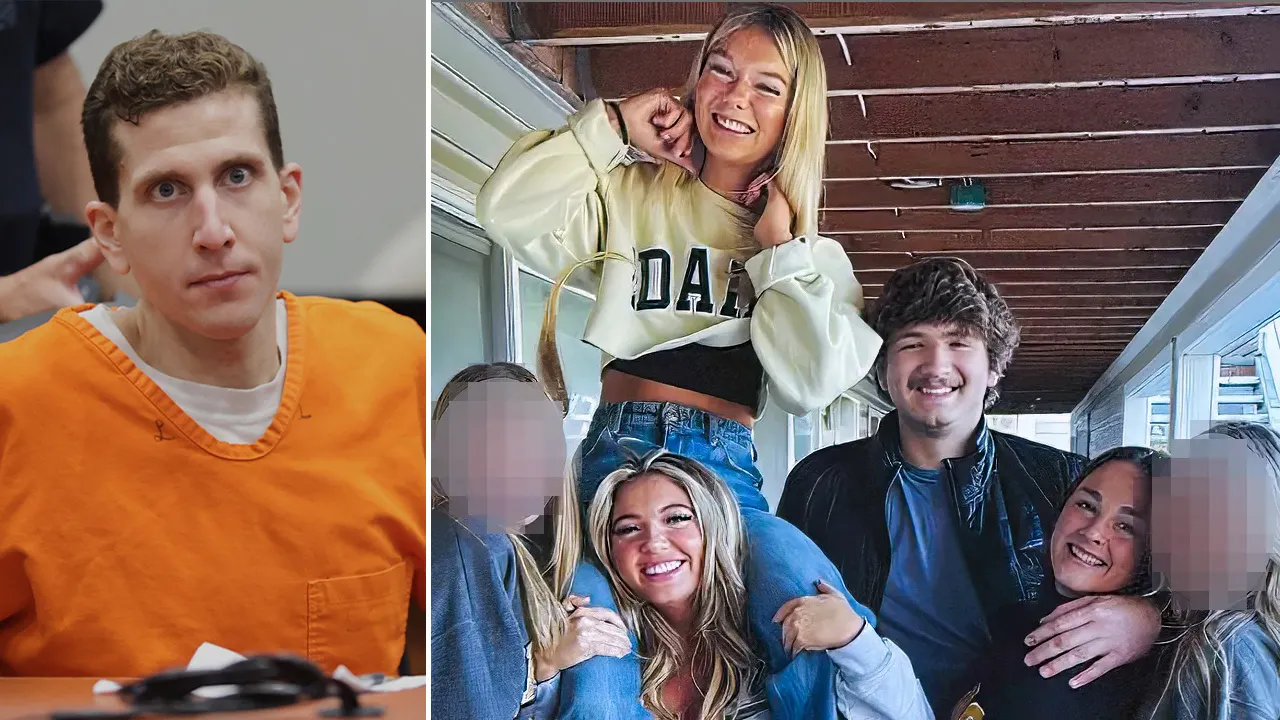
To understand the stakes, it helps to remember how this case began and how it arrived at this strange legal crossroads. In November 2022, four young people were found stabbed to death in a rented house near the University of Idaho campus in Moscow, Idaho. Madison Mogen, twenty-one, and Kaylee Goncalves, twenty-one, were killed on the second floor; Xana Kernodle, twenty, and Ethan Chapin, twenty, were killed on the third floor. The murders sent shockwaves through the small college town and sparked a weeks-long manhunt that ended with the arrest of Bryan Kohberger, then a twenty-eight-year-old criminology Ph.D. student at Washington State University, after DNA evidence and other investigative leads pointed his way. For years, the case moved through pretrial hearings, evidentiary fights, and motions under an intense media spotlight. Then, just as the trial was about to begin, Kohberger pleaded guilty—not as part of any negotiated deal that would spare him execution, but seemingly as a unilateral decision. He was sentenced to life in prison without the possibility of parole, and at sentencing the judge let loose with the searing condemnation that now anchors Rauch’s recusal motion. But Kohberger, who has insisted through his lawyers that he did not fully understand what he was doing when he pleaded guilty, filed a handwritten petition for post-conviction relief in July. Under Idaho law, such a petition allows a convicted person to challenge the validity of their conviction or sentence on constitutional grounds—here, presumably, that his plea was flawed, that his previous defense was inadequate, or that other errors deprived him of a fair process. Rauch was later appointed to represent him and has until January 13, 2027, to file a far more detailed amended petition. But before that legal work can move forward, he wants a different judge to oversee it.
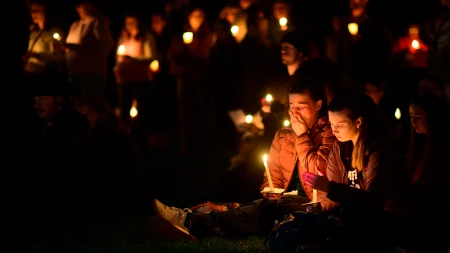
Behind the legal arguments about impartiality and recusal lies a tragedy that has never left the public consciousness, and the families of the victims are once again being forced to watch their loved ones’ deaths dissected in court filings. Madison, Kaylee, Xana, and Ethan were not just names in a police report; they were young people with families and friends, futures and dreams. Madison and Kaylee had been best friends since childhood, often seen together around Moscow; Xana had just celebrated her twentieth birthday and was thriving in her sorority; Ethan was a fraternity member and athlete from a close-knit family who, by all accounts, loved the outdoors and the people around him. Their families have endured years of delay, endless motions, and the emotional whiplash of a guilty plea that seemed to offer closure before being thrown into doubt again. Now, as Kohberger seeks to withdraw that plea, they face the possibility of more hearings, more legal arguments, and more years without finality. Rauch’s request to remove Judge Hippler is, from a legal perspective, about protecting Kohberger’s right to a fair proceeding. But from a human perspective, it is also another reminder that the judicial process, no matter how necessary, can be agonizingly slow for those who are still grieving. The families have been repeatedly in the courtroom, and they have heard the judge call Kohberger “the worst of the worst.” Some might argue that a judge who has seen the evidence and listened to the pain of the victims is exactly the right person to decide what happens next. Others might wonder whether that same judge can offer Kohberger the open-mindedness that post-conviction law demands. It is a tension at the very heart of the American justice system—between the need for accountability and the promise of fairness, between the desire for closure and the obligation to scrutinize even the most morally repugnant defendants.
Ultimately, Rauch is asking the court to do something that is both simple and radical: to reassign the case to a judge who has not already passed judgment on Bryan Kohberger’s soul. In his initial 22-page motion, Rauch wrote that his request “does not rest upon one adverse ruling, one harsh statement, or the mere fact that the judge who presided over Bryan Kohberger’s criminal case has been assigned to his post-conviction proceeding.” It rests, he said, on the extraordinary convergence of all of them—the judge’s statements about Kohberger being a “faceless coward,” his suggestion that Kohberger was incapable of telling the truth, his criticism of the defense’s preparation, and his decision to move the case forward just before the guilty plea. Rauch also suggested that Hippler could voluntarily step aside to avoid any appearance of partiality, noting that “reassignment would change the judge, not the evidence or the governing law.” His latest filing makes the point even more forcefully: “A request for an impartial adjudicator is certainly not a request for a sympathetic one.” Prosecutors, meanwhile, are pushing back, and they have indicated they believe Kohberger’s bid is simply an attempt to fish for new arguments and delay the inevitable. A hearing on the disqualification motion was supposed to take place on a recent Thursday, but Hippler abruptly canceled it and said it would be rescheduled later, leaving the case in an unsettling limbo. What happens next will determine not only the course of Kohberger’s post-conviction efforts, but also whether the families of the four murdered students will finally see the end of a legal saga that has stretched on for more than three years. There are no easy answers. The law requires fairness for every defendant, no matter how terrible the crime. But the law also demands respect for the dignity of the victims and the finality of a judgment that was entered after a guilty plea. In the end, the fight over Judge Hippler is not just about one judge or one defendant—it is about whether the justice system can be trusted to remain impartial even in the face of the darkest human acts, and whether the memory of four young lives can ever find peace amid the endless motions and mirrored legal battles.