

The NFL coaching carousel is already creaking and turning long before the calendar flips, and while head coaches get the big salaries and the biggest blame, it is the coordinators who often become the most compelling stories. This season began with ten new head coaches across the league, a wave that included some genuinely surprising shake-ups, and by the time October arrives, familiar faces like Todd Bowles in Tampa Bay, Jim Harbaugh with the Chargers, and Dan Quinn in Washington are already feeling the heat after slow starts. Owners and general managers are always looking for the next Sean McVay, the next young offensive wizard or the next defensive mastermind who can grab a locker room by the collar and turn a franchise around. That search will begin long before the season ends, and the most intriguing candidates are not necessarily the flashy names on your television every Sunday. They are the assistant coaches grinding in meeting rooms, drawing up obscure formations, fixing broken run defenses, and quietly earning the trust of players and executives alike. The list of coordinators to watch is a mix of seasoned lieutenants who have survived dysfunction, young offensive voices from coaching’s most successful trees, and at least one former head coach looking for a second chance. Each one has a different path, but all of them are people whose names will start circulating the moment a vacancy opens, and understanding who they are and why they matter is the first step in predicting the next wave of leadership in the NFL.
The defensive side of the ball is loaded with coordinators who have done more with less, and Jeff Ulbrich and Ejiro Evero are two of the clearest examples. Ulbrich has been something of a fringe head-coaching candidate since his time as the New York Jets’ defensive coordinator under Robert Saleh, and he has only strengthened his reputation since landing in Atlanta. He does not call exotic blitzes or fill the tape with complicated coverages, but his Falcons defense is structurally sound, tough, and always playing hard, and by the end of last season the unit was performing at a top-ten level with a young and untested group. One of the biggest shocks of the year came when Atlanta pummeled Josh Allen and derailed his MVP campaign on Thursday Night Football, a statement performance that put Ulbrich right back on the radar. He also kept a dysfunctional Jets team from completely tearing itself apart as an interim head coach in 2024, which impressed an NFL executive who wondered aloud why Ulbrich does not get more play in hiring cycles. Evero’s story is a little different. He first turned heads in Denver in 2022, then landed in Carolina, where he somehow kept producing respectable defensive results despite brutal rosters and two different head coaches in Frank Reich and Dave Canales. The numbers have been ugly at times because the talent was simply not there, but the Panthers have started investing, with stars like cornerback Jaycee Horn and defensive lineman Derrick Brown, plus emerging players like linebacker Devin Lloyd and edge rusher Jaelan Phillips. Evero has already interviewed for head coach openings in Atlanta, Pittsburgh, and Las Vegas, and the people in the buildings where he has worked describe him as a smart, strong leader who carries himself like an alpha. If Carolina’s defense ascends as quickly as the talent suggests it can, Evero will finally get the respect that feels long overdue.
Two more defensive coordinators who belong in the conversation are Anthony Weaver and Chris Shula, both of whom bring very different leadership styles but share a reputation for getting players to believe. Weaver has been in the building for some unusual situations, including Mike McDaniel’s unraveling in Miami and the strange exit of Vic Fangio, but he quietly produced a strong Dolphins defense in 2024 and then took over Baltimore’s aging unit and made it work. The Ravens are not the youngest team in football, but Weaver, working alongside head coach Jesse Minter, has squeezed every drop of production out of that group, and if Baltimore’s defense keeps improving as the season goes on, Weaver should finally graduate from being a hot name to being the actual man in charge. An NFL assistant general manager said the phrase he hears over and over about Weaver is “leader of men,” which is often an overused cliché, but apparently when Weaver walks into a room, players listen and they believe. Shula, the grandson of the winningest head coach in NFL history, Don Shula, has spent a decade learning from Sean McVay and has a defensive mind shaped by mentors like Wade Phillips, Raheem Morris, and Brandon Staley. His Rams defense has put together some of the most dominant game plans in the league over the last two years, including weeks when they made Jalen Hurts uncomfortable and left Bo Nix looking completely lost. Shula has had a lot of talent on that defense, and some scouts privately wonder if the unit should be more consistent, but the upside is obvious, and those who know him say he is a squared-away guy with the kind of depth that prevents young coaches from being swallowed by the job. Both Weaver and Shula are being watched closely, and the way their defenses perform in the biggest moments will shape how quickly they get their own head sets and challenge flags.
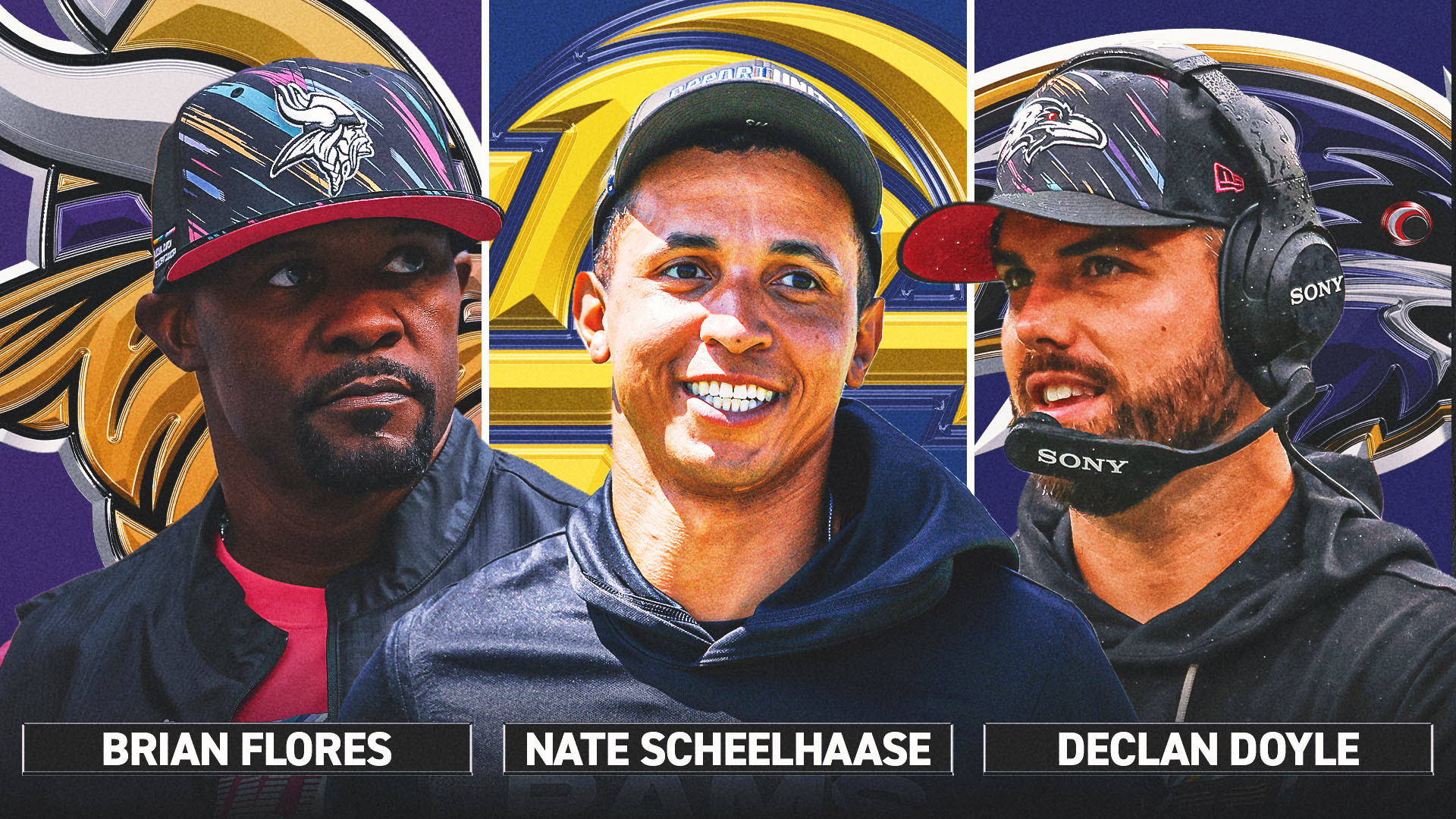
The offensive side of the coaching carousel is always particularly appealing to owners, and this year’s crop of young offensive coordinators is led by Klay Kubiak and Nick Scheelhaase, two disciples of famous coaching trees who are just beginning to emerge. Kubiak, the son of longtime NFL head coach Gary Kubiak and the brother of Raiders head coach Klint Kubiak, was a high school teacher before he started coaching in the NFL, and there is something about that background that makes him a compelling human story as much as a strategic mind. He has never called plays above the high school level, and with Kyle Shanahan still handling play-calling in San Francisco, it can be difficult to know exactly what Kubiak does as offensive coordinator. But the 49ers offense has taken massive steps forward since Kubiak took over, with a more diverse running game and more creative pre-snap movement, and he deserves a lot of credit for keeping the offense afloat when injuries piled up and Brock Purdy missed seven weeks. Former 49ers quarterbacks coach Brian Griese described Kubiak as one of the best coaches he has ever been around, a guy with his father’s intelligence and communication skills, someone who genuinely cares about players and has the acumen to stay ahead of opposing defenses. Scheelhaase is an even newer name to the NFL, having spent only two years on McVay’s staff before earning three head-coaching interviews last offseason and being promoted to offensive coordinator. He is an undeniably sharp and diligent coach, but there is still plenty of uncertainty about what exactly he will bring as a play-caller, whether he will even call plays, and whether that matters as much as the halo effect of being around McVay. History suggests teams will not be deterred. Kevin O’Connell got the Vikings job without play-calling experience, Zac Taylor did the same in Cincinnati, and Liam Coen and Matt LaFleur both left McVay’s nest to prove themselves elsewhere before becoming successful head coaches. Teams that hired McVay’s assistants have largely been happy with the decision, so Scheelhaase’s proximity to that magical offensive tree may be enough to get him a job, as long as he interviews as well as he did last time.
The very youngest names on the list are the ones who might need the most patience, even if they are receiving the most hype. Press Taylor Udinski, the Jacksonville Jaguars’ passing game coordinator, has quietly become one of the league’s most intriguing young offensive minds. Since Liam Coen arrived in Jacksonville, Trevor Lawrence has finally become the consistent, top-tier quarterback everyone expected, and Udinski has been heavily involved in that development. He is only thirty years old, which makes him Sean McVay-young in the eyes of general managers, and one assistant GM called him a rising star who fits the mold of the next great offensive head coach. But the same executive cautioned that Udinski needs more experience, and maybe needs to get away from Jacksonville to escape the perception that Coen is the real brains of the operation. That might be unfair, but it is the reality of working in the shadow of an established coordinator, and it could mean Udinski has to succeed somewhere else first before being handed the keys. Then there is Benjamen Doyle, the first-year Baltimore Ravens offensive coordinator, whose use of receiver Zay Flowers has been something like a masterclass in window dressing. Doyle has found seemingly endless ways to get Flowers open on simple crossing routes, adding elaborate motion and deception without overcomplicating the actual play. He learned from Ben Johnson in Chicago and Sean Payton in both New Orleans and Denver, and he followed Ravens head coach Jesse Minter to Baltimore specifically to take over play-calling duties. That move out of Johnson’s shadow was a smart one, and Doyle has impressed with his creativity and his ability to adapt. But at least one NFL executive cautioned that it might be too quick to hand him a head-coaching job, noting that Johnson was really the one running the Bears offense last year and that Doyle should be allowed to develop as a leader for a couple of years before taking on the enormous responsibility of managing an entire roster.
The final two names on the list are perhaps the most fascinating because they represent opposite ends of the experience spectrum. Anthony Campanile, the Jacksonville Jaguars defensive coordinator, is the kind of coach who can fire up a room in one meeting, but he is far more than just a rah-rah guy. He has been around Vic Fangio and Brian Flores, and you can see the influence of both in the way he designs his defense. His unit stops the run without sacrificing coverage, throws a variety of man, zone, overload blitzes, and simulated pressures at opposing quarterbacks, and is genuinely hard to prepare for. Campanile fixed Green Bay’s run defense in 2024 and then turned Jacksonville’s defense from one of the league’s worst into an above-average, steadily improving unit. Offensive assistants around the league hate going against his defenses, and executives believe it is only a matter of time before teams start picking apart the Jaguars staff to hire him. Brian Flores, on the other hand, has been a head coach before, and his candidacy is complicated by both the success of his Minnesota defense and the baggage of his Miami tenure. No defensive coordinator in football has done more with less than Flores, who has kept the Vikings near the top of the league in points allowed with only one All-Pro and two Pro Bowlers over several seasons. His defense is a nightmare for quarterbacks, a controlled chaos of relentless blitzing that always seems to find the weak point in pass protection. He clashed with players in Miami, including Tua Tagovailoa, and he has an ongoing racial discrimination lawsuit against the league, but sources say he has softened his approach and players in Minnesota, where he operates almost as co-head coach under Kevin O’Connell, absolutely love him. A longtime personnel man said Flores deserves a second chance, that he learned from his past, and that owners are unfairly holding his lawsuit against him. It may be the most complicated candidacy on the board, but it is also the most compelling, because Flores has already proven he can lead a team and command a locker room, and this time around he will be much more selective about where he goes and what he expects from ownership. Whether it is a fiery defensive coordinator like Campanile, a young offensive prodigy like Udinski, or a veteran like Flores who is ready to turn a second chance into a legacy, the next great NFL head coach is probably standing on a sideline right now, waiting for someone to give him the call.