


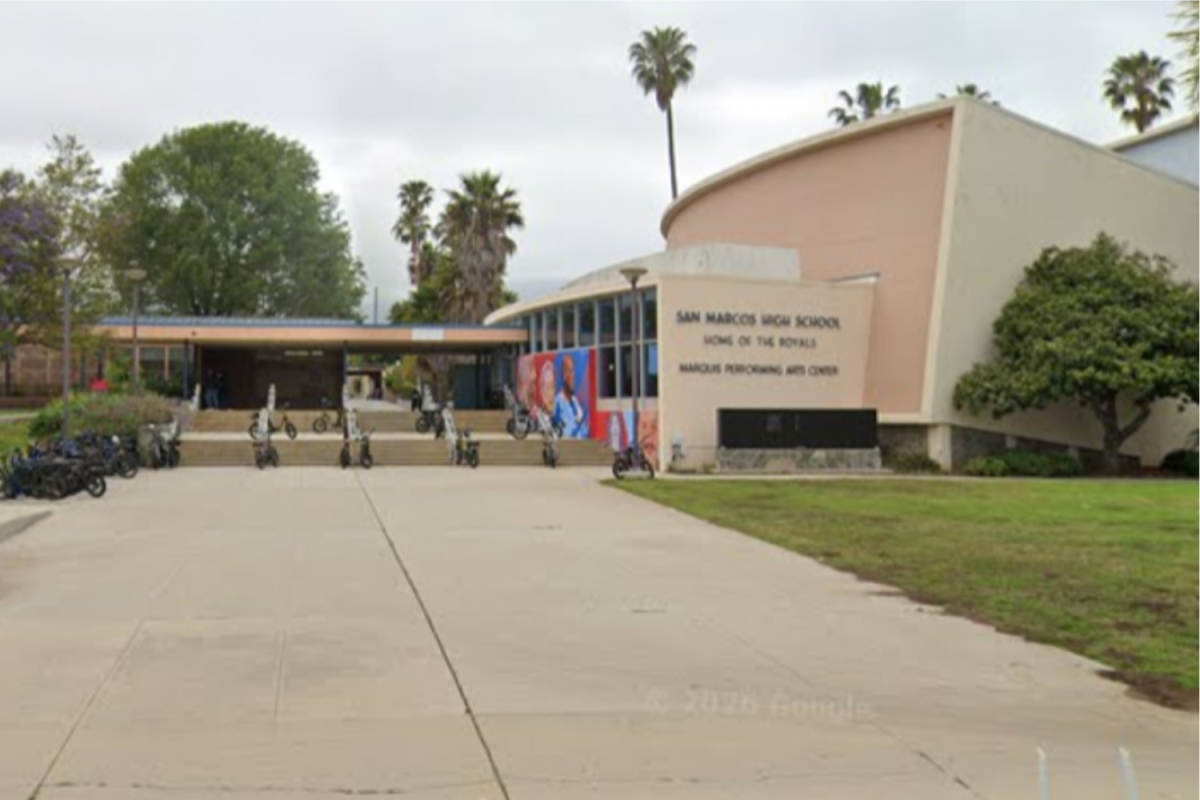
On a crisp Tuesday morning in Santa Barbara, the steady rhythm of a normal school day was interrupted by something far more urgent. Students from San Marcos and Dos Pueblos high schools walked out of their classrooms, not for a holiday or a spontaneous celebration, but to demand accountability after weeks of simmering anger over a racist social media post. The controversy began the previous month, when four San Marcos High School students faced backlash for a TikTok video in which they appeared in blackface. The post, which recreating an AI-generated meme, showed the students darkening their skin to mimic Black children, a deeply painful image that quickly spread through the community. The Santa Barbara Independent reported that Principal Dare Holdren sent a message to families acknowledging the incident and saying that San Marcos High School had “instituted consequences” for the group of students who “portrayed blackface” on social media. But for many students, parents, and educators, those private consequences were not enough. As the news settled, so did a heavier feeling: this was not an isolated lapse in judgment but part of a larger pattern of racial harm that had gone unaddressed for too long. The walkout was not just about one video. It was about every time a Black student was asked to be quiet, every time a slur went unchallenged in the hallway, every time a school district responded with words rather than meaningful change. The students who left their classrooms carried signs and their voices, but they also carried generations of exhaustion. They were not simply angry about a single meme; they were angry about a culture that had allowed such a moment to happen and had apparently done little to make sure it never happened again.
That evening, the frustration moved from the sidewalks and schoolyards into the formal setting of the Santa Barbara Unified School District board meeting. Parents, students, and community members packed the room, waiting for a response that matched the gravity of the moment. Dr. Hilda Maldonado, the district superintendent, opened her remarks with a direct acknowledgment of the pain. “I want to address our culture of care and the harm caused by the blackface incident in San Marcos,” she said. “What happened was racist and harmful, and there is no place for hate, racism or discrimination in our schools.” She went further, addressing Black students and community members directly and saying, “I recognize that this reaches beyond one incident and touches deeper experiences of racism and exclusion. I am committed to listening.” For many in the room, those words were a start, but only a start. The board had made clear that due to the number of people who wanted to speak, there would be no official responses that night. That silence, however well-intentioned, felt familiar to those who had been raising concerns about racial equity in the district for years. The meeting was less a resolution than a reflection of how wide the gap had grown between institutional promises and lived experience. The superintendent’s language was careful and compassionate, but the crowd wanted more than compassion. They wanted policies, protocols, and a clear process for what happens when a student commits an act of racism. They wanted to know why Black students in Santa Barbara had to gather, protest, and testify just to be heard at the same level as the district’s public statements. The room was full of people who had been waiting, some for a very long time, for the district to move from a “culture of care” to a culture of accountability.
One by one, speakers approached the board, and the personal stories cut through the official language of meetings and resolutions. Charlotte Gullap-Moore, speaking in a personal capacity, did not mince words when she described the broader stakes. “When a nation refuses to confront institutional and structural racism the harm does not stay contained,” she said. “It escalates. Santa Barbara Unified has watched that escalation in its own schools… How much more must our black students endure before the district acts?” Her voice was steady, but the weight of the question hung in the air. It was the same question that seemed to echo through every testimony that followed. A district student named Yeko offered a sharp and simple comparison that many young people in the room clearly felt: “If someone who has tardies gets lunch detention, but someone who posts blackface doesn’t. You are clearly promoting racism.” The logic was undeniable, and it exposed the unevenness of discipline in ways that data and policies often fail to capture. Another Black student, Sedenya, spoke with the raw honesty of someone who had lived through the very thing the community was now condemning. “As a Black student in the Santa Barbara Unified District, I have experienced many acts of racism firsthand,” she said. “There is hardly any acknowledgment or punishment, and we have spoken up about this before. We aren’t being heard and we deserve to have a voice.” Her words were not hypothetical. They were the testimony of a young person who had tried, before this moment, to tell adults what was happening and had been met with silence. The board listened, but the room was not simply listening to a list of demands; it was witnessing a collective breaking open of grief that had been stored up for too long.
The scope of the pain became even clearer when Maile Schoonover, a representative of the Santa Barbara Fund, spoke about other incidents that had been reported across the district. She did not come with only one story; she came with a pattern. She cited allegations of a Black student being physically assaulted, a substitute teacher using the N-word in class, racial slurs echoing through school hallways, and even monkey noises directed at Black students. She also described the experience of a Black educator who found the N-word written in a classroom. Each detail added another layer to the picture, and together they painted something far more troubling than a single viral video. The blackface incident was not an outlier; it was a symptom. The community was not just responding to one act of racism but to a school system where, at least from the perspective of many Black families, racism had been allowed to thrive in small ways, everyday ways, that often went unnamed and unreported. The speakers wanted the board to understand that the TikTok post could not be treated as a one-time disciplinary matter. It had to be understood as part of a continuum, a thread in a story that stretched from classroom microaggressions to physical violence to the ways Black students were disciplined and dismissed. They demanded not only consequences for the four students involved but also a districtwide commitment to confront racial bias at every level, from substitute teachers and hallway monitors to administrators and board members. The emotional intensity in the room was not just about punishment; it was about safety, belonging, and the right to go to school without being reminded that some people saw your skin as a costume.
As the meeting drew to a close, board members pledged to continue the conversation at a future meeting. It was a small promise, but for the speakers it represented at least a chance that their words might not disappear into the record. The deeper question, though, was whether the district would act with the urgency that the moment demanded. The concerns raised in Santa Barbara are not isolated. They sit against a national backdrop of racism in schools that has been documented for years. According to the Centers for Disease Control and Prevention’s 2023 Youth Risk Behavior Survey, 31.5 percent of U.S. high school students reported having experienced racism at school. Among Black students, that number rose to 45.9 percent, and among Asian students, to 56.9 percent. These are not small statistics. They represent millions of young people who go to school each day carrying the weight of discrimination alongside their backpacks. A 2024 report from the Government Accountability Office (GAO) added another troubling layer, finding that Black girls represented 15 percent of girls enrolled in U.S. public schools but received nearly half of all suspensions and expulsions in the 2017-18 school year. The report also found that Black girls were punished more harshly than White girls even when the underlying infractions were similar. The national data reinforces what Santa Barbara students described from their own experience: racism is not a rare occurrence in American schools, and punishment is not always meted out fairly or consistently. When a district like Santa Barbara Unified claims to value all students equally, it must be measured against these realities. The walkout and the board meeting were local acts, but they were also part of a much larger movement of students across the country who are demanding that schools do more than issue apologies.
In the end, the blackface TikTok post was the spark, but what burned in that boardroom was something much older. The students who walked out of class on that Tuesday were not only protesting a video; they were protesting a long history of being heard and not listened to, of being invited to speak and then being told there was no time, of being promised change and then watching the next school year begin with the same patterns. The community members who stood before the board wanted more than a condemnation of racism. They wanted a transformation of the systems that allow racism to go unchallenged. They wanted the district to look at who is comfortable in its schools and who is merely tolerated. They wanted administrators to ask hard questions about discipline, curriculum, staff training, and the daily interactions that shape a student’s sense of belonging. They wanted Black students not to have to march in the streets to be viewed as fully human. And they wanted adults to remember that a viral moment often reveals what has been sitting quietly in the hallways for generations. The district superintendent said she was committed to listening. The board promised to meet again. But the true test will come in the weeks and months ahead, when the cameras have left and the meeting rooms are empty. Will the policies change? Will the culture shift? Will the students who spoke be invited back to help shape the solution, not just to describe the pain? The answer to those questions will determine whether this walkout becomes a turning point or just another chapter in a long and tiring story. For now, the students of Santa Barbara have made one thing clear: they are watching. They are listening. And they will not stop raising their voices until the schools that claim to care for them begin to act like it.