


Maurice Cohen walked into the Herbert Park Hotel on May 7 with the quiet confidence of someone who believed a simple conversation would settle everything. The rooms had been confirmed, the purpose was clear, and the gathering itself was something that should have united people rather than divide them. Cohen, the chairman of the Jewish Representative Council of Ireland, had come with an event organizer to explain the nature of an upcoming international conference focused on combating antisemitism. The meeting brought together Jewish community leaders, diplomats, and government officials from across the world, many of whom were not Jewish at all. The hotel had already sent written confirmation that roughly seventy rooms were being held for participants. There was no reason to suspect trouble. But as the general manager sat across the table, Cohen watched her demeanor shift—a subtle tightening, a change in posture, a distance that had not been there moments before. Then came the question that stopped him cold: she asked whether the Israel Defense Forces would be involved. For Cohen, it was so absurd, so disconnected from the purpose of the conference, that he needed a moment to process it. He told her plainly that the IDF had nothing to do with a conference on antisemitism. But the question itself revealed something far deeper than confusion. It suggested that the mere mention of Jewish community, Israeli diplomats, or anything connected to Israel could make a place less welcoming. The manager offered no explanation, only a promise to consult the hotel’s owners. Cohen left that meeting unsettled, not quite knowing what would happen, but hoping that reason and decency would prevail. They did not.
The next day, May 8, came the email. The hotel would not be able to accommodate the event, it said, without offering any real explanation. Cohen and the organizers were stunned. This was not an unusual request, not a political rally, not a celebration of anything controversial. It was a conference dedicated to fighting antisemitism—an effort that should have been welcomed, or at least treated with neutrality. But the rejection was only the beginning. A few days later, organizers followed up about the seventy rooms that had been reserved for delegates. They were told, almost offhandedly, that the rooms were no longer available. The hotel claimed the rooms had automatically been released one week before the meeting, meaning they were never really secured. But no one had mentioned this during the face-to-face conversation on May 7, when the general manager was asking about the IDF and consulting the owners. Cohen could not believe the convenient excuse. Why would the hotel schedule a meeting, sit across from him, ask suspicious questions, and then never bother to mention that the rooms were already gone? To him, it looked like a retroactive justification, a way of covering up what was really happening. The message was unmistakable: the conference had become defined not by its purpose but by the people it represented. Danny Danon, Israel’s ambassador to the United Nations, called it a disgraceful example of the very antisemitism the conference was organized to combat. Seventy rooms had been booked. Seventy people had been welcomed as guests. The only thing that changed, Cohen later reflected, was what they were understood to be.
For Cohen, the sting of the hotel cancellation was not just professional or communal—it was deeply personal. He had grown up with this hotel in the background of his life. He had attended meetings there, celebrated New Year’s Eves there, and marked his mother’s birthdays there through her ninety-third year. It was a place that held memories, not just reservations. And now it had turned him away, not because of anything he had done, but because of what the gathering represented. In a speech at Ireland’s Department of Foreign Affairs on October 13, Cohen asked a question that stayed with him: “How quickly does the word ‘Jewish’ change a conversation?” It was a poignant and painful reflection on how quickly acceptance can turn to suspicion, how a familiar place can become unwelcoming. The hotel had no comment when approached by Fox News Digital directly; its owners, reached through the corporate entity, did not respond either. But the silence itself felt like an answer. Cohen had not asked for anything extraordinary. He had simply expected that a hotel would honor its commitment, or at least explain honestly why it couldn’t. Instead, he got evasion and a story that didn’t hold together. The experience left him with a sense of displacement, the feeling that even the most ordinary spaces could become charged with anxiety and exclusion. When he said, “I, like most people, don’t want to be in a place where I’m not wanted,” he was speaking not just for himself, but for a small community that had learned to listen for the subtext in every interaction.
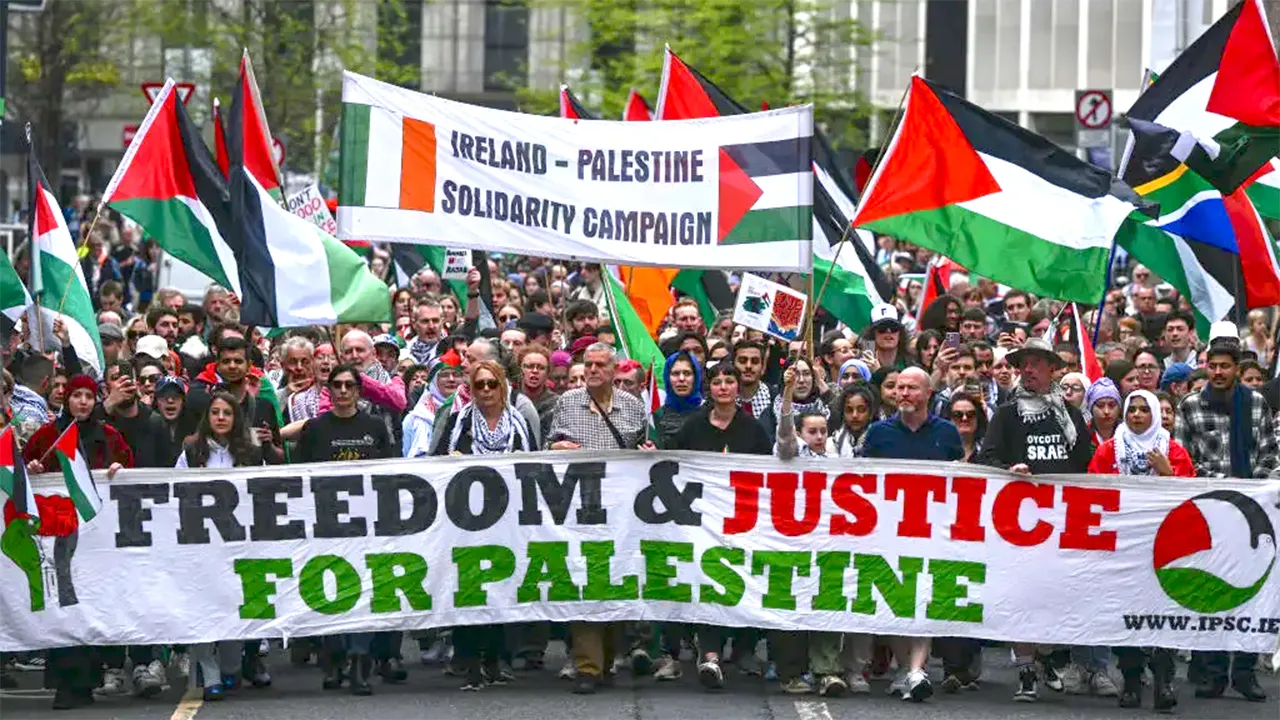
The episode at the Herbert Park Hotel did not happen in a vacuum. Ireland’s Jewish community is tiny—only about 2,200 people. And in recent years, the atmosphere around them has changed in ways that are hard to measure but impossible to ignore. The Jewish Representative Council of Ireland launched its first six-month reporting initiative and recorded 143 self-reported antisemitic incidents: verbal abuse, threats, vandalism, discrimination. The council was quick to caution that these numbers almost certainly represent only a fraction of what actually happens, because antisemitism is so often underreported. People don’t always know where to go, or they doubt that anything will be done. Cohen describes the broader climate as “ambient antisemitism”—a kind of persistent, background hostility that Jewish and Israeli people in Ireland face in everyday life. Since the October 7 Hamas attacks, he said, the situation has only gotten worse. The narrative is overwhelmingly one-sided, and that one-sidedness finds its way into ordinary encounters. If you say you’re Israeli, Cohen said, you may not get into certain places. It’s all around you. This is the deeper context for what happened at the hotel: not a single bad decision by one manager, but a reflection of a wider social mood in which Jewish identity can become a mark of suspicion. With no official state mechanism dedicated to tracking antisemitic incidents, community organizations are left to document the evidence themselves. Many experiences never make it into any record at all.
The Irish government’s response—or lack of it—has added to the community’s frustration. Fox News Digital reached out to the office of Prime Minister Micheál Martin, as well as the departments of foreign affairs and justice, and the Irish Embassy in Washington, D.C., asking whether the government condemned the hotel’s reported actions and whether any review or investigation was being considered. None had responded by the time of publication. In a September interview, Martin had insisted, “We have no toleration for antisemitism, none.” But for many Jewish leaders, that strong statement has not been backed up by visible action. After Cohen’s address at the Department of Foreign Affairs on October 13, several Irish lawmakers and civil servants reached out to him personally, expressing sympathy or concern. Yet there was no broader public condemnation from the government. Cohen has been left to wonder whether the official stance is merely rhetorical. He believes the hotel’s management should sit down directly with Jewish community representatives and receive training on what antisemitism actually looks like in the modern era. They need to understand why they’re so wrong, he said. They need to be cognizant of the fact that their actions promote antisemitism, even if that wasn’t their intention. But training is a practical step; it doesn’t address the underlying discomfort that led to the cancellation in the first place. And without a real acknowledgment from the government, Cohen fears the message will be that antisemitism is a problem to be managed quietly, not a crisis to be confronted openly.
This is what makes the hotel story so significant. It is not an isolated incident, nor is it merely about one event or one reservation. It is a case study in how prejudice operates in everyday life—through questionable questions, convenient excuses, and institutional silence. The Herbert Park Hotel never said “we don’t want Jews.” It said the event couldn’t be accommodated, and then the rooms disappeared. It was the kind of discrimination that leaves no obvious trace, yet its impact is deeply felt. For Cohen, the whole experience has been a lesson in how quickly trust can be severed. He came to the meeting as a representative of a community that has long contributed to Irish society, a community small in number but rich in history. He left feeling unwanted. When he says he doesn’t want to be in a place where he isn’t wanted, he is not being dramatic. He is describing the quiet erosion of belonging that comes when a familiar hotel, a trusted institution, suddenly makes you feel like an outsider. The broader challenge for Ireland—and for any country facing rising antisemitism—is whether it will name this problem honestly and take meaningful steps to address it. Words matter, but so do actions. A hotel that cancels a conference on antisemitism and then refuses to explain is an action that speaks louder than any official policy statement. The conference itself went ahead, and Jewish leaders from around the world gathered in Dublin to confront the very hatred that had just touched their own organizing committee. That is the irony and the tragedy of the story: the people who came together to fight antisemitism were reminded, in the most personal way, how much work remains to be done.