



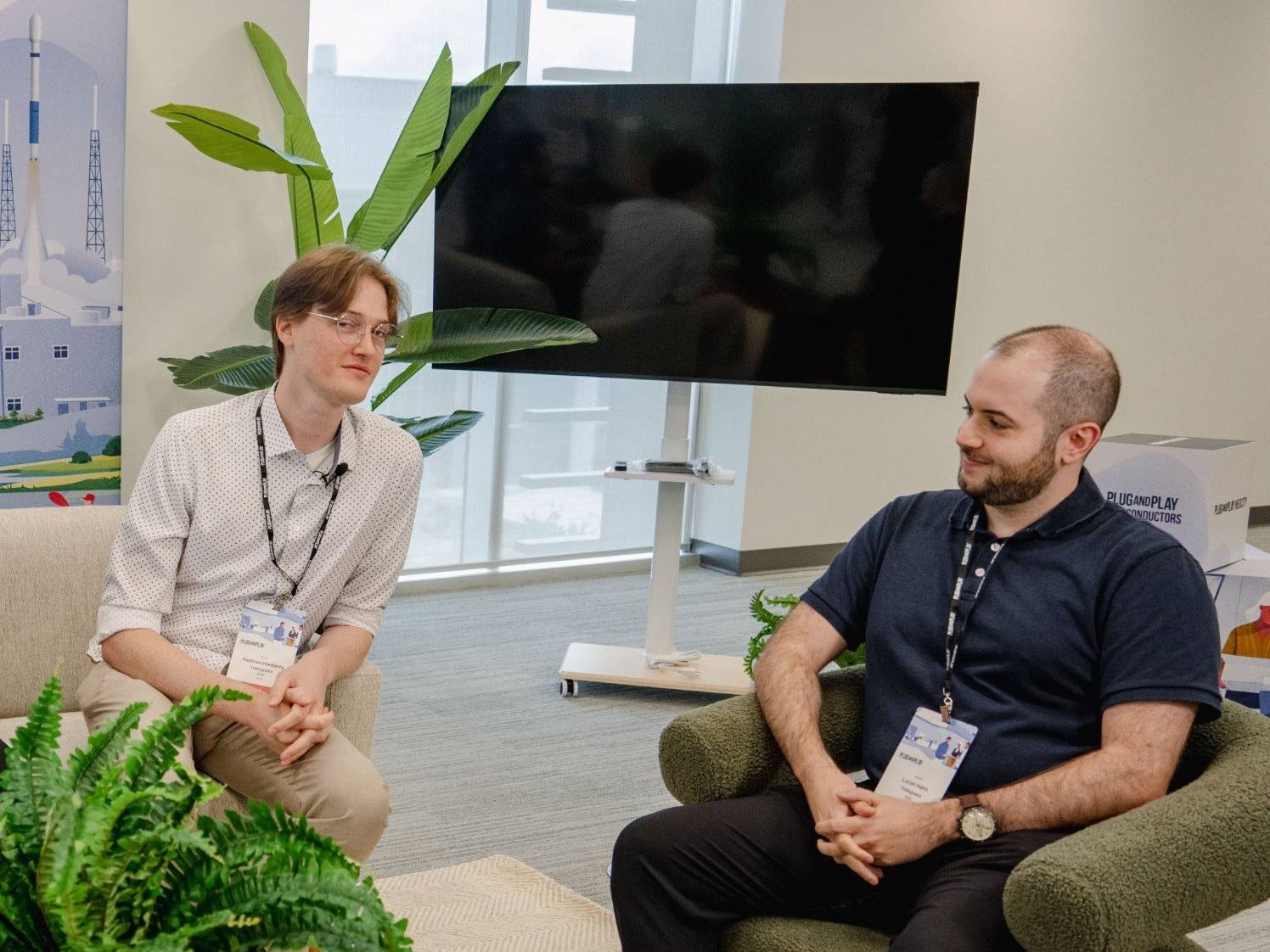
In a corner of Seattle’s emerging semiconductor scene, something small is promising to make a huge dent in one of tech’s biggest problems: energy consumption. TriMagnetix, a tiny startup with roots in nanoscience, has lined up $1 million in new funding and commitments to push forward a chip design that could dramatically reduce the electricity needed to process data. Based on early lab tests, the company says its technology uses 800 times less energy than a conventional chip to handle the same workload. The secret isn’t exotic materials or shrinking transistors further; it’s nanomagnets. Rather than keeping a constant stream of electricity flowing through a processor, as traditional chips do, TriMagnetix’s design uses brief electrical pulses to flip the magnetic states of tiny structures. That means far less power is consumed, less heat is generated, and there’s less strain on the systems that house the chips. The technology is also naturally resistant to radiation, making it attractive for harsh environments like space, and it is designed to fit with existing computing infrastructure. It’s a value proposition that has already attracted financial backers, early partners, and a spot in accelerator programs connected to some of the biggest names in technology. The money includes a round led by Acequia Capital, with participation from Athenaeum Ventures and a commitment from Actuate Ventures, adding to a $200,000 investment from climate fund SNØCAP last year. For a startup with just a handful of employees, the momentum is significant. The company’s co-founders, Madison Hanberry and Lucas Hahn, are careful not to overpromise; they’re still in the early stages, and the chip is not yet a commercial product. But they believe the fundamental physics and engineering are sound, and the interest from industries desperate for more efficient computing suggests they’re onto something. This is the story of a small team with a big idea, fueled by a mix of ingenuity, patience, and a growing realization that the world’s digital future needs to use far less energy.
To understand why TriMagnetix matters, it’s worth looking at the problem facing the modern computing world. For decades, chipmakers have made processors faster and more powerful by packing in more transistors and cranking up clock speeds. But that progress has come with a price: electricity. Conventional chips are power-hungry. They need a continuous feed of energy just to maintain their state, and much of that energy turns into heat. Data centers now consume enormous amounts of electricity, and the explosive growth of artificial intelligence has only made things worse. Training and running AI models requires vast clusters of chips humming around the clock, generating heat that must be cooled, often with more electricity. Companies like Google, Microsoft, and Amazon have made ambitious commitments to reduce their carbon footprints, but their data centers are straining power grids and missing emissions targets. TriMagnetix’s approach is fundamentally different. Instead of relying on the constant flow of electrons, it uses nanomagnetic elements that can store and process information via magnetic states. A pulse of electricity is enough to flip a state; no energy is needed to keep it in place. This “non-volatile” style of logic is what gives the chip its huge efficiency advantage. It also runs cooler, which means less energy spent on cooling and less stress on the hardware. The chip is also designed to be radiation-hardened, a property that comes naturally from the magnetic technology rather than requiring extra shielding. That makes it particularly interesting for satellites and other spacecraft, where radiation can disrupt ordinary semiconductors. But exactly what is TriMagnetix building? Hahn, who serves as co-founder, president, and chief strategic officer, describes it as a low-level compute element that doesn’t fit neatly into familiar categories like GPUs or CPUs. “It’s replacing specific compute in certain devices at a very low level,” he says. “So not quite CPU yet, but it is at the core level doing similar things.” In other words, this is not a graphics card for gaming or a main processor for a laptop; it’s a specialized component that could be embedded in devices to handle certain logic tasks with extraordinary efficiency. It’s an ambitious but focused goal, and the company is deliberately moving step by step, building and testing prototypes at the Washington Nanofabrication Facility at the University of Washington. The hope is to have a sellable product within the next year. If it works, it could be an important tool in the fight against runaway energy use.
The real-world validation for TriMagnetix is starting to pile up. The company recently signed its first paid pilot with WaveWorks Technologies, a partnership that gives it a chance to put its chips to actual use and earn revenue for the first time. It also joined the Plug and Play Semiconductor Accelerator, a program that connects startups with corporate partners, mentors, and investors. And perhaps most notably, TriMagnetix was accepted into the Nvidia Inception program. That’s not a funding program; it’s a support network designed to help cutting-edge startups grow. Through Inception, TriMagnetix gets access to technical experts, introductions to Nvidia’s corporate clients, and marketing exposure. Nvidia is the world’s most valuable chip company, best known for the GPUs that power AI. Having its stamp of approval, or at least its doors open, is a significant step for a startup that doesn’t directly compete with Nvidia but could one day complement it in specialized applications. For a small company, these partnerships matter far beyond the logos on a website. They signal to potential customers and investors that the technology is credible, that the people behind it are serious, and that there is a path forward in a notoriously difficult industry. Building a semiconductor is hard; bringing it to market is harder. The accelerator connections help TriMagnetix navigate the ecosystem, avoid common pitfalls, and get introductions to people who might one day write checks or sign contracts. Hahn expressed excitement about the opportunities, particularly the chance to learn from the best in the industry. But he also made clear that the company’s focus remains on execution. The pilot with WaveWorks is a chance to prove the technology in a real-world setting, not just in a lab. The accelerators are a boost, but they don’t replace the painstaking work of product development. Still, the momentum is undeniable. Last year, TriMagnetix was an idea with a small grant; now it’s a company with a paid pilot, accelerator affiliations, and a growing network of supporters. For a two-person startup, that’s a remarkably fast rise. It’s also a reminder that in the world of deep tech, success comes from a combination of technical brilliance, business savvy, and the patience to wait for the right doors to open.
One of the most promising markets for TriMagnetix’s technology is not on Earth at all. The Pacific Northwest has become a hub for the satellite industry, home to companies like Starcloud and SpaceX, and it’s often described as the “satellite capital of the world.” That’s no accident: the region has a deep pool of aerospace talent, a history of innovation in space technology, and a favorable ecosystem for ambitious startups. Lucas Hahn is keenly aware of this. He talks about the satellite companies in the region and what they’ve told him. They need chips that are energy efficient and that can withstand the intense radiation found in space. Ordinary semiconductors are vulnerable to radiation; high-energy particles can cause errors, crashes, or permanent damage. Satellites often require special shielding or redundant systems to compensate, adding weight and cost. TriMagnetix’s nanomagnetic chips, by contrast, are naturally radiation-resistant. The magnetic states are not easily disturbed by radiation, which means the chips could operate reliably in orbit without the usual safeguards. And because they use so little power, they could extend battery life or reduce the size of solar panels, both critical considerations for spacecraft. The combination of these qualities, Hahn says, makes the technology “a no-brainer” for satellite applications. But the appeal isn’t limited to space. Back on Earth, data centers are struggling with energy consumption and heat output. Companies like Google and Microsoft are pouring billions into renewable energy and cooling systems, but they’d rather have processors that simply use less power in the first place. TriMagnetix’s chip could be a game-changer for any computing environment where energy efficiency matters, from edge devices to large-scale data centers. It’s a broad market, but the startup is smartly focusing on satellites first, where the value proposition is clearest and the urgency is greatest. Once the technology is proven in that demanding environment, it could be easier to persuade Earthbound customers to adopt it. The path from lab to orbit is not an easy one, but the founders are undeterred. They see a future where their chips are humming away in satellites overhead, helping to power the communication, navigation, and observation systems that modern life depends on, all while using a fraction of the energy of today’s chips. It’s a vision that combines climate consciousness with commercial opportunity, and it’s why so many people are rooting for this little startup to succeed.
TriMagnetix’s team is small, but it’s deeply committed. The company was launched in 2023 by Madison Hanberry, who has been serving as chief of R&D and is now transitioning to the role of CEO. His sister, Aspen White, is also a co-founder, though the public face of the company has largely been Hanberry and Lucas Hahn. Hahn, who joined as co-founder, president, and chief strategic officer, brings a strategic perspective and an ability to communicate the technology’s potential. The two employees are backed by a network of advisors, partners, and investors who believe in the mission. It’s a classic startup structure: a couple of believers, a bold idea, and a lot of hard work. Hanberry’s shift to CEO is a natural evolution. As the company moves from pure research toward commercialization, it needs a leader who can drive business development, fundraising, and customer relationships while still keeping a hand in the technical vision. Hahn, meanwhile, is focused on strategy and partnerships, working to land pilots and build the company’s presence in key industries. The sibling connection with White adds another layer of trust and shared purpose. Startups are often founded by friends or family; the bonds can be both a strength and a challenge, but in this case, the outside support suggests the core team is functioning well. The scientists and engineers at the Washington Nanofabrication Facility have also played a crucial role, giving TriMagnetix access to fabrication equipment that would otherwise be impossibly expensive to own. The company has contracted with the facility to manufacture its prototypes, a cost-effective way to iterate and improve the chips. The goal is to have a product available for commercial sales within the next year. That’s an aggressive timeline for a semiconductor startup, but the team is moving quickly. They’ve already built working chips that demonstrate the energy savings, and now they need to turn those prototypes into reliable, manufacturable components that customers can actually buy. The road ahead is full of challenges: scaling manufacturing, ensuring quality, proving durability over time, and convincing customers to adopt a new technology. But the founders have shown they’re willing to take risks and work hard. They’re not just building a company; they’re building a new way to think about computing.
The new funding round is a vote of confidence. Acequia Capital led the round, with participation from Athenaeum Ventures, and Actuate Ventures has committed as well. Together, the three firms are putting $1 million into TriMagnetix. That’s not a huge amount by Silicon Valley standards, but for a deep-tech startup with a tiny team, it’s enough to push the technology forward, secure essential equipment time, and validate the approach in the eyes of other investors. Last year, the company received a $200,000 investment from SNØCAP, a climate venture fund, an early sign that sustainability-focused investors saw promise in the idea. The fact that multiple investors, including some with a climate focus, are willing to back a semiconductor startup shows the growing appetite for technologies that can reduce the carbon footprint of computing. The semiconductor industry is one of the most complex and capital-intensive sectors in the world; new entrants are rare. TriMagnetix is attempting to carve out a niche by offering something big tech companies can’t: a fundamentally different approach to energy-efficient logic. It’s a risky bet. There are technical hurdles to overcome, competitors with deep pockets, and the general inertia of an industry built around existing chip designs. But the startup’s backers are betting that the need for efficiency will outweigh the resistance to change. The potential payoff is enormous, not just for investors, but for the planet. Computing already accounts for a significant share of global electricity use, and that share is growing. If TriMagnetix can make even a small dent in that consumption, the environmental impact would be huge. And if the radiation-hardened aspect proves out in space, the satellite market could provide a steady stream of early revenue while the technology continues to mature. The founders know there’s a long way to go. They’re not declaring victory, but they’re also not slowing down. With new funding, new partnerships, and a clear roadmap, TriMagnetix is positioning itself as a small but mighty player in the next chapter of computing. In a world hungry for solutions, the promise of doing more with less is always a story worth telling. For TriMagnetix, the next year will be critical—the journey from lab to market is never easy, but with the right mix of science, business acumen, and luck, this tiny Seattle startup could make a big impact.