



When Abdulrahman Alfozan walked into the sleek, glass-walled offices of OpenAI in San Francisco, he probably looked like any other engineer—lanyard around his neck, laptop bag over his shoulder, a quiet presence amid the hum of one of the most important technology companies on Earth. To his colleagues, he was a trusted insider, someone who had spent years working on frontier artificial intelligence systems. But behind that ordinary facade, federal investigators now believe, Alfozan was allegedly engaged in a secret and deeply troubling act: planting a hidden recording device in a conference room where OpenAI executives discussed some of their most confidential commercial and technical secrets. On October 9, federal agents arrested the 35-year-old Saudi national, charging him with using or attempting to use a device to intercept oral communications. Just days later, according to the Justice Department, Alfozan was scheduled to fly out of the country—not on a routine business trip, but on what prosecutors described as a one-way ticket to Saudi Arabia. The flight was booked for October 12 for Alfozan, his wife, and another relative. That detail, laid out in court documents, would become a centerpiece of the government’s argument for why the arrest had to be kept under wraps, at least temporarily: if Alfozan learned the case was public, they feared, he would vanish before they could take him into custody. The image is arresting: a three-person family with bags packed, ready to leave everything behind, perhaps convinced that the secret of the hidden microphone would never surface. But it did surface. And now a man who once worked at the heart of the AI revolution is facing a federal criminal charge that could have serious consequences.
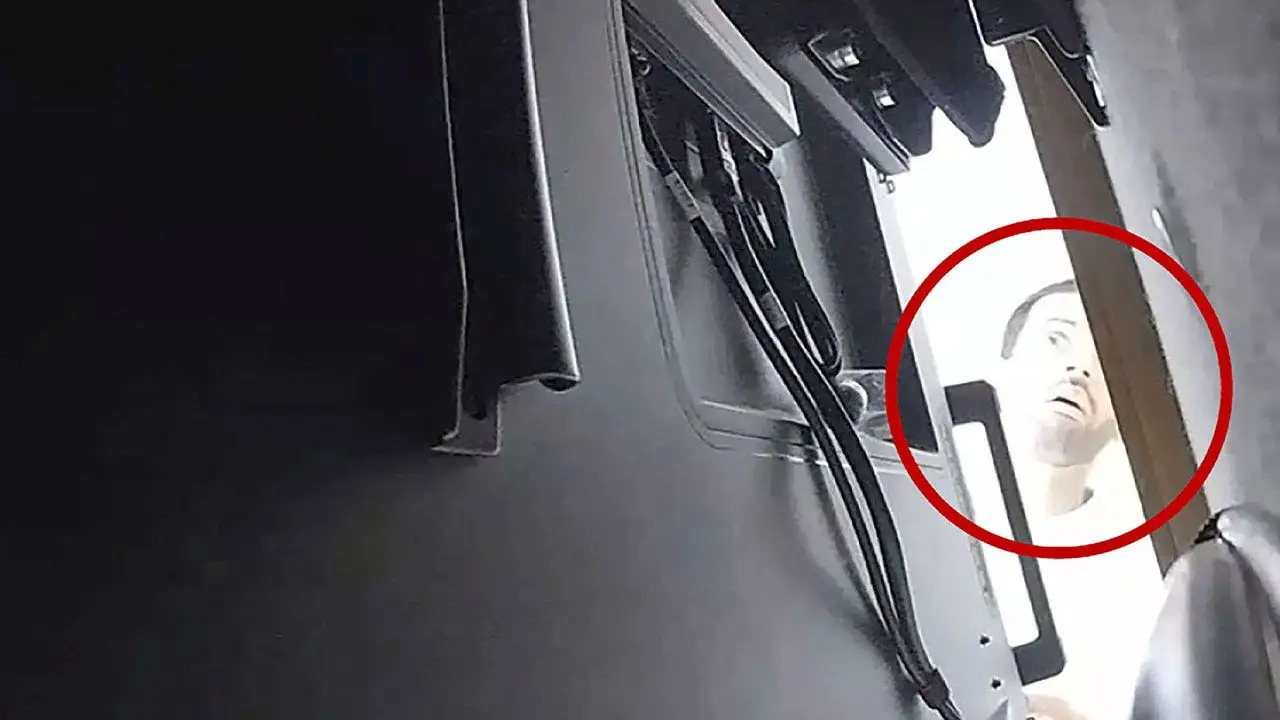
The story begins in a room that was not supposed to be the center of a federal investigation. Sometime in late September, an OpenAI employee noticed something odd in a conference room—a room, prosecutors say, that was regularly used for “highly confidential” discussions involving proprietary research, product plans, and emerging business opportunities. It was the kind of space where engineers and executives would hash out the future of artificial intelligence, where trade secrets were spoken aloud, where strategies were born and rejected before they ever reached the public. And there, tucked behind a television, plugged into a USB port on the back of the set, sat a small, encrypted digital audio recorder. The device was hidden in what must have been a deliberate attempt at camouflage: it was wrapped in toilet paper. The image is almost absurd—a cutting-edge surveillance tool embedded in something so mundane, so domestic—but the implications were anything but funny. The recording device had allegedly been placed there on September 28, only two days before it was discovered. It was, in other words, newly installed, and if it had not been found when it was, it might have captured weeks or months of sensitive conversations. OpenAI immediately traced the device back to Alfozan. Security footage reportedly showed him near that conference room multiple times, and investigators began to piece together a timeline that suggested he was not just wandering by by chance. The discovery set off alarms across the company, beyond the single office in San Francisco. If an employee could plant a listening device in the heart of OpenAI’s operations, what else might have been compromised? What combinations of words, ideas, and proprietary data had been sucked into that tiny black box before it was yanked from the USB port? For a company whose entire value rests on the quality of its research and the secrecy of its breakthroughs, the violation was existential.
The investigation that followed was a modern, high-tech hunt for answers, and it revealed a trail of digital breadcrumbs that prosecutors say points directly to Alfozan. The recording device itself was encrypted, which made it harder to access, but it also made the alleged crime more deliberate. People do not encrypt a recorder in a conference room unless they have something to hide. Beyond the physical evidence, investigators found what they described as a chatbot associated with Alfozan’s wife. That chatbot, they said, had been used to send prompts asking for advice on how to install and hide audio recording devices. It is a detail that adds an almost bizarre, surreal layer to the case: in a world where artificial intelligence now powers everything from customer service to cybersecurity, a man accused of spying on OpenAI allegedly turned to the same kind of technology to figure out how to commit the alleged crime. The chatbot may not have given him anything he hadn’t already learned from the internet, but the questions themselves were damning. Why would anyone’s spouse need to know how to hide a listening device inside a wall-mounted television? Why would anyone want to know the best ways to conceal a recorder in a conference room? Combined with the physical evidence—the device itself, the toilet paper, the USB connection, the security footage—the chatbot inquiries painted a picture of a person who was not merely curious about surveillance, but actively preparing to conduct it. The government’s case seemed to be building toward a simple conclusion: this was not an accident, not a misunderstanding, and not a prank. This was, in the words of the criminal complaint, an unauthorized attempt to intercept oral communications—a federal crime that carries serious penalties.
Who is Abdulrahman Alfozan, and how did he end up in this position? He was, according to public records and his own accounts, a well-educated engineer from Saudi Arabia who had made a home in the United States, working at one of the most prestigious technology companies in the world. His path to OpenAI was part of a larger story: the kingdom of Saudi Arabia has been pushing for years to expand its footprint in cutting-edge technology, and part of that strategy has involved sending young Saudis to study and work abroad, especially in Silicon Valley. In a podcast last month, recorded in Arabic, Alfozan recalled an encounter with Saudi Crown Prince Mohammed bin Salman during the prince’s 2016 visit to Silicon Valley. Alfozan said he had been thinking aloud about whether he should return to his native country, and the crown prince gave him some advice: stay, learn, and refine your skills at the best technology companies in the world before bringing that expertise home. The prince reportedly urged young Saudis to “learn from the source and then, God willing, bring that experience and knowledge back to the homeland.” It was the kind of message designed to inspire young engineers to see themselves as future builders of their country’s technological sovereignty. In hindsight, that podcast conversation takes on a darker resonance. It suggests a man torn between two worlds, deeply connected to his homeland and perhaps eager to prove his value to it. Whether that loyalty drove him to cross the line from advice to espionage is a question the legal system will now have to answer. But the timing of the flight booking—just days after his arrest—and the fact that the tickets were one-way, raises obvious questions about his intentions. Was he planning to leave the United States for good? Was the alleged recording device part of a larger plan to collect intelligence before departing? And if he had succeeded in leaving, would anyone have ever known what happened inside that conference room? These are the kinds of unanswered questions that make this case feel less like a simple criminal matter and more like a window into the shadowy world of corporate espionage in the age of artificial intelligence.
On the legal side, the government has been careful to keep certain details close to the vest, and their reasoning offers its own glimpse into how seriously they take the case. Federal prosecutors asked a judge to seal the criminal complaint and arrest warrant against Alfozan, arguing that if the public knew about the investigation before Alfozan was detained, he might panic and flee the country. The flight to Saudi Arabia—one-way, for himself, his wife, and a relative—was the evidence they used to make that argument. In court documents, prosecutors wrote that “disclosure of the specified documents might jeopardize the defendant’s arrest.” It is a routine but powerful request: the government was essentially saying that this man was a flight risk, that he had the means and the motive to disappear, and that the only way to ensure he faced justice was to keep the arrest a surprise. The request was granted, and Alfozan was taken into custody on October 9. He now faces a charge that could lead to significant prison time if he is convicted. The Justice Department has not suggested in public filings that Alfozan was working on behalf of the Saudi government, and the embassy in Washington has not issued a public statement about the case. But the facts speak to a broader anxiety: a citizen of a foreign power, embedded in a sensitive American technology company, allegedly attempting to record private conversations, with a plane ticket home already in hand. That combination of facts would make any prosecutor nervous, and it has certainly unsettled the broader tech community. Alfozan’s attorney has not yet responded to requests for comment, leaving much of the narrative without rebuttal. But in the court of public opinion, the story has already taken shape: a brilliant engineer, a government’s ambition, a hidden microphone, and a one-way ticket to the other side of the world.
What does this case mean, beyond the fate of one man? It is a reminder that artificial intelligence is not just a collection of algorithms on public servers—it is an industry built on secrecy, proprietary research, and the intense competition between nations and corporations. The conference room at OpenAI, with its encrypted recorder hidden behind the television, symbolizes the new front lines of economic and technological espionage. Countries around the world, but especially those with rapid growth ambitions like Saudi Arabia, are eager to acquire the knowledge and technology that power the AI revolution. They invest in start-ups, they fund research, and they send their brightest citizens to work in Silicon Valley. Most of those citizens are honest, devoted to their work, and committed to the norms of their host country. But the pressure to bring home advantage—whether a professor, a patent, or a piece of confidential audio—can be immense. The government’s response to this case, from the swift arrest to the careful sealing of documents, suggests that law enforcement understands how high the stakes have become. For OpenAI, the incident is both a security breach and an internal wake-up call. If one employee could hide a microphone in a roll of toilet paper, what other vulnerabilities remain? What other rooms, devices, or video systems might have been compromised? The company will likely have to spend millions of dollars on new security measures, and every employee will be reminded that the secrets they discuss in those quiet conference rooms are valuable enough to steal. For Alfozan, the future is now uncertain. The one-way flight to Saudi Arabia never happened. Instead of standing on the tarmac in a foreign airport, or sitting at home with his wife and relative, he is facing the American justice system, charged with a crime that could end his career and his ability to ever return to Silicon Valley. The crown prince told him to learn from the source and bring that knowledge home. In the end, he may have tried to bring back something more than knowledge—and that choice changed everything. His story, told plainly, sounds like the plot of a thriller novel: a quiet engineer, a hidden listening device, a plane ticket to the desert. But it is real, and it is a cautionary tale for the entire technology industry. In the race to build the future, the most valuable currency is not money or code—it is information itself. And in this case, someone allegedly tried to take it without permission, hide it in a box, and carry it across an ocean. The only mystery left is why.