



Paragraph 1: The Unthinkable Shatters a Peaceful Community
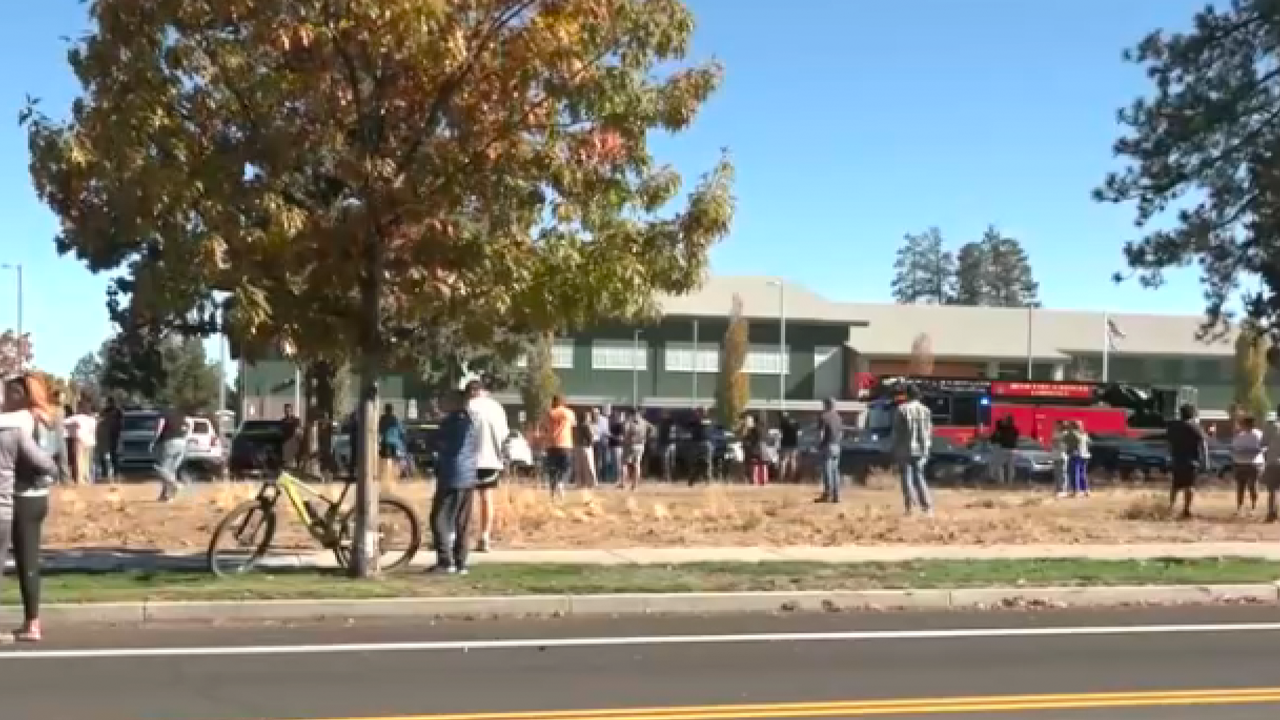
On a quiet Thursday afternoon, the idyllic town of Bend, Oregon, was violently jolted out of its serene rhythm. The call came in at 12:59 p.m.—a report of a shot fired into a car near Silver Rail Elementary School. Within minutes, the unimaginable became real: an active shooter was on the loose in a school where children were supposed to be learning their ABCs, playing tag, and eating lunch. The news spread like wildfire, leaving a community in shock, parents scrambling for answers, and law enforcement racing against time. Silver Rail Elementary, a modest school serving roughly 400 to 450 students and staffed by over 40 teachers and helpers, was transformed into a scene of terror. For those parents waiting by the phone, for the teachers locking classroom doors, and for the little ones hiding under desks, the world seemed to stop. The initial reports—multiple victims, including children—sent a cold dread into every heart. This was not supposed to happen in Bend, a place known for its friendly neighborhoods, its outdoor beauty, and its tight-knit sense of belonging. Yet here it was, a nightmare unfolding in broad daylight, ripping apart the sense of safety that every parent cherishes.
Paragraph 2: The Race Against Time and a Mysterious Intervention
As the first call hit dispatch, officers from the Bend Police Department didn’t hesitate. The alert went out at 1 p.m., and by 1:02 p.m., officers were already on the scene—just three minutes after the first report. They moved with the precision of professionals who had trained for this worst-case scenario, going room by room through the elementary school to evacuate terrified students and staff. The chaos was palpable; meanwhile, dispatchers were flooded with multiple 911 calls from inside the school, each one a desperate plea for help. Then, moments after the officers arrived, word crackled over the radio that the suspect was down. But the mystery of who exactly stopped the shooter remained unsolved. Sheila Miller, the Bend Police Department’s communications manager, addressed the press with a voice heavy with emotion. “We don’t have confirmation yet who shot the suspect. It may have been a bystander,” she said. That small word—bystander—sparked a wave of both gratitude and intrigue. Could it be that a courageous citizen, an armed staff member, or a passerby had intervened? The thought of an ordinary person stepping up to protect innocent children was both humbling and harrowing. Meanwhile, medics from Bend Fire rushed at least two people to St. Charles Medical Center, though their conditions remained unknown. The number of child victims was still unclear, but the weight of that uncertainty hung over every sentence spoken by authorities. The suspect was dead, but the scars were just beginning to form.
Paragraph 3: A Small School’s Heartbreak and the Echoes of Fear
Silver Rail Elementary is more than just a building; it’s a second home for its students. With only a few hundred children, teachers often know every kid by name—their favorite subjects, their quirks, their hopes. On the day of the shooting, the hallways that usually echoed with laughter and the shuffling of tiny feet were filled with whispers of fear. Children who had learned to do arts and crafts, to sing songs, and to count numbers were instead practicing a grim lesson: how to stay silent, how to hide, how to pray that the noise outside their door would fade. For the parents who rushed to the school, the agony was unbearable. Some had to wait hours before being reunited with their little ones, clutching photographs and memories, silently bargaining with a higher power. The school’s sudden transformation from a place of innocence to a place of violence is a wound that will take a long time to heal. Even after the shooter was neutralized, the psychological damage had already struck deep. Tears of relief mixed with tears of sorrow as families came together at the designated reunification center, Journey Church, located just off Highway 97. There, volunteers and councilors offered hugs and water, but no one could erase the images that would linger in the minds of those children, and no one could fully mend the hearts of a community now bound by a shared trauma that no one had ever wanted.
Paragraph 4: The Overwhelming Response of Heroes and the Community’s Grief
The response from law enforcement was nothing short of Hercules-scale. Hundreds of officers from across Central Oregon responded, converging on Silver Rail Elementary like a small army. The FBI’s Portland field office also deployed agents to assist local authorities, pledging full resources. The scene was a hive of activity—stretchers, radios, patrol cars, and the unmistakable sound of helicopters overhead. Yet amidst this procedural efficiency, there was profound humanity. The Bend Police Department’s communications manager, Sheila Miller, lost her composure during the briefing. “This is the kind of thing we never want to see happen in Bend. It’s devastating,” she said, her voice cracking. Her raw emotion resonated with every parent watching from home and every officer on the front lines. The public was urged to avoid the area, and a city that prided itself on its safety now hunkered down in a state of disbelief. Social media buzzed with prayers hashtags, while local churches opened their doors. Neighbors checked on each other. Strangers offered support. The community’s response was a testament to human resilience—the very same resilience that would see them through the dark days ahead. As the sun began to set on Bend, the streets near the school were still cordoned off, but the spirit of the town was already rising. Notes of encouragement were tied to trees, candles were lit, and a vigil was planned. The heroes—the officers, the medics, the unknown bystander who may have brought down the shooter—were unnamed but not forgotten.
Paragraph 5: A Cry from the Heart of the Nation’s Leaders
As news of the shooting broke, political leaders in Oregon and beyond weighed in with heavy hearts. Senator Jeff Merkley, D-Ore., took to X (formerly Twitter) to express his anguish: “As details continue to come out, my heart is with the Bend community and all of the students and families affected. No one should have to fear violence at school.” His words, though simple, echoed the frustration of millions. Representative Janelle Bynum, whose district includes Bend, spoke with raw emotion: “Our babies are supposed to do arts and crafts at school, not use their desks as cover from gunfire.” She continued, “My heart and my prayers and everything else I got is with the families at Silver Rail Elementary. When will it end?” That refrain—“When will it end?”—cut through the partisan noise and became a shared lament. It wasn’t a question of policy or politics; it was a cry of a weary nation, tired of reading the same headlines with different names and different towns. The shooting at Silver Rail was a painful reminder that school violence is not just a statistic; it’s a plague that infects communities regardless of their size or peacefulness. Politicians offered thoughts and prayers, but the demand for action grew louder. Yet, in those first few hours, the most important thing was the safety and well-being of the children, the families, and the responders who had faced the unthinkable. The political debate would come later; for now, there was only grief, hope, and the ferocious love of a community that refused to be broken.
Paragraph 6: The Long Road Ahead and the Fight for a Better Tomorrow
As the night descended on Bend, the facts were slowly beginning to piece together: one shooter dead, multiple victims, and a community in mourning. The investigation would continue, with FBI agents and state police combing over every detail, trying to understand the why and the how. But the “why” often remains elusive, a puzzle of anger, mental illness, and access to weapons that has become all too familiar. For the students of Silver Rail Elementary, the road ahead is daunting. They will need counselors, patience, and time. Their parents will need to find the strength to send them back to school with a smile, even as their own hearts tremble. The teachers, those everyday heroes who stood between their students and danger, will carry the memory of that day forever. But Bend is a resilient community. In the coming weeks, the school will reopen, repaired and repainted. Children will return to their classrooms, perhaps clutching their parents’ hands a little tighter. The community will rally, organizing fundraisers, support groups, and vigils. And perhaps, just perhaps, this tragedy will spark another conversation about how to keep our schools safe. The plea from Representative Bynum—“When will it end?”—is not just a question; it is a challenge to all of us to find solutions, to hold our children close, and to build a world where no one has to use a desk as cover from gunfire. The story is still developing, but one thing is certain: the love of a community can outshine even the darkest day. We will watch, we will pray, and we will act—so that the children of Bend, and children everywhere, can finally be free from fear.