



Kushner-Linked Luxury Resort Sparks Revolt as Living Costs and Corruption Grievances Boil Over
The Project That Ignited a Firestorm
A proposed five-star luxury resort, backed by a real estate firm with ties to former White House adviser Jared Kushner, has become the unlikely flashpoint for a broader eruption of public anger. What began as a local zoning dispute has swelled into a full-blown political crisis, as opposition to the high-end development collides with deepening frustration over soaring living costs and chronic corruption. The project, which promises thousands of jobs and a global tourism boom, is now facing a street-level backlash that its supporters never anticipated — and that its critics see as long overdue.
The resort, slated for a pristine coastal strip in a country already grappling with economic instability, has drawn withering criticism from grassroots organizations, environmental activists, and ordinary citizens who argue that it symbolizes everything wrong with the current system. At its core, the fight is no longer just about a hotel and a golf course. It has evolved into a referendum on inequality, governance, and the widening chasm between the nation’s elite and its struggling middle class. And with Kushner’s name attached, the controversy has taken on international dimensions, drawing attention from global media and human rights watchdogs alike.
A Billion-Dollar Bet on an Uneasy Future
According to project documents and developer statements, the luxury resort represents an investment of more than $800 million, with plans for 300 private villas, a marina, a championship golf course, and a spa designed by a renowned international architect. Proponents tout it as a transformative opportunity for the region, promising to create 5,000 construction jobs and 2,000 permanent positions once operational. Local officials have championed the deal as a critical injection of foreign capital into a struggling economy, arguing that the country cannot afford to turn away high-net-worth investors eager to build in one of the world’s last undeveloped coastlines.
The developer’s parent company, which has acknowledged Jared Kushner’s advisory role in its international expansion strategy, has insisted that all legal and environmental approvals were properly obtained. In a prepared statement, a company spokesperson called the resort “a model of sustainable luxury” and emphasized its commitment to local hiring and community development. Yet those assurances have done little to assuage concerns. Independent environmental reviews have flagged potential damage to protected wetlands and marine habitats, while economic analysts question whether the promised jobs will actually benefit local residents or be filled largely by imported labor. The opaque nature of the financing — including a network of shell companies and offshore accounts — has only deepened suspicions that the project serves as a vehicle for personal enrichment rather than public good.
The People Push Back
Opposition has crystallized into a cohesive movement that transcends traditional political lines. Farmers, shopkeepers, teachers, and university students have come together under the slogan “Our Shore, Not Their Resort,” organizing rallies, petitions, and legal challenges that have forced the project into a series of court battles. At the heart of the resistance is a deeply personal grievance: the plan would require the relocation of several small fishing villages that have existed for generations. For many residents, the compensation offers — reportedly one-third of the current market value of their homes — amount to an insult, and they have vowed to chain themselves to their properties before surrendering.
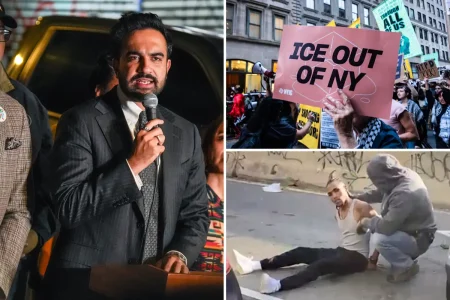
But the movement’s reach extends far beyond those directly displaced. In recent weeks, protests have spread to the capital, where thousands have marched past the presidential palace, chanting against high grocery prices, fuel costs, and a housing market that has become unaffordable for the middle class. The resort project has become a symbolic shorthand for a government that appears to prioritize foreign investors over needy constituents. “We are not anti-development,” explained Lina Marchetti, a 48-year-old schoolteacher and protest organizer. “We are against a model of development that enriches a few while the rest of us struggle to buy bread. This resort is just the most glaring example of a system that has failed us.” Her words were met with cheers, but also with a sense of urgency that has been building for years.
The Perfect Storm of Corruption and Economic Pain
The explosion of anger over the resort cannot be understood without accounting for the broader economic and political context. Inflation has reached a 20-year high, with food prices rising nearly 30% over the past twelve months. Youth unemployment hovers at a staggering 40%, and the national currency has lost half its value against the dollar since the start of the pandemic. Meanwhile, corruption charges have become a daily staple in the news cycle, with several cabinet ministers resigning amid allegations of embezzlement, bribery, and kickbacks. A recent national survey found that 8 out of 10 citizens believe corruption is “the most serious problem facing the country today.”
In this environment, the resort project’s rapid approval — reportedly fast-tracked through multiple regulatory hurdles in less than four months — has been interpreted as a glaring example of influence peddling. Opposition lawmakers have demanded a parliamentary inquiry into the decision-making process, alleging that the developer received preferential treatment due to Kushner’s political connections. Document leaks published by an investigative journalism collective suggest that the land was sold below market value and that environmental impact studies were commissioned by a consulting firm linked to the developer itself. The government has dismissed these claims as baseless conspiracy theories, but the stench of impropriety has further eroded public trust. “When people see a multi-millionaire with close ties to a former president get special treatment while they can’t afford basic healthcare, you don’t need to explain why they’re angry,” said political analyst Ravi Sontag in a phone interview. “The resort is just the match in the powder keg.”
A Flashpoint That Refuses to Be Silenced
The collision between the development’s promise and the public’s pain has created a volatile standoff with no obvious resolution. In the past month, protests have turned increasingly confrontational. Riot police have been deployed to prevent demonstrators from approaching the construction site, using water cannons and tear gas to disperse crowds. Dozens of activists have been arrested on charges ranging from “public nuisance” to “obstruction of state infrastructure,” drawing condemnation from international human rights organizations. The developer has responded by increasing on-site security and announcing a temporary pause in construction “in the interest of public safety,” but the underlying tensions remain unresolved.
Critics of the protest movement accuse them of endangering economic progress. Business associations and pro-investment groups have warned that continued instability will scare off not just this project but future foreign investment. In an open letter to the prime minister, a coalition of chamber-of-commerce leaders urged the government to “stand firm against populist hysteria” and enforce the rule of law to protect the country’s reputation as a safe destination for capital. Yet such appeals have done little to cool the streets. Instead, they have amplified the narrative that the establishment is out of touch with ordinary misery. Social media has further fueled the fire, with viral hashtags and video clips of police confrontations drawing tens of millions of views. A recent online petition demanding the project’s cancellation has gathered over a million signatures, and calls for a general strike have gained traction among major trade unions.
The Road Ahead: Accountability or Chaos?
As the standoff deepens, the central question is whether the government will choose to back down, negotiate, or double down. Political insiders suggest that the ruling party is deeply split on how to handle the crisis. Some influential figures see the resort as a test of resolve and believe that capitulating to street pressure would set a dangerous precedent for other development projects. Others, however, are increasingly alarmed by the scale of public unrest and fear that continued defiance could topple the fragile governing coalition. A senior official, speaking on condition of anonymity, admitted that “the project is no longer economically viable if the opposition consumes all the political oxygen. We need a face-saving way out.”
Possible outcomes range from a revised plan that reduces the resort’s footprint and guarantees more community benefits, to an independent judicial review of the land deal, to a complete cancellation and reallocation of the site as a public park. Each option carries risks, and no one expects a quick fix. For ordinary citizens, however, the issue has moved beyond the specific fate of the resort. It has become a test of whether their voices can influence decisions that shape their lives. As Marchetti, the schoolteacher, put it: “If they push this through against our will, we know we will never have power over anything. But if we stop it, we prove that we are not powerless.” With the international spotlight now fixed firmly on the project, that test will have repercussions far beyond one stretch of coastline — and for a population already stretched to its breaking point, the outcome could not be more consequential.