


Paragraph 1: The Autumn Escape You Never Knew You Needed
For many of us, autumn is synonymous with New England—those postcard-perfect landscapes of fiery maples and cozy colonial towns that have become the gold standard for leaf-peeping. But this year, as the political landscape turns a shade of orange that feels more like a circus than a season, the idea of fleeing to the States for a dose of fall foliage loses some of its charm. The good news is that there’s a place far closer, far quieter, and arguably just as magical—a hidden gem nestled in the heart of Latvia, a mere hour and a bit from the capital Riga. Sigulda, often dubbed “Latvia’s autumn capital,” is the antidote to crowded tourist trails and overpriced pumpkin spice lattes. The town itself is charming enough, but it’s the surrounding forests that steal the show—a riot of golden yellows, deep oranges, and warm reds that paint the landscape as soon as the temperature drops. What’s truly wonderful, though, is that you’ll likely have this scenery almost entirely to yourself. No throngs of selfie-stick-wielding visitors here, no traffic jams on scenic byways. The only crowds you might encounter are the few adventurous souls who stumbled upon the same secret that I did, perhaps after reading a certain travel publication that listed Sigulda as a must-visit. I first discovered this enchanting place last summer, when the greenery was lush and the days were long. But I knew instantly that I had to return when the season turned, to witness the transformation with my own eyes. So earlier this month, I did exactly that, and let me tell you—it did not disappoint.
Paragraph 2: The Cable Car Ride That Sets the Tone
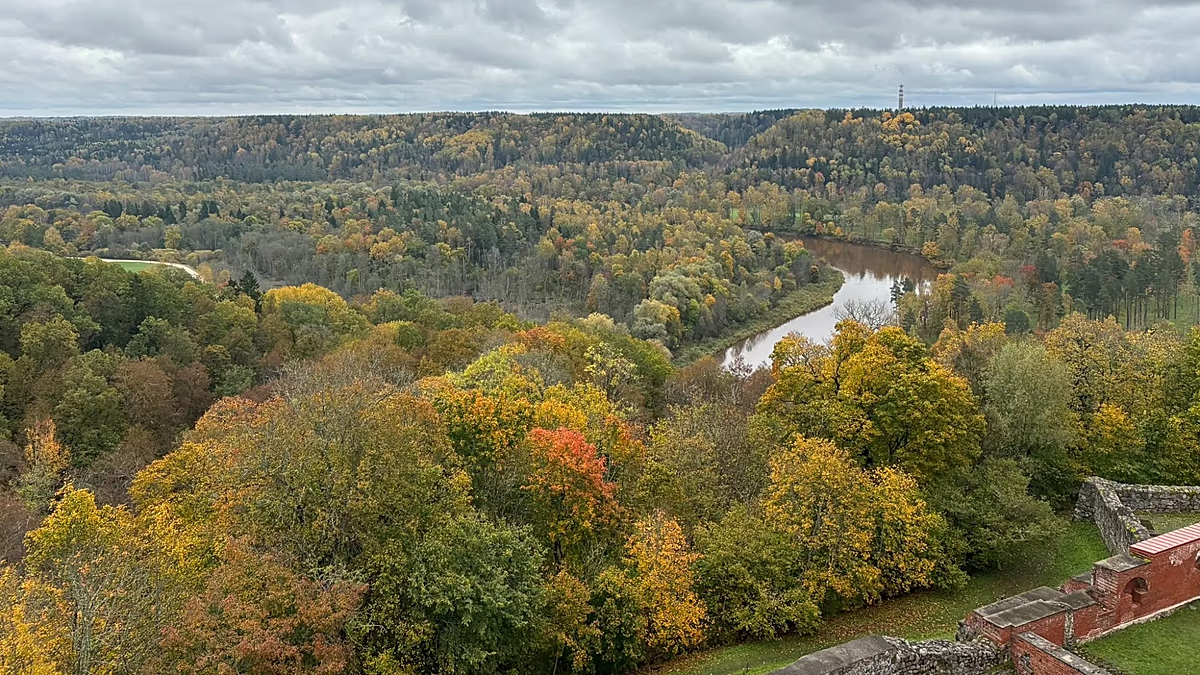
The best way to begin your autumn adventure in Sigulda is to get a bird’s-eye view of the spectacle. The town is nestled along the Gauja River, and the most thrilling way to cross it is via a cable car that glides gently over the valley. The ride lasts just seven minutes, but those seven minutes are pure poetry in motion. You’re suspended above a sea of ochre and amber, the river winding below like a liquid ribbon. On either side, the forest stretches out in waves of color, and perched on the hillsides are ancient castles, weathered by centuries of time, peeking through the treetops. It’s impossible not to feel a sense of awe, a quiet wonder at the sheer beauty of nature’s annual spectacle. As the cable car descends on the other side, you land in a world that seems unchanged since the Middle Ages. A short walk through the woods brings you to Gutman’s Cave, the largest cave in the Baltics. The cave’s sandstone walls are covered in carvings—names, dates, and cryptic messages left by lovers who have visited over the centuries. It’s a place that feels sacred, steeped in romance and whispered legends. The air is cool and damp, and the soft light filtering through the trees adds an ethereal quality. You can’t help but wonder about the hands that carved those marks, the hearts that yearned, and the stories that unfolded within these ancient walls.
Paragraph 3: The Legend of Maija and the Rose of Turaida
The most famous story associated with Gutman’s Cave is that of Maija, the “Rose of Turaida.” It’s a tale that has become a local myth, passed down through generations. Maija was an orphaned girl, abandoned during the Swedish-Polish war, and she grew up in the nearby Turaida Castle, where she became known for her extraordinary beauty and gentle spirit. She fell deeply in love with Victor Heil, the castle’s gardener. Their secret meetings took place in this very cave, a hidden sanctuary where their love could flourish away from prying eyes. But their happiness was not to last. An army deserter named Jakubowsky, who had become obsessed with Maija, plotted to win her for himself. One day, he lured her to the cave by pretending to be Victor. Maija, realizing the deception, tried to escape, but Jakubowsky cornered her. In a desperate act of courage, she told him a lie—that she possessed a magic scarf that would protect her from any harm. Believing her, Jakubowsky attacked her with his sword, but instead of finding her invincible, he struck her down. The scarf had been nothing but a trick, a final act of defiance that allowed her to control her own fate, even in death. The story is tragic and haunting, and as you stand inside the cave, you can almost feel the echo of her footsteps, the weight of her legacy. It’s a reminder that these places are not just pretty scenery; they are repositories of human emotion, love, and loss.
Paragraph 4: Turaida Castle and Its Many Wonders
From Gutman’s Cave, a short walk through the forest leads you to the main attraction: Turaida Castle. This majestic fortress dates back to 1214, and its red-brick walls rise dramatically against the autumn sky. Climbing to the top of the main tower is a must—the reward is a panoramic view that is simply unmatched. From each of the tower’s windows, you’ll see a different perspective, each one more beautiful than the last. To the north, the Gauja Valley stretches out in a patchwork of gold and green; to the south, the town of Sigulda lies nestled among the hills. The castle itself is a treasure trove of history. Inside, you can wander through exhibitions that tell the story of the castle’s past, from its earliest days as a fortified settlement to its later life as a noble estate. In the gardens, you’ll find a collection of sculptures by the Latvian artist Indulis Ranka, which add a modern, contemplative touch to the ancient surroundings. But the castle is just one of many in the area. Sigulda is also home to the New Castle, which has been lovingly restored and now houses a variety of creative businesses in its old manor buildings. Here, you can purchase a traditional Sigulda walking stick, a beautifully crafted cane with a distinctive patterned handle. It’s the perfect souvenir, a practical yet symbolic keepsake that represents the spirit of the town and the adventures you had there.
Paragraph 5: Beyond the Castles – Nature Trails and Cēsis
Sigulda is more than just a collection of historic landmarks; it’s the gateway to Gauja National Park, Latvia’s largest and oldest national park. The park is a paradise for hikers, with an extensive network of trails that wind through lush forests, along riverbanks, and up to scenic viewpoints. Armed with your new walking stick, you can spend hours exploring these paths, each turn revealing a new perspective on the autumn landscape. The official tourism website, Enter Gauja, is an invaluable resource for planning your routes, offering detailed maps and descriptions of the trails. For those who want to venture further afield, the town of Cēsis is another must-visit in the Gauja region. Just a short train ride away, Cēsis is home to a stunning medieval castle that dates back to the 13th century. The castle is wonderfully preserved, with towers to climb, dungeons to explore, and a rich history to uncover. The town itself is equally charming, with cobblestone streets and colorful wooden houses that seem untouched by time. It’s the perfect day trip if you want to extend your autumn escape and immerse yourself in even more of Latvia’s heritage.
Paragraph 6: Getting There and Practical Tips
Getting to Sigulda is refreshingly easy. Trains depart from Riga regularly, with the journey taking about an hour and ten minutes. The ride itself is pleasant, passing through forests and farmland that hint at the beauty to come. Tickets can be purchased at the station or conveniently booked online through the Vivi website, so you can plan ahead and avoid any queues. Once in Sigulda, you can walk to most of the attractions, but if you prefer not to use your feet, there are local buses that run from Sigulda to Turaida Castle. They operate about once an hour, so you might have to wait a bit, but it’s a reliable option. You can buy tickets directly from the driver, using cash or card—no need to worry about pre-booking. As I sat on the train back to Riga, watching the last rays of golden sunlight fade over the hills, I felt a deep sense of contentment. Sigulda had delivered everything I had hoped for and more. It’s a place that feels untouched by the pressures of modern life, where the changing seasons are celebrated in the most authentic way possible. So if you’re looking for an autumn escape that’s off the beaten path, consider this little Latvian town. You might just find that it offers a slice of paradise that you never knew existed.