



Bitcoin Hash Rate Stabilizes After Brutal Mining Contraction, Reshaping the Economics of Network Security
Bitcoin’s network has finally caught its breath. After a year of turbulence that forced a substantial share of the world’s mining infrastructure offline, the blockchain’s hash rate has stabilized — a development that industry observers say marks a critical turning point in the ongoing recalibration of Bitcoin’s industrial base. Zach Pandl, a prominent digital asset strategist, drew attention to the shift this week with a succinct social media post that captured the mood of a cautious market: “Bitcoin hash rate has stabilized,” he wrote, sharing a chart that illustrated the metric’s steadying trajectory over recent weeks. The observation, coming from a well-regarded voice in macro and cryptocurrency research, reinforced a growing sense among market participants that the worst of the 2026 mining downturn may be behind the network. Hash rate — the aggregate computational power dedicated to securing the Bitcoin blockchain — suffered one of the steepest declines in its history earlier this year, contracting by more than a quarter in under six weeks. The stabilization now visible does not imply that miners have returned in full force, but rather that the network’s total processing capacity has settled into a new, more sustainable range. For a system engineered to self-correct through economic incentives, that equilibrium represents both the residue of absorbed pain and the foundation for the next phase of growth. It also raises a pivotal question for investors, energy traders, and infrastructure developers watching from the sidelines: what exactly does this cycle of destruction reveal about the future of Bitcoin mining?
The stakes are substantial, because hash rate is not merely a technical curiosity — it is the backbone of Bitcoin’s security model and, by extension, its value proposition as a decentralized financial network. Every block of transactions requires computational work to validate, and the total amount of that work determines how resistant the network is to malicious attacks. A degraded hash rate leaves the chain theoretically more vulnerable, while a thriving one signals health, confidence, and capital deployment. That is why the numbers from earlier this year were so jarring. According to an industry source cited in a September 2026 market report, total network computing power retreated from approximately 1,160 exahashes per second (EH/s) to 850 EH/s during the first week of February — a dizzying 26.72% drop across the analyzed period. For context, a single exahash represents one quintillion hash computations per second, meaning the network shed hundreds of quintillions of calculations each second in a matter of weeks. The decline was attributed primarily to margin compression following a price pullback from Bitcoin’s October 2025 all-time highs. As spot prices retreated, mining revenue per unit of computational work collapsed, making it economically irrational to keep older, less efficient machines running. In a sector where electricity is often the largest line item on the balance sheet, unprofitable hardware does not stay plugged in for long.
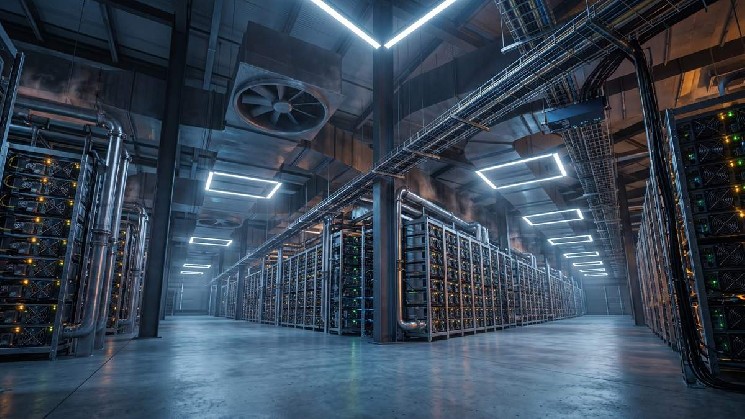
Analysts attribute the wave of hardware disconnections to three concurrent variables that compounded one another throughout the first half of the year: persistently depressed spot prices, elevated algorithmic difficulty levels, and a marked decline in transaction fee volume on the base layer. Together, these forces squeezed direct revenue per processing unit to levels that rendered entire fleets of mining equipment economically unviable. Industry data placed the hashprice — a widely watched metric that measures expected earnings per petahash per second per day — at a monthly average of just $27.70 during June 2026. That figure, which incorporates both block rewards and transaction fees, fell well below the operational break-even threshold for mining farms still running older-generation ASIC hardware. For those operators, every day of continued operation generated losses that could no longer be offset by anticipation of a future price rally. The result was a cascade of shutdowns, sell-offs, and strategic repositionings. Mining rigs that had once hummed in vast warehouse facilities across North America and Central Asia were either powered down, liquidated on secondary markets, or shipped to jurisdictions where electricity costs offered a slight margin of relief. The contraction was not uniform across the sector either: large-scale, institutionally backed mining companies with modern fleets and locked-in power agreements were better positioned to weather the storm, while smaller, less capitalized players bore the brunt of the downturn.
Compounding these market-driven strains were direct pressures on operational costs, particularly on the energy side of the equation. In major mining hubs such as Texas — which has become the de facto heartland of American Bitcoin mining — operators faced a punishing combination of seasonal electricity price hikes and winter weather disruptions that strained the state’s grid. Market reports indicate that several facilities made the deliberate choice to power down portions of their operations, curtailing their electrical load back to the grid in exchange for demand-response payments. In some cases, the economic calculus shifted so dramatically that mining operators opted to repurpose their existing infrastructure entirely, migrating capacity toward AI data centers and high-performance computing workloads that offer more predictable revenue streams. This crossover between crypto mining and artificial intelligence has become a defining theme of the 2026 cycle, as energy-rich facilities recognize that the same power contracts that once underwrote Bitcoin production can be redirected toward a broader range of compute-intensive applications. The trend has begun to blur the traditional boundaries between the cryptocurrency sector and the booming AI industry, with major data center operators and institutional capital moving fluidly between the two. For Bitcoin specifically, however, the consequence was a further reduction in active mining capacity, as once-dedicated facilities weighed the relative merits of producing digital gold versus serving as cloud compute providers in a rapidly expanding technology landscape.
The recovery toward levels near 1 ZH/s — or 1,000 exahashes per second — tells a story that is less about wholesale return than about strategic consolidation. As the industry emerges from the trough, the network’s rebound has been led almost exclusively by companies with efficient hardware, favorable power purchase agreements at fixed prices, and the balance-sheet strength to withstand prolonged periods of low revenue. These operators, by maintaining production while their competitors faltered, have captured a greater share of the network’s total computing power at a time when diminished competition means larger block rewards per active machine. This dynamic has effectively concentrated a larger portion of Bitcoin’s hash rate among a smaller number of financially robust players, a structural shift that may have implications for decentralization and governance debates within the community. For those who survived the purge, the current environment offers a compelling opportunity: the network’s difficulty level is still adjusting to the reduced hash rate, and the miners who remain operational benefit from lower overall competition while the market works through its oversupply of hardware and energy capacity. There is, however, another side to this consolidation story. With several large mining firms diversifying into AI infrastructure and cloud services, the question arises whether Bitcoin’s industrial base has permanently changed — whether the era of monolithic, Bitcoin-only mega-miners is giving way to a more flexible model in which mining operations serve as anchor tenants within broader digital infrastructure platforms.
Looking ahead, all monitoring desks and market desks are now fixed on the upcoming Bitcoin network difficulty adjustment, an event scheduled to conclude within the next 150 blocks of the current two-week cycle. This recalibration, built into the protocol to maintain predictable block production times, will formally reset the amount of computational effort required to mine a new block, effectively re-pricing the cost of production across the network. If the adjustment accounts for the lower hash rate, as expected, it will reduce the difficulty level and improve profitability margins for all miners who remained active — providing a further cushion for the industry’s recovery. Industry specialists caution, however, that the path forward remains uncertain. The stabilization of hash rate does not resolve the broader macroeconomic uncertainty that continues to weigh on Bitcoin’s spot price, nor does it eliminate the risk of further energy-related disruptions as the winter season approaches. But for a network that has weathered one of its most challenging periods in recent history, the simple fact of stability has been enough to restore a measure of confidence. The miners who survived this cycle are, by definition, the most efficient, the most resilient, and the most strategically diversified. Their ability to hold the line through the storm speaks to the maturation of an industry that was once considered a fringe experiment and now stands as a significant participant in global energy markets. Whether the hash rate climbs back to its historic highs or settles at a new plateau, one thing has become clear: Bitcoin’s mining economy has entered a new phase, shaped as much by discipline and adaptation as by the unpredictable rhythm of crypto markets.