



France’s Crypto Tax Overhaul Sends a Warning Signal: Too Much Transparency Could Drive Investors into the Shadows
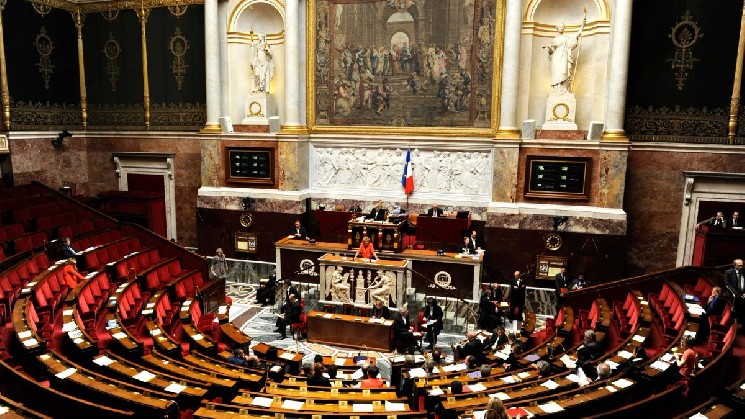
PARIS — France is barreling ahead with an ambitious rewrite of its cryptocurrency tax rules, and the move is sparking a high-stakes debate about whether the country is strengthening its financial oversight or accidentally pushing digital asset holders into darker corners of the market. In a series of amendments advanced by the National Assembly’s finance committee this month, lawmakers have endorsed proposals that would place new reporting requirements on self-custodied wallets, extend France’s exit tax to crypto positions, and change how losses are treated for tax purposes. Supporters argue that these changes are necessary to bring an increasingly important asset class into the mainstream and to ensure that crypto wealth is not quietly shifting beyond the state’s reach. Yet critics, including industry executives and legal observers, warn that the package may have unintended consequences. The very people the French government wants to identify and tax could simply vanish into decentralized platforms, where no intermediary exists and where traditional monitoring tools struggle to follow the trail of money.
The concern is especially acute when it comes to stablecoins and the regulated part of the digital asset ecosystem. Francois Volpoet, Chainalysis’ CEO for France, made that point directly when he cautioned that certain tax measures could undermine years of work aimed at pulling crypto transactions into the regulated financial system. “Do we want more taxpayers to declare their assets, or a higher tax rate applied to a base that is increasingly evaded?” Volpoet said in an email to CoinDesk. His argument, echoed by other compliance experts, is that authorities already have a significant advantage when they deal with stablecoins and other assets moving through mainstream, regulated channels. Those transactions are often visible on public blockchains and can be traced using advanced analytics, especially when exchanges and custodians follow know-your-customer rules. Decentralized finance, or DeFi, is a different story. There, trades can happen peer-to-peer, without intermediaries, through smart contracts and self-hosted wallets. If French tax policy becomes too heavy-handed, the logic goes, investors will simply migrate toward those less visible corners, and the state will end up with less information, not more. That outcome would be a serious blow to regulators who have spent years trying to build a transparent framework around digital assets.
The committee’s decision to target self-hosted wallets has drawn particular scrutiny. Under an amendment backed on Oct. 9, French taxpayers would be required to declare any self-hosted crypto wallet holding at least €100,000, an amount roughly equivalent to $116,000, with penalties of up to $11,600 for those who fail to comply. Self-hosted wallets, also known as unhosted or self-custody wallets, are tools that give users complete control over their private keys, meaning they do not rely on a bank or exchange to hold their funds. For many crypto proponents, these wallets are the essence of the digital asset movement: they embody financial sovereignty and independence from centralized power. But for governments, they represent a blind spot. Tax authorities cannot see what is inside a self-hosted wallet unless the holder voluntarily discloses it, and that opacity has made such wallets a focus of regulatory concern around the world. France’s proposed reporting threshold is not trivial, but it is also not out of reach for a growing number of medium-sized investors who simply bought and held assets through several market cycles. The risk, critics say, is that the new rule will treat law-abiding crypto holders as presumptive tax evaders and force them to expose sensitive financial information in a country where, alarmingly, crypto-related violence has become a real problem.
Volpoet explicitly linked the declaration requirement to the safety of cryptocurrency owners, pointing to a spike in physical attacks targeting crypto holders in France. The statistics are sobering. As of July, according to data cited by industry analysts, Europe accounted for 39 of the 52 physical incidents involving crypto holders reported globally, and France alone was responsible for 33 of the worldwide total, or roughly 63.5 percent. Those numbers paint a grim picture. In France, public knowledge that a person holds a substantial amount of cryptocurrency has, in some cases, turned them into a target for criminals. The threat is not hypothetical; reports have emerged in recent years of aggressive home invasions, armed robberies and other violent episodes in which attackers specifically demanded that victims transfer digital assets. A mandatory declaration requirement, even if the information is intended only for tax authorities, introduces a new point of vulnerability. If that data were ever leaked, breached or accessed by the wrong people, it could expose thousands of investors to serious physical danger. Privacy, in this context, is not merely a matter of financial secrecy. It is a matter of personal security. The tension between government oversight and physical safety is one of the most uncomfortable elements of the proposal, and it is exactly the kind of nuance that is often lost in the broader debate over tax compliance.
Beyond the wallet declaration, lawmakers also backed a proposal to extend France’s exit tax to crypto holdings worth roughly $900,000. The exit tax is a long-standing mechanism designed to prevent wealthy individuals from escaping French taxation simply by moving abroad before selling appreciated assets. Under existing rules, a person who holds significant stock in a company and who leaves France can be taxed on unrealized gains as if those gains had been realized on the day of departure. This keeps people from relocating to another country, cashing out and avoiding the French treasury. The new amendment would apply that same logic to cryptocurrency. In practical terms, that means a French resident holding more than $900,000 in unrealized crypto gains could not avoid the tax bill by packing up and moving to a lower-tax jurisdiction before selling. The state would treat the departure as a taxable event, bringing digital assets into the same legal framework that already applies to wealthy shareholders. For people who built fortunes during the crypto boom, this is a profound change. It effectively converts the exit tax from a rule aimed at corporate founders and investment elites into a measure that reaches deep into the world of digital wealth. Some tax specialists argue that this is a logical extension of an existing principle, since crypto assets are increasingly treated as legitimate investment vehicles. Others, however, point out that the measure may encourage what it is supposed to prevent: instead of paying the tax, wealthy crypto holders might find more creative ways to structure their affairs, perhaps through corporate vehicles, decentralized autonomous organizations, or by moving their assets into jurisdictions that are more welcoming to digital capital.
In a more investor-friendly move, the finance committee also backed a separate amendment on Oct. 7 that would allow taxpayers to carry forward cryptocurrency losses for up to 10 years. This change would bring the tax treatment of digital assets closer to that of stocks and other traditional investments. Under the current system, crypto losses have been more difficult to use effectively, often leaving investors with little recourse after a major market downturn. The new proposal would provide a longer window for losses to be offset against future gains, giving people who lost money during the brutal bear markets a chance to recover some of their value over time. For long-term holders, this is a meaningful adjustment. It recognizes that cryptocurrency markets are volatile and that patient investors should not be punished for the timing of their losses. It also signals a subtle shift in how the French government views digital assets: less as a fringe experiment and more as a permanent feature of the investment landscape. The loss carryforward proposal has received far less attention than the wallet declaration and the exit tax, but it may be the most clear-sighted part of the entire package. It suggests that policymakers are beginning to understand that crypto is not a passing fad and that the tax code must be built to handle both the ups and the downs of a highly volatile market.
Taken together, the amendments represent a significant turning point in France’s approach to cryptocurrency. They come at a time when regulators around the world are struggling to balance the desire for innovation with the need to implement rules that protect consumers, prevent fraud and ensure tax revenues are collected fairly. France has long tried to position itself as a technology-friendly country in Europe, with active efforts to attract crypto startups and blockchain developers. But this new wave of tax legislation will inevitably send a different signal. For every investor who appreciates the clarity of formal regulation, there will be another who sees the new rules as an intrusion, a risk, or both. The question posed by Volpoet is likely to linger over the final debates as the measure moves through the French Parliament: should the state aim for a high tax rate on compliant taxpayers, or should it aim for a broad but manageable rate that encourages people to stay within the system? The answer will determine not only the future of crypto taxation in France, but also the country’s reputation as a place where digital assets can be held and traded safely and openly. The international community is watching closely. If France’s experiment proves that tough tax rules can coexist with a thriving, transparent crypto economy, it could become a model for other nations. If it fails, and investors simply slip into the shadows of decentralized finance, the entire European regulatory project may have to go back to the drawing board.