


Thirteen Startups Are Building the Next Era of Payments, AI, and Credit on the XRP Ledger
A new accelerator cohort shows how far the XRP Ledger has moved beyond simple payments
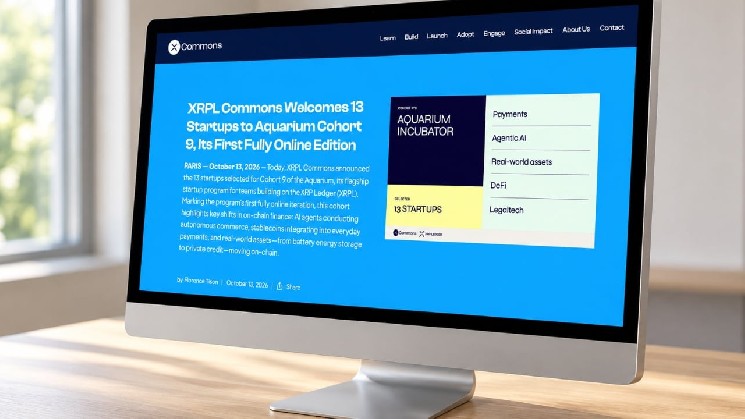
For much of its existence, the XRP Ledger has been defined by a single, powerful idea: that moving money across borders should be as fast and cheap as sending a message. Banks and payment companies have embraced that idea for years, using XRPL to settle transactions in seconds rather than days. But the network is now entering a very different phase. A new cohort of 13 startups, gathered through a nine-week accelerator program, is building on the XRP Ledger to create products that go far beyond payments. The group includes five payments companies, two AI transaction platforms, four energy finance and credit ventures, and two projects focused on inheritance and trade documentation. These are not speculative token projects or abstract experiments. They are real companies tackling real inefficiencies in the financial system—slow settlement, opaque credit markets, paper-heavy trade finance, and the growing complexity of digital inheritance. The fact that so many of them chose XRPL as their foundation says a lot about the ledger’s evolution from a niche payments rail into a full-fledged platform for financial innovation. For founders, the appeal is clear: the XRP Ledger offers speed, low fees, and a proven track record of reliability, all of which matter when you are building products that are expected to handle real money. The accelerator program itself is designed to accelerate that transition. It connects founders with investors, offers technical and business coaching, and provides a structured path from prototype to market. The 13 companies in this cohort were chosen because they have working products and ambitious plans, not just ideas. Their presence in the program is a reminder that blockchain’s value is no longer measured by the size of a token’s market cap, but by the usefulness of the applications built on top of it. As these startups move through the nine-week program, they are helping to answer a question that has hovered over the industry for years: what is the technology actually for?
Five payments startups are putting stablecoins, cards, and AI-powered remittances to work
Payments remain the most obvious application for the XRP Ledger, and the five startups in this category are approaching the market from every angle. Xrpay is building e-commerce settlement around Ripple USD (RLUSD), the dollar-backed stablecoin issued on XRPL. By integrating RLUSD into online checkout flows, Xrpay wants to give merchants a faster, cheaper alternative to the card networks that dominate digital commerce. Payinnov Labs is taking a hybrid approach, combining card acceptance with stablecoin payments so businesses can serve both traditional customers and crypto-native ones. Salypay is using artificial intelligence to power remittances and merchant payments, a move that could significantly reduce the cost of sending money across borders. Netten is focused on the payout side, helping businesses, service providers, and freelancers get paid quickly and reliably. And Zeno is building privacy-preserving mobile transfers on XRPL, acknowledging that not every payment should be visible to the public. What unites these companies is a shared belief that the current payment system is too slow, too expensive, and too fragmented. Stablecoins and blockchain-based settlement offer a way forward, and each of these startups is testing a different piece of that puzzle. The winners in this group could end up shaping how e-commerce, remittances, and business payouts work in the next decade. The use of RLUSD is particularly notable, because stablecoins are increasingly seen as the bridge between the traditional financial system and the world of digital assets. For merchants, accepting RLUSD could mean instant settlement and lower fees. For customers, it could mean a payment method that is both familiar and fast. Xrpay and Payinnov Labs are betting that this hybrid model will win; Salypay is betting that AI can make remittances smarter; Netten is betting on the payout layer; and Zeno is betting that privacy will be a feature, not an afterthought.
AI agents and energy finance are pushing the ledger into uncharted territory
Beyond payments, the cohort is exploring how artificial intelligence and decentralized finance can interact on the XRP Ledger. Ultra AI is building a network that connects AI agents seeking business opportunities, creating a digital marketplace where autonomous software can find partners, negotiate terms, and complete transactions. Agntpymt is tackling the governance side of that vision, building systems that allow automated spending to stay within corporate policies and audit requirements. As AI agents are given more authority to make purchases, book services, or allocate resources, companies will need guardrails to ensure those actions are legal, approved, and traceable. Agntpymt’s focus on compliance and auditability could make it an essential layer for enterprise adoption. The energy and credit segment is just as ambitious. Megawatt is enabling fractional investment in commercial battery storage, allowing individual investors to own a piece of a large-scale energy project. Hestiax is building a lending platform for renewable energy, a sector that has struggled to attract traditional financing because of complex project economics. Straid is developing a product that lets users borrow RLUSD against XRP collateral, which could unlock liquidity for XRP holders without forcing them to sell. And Laguna is working on tokenized private credit, representing lending investments as digital tokens. That model has the potential to bring transparency, liquidity, and efficiency to a market that has historically been opaque and relationship-driven. Together, these projects show that the XRP Ledger is not just for payments; it is becoming a home for the broader infrastructure of digital finance. Energy finance is a particularly interesting choice. Battery storage and renewable energy projects require large amounts of upfront capital, and traditional lenders have been slow to embrace them. By using fractional ownership and tokenization, Megawatt and Hestiax are opening up these assets to a much wider pool of investors. Straid’s XRP-backed lending model, meanwhile, offers a way for XRP holders to access liquidity without selling their holdings, which could be especially appealing in a rising market. And Laguna’s private credit tokens could make a once-exclusive asset class available to a broader range of investors. The result is a cohort that is not only diverse but also deeply connected to real-world financial needs.
Inheritance automation and AI-powered trade finance complete the startup lineup
The final two startups are addressing problems that most blockchain projects have ignored. Genwealth is automating asset succession and inheritance distribution, using the XRP Ledger to encode how assets should be passed on after someone dies. It is a service that could become increasingly important as digital assets grow in value and complexity. Wills and estates are traditionally handled by lawyers, courts, and paperwork, but Genwealth aims to streamline that process with smart contracts that execute automatically. Paper-Chain is applying artificial intelligence to trade documentation, specifically letters of credit and other bank instruments that support international payment obligations. Trade finance is one of the most paper-heavy industries in the world, and Paper-Chain’s use of AI to verify documents could reduce fraud and delays. The company also plans to add escrow and stablecoin settlement functions, which would allow trade payments to be settled instantly once conditions are met. These two projects may not grab headlines, but they address real, painful problems in finance. They also highlight a broader trend: the XRP Ledger is increasingly being used not just for payments, but for the administrative plumbing that keeps the global economy running. When a startup can automate a will or verify a letter of credit, it is doing something far more consequential than moving a token from one wallet to another. It is taking a process that has relied on intermediaries for centuries and turning it into code. Inheritance, in particular, is an area where digital assets create new challenges. If someone holds cryptocurrency, a digital wallet, or tokenized real estate, how will their heirs access it after they die? Genwealth is trying to answer that question by building the infrastructure for digital estate planning. Paper-Chain, meanwhile, is focusing on the trade finance ecosystem, where letters of credit have changed little in decades. By using AI to verify documents and stablecoins to settle transactions, the company could make cross-border trade faster, safer, and more accessible to small businesses. These are not the flashiest applications in the cohort, but they may be among the most durable.
AI payments gain momentum as x402 transaction volumes surge
The accelerator’s emphasis on AI is not happening in isolation. Ripple has released an XRPL AI Starter Kit that supports payments using both XRP and RLUSD, and its developer tools are designed to connect AI agents directly to wallets and payment functions. At the center of this effort is the x402 protocol, a lightweight standard that lets online services request payment before granting access. In practical terms, x402 allows software to buy data, computing resources, or APIs on demand, creating a machine-to-machine economy that runs on the XRP Ledger. The early numbers are encouraging. XRPL Commons cited data from t54 showing more than 8 million x402 transactions on the ledger in the 30 days through Oct. 8. By Oct. 13, total x402 transactions had surpassed 14 million, according to t54’s XRPL AI Hub. For a protocol that is still in its early stages, that level of activity is a strong signal that AI agents are beginning to transact in meaningful volumes. It also suggests that the XRP Ledger is emerging as one of the preferred settlement networks for this new form of commerce, where software, not people, decides when and how to pay. RLUSD, a digital token designed to maintain a one-to-one value with the U.S. dollar, plays an important role in this ecosystem, as it gives AI agents a stable, familiar unit of account. The combination of RLUSD, XRP, and x402 is a powerful one, and it could lay the groundwork for an internet where machines are not just exchanging information, but actually exchanging value. The x402 protocol itself is elegantly simple. It treats a payment request like an HTTP request, which means any online service can integrate it without building custom blockchain infrastructure. That simplicity is likely one of the reasons for the rapid growth in transaction volumes. If the trend continues, the XRP Ledger could become the default settlement layer for AI-to-AI commerce, a market that is still in its infancy but has enormous potential. For the startups in this cohort, that could open up new revenue streams and new ways to serve customers. For the XRP Ledger, it could cement the network’s role as a foundational layer of the machine economy.
Brazil tokenization and bank custody expand the ledger’s institutional reach
While startups are building on the edge of the XRP Ledger, institutional adoption is accelerating at the core. In Brazil, Ripple has partnered with CSD BR to begin mirroring investment fund ownership records on the blockchain. The operator’s systems will remain the official record, but the mirrored data on XRPL opens the door to faster reconciliation, more transparent reporting, and new forms of automation. A separate private credit platform operated by VERT is also using the ledger to record events throughout the financing lifecycle, extending XRPL’s applications into corporate lending. On the custody side, Standard Chartered has gone live with institutional custody of RLUSD, a major endorsement for the stablecoin. The bank is also working with Ripple and LMAX Group on a planned collateral mirroring arrangement that would recognize the value of bank-held tokens for trading without requiring them to be transferred to the venue. That kind of institutional plumbing is essential if stablecoins are to move from retail speculation to mainstream finance. The nine-week program that brought the 13 startups together reflects the same momentum. Participants receive workshops, technical and business coaching, and mentorship, with an investor demonstration midway through the program. The online format welcomes founders from around the world, particularly Europe, the Middle East, and Africa, and teams must have a working product and at least one full-time founder to join. Four of the startups—Xrpay, Straid, Paper-Chain, and Netten—advanced from Make Waves, a 90-day challenge that helped participants build, release, and grow XRPL applications through September. With that kind of pipeline, the XRP Ledger’s next chapter is likely to be defined not just by the projects themselves, but by the founders who are building them. The combination of startup innovation, institutional adoption, and developer tools suggests a network that is maturing on every level. The question now is not whether the XRP Ledger can support real-world applications; it is which of these applications will scale first. If the 13 startups in this cohort are any indication, the answer may come from a corner of finance that most people never expected.