


It has been quite a year for anyone who loves to travel. Between the constant news of conflict in the Middle East, heatwaves disrupting some of our favourite destinations, and the cost-of-living crisis squeezing household budgets, the simple act of planning a holiday has sometimes felt like navigating a storm. Yet here’s the thing: we haven’t stopped dreaming about getting away. Despite all the turbulence and the careful counting of pennies, holidays remain a priority for most of us. According to ABTA’s Holiday Habits report 2026/27, based on polling of more than 2,000 UK adults, 70% of people now say they plan to travel abroad in the next 12 months. That’s a powerful signal of how deeply travel is woven into our lives. We may check prices twice, trade a long-haul flight for a shorter hop, or hunt for last-minute bargains, but we are not cancelling our plans. The report shows that the British appetite for exploring somewhere new is still very much alive. What has changed, though, is the way we approach those holidays. We have become more thoughtful, more budget-aware, more willing to swap a few luxuries for the joy of experiencing another place. The pandemic years reminded us how much we value time away, and even as economic headwinds blow, that sense of escape is something people are reluctant to give up. Yes, there is more anxiety about money, and yes, there are real worries about safety and weather. But the overall mood is one of adaptation. Holidaymakers are adjusting their expectations rather than abandoning them altogether. Some are choosing cheaper hotels; others are planning self-catering trips to save on restaurant bills. The key message is resilience. We want to travel, and we will find a way to make it work, even if it means doing things a little differently. That resilience isn’t just a statistic; it reflects a deep human need to reconnect with the world, to make memories, and to step away from everyday pressures. As the industry looks ahead, the picture is not one of decline, but of careful, creative planning.
Of course, saying “I’m going on holiday” doesn’t mean “I’m spending like before.” The report shows just how much thought people are putting into every pound. Only 7% of those surveyed said the cost-of-living crisis would stop them from taking a holiday altogether next year. That’s a remarkably small number, and it tells you that the vast majority are determined to keep travel in their lives. But the ways they’re doing it have shifted. Around 21% said they’ll book cheaper accommodation, and 19% said they’ll eat out less while they’re away. In other words, the holiday itself is non-negotiable, but the extras are up for negotiation. Maybe that means renting a flat with a kitchen instead of staying in a hotel, so you can cook a few meals rather than dining out every night. Maybe it means choosing a slightly less glamorous seaside town, travelling in shoulder season, or cutting back on souvenirs. The effect is a more thoughtful, more deliberate kind of holiday. People are no longer chasing the flashiest option; they’re chasing the best value. That’s a big change in mindset, and it’s reshaping what travel companies offer. Package holidays, once seen by some as old-fashioned, are having a real moment. 48% of people who booked one said they chose it because it offered the best value for the price, up from 43% last year. That might be because a package bundles flights, accommodation, transfers, and often a few extras into one clear price, which makes budgeting easier. Instead of a string of separate bookings that each come with their own costs and surprises, a package gives you a sense of control. You know what you’re paying, you’ve paid it upfront, and you can relax. Even when money is tight, there is something reassuring about that. The shift to cost-conscious travel isn’t about lowering standards; it’s about making smarter choices. It means knowing what matters to you—a nice bed, a great location, a good breakfast—and letting go of the rest. It also means recognising that a holiday is worth the sacrifice in other areas of daily spending. Many people are probably skipping daily takeaway coffees, cooking at home more, or delaying a big purchase in order to fund their next trip. They’re not seeing that as deprivation; they’re seeing it as saving for something meaningful. The report’s data suggests this pragmatic, optimistic approach is here to stay, and it’s one that can make travel more sustainable—at least financially—in the long run.
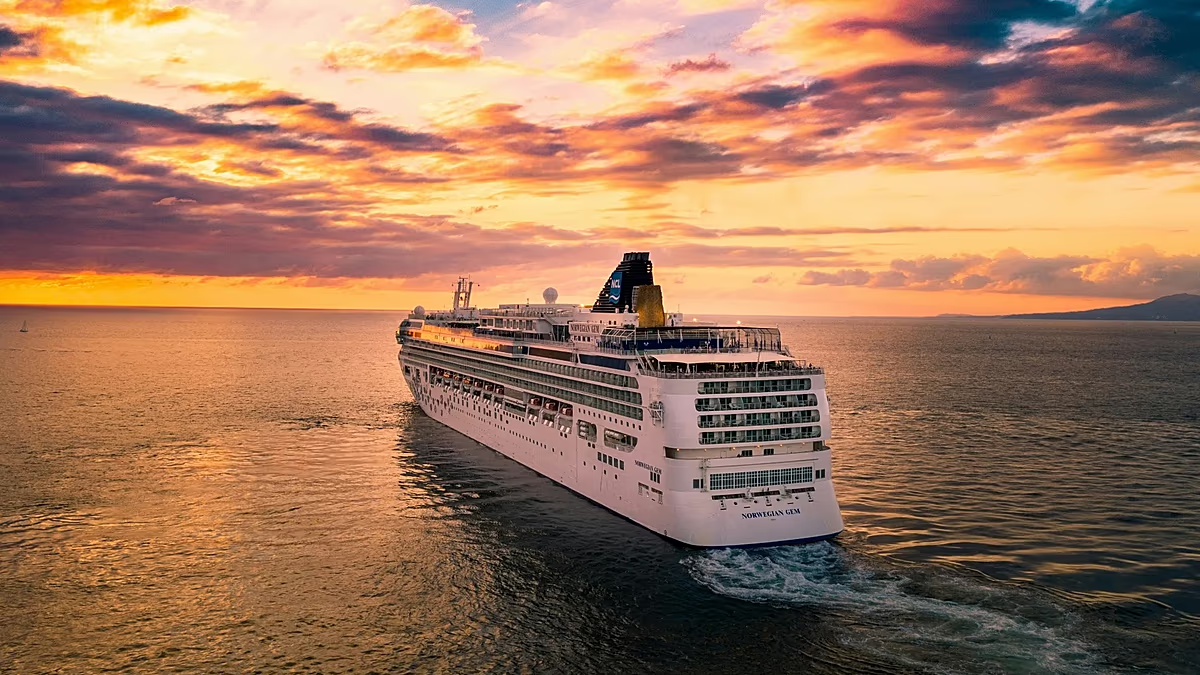
It’s not just package holidays that are benefiting from this new value-consciousness. Cruises are also becoming more appealing to a broader group of travellers. The number of people who actually took a cruise in 2026 has held steady at 13%, but the proportion planning to take one next year has jumped to 17%. That’s a notable increase, and the reasons behind it feel very much in line with the current mood. 52% of cruise bookers said they were drawn by value for money, up from 49% the previous year, while 40% said they liked the ability to pay for everything upfront, up from 38%. If you’ve ever been on a cruise or even looked into one, you can see why. The idea of paying one price that covers your cabin, meals, entertainment, and travel between destinations is incredibly attractive when you’re trying to keep a budget in your head. There are no taxi fares between cities, no separate hotel bills, no endless decisions about where to eat. On a cruise, a lot of the friction disappears, and that’s exactly what a lot of stressed, cash-conscious holidaymakers want right now. The appeal isn’t just about price, though. Cruises offer a way to see several places without packing and unpacking. You wake up in a new port, step ashore for a day of exploration, and return to the same bed at night. For families, couples, and older travellers especially, that’s a strong draw. And the upfront cost, while not small, provides psychological comfort. Once you’ve paid, your holiday is essentially taken care of; you’re not going to be hit by unexpected bills at the end of the week. That sense of security is powerful in a world where prices seem to change overnight, from fuel to food. It perhaps explains why so many people are willing to consider a cruise for the first time, even those who previously thought it wasn’t for them. The cruise industry has also modernised, with new ships, specialty dining, and shore excursions that go beyond the old stereotype. But the fundamental appeal is value, in every sense of the word. The report shows that when people are uncertain about geopolitics and the economy, they look for ways to make their travel plans feel safe. A cruise, with its all-inclusive nature and controlled costs, is a comforting answer. It’s also a self-contained world, which may be part of the appeal when international situations feel volatile. You’re on the water, away from the gridlock, and constantly moving toward new horizons. For many, that’s exactly the escape they need. The data suggests this upward trend isn’t a blip; it’s a reflection of a collective desire to travel, but to do so without constant financial anxiety.
Behind these numbers, there’s a deep truth about the role of travel in our lives. Mark Tanzer, chief executive of ABTA – The Travel Association, summed it up neatly: “We continue to love our holidays and the desire to travel remains strong; this looks set to continue despite the ease of getting away, for some, being affected by geopolitical and economic challenges.” That’s a very measured way of saying something many of us feel in a much more personal way. A holiday is more than just a trip. It’s a chance to reset, to spend uninterrupted time with the people you love, to rediscover parts of yourself that get lost in the daily grind. So even when the world feels wobbly, we hold on to that. Tanzer also stressed the importance of booking with a professional, especially in uncertain times. “When times are uncertain, booking with an expert ABTA member gives holidaymakers added confidence. And, in a ‘value for money’ market, they are excellently placed to find people a fantastic holiday at a budget that works for them.” This is not just industry speak. There is real value in having a human being who knows the destinations, the airlines, the hidden costs, and the safety records. In a world of countless online booking sites and ever-changing travel rules, an expert can help you avoid scams, avoid overpaying, and avoid getting stuck. They can also help you make smarter compromises—showing you that a slightly different date or a different airport might save you hundreds of pounds. For people who are nervous about flying into a region affected by conflict, or who aren’t sure what the weather will do in a summer of extreme heat, a travel agent can provide reassurance and alternative options. The report’s findings suggest that while we are increasingly confident about wanting to go on holiday, we’re not necessarily confident about all the logistics. We want someone in our corner. A good agent does more than sell a holiday; they negotiate, troubleshoot, and protect. They know which hotels are worth the money, which tours are genuinely good, and which areas to avoid. In a value-for-money market, that expertise is priceless. It’s about turning a complex, potentially stressful process into something enjoyable. You get the excitement of planning without the fear of getting it wrong. And at a time when every pound counts, that peace of mind is a valuable extra. The quote from ABTA’s chief executive highlights a reality that goes beyond the stats: people want to travel, but they want to travel well, safely, and with confidence. We’re looking for a partner in the journey, not just a booking engine.
One of the most fascinating shifts in the report is the changing shape of our getaways. For the first time in a while, city breaks have overtaken beach escapes as the most popular type of holiday among UK travellers. In the past 12 months, 53% of those surveyed said they’d enjoyed a city break, up from 48% last year, while 49% had taken a beach break. That’s a close race, but it says a lot about what we’re looking for. City breaks are often shorter, cheaper, and more flexible than a week in the sun. You can squeeze one into a long weekend, take advantage of budget airlines, and stay in a compact hotel rather than a sprawling resort. They also offer that rich sense of culture, food, and discovery that many of us crave after being cooped up for long periods. The third most popular type was a countryside break, chosen by 23% of respondents, followed by multi-destination trips at 16%, adventure holidays at 14%, cruises at 13%, lake and mountain escapes at 10%, and wellness holidays at 9%. That list is wonderfully varied. It shows that there is no single “normal” holiday anymore. Some of us want to explore a new city on foot, museums and cafés and street art; some want to hike through hills and sleep in a remote cottage; some want an action-packed adventure with adrenaline around every corner; and some just want to be pampered in a spa. The rise of city breaks might also be tied to cost-of-living concerns: a city break can be surprisingly economical, especially if you go with a friend, stay in a cheaper hotel outside the centre, and eat street food rather than fancy restaurants. It’s a way to get a genuine change of scenery without committing to a full week away. It also offers more opportunities for spontaneity. You don’t need months of planning; you can book a train or flight, pack a small bag, and go. That’s very appealing when life feels heavy and you need a quick soul-refresh. The report’s breakdown of holiday types suggests that our travel desires are becoming more personalised. We no longer accept a one-size-fits-all package. Instead, we choose based on our mood, our budget, and our energy levels. The “beach vs city” debate will always exist, but the truth is that most of us want both at different times. The important thing is that we’re still exploring, still curious. Whether it’s a sunny coast or an exciting capital, the underlying motivation is the same: to break routine and feel alive. This variety also benefits local economies around the world, as travellers spread out beyond the traditional beach resorts and seek out new destinations and experiences.
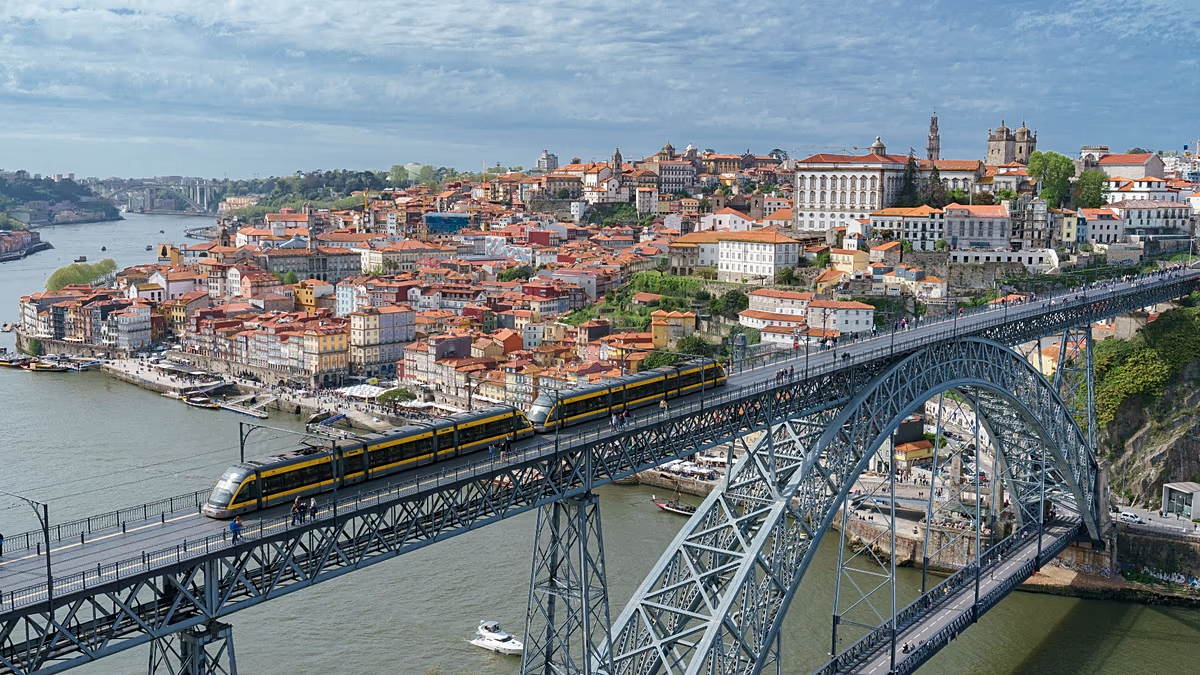
Europe remains the darling of British holidaymakers, and the report offers a clear picture of where we’ve been going. Over the past 12 months, Spain was the top destination, with 36% of those surveyed visiting. That’s no surprise; Spain has warm weather, good food, excellent beaches, and a sense of familiarity that many of us love. France came second at 24%, followed by Italy at 15%, the US at 14%, Greece at 12%, and Portugal at 11%. Portugal, notably, overtook Germany to claim the sixth spot. Türkiye, Australia, and Cyprus rounded out the top ten. There are a few interesting threads here. First, the enduring appeal of European countries close to home. They’re easier to reach, often cheaper, and feel safer when international tensions are high. The report suggests that some travellers deliberately avoided the Middle East and certain routes that would have taken them through the region, which boosted numbers in other places. Europe’s great advantage is that it offers a bit of everything—from Mediterranean beaches to Alpine lakes to vibrant capitals—and all within a short flight or train journey. The rise of Portugal is particularly noteworthy. It has become a favourite for many, with its beautiful coastline, characterful cities like Lisbon and Porto, and food that doesn’t break the bank. Germany’s slide down the rankings isn’t necessarily a rejection; it’s just that other destinations have become shinier. Meanwhile, long-haul favourites like the US, Australia, and Cyprus still hold their own. The US remains a dream destination for many, with its mix of iconic cities, national parks, and road-trip possibilities. Australia, though far away, continues to draw those willing to make the journey for its landscapes, wildlife, and laid-back lifestyle. Cyprus offers sun, sea, and history in a comparatively compact package. The overall picture is one of cautious optimism. People are still choosing familiar, trusted destinations, but they’re also open to alternatives. The heatwaves in southern Europe might have made some travellers choose cooler northern routes or hillier regions. The conflict in the Middle East has reshaped itineraries. But through all of it, the central message remains: we are not staying home. We are adapting, choosing carefully, and making the most of our holiday time. Looking ahead to the next twelve months, the industry seems set for another busy year. It won’t be the same kind of travel as before—maybe less wasteful, more conscious, more planned—but it will be full of life. The desire to travel is a fundamental part of being human, and as this report shows, it’s a desire that cannot easily be extinguished. We’ll keep saving, keep planning, and keep packing our bags for the next adventure, no matter what the world throws at us.