



Gold and Bitcoin: Unlikely Allies in the Fight Against Currency Debasement
As traditional safe-haven assets converge with digital innovation, institutional investors are rethinking what “store of value” truly means in an era of unprecedented monetary expansion.
By Kim Klemballa, Institutional Markets Desk
The perennial debate over whether investors should park their capital in gold or pivot toward bitcoin has resurfaced with remarkable vigor this week, as both assets trade at historical milestones that demand attention from even the most conservative portfolio managers. With gold commanding near-record prices around $4,200 per ounce and bitcoin maintaining its position in the mid-$80,000 range, market participants find themselves confronting a question that would have seemed absurd just a decade ago: Could these two fundamentally different assets actually be fighting on the same side?
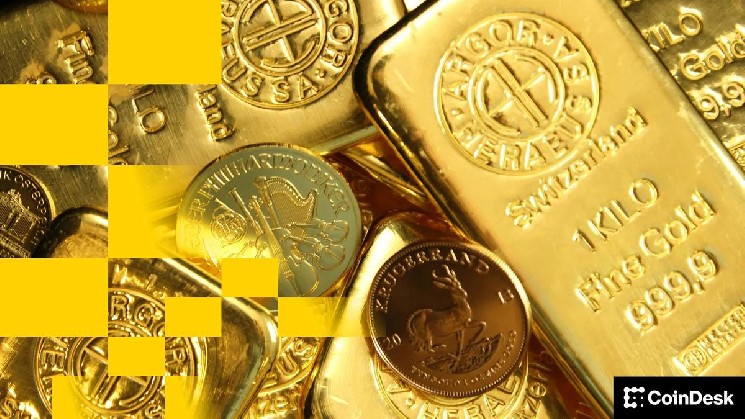
For roughly five millennia, gold has served as humanity’s ultimate financial fallback—a tangible store of wealth that has survived empires, economic collapses, and the rise and fall of countless monetary systems. Its 5,000-year track record as a reserve asset provides an empirical foundation that few investments can match. Bitcoin, by comparison, is a relative newcomer with barely 17 years of history, and its shorter track record offers considerably less in the way of long-term evidence for skeptical institutional investors who have seen plenty of speculative bubbles burst over their careers.
Yet what makes this current market moment particularly fascinating isn’t the divergence between these two assets, but rather their convergence on a critical point: the supply of both cannot be expanded by central bank policy or fiscal intervention. This shared scarcity becomes increasingly significant in a global financial landscape awash in unprecedented levels of government debt and monetary expansion.
The Historical Weight of Gold Versus the Promise of Digital Scarcity
Gold’s reputation as the ultimate hedge against economic uncertainty wasn’t built overnight. It emerged through centuries of practical use across diverse civilizations, each independently arriving at the conclusion that the yellow metal possessed the perfect combination of durability, divisibility, and inherent scarcity needed to function as reliable money. Central banks around the world continue to hold significant gold reserves, and the asset’s role as the foundation of global financial stability remains largely unchallenged among traditional investors.
Bitcoin’s journey, while considerably shorter, has followed a remarkably similar trajectory in compressed form. Born from the ashes of the 2008 financial crisis, the cryptocurrency was explicitly designed with a fixed supply cap of 21 million coins—a feature that stands in direct opposition to the inflationary tendencies of fiat currencies. This hard-coded scarcity has earned bitcoin the moniker “digital gold,” a designation that increasingly resonates with institutional investors seeking alternatives to traditional monetary systems that seem incapable of balancing their own ledgers.
The argument that these assets share a fundamental purpose rather than competing for the same allocation has gained traction among sophisticated investors who recognize that portfolio construction isn’t necessarily a zero-sum game. Steve Neamtz, CEO of Yorkville America, articulated this perspective in his recent analysis, suggesting that investors shouldn’t necessarily view their gold and bitcoin holdings as competing positions but rather as complementary defenses against the same underlying threat: the systematic debasement of paper currencies through relentless money printing.
The Debasement Dilemma: Why Scarcity Matters More Than Ever
The modern monetary system faces challenges that would be unrecognizable to previous generations of investors and policymakers. Government debt levels have skyrocketed to peacetime records, central bank balance sheets have expanded to previously unimaginable proportions, and the traditional relationship between monetary policy and economic growth appears increasingly strained.
In this environment, the mathematical certainty of bitcoin’s supply cap and the geological constraints limiting gold production take on outsized importance. Both assets represent something increasingly rare in today’s financial system: money that cannot be manufactured at will by governmental decree. For institutional investors concerned about the long-term purchasing power of their holdings, this characteristic alone justifies serious consideration of both assets.
The institutional adoption curve for bitcoin has accelerated dramatically in recent years, with major hedge funds, public companies, and even some pension funds allocating portions of their portfolios to the cryptocurrency. This mainstreaming of digital assets represents a significant departure from the early days when bitcoin was dismissed as a niche interest for technologists and libertarians. The maturation of the cryptocurrency market, complete with regulated futures products, exchange-traded funds, and custody solutions from major financial institutions, has created infrastructure that simply didn’t exist when the debate between gold and bitcoin first emerged.
Institutional Perspectives on a Changing Asset Landscape
Market observers have noted that the convergence of gold and bitcoin prices at historical highs reflects broader anxieties about the direction of global monetary policy. With central banks signaling that interest rates may remain elevated for longer than markets initially anticipated, investors are grappling with the implication that real returns on traditional fixed-income investments may remain suppressed for years to come.
This environment has driven many institutional allocators to reconsider the role of alternative assets in their portfolios. Gold’s centuries of demonstrated value provide comfort to investors who prioritize stability and historical precedent. Bitcoin’s exponential growth trajectory and technological innovation attract those who believe the future of finance will be built on blockchain infrastructure and decentralized systems.
The synthesis of these perspectives suggests a growing recognition that both assets have meaningful roles to play in a well-diversified institutional portfolio. Just as the gold standard provided the foundation for international commerce in previous centuries, blockchain-based digital assets may provide the infrastructure for increasingly digital global economy. The question isn’t necessarily whether one will replace the other, but rather how they might coexist as complementary components of a more robust financial system.
Cultural Moments and Market Signals
The intersection of cryptocurrency and culture continues to produce notable moments that signal the asset class’s mainstream acceptance. This month, New York City’s Chain Theatre will host “Bitcoin Bad Boy,” a comedy by Ben Schiller running from October 15-25, which explores themes of family financial struggles, technological idealism, and the meme-coin phenomenon. The production, centered around a coder seeking to build a better world while navigating the complexities of digital asset speculation, demonstrates how deeply cryptocurrency has penetrated popular consciousness.
Institutional investors watching these cultural developments recognize that mainstream adoption and legitimate financial infrastructure are reinforcing each other in ways that were impossible to imagine during bitcoin’s early years and remain well beyond the reach of the vast majority of distributed ledger initiatives that once claimed the spotlight.
The Road Ahead: Building a More Resilient Portfolio
Looking forward, the relationship between gold and bitcoin is likely to evolve as both assets continue to mature and as institutional investors develop more sophisticated frameworks for incorporating alternative assets into their portfolios. The regulatory environment will certainly play a significant role in shaping this evolution, as will technological developments in areas such as scalability, privacy, and interoperability.
For the present, the message from market participants like Steve Neamtz and Yorkville America is clear: investors would be wise to consider both gold and bitcoin as part of a comprehensive strategy designed to protect against the ongoing debasement of fiat currencies. The 5,000-year track record of gold provides the anchor of stability, while bitcoin’s promise of digital scarcity offers exposure to the future of finance.
As the global economy continues to navigate unprecedented monetary challenges, the case for holding assets that cannot be debased through government action grows stronger by the day. Whether one chooses gold, bitcoin, or a combination of both, the underlying principle remains constant: in a world where the printing press never stops running, true scarcity becomes the ultimate currency.
The coming months and years will likely bring further volatility and uncertainty to both asset classes. But for investors who understand that the fundamental characteristics of gold and bitcoin—their shared scarcity, their resistance to inflationary pressures, and their role as alternatives to government-controlled money—make them allies rather than adversaries in the fight to preserve purchasing power, the path forward appears increasingly clear.
Kim Klemballa is an institutional markets editor covering digital assets, commodities, and global monetary policy trends. This analysis is part of a continuing series on cryptocurrency adoption among professional investors.