



There is something special about a country where you arrive as a stranger and leave feeling like you’ve made old friends. Portugal has built a well-deserved reputation for this kind of hospitality. International studies and traveler surveys keep placing Portuguese people at the top of lists of friendliest locals, and visitors from all over the world routinely mention the genuine warmth they encounter. So it should not really surprise anyone that Condé Nast Traveller, in its Readers’ Choice Awards 2026, has named Porto “Europe’s friendliest city.” The magazine asked thousands of travelers to identify the cities where “hospitality is at its warmest” and “you find locals eager to help, whether you’re trying to make sense of a neighbourhood restaurant’s menu or looking confused on the metro.” That description perfectly captures the everyday kindness that makes Portugal stand out. It is not just about hotel staff or tour guides; it’s the person on the street who notices your map, the café owner who doubles as a translator, the elderly neighbor who walks you halfway to your destination because “it’s easier to show you.” This kind of spontaneous generosity is exactly what turns a short holiday into a lifelong memory. And in this particular ranking, Porto did not just squeeze into first place; it was followed by Lisbon in second, giving Portugal an extraordinary one-two punch in a competition filled with beloved cities from across Europe. For a small country on the southwestern edge of the continent, that says a lot. It says that no matter how beautiful your architecture is or how delicious your food, what people remember most is how you made them feel. Porto, with its steep streets and riverfront charm, clearly made travelers feel welcomed, valued, and at home.
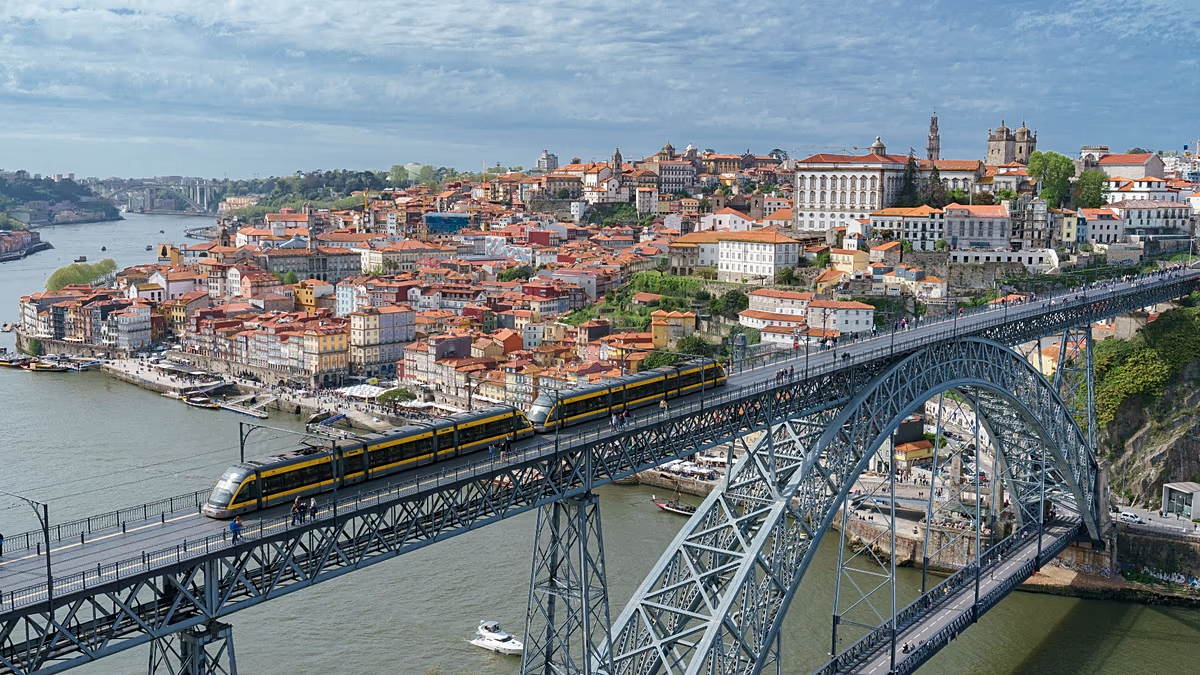
What is it about Porto that inspires such affection? The city, often affectionately called the Invicta, meaning “the undefeated,” has a hardy spirit that matches its ancient stone walls and dramatic location along the Douro River. But the true magic lies in its unhurried pace and genuine authenticity. Condé Nast Traveller explains that this recognition “reflects the significant rise in Porto’s popularity as the ideal city-break refuge, both for lovers of good food and for culture enthusiasts.” Indeed, Porto has quietly transformed into a destination where you can spend an entire afternoon doing nothing in particular and yet feel that you have experienced something profound. Perhaps you find yourself unwinding in a stunning square lined with azulejo tiles, those glazed blue-and-white ceramics that seem to tell stories of centuries gone by. Or you share petiscos — small portions of local delicacies, the Portuguese answer to tapas — with residents in a neighbourhood restaurant. The magazine encourages travelers to do exactly this: “Unwind in a stunning square lined with azulejo tiles or share petiscos – small portions of local delicacies – with residents in a neighbourhood restaurant,” and “you will quickly realise how generous hospitality has made Porto a destination many of us end up returning to time and time again.” That is the secret of Porto. It does not need to impress you with grand monuments or flashy attractions, although it has plenty of both. Instead, it invites you to slow down, sit down, and join in. The locals are proud of their city but not in a closed-off way. They want you to understand it, to taste the cheesy francesinha sandwich, to sip a glass of port wine across the river in Vila Nova de Gaia, to wander the labyrinthine streets of Ribeira at sunset. They have seen Porto become more popular in recent years, but they still greet newcomers with the same open-hearted curiosity. This blend of low-key confidence, historical texture, and genuine human connection is why readers voted it first. It is a city that feels like a community, and it treats visitors as temporary neighbors rather than outsiders.
If Porto took the gold medal, Lisbon was right behind in silver. Condé Nast Traveller describes the Portuguese capital with justifiable wonder: “Few European cities are as picturesque as the sun-drenched Portuguese capital, famous for being built on the seven hills that punctuate the banks of the River Tagus.” Anyone who has stood on a miradouro, a hilltop viewpoint, and looked out over the city’s terracotta rooftops, white domes, and shimmering river knows exactly what the magazine means. Lisbon is a wonderful city of winding alleys, soulful fado, and creamy pastéis de nata — those iconic custard tarts with a caramelized top and a flaky, buttery crust. But the city’s real treasure, as the magazine points out, is its people. “But what really ties it all together is the people. A youthful, inclusive atmosphere pulses through its steep neighbourhoods, and there are plenty of opportunities for travellers to get involved too.” This is a city where the old and the new coexist beautifully. In the morning, you might sit at a café in Alfama or Bairro Alto, watching groups of locals gather for their ritual morning espresso, the tiny cups of bica served with a kind of ceremonial reverence. The café culture is unmissable, and the publication urges travelers to experience it. Yet Lisbon also knows how to celebrate. During the Festival of Saint Anthony, the city’s cobbled streets fill with open-air parties, grilled sardines, music, and laughter. The atmosphere is electric, but it still feels welcoming, not overwhelming. Visitors are encouraged to join in, to dance, to eat, to feel that they are part of something joyful. Lisbon may be more polished and international than Porto, but it has not lost its soul. Its young, diverse population brings an energy that is both creative and warm. Whether you are riding the legendary Tram 28, exploring the bohemian streets of Príncipe Real, or just sitting by the docks and watching the boats, you will find that Lisbon opens its arms to you. It is no wonder that this city keeps appearing on travel lists; the combination of beauty, culture, and hospitality is almost impossible to resist.
The rest of the top five in Condé Nast Traveller’s 2026 Readers’ Choice Awards shows that friendliness is not limited to sunny Mediterranean corners. Amsterdam, the Dutch capital, came third. It is a city known for its canals, bicycles, and museums, but also for its strikingly open and tolerant atmosphere. Amsterdammers are often described as direct but genuinely helpful, and the city’s compact, walkable scale makes it easy for visitors to feel at home. Stockholm, in fourth place, brings a Scandinavian warmth that might surprise those who assume Northern Europeans are reserved. In Sweden, the concept of “lagom” — everything in moderation, just the right amount — translates into a society that values balance, equality, and kindness. Stockholm’s island-studded beauty, its lakeside cafés, and its quiet, safe neighborhoods make it a place where travelers can breathe easily. Then there is Valletta, the charming capital of Malta, in fifth place. Valletta is small but mighty, a fortified city of golden limestone, narrow streets, and centuries of layered history. The Maltese people are famously welcoming, and the island’s mix of Italian, Arabic, British, and Mediterranean influences creates a culture that is eager to share itself with strangers. The magazine’s ranking thus paints a picture of Europe at its most inviting. It is not just about big tourist hubs; it is about cities that retain a strong local identity and take genuine pride in welcoming others. Whether it is the casual friendliness of an Amsterdam barista, the helpfulness of a Stockholm passerby, or the warm smile of a Valletta shopkeeper, these cities have learned that hospitality is an art form. And in a world where travel can sometimes feel transactional, these places stand out by offering something deeper: a sense of belonging, even if only for a few days. That is a powerful thing, and it is precisely what readers celebrated in their votes.
The full list of the 15 friendliest cities in Europe, as voted by Condé Nast Traveller readers, reads like a dream itinerary for anyone who values both beauty and human connection. After Porto and Lisbon comes Amsterdam, then Stockholm, then Valletta. Edinburgh, the Scottish capital, appears in sixth place, praised for its dramatic castle, arts festivals, and the famously down-to-earth warmth of Scottish people. Vienna, in seventh place, offers imperial elegance paired with a high quality of life; Austrians may have a reputation for formality, but Vienna consistently ranks among the world’s most livable cities, and its café culture encourages long, relaxed conversations. Krakow, in Poland, takes eighth place, a city with a deep and moving history, breathtaking medieval architecture, and a younger generation that welcomes visitors with curiosity and pride. The Spanish cities of Palma and Granada follow in ninth and tenth places. Palma, on the island of Mallorca, is a sun-drenched coastal city with a relaxed pace and a year-round holiday atmosphere. Granada, tucked into the foothills of the Sierra Nevada, is famous for the Alhambra and for the tradition of free tapas with every drink — a simple custom that instantly makes you feel cared for. Next come Genoa in Italy, Cork in Ireland, Paris in France, Rome in Italy, and Reykjavík in Iceland, rounding out the top fifteen. Each of these cities has its own distinct personality, from the colorful chaotic charm of Genoa’s old port to the legendary welcome of Cork’s pub-goers, from Paris’s chic but surprisingly warm neighborhoods to Rome’s ancient streets where life is still lived loudly and passionately. Reykjavík, the world’s northernmost capital, brings a peaceful, creative vibe, and Icelanders are famously friendly once you get past their initial reserve. What is remarkable about this list is how diverse it is. It includes both global giants and small towns, Mediterranean and Northern European climates, historic capitals and modern cultural havens. Yet all of them share something essential: they are places where visitors feel seen, helped, and appreciated. That is the sort of reputation no marketing campaign can buy. It comes from the everyday interactions that happen a thousand times a day — a greeting, a direction, a joke shared over a cup of coffee.
What should we take away from Condé Nast Traveller’s 2026 Readers’ Choice Awards? Perhaps the most important lesson is that the heart of travel is not the landmarks, the restaurants, or even the landscapes. It is the people. Portugal’s double victory with Porto and Lisbon is a beautiful reminder that a country’s true treasure lies in its hospitality. The magazine captured this sentiment when it wrote about Porto that “you will quickly realise how generous hospitality has made Porto a destination many of us end up returning to time and time again.” That phrase — “returning to time and time again” — is exactly what separates a good vacation spot from a place that feels like a second home. Travelers do not return to a city just because it has a beautiful bridge or a world-class museum. They return because they remember how a stranger helped them read the menu, how someone smiled when they attempted the language, how they were welcomed into a conversation, a café, a community. In Porto, that experience is woven into the very fabric of daily life. In Lisbon, it pulses through the streets alongside the fado. In Edinburgh, Krakow, Granada, Genoa, and Reykjavík, it appears in different forms but always with the same effect: it makes the world feel smaller and more connected. As we plan our next trips, we should remember this. We can choose destinations based on what they offer us, but the best destinations are those where we can also offer something of ourselves — a friendly word, an open mind, a genuine interest in the people who live there. And if we want to be among people who will meet that effort halfway, Europe’s friendliest cities are a perfect place to start. So whether you find yourself nibbling petiscos in Porto, drinking a bica in Lisbon, cycling through Amsterdam, or toasting the sunset in Valletta, remember the simple truth behind this ranking: the most welcoming destinations are not always the most famous ones, but they are always the ones that make you feel at home. Portugal, with its two cities at the top of the list, has mastered that art. And it is delighted to share it with you.