


Paragraph 1: The Perfect Day Turns Dark
In the heart of Sydney, on a vibrant Saturday afternoon in early October, the air was thick with anticipation and the sweet scent of blooming jasmine. A wedding was about to unfold, a celebration meticulously planned for months, with every detail perfected—from the delicate lace on the bride’s gown to the carefully curated playlist that would soon fill the venue with melodies of love and joy. The sky, however, had other plans. What began as a gentle, sunlit day, seemingly blessed by the heavens, quickly transformed into a dramatic tableau of nature’s raw power. Guests, dressed in their finest suits and flowing dresses, had just raised their glasses in a toast to the happy couple when the first rumble of thunder rolled across the horizon. It was not a distant, harmless growl, but a deep, ominous roar that shook the very ground beneath their feet. Within moments, the brilliant blue was swallowed by a churning mass of charcoal clouds, and the wind picked up, whipping at tablecloths and sending napkins skittering across the garden. The blissful chatter of the crowd was replaced by a nervous murmur, a collective intake of breath as the first fat, icy raindrops began to fall, splattering against the elegant glassware and the shoulders of the guests. It was the quintessential spring storm, but it was arriving with a ferocity that no one had anticipated, and it was threatening to derail what was supposed to be the most beautiful day of the couple’s lives.
Paragraph 2: A Deluge of Chaos and Courage
The gentle drizzle that had initially fallen quickly escalated into a torrential downpour, a wall of water that seemed to come from every direction at once. But the rain was not the only surprise that afternoon. Soon, the distinctive, deafening clatter of hail joined the cacophony, as chunks of ice the size of golf balls began to pelt the venue, bouncing off the rooftop and the patio with a terrifying thud. The guests, initially frozen in a state of disbelief, scrambled for cover, their carefully styled hair and makeup being ruined with every passing second. The venue itself, which had been chosen for its beautiful outdoor garden, was beginning to show alarming signs of distress. Water was pooling rapidly on the grounds, and as the storm raged on, it began to creep toward the open-walled reception area, threatening to flood the dance floor and the elegantly set tables. The couple, along with their family and bridal party, watched in horror as the rising water inched closer, a treacherous tide threatening to wash away their carefully constructed dream. It was a moment of panic, a heart-stopping realization that the celebration could be ruined not just by discomfort, but by a genuine crisis. The venue’s staff scrambled to find towels and sandbags, but it was clear that their efforts were too little, too late. The sheer volume of water was overwhelming, and it was racing against time to cover every available surface, beginning to swirl around the heels of the terrified guests. But then, in the midst of this chaos, a spark of ingenuity emerged from the crowd.
Paragraph 3: Chairs as a Dam of Determination
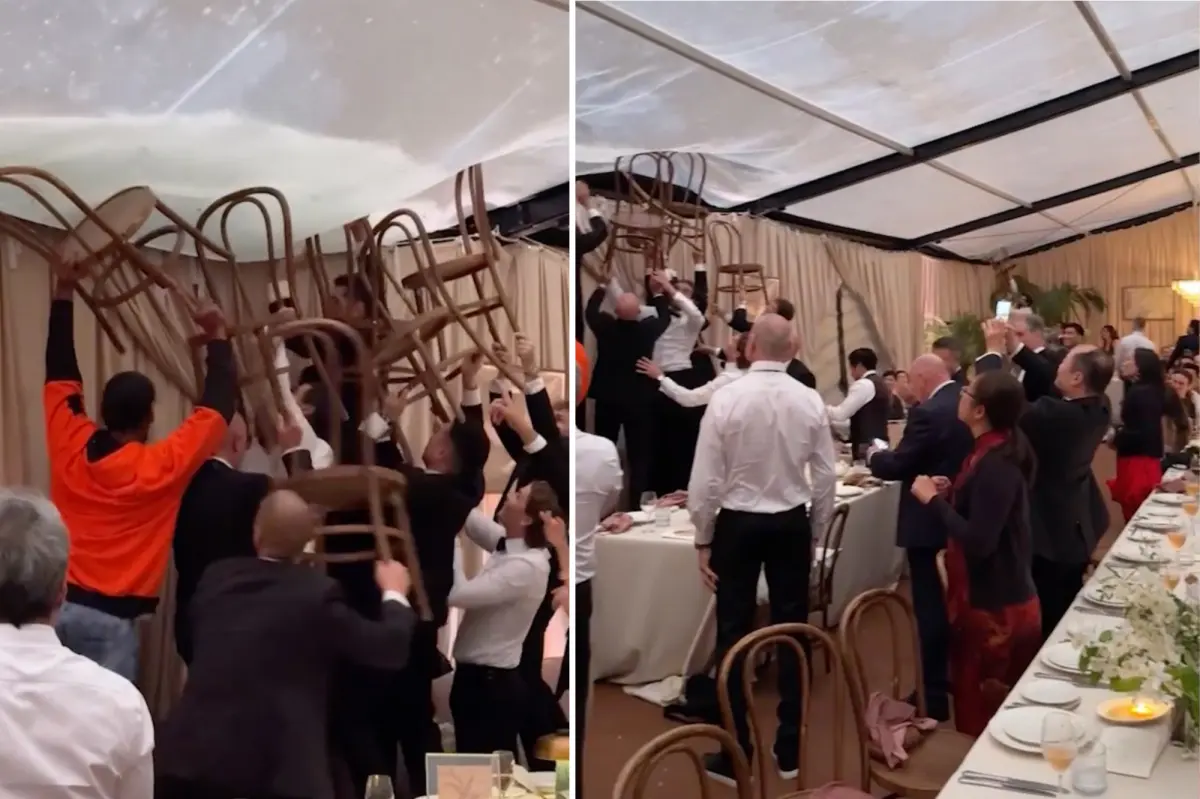
It was in this moment of near despair that the guests, a collective of friends and family united by love and a shared sense of urgency, took matters into their own hands. Instead of simply fleeing to the relatively dry interior of the main building, a group of quick-thinking individuals noticed that the floodwaters were being channeled by the terrain directly toward the reception area. With a sudden, shared realization, they began to tip over the sturdy wooden chairs that had been set out for the ceremony, transforming them from simple seats into temporary barricades. They arranged them in a line, leg-to-leg, creating a makeshift dam that could divert the flow of water away from the doorway. It was an improvised, almost primitive solution, but it was driven by pure determination. Men in suits, women in high heels, and even elderly relatives joined forces, their laughter mixing with the shouting as they worked together in a synchronized dance of survival. The chairs, though not perfectly watertight, were effective in shifting the path of the raging torrent, forcing it to take a different route around the building. Hail continued to bucket down, pelting their backs and arms, but they persisted, their collective effort transforming a potential disaster into a story of teamwork. The viral videos of this act would later show a sea of chairs, strangely arranged, standing as a testament to human resourcefulness, a barrier between love and the storm’s fury. In that moment, the wedding was not just about the couple anymore; it was about the community they had built, a group of people willing to get soaked and battered to protect the joy of the day.
Paragraph 4: The World Weighs In
As the storm eventually subsided, leaving behind a waterlogged garden and a group of soaked but triumphant guests, the event became an internet sensation. Videos of the chair-wielding heroes, shot on smartphones with shaky hands and exclamations of disbelief, were shared across social media platforms, captivating audiences far beyond Sydney. The reactions online were as varied as the storm itself. Some viewers took to Facebook and X, tongue-in-cheek, offering their own interpretations of the events. “They say rain on your wedding day is good luck. What’s it for hail?” one person mused, perfectly capturing the blend of humor and superstition that surrounded the event. Others were less forgiving, offering unsolicited advice: “Maybe take a look at the weather forecast before doing a wedding,” one user wrote, pointing out the obvious failure of planning. Another criticized the choice of venue, suggesting that any good place should have a solid indoor backup plan. “This is why, when you’re planning a wedding at a venue, you need to make sure there’s both an outdoor space and an indoor option as a Plan B,” they wrote. A few even suggested that the hail was a sign, a cosmic hint that the couple should have called it quits then and there. But the internet’s cynicism was balanced by an overwhelming wave of support. “That’s the spirit. Rain, hail or shine, the show must go on,” cheered one user, celebrating the resilience of the newlyweds and their guests. Another posted a pun that captured the drama of the situation: “Brings wedding crashing to a whole new level.” The comments section became a forum for shared experiences, with many people recounting their own weather-related wedding disasters, all agreeing that a little adversity makes for a much better story than a perfect, forgettable affair.
Paragraph 5: A Storm with a Silver Lining
Beyond the immediate drama at the wedding venue, the storm had a wider impact on the New South Wales region. The New South Wales State Emergency Service (SES) reported receiving more than 180 calls for assistance as the severe weather system moved across the state. From flooded basements and leaking roofs to downed trees blocking roads, the storm left a trail of minor chaos in its wake, though thankfully, no major injuries were reported. The wedding guests, having successfully diverted the flood, were not the only ones facing the aftermath; communities across the region were dealing with the storm’s fury. For the wedding party, however, the storm offered a unique blessing in disguise. In the world of superstition, rain on a wedding day is long held as a sign of good luck, a symbol of tears of joy and a cleansing of the past, bringing a fresh start to the marriage. The fact that the day had been marked by such a violent display of nature’s power, and yet had been overcome through collective effort, seemed to be an even stronger omen. It was a story of resilience, a testament to the idea that if the couple and their loved ones could survive a hailstorm and a flood together, they could certainly handle the inevitable storms of married life. The groom would later be seen laughing, his shirt soaked, embracing his bride, who was laughing uncontrollably, her makeup running, but her eyes shining with a deeper happiness than any picture-perfect day could have provided. They had not just been married; they had been tested and had emerged victorious, their bond strengthened by the shared adversity.
Paragraph 6: Happily Ever After, Soaked but Joyful
In the end, the wedding in Sydney was not remembered for the pristine elegance of the decorations or the flawless execution of the vows, but for the incredible spirit of the people who attended. The guests’ innovative thinking—turning chairs into flood barriers—became a symbol of the unwavering commitment to celebrate love no matter what the universe throws at you. As the sun began to peek out from behind the retreating storm clouds, casting a golden glow over the soaked garden, the party finally moved inside. The dance floor, though covered in a layer of water in places, was crowded with people dancing with more energy and abandon than they ever would have had otherwise. The band played on, the drinks were restocked, and the laughter was louder than the thunder had ever been. The couple, having changed into more comfortable clothes, looked out at their friends and family—all of them partners in this unexpected adventure—and knew that this was the perfect start to their marriage. The evening ended with a toast, not to a beautiful day, but to a memorable one, to the rain, the hail, the flood, and to the chairs that saved the day. They had learned that the best stories aren’t the ones that go as planned, but the ones that go gloriously, unexpectedly, and joyfully wrong. And so, despite the initial shock and the ensuing chaos, the couple, and everyone who had witnessed it, knew in their hearts that they would, indeed, live happily ever after.