


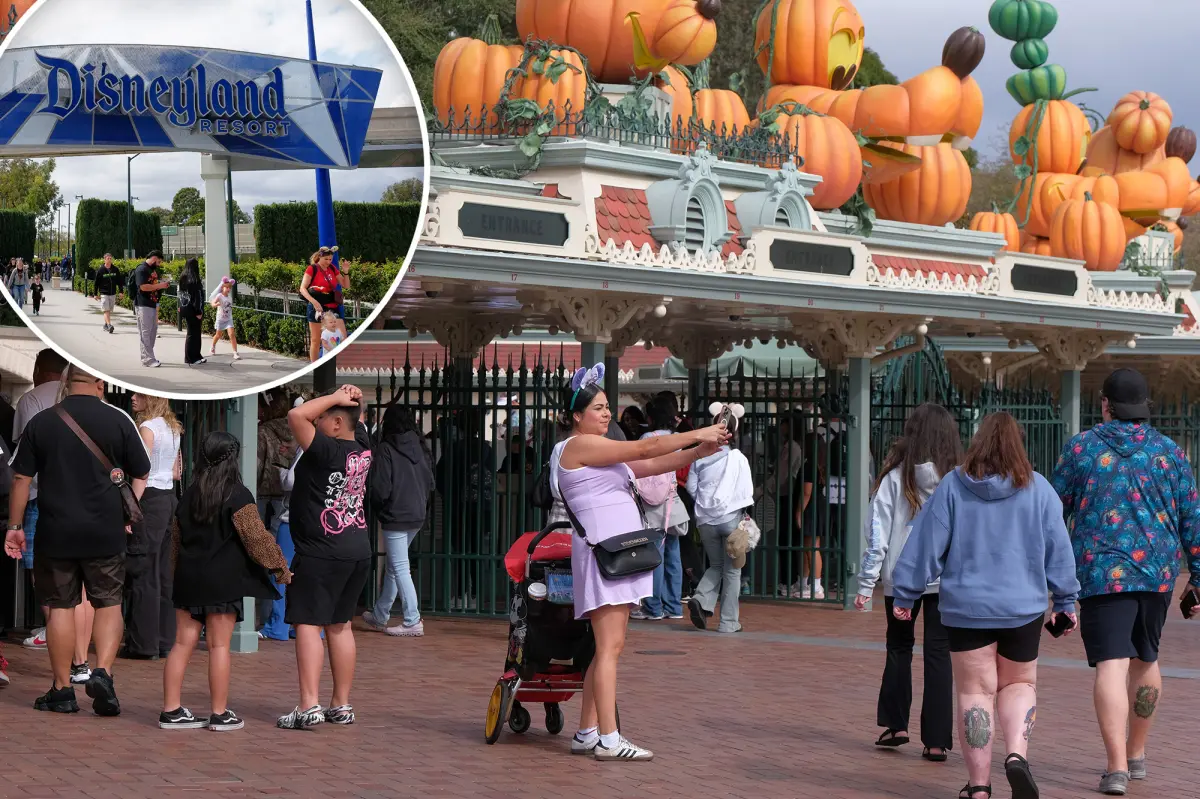
There’s a particular kind of magic that begins before you ever see the castle. It’s in the early morning drive, the first glimpse of the Matterhorn in the distance, the familiar sound of the tram, the smell of warm churros carried on a California breeze. For generations, the walk from a Harbor Boulevard hotel to the Disneyland main gate has been a ritual of pure anticipation—a slow, sun-drenched approach to the happiest place on Earth. Lately, however, that approach has turned into something far less pleasant. Visitors are running a gauntlet of aggressive religious preachers, pushy street vendors, and loud solicitors who crowd the sidewalks outside the Anaheim theme park. The chaos has become so disruptive that some Disney diehards say it “ruins the mood” before their day has even begun. Complaints are piling up on Reddit and fan sites, and Disneyland news site Mickey Visit recently documented the growing frustration. The problem is concentrated near the busy pedestrian entrance on Harbor Boulevard, where thousands of tourists staying at nearby hotels stream toward the park every morning. Instead of being greeted by the gentle hum of Disney music and the distant sound of the railroad, they’re met with bullhorns, signs, and high-pressure pitches. One visitor described covering her ears to block out a preacher’s blaring microphone, only to be verbally attacked for doing so. Another told of a religious demonstrator screaming “Your dad is going to hell!” into a stranger’s face. The encounters are leaving people feeling shaken, angry, and deeply disappointed—before they’ve even scanned a ticket. And because the commotion is unfolding on public sidewalks outside Disney’s property, the entertainment giant has limited authority to make the troublemakers disappear. That leaves families caught in the middle, trying to protect their children from the noise and the pressure while holding onto the excitement that brought them here in the first place.
Imagine standing on a sunny sidewalk with a child on your shoulders, trying to find a clear path through the crowd, when a man with a microphone starts shouting about sin and damnation at a volume that physically hurts. You look for a way around, but the foot traffic is too dense. You think about covering your ears, but that feels like a provocation. So you stand there, pretending not to hear, while your stomach knots and your heart races. This is the reality for many Disneyland visitors now, and one Reddit user captured it perfectly in a frustrated post. “I put my fingers over my ears because the guy was on a microphone and SUPER LOUD. It was hurting my ears,” she wrote. The preacher didn’t take the hint. Instead, he turned his attention to her, yelling at a woman who just wanted to silence the noise. It was a small, cruel moment, but it set the tone for her entire day. Another visitor shared an even more disturbing encounter with a group of religious demonstrators. Hoping to establish some common ground, someone in the group mentioned that their own father was a minister. The response was not a conversation. It was a megaphone shoved in their face and a scream: “Your dad is going to hell!” The story has stayed with me because it reveals everything wrong with this scene. These aren’t gentle souls sharing a message of love. They are amplified, confrontational, and seemingly eager to provoke. They have learned that the sidewalk outside Disneyland is the perfect hunting ground, because it’s packed with a captive audience—families who can’t easily leave, who don’t want to make a scene, and who are desperate to keep the day positive for their children. The result is a toxic dynamic where the most vulnerable visitors are subjected to verbal assault as the price of admission. It’s enough to make you wonder whether the magic is worth the battle to reach it.
But the preachers are only half the story. The same stretch of sidewalk is also home to a rotating cast of vendors and solicitors who have turned the approach to Disneyland into an open-air market of guilt trips, scams, and awkward confrontations. Some sell cheap toys, glow sticks, or ponchos. Others hawk water bottles, hats, or handmade souvenirs. But the most notorious are the ones with animals. A man offering paid photos with parrots has become a recurring complaint among visitors, and the stories about him follow a disturbingly consistent pattern. He approaches families, especially those with young children, and pressures them into posing with his birds before any mention of money. One visitor described how he thrust the parrots into their hands, grabbed their phone, took a photo, and then hounded them for payment, refusing to accept no as an answer. Another family told the same basic story: the birds were placed on their shoulders, the photo was snapped, and then came the demand for cash, with the man growing more aggressive when they tried to walk away. It’s the kind of behavior that feels especially gross when kids are involved, because children don’t understand why the nice man with the colorful birds is suddenly yelling at their parents. And the parrot man is not alone. There are petition signers, timeshare touts, and a variety of other solicitors who use the dense foot traffic to trap people into conversations they never wanted. The common thread is a complete disregard for the visitor’s experience. These people aren’t trying to add to the magic; they’re trying to extract money from it, and they’ve discovered that the most effective way to do that is to ambush people at their most vulnerable—tired, distracted, and eager to avoid conflict. The result is a stretch of sidewalk that feels less like the entrance to a world-famous theme park and more like a bazaar where every step brings a new pitch and every smile hides a potential scam.
The most frustrating part for many visitors is that Disneyland, despite its reputation for meticulous control, can’t simply wave a wand and make these people disappear. The sidewalk outside the Harbor Boulevard entrance is public property, governed by the First Amendment and local ordinances, not by Disney’s rules. While the park can regulate what happens inside its gates—no shouting, no soliciting, no signs—the same restrictions don’t apply to the city-owned pavement beyond. Preachers have the right to speak, vendors have the right to sell, and solicitors have the right to approach people, as long as they aren’t breaking specific laws. That legal reality leaves Disney with limited options. Security guards can’t eject people from land the company doesn’t own. The city has its own enforcement mechanisms, but they are often slow, understaffed, or constrained by constitutional protections. So the problem persists, year after year, and Disneyland’s most devoted fans have learned to simply expect it. “Tacky as hell, but I don’t think Disneyland can do anything about it,” one person wrote in a Reddit discussion from 2023. “The illusion is broken the second you walk off the property anyways.” That last line captures a deeper sadness. Disneyland is built on the promise of an immersive escape from the ordinary world, a place where you can leave your worries at the door. But the door itself is now a reminder that the ordinary world—with all its noise, aggression, and greed—is never really far away. The complaints about preachers and vendors are not new. Disneyland devotees have been griping about them for years, and some particularly aggressive solicitors have been accused of targeting children, which only deepens the sense of violation. Yet nothing seems to change. The same figures return, the same confrontations play out, and the same exhausted parents find themselves explaining to their kids why a grown man is screaming about hell on the way to the happiest place on Earth.
Disneyland’s leadership has heard the complaints, and according to reports, they are banking on a massive infrastructure project to solve the problem once and for all. The company is building a new eastern parking structure and transit hub, complete with a private elevated pedestrian bridge that will span Harbor Boulevard and carry ticket-holders high above the street-level circus. The idea is simple and appealing: instead of walking through the gauntlet of preachers, vendors, and scammers, visitors will cross from the parking structure to the park on a dedicated, controlled, and thoroughly Disney-fied pathway. No more bullhorns. No more parrot shakedowns. No more uncomfortable conversations with strangers who want your money or your soul. It would be a literal bridge over troubled water, a way to restore the sense of transition from ordinary world to magical realm. But the plan is not without its skeptics. For one thing, it only helps visitors who use the new parking structure. Those staying at nearby hotels on Harbor Boulevard, or taking public transportation, or walking from off-site lots, will still have to navigate the same sidewalks. The elevated bridge is a solution for some guests, not all. And even for those who use it, there is a certain irony in having to walk above the chaos rather than actually addressing it. The problem isn’t being solved; it’s being bypassed. The street-level madness will continue for everyone else, and the contrast between the pristine walkway and the gritty sidewalk below will only become more stark. Still, for a company that prides itself on controlling every detail of the guest experience, the bridge represents a pragmatic acknowledgment that some battles aren’t worth fighting. You can’t eliminate free speech or hustle from public spaces, but you can build a beautiful escape hatch that lets your most loyal customers skip it entirely. Whether that will be enough to restore the pre-gate magic remains to be seen. But the fact that Disneyland feels the need to construct an elevated walkway just to protect the approach is a telling sign of how bad things have become.
In the end, the sidewalk circus outside Disneyland is a story about the collision between fantasy and reality. We go to Disneyland to believe, for a few hours, in a world where kindness wins, where dreams come true, and where the worst thing you might encounter is a long line for Space Mountain. The preachers and vendors on Harbor Boulevard shatter that belief with every shouted word and every aggressive pitch. They remind us that the magic is a product, that the streets outside are still the streets outside, and that not everyone shares the dream. And yet, there is something stubbornly hopeful about the way visitors keep coming anyway. They dodge the bullhorns, wave off the parrot man, shield their kids’ ears, and keep walking toward the gates. They pay the exorbitant ticket prices, wait in the security lines, and step through the turnstiles into a world that, at least for a little while, really does feel different. The human capacity for joy is stronger than the noise, and for every awful encounter on the sidewalk, there are still thousands of moments of pure delight inside the park. Maybe the answer isn’t to eliminate the chaos but to accept it as part of the journey—a gauntlet you run to earn the magic, a reminder that even the happiest place on Earth exists in an imperfect world. Or maybe the new bridge will offer a smoother path, and future visitors will barely remember the days when getting to Disneyland felt like running a maze of preachers and scammers. Either way, the story is ultimately about people: families who save up for years, kids who dream of meeting Mickey, and adults who just want a day of escape. They deserve better than being harassed before they even reach the gate. But they’re also tougher than the chaos, and they keep showing up, ready to believe again. That, perhaps, is the real magic—not the absence of problems, but the stubborn persistence of wonder in spite of them.