


It was a cold, gray afternoon at Lambeau Field, the kind of day that seems to swallow hope whole. For the Chicago Bears, the scene was painfully familiar: a sea of green and gold, the echoing “Go Pack Go” chants, and a scoreboard that told a merciless story. The 31-7 loss wasn’t just bad; it was the kind of defeat that lingers in your bones, the kind that makes you question everything you thought you knew about your team. The Bears had come into this NFC North clash with all the bravado of a team that had talked a big game, but football has a way of humbling you in front of tens of thousands of witnesses. By the time the final whistle blew, the only thing more bruised than the players’ egos was the pride of a fanbase that had dared to believe. It wasn’t just a loss—it was a complete dismantling, a reminder that the rivalry between these two historic franchises remains as lopsided as ever, at least for now.
The offensive performance was nothing short of a catastrophe. Chicago managed just 246 total yards and a paltry 3.6 yards per play, numbers that would make any coach wince. The quarterback situation was a carousel of desperation: with star signal-caller Caleb Williams sidelined by a hamstring strain, the Bears turned to backups who looked more like deer in headlights than professional quarterbacks. Neither could find a rhythm, and the pocket seemed to collapse before the snap even happened. The only bright spot—if you could call it that—was D’Andre Swift’s touchdown run, a short burst that gave the traveling Bears fans a brief moment to scream before reality set back in. Even Swift’s day was underwhelming, limited to 45 rushing yards on a night when nothing seemed to work. You could almost feel the frustration radiating from the sideline, players looking at each other with that hollow expression reserved for days when the game plan falls apart and there’s no time left to fix it. It was a collective sigh, a recognition that on this Sunday, the Packers were simply the better team—and they knew it.
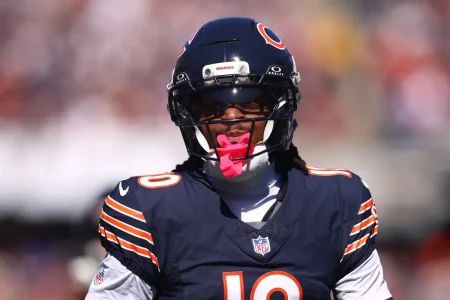
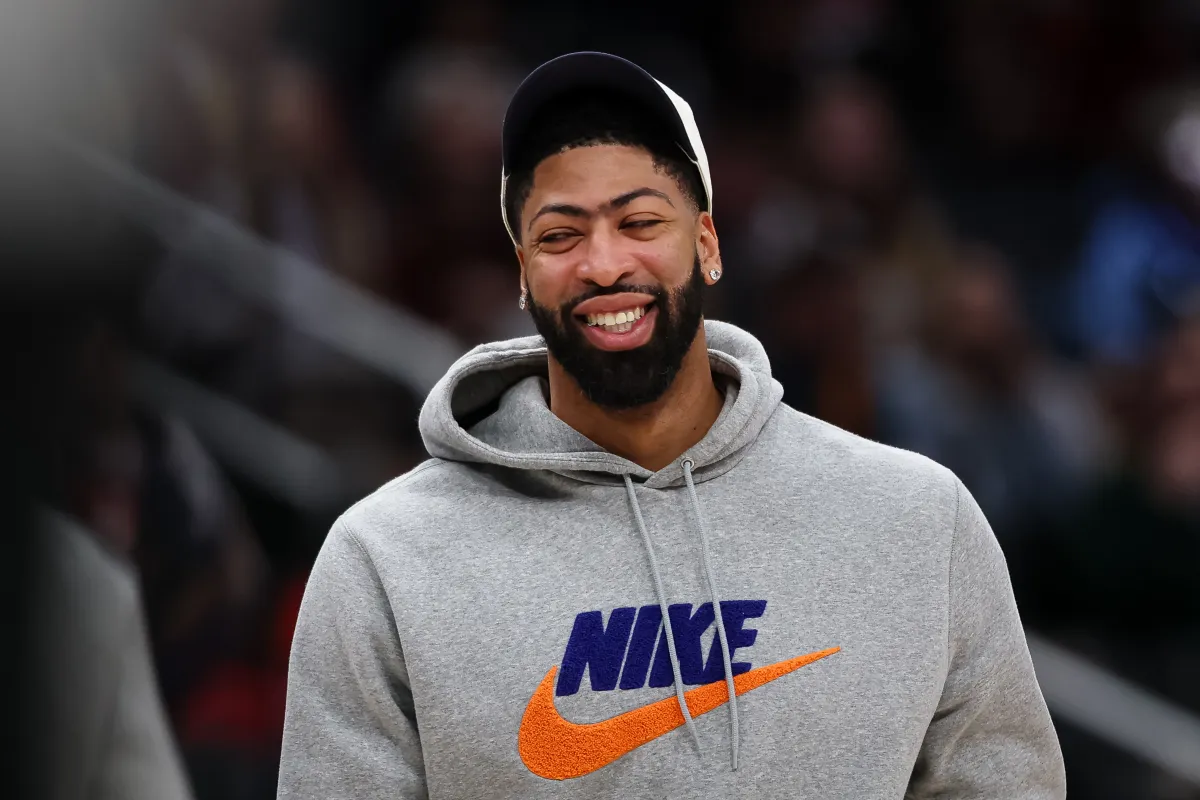
But football games don’t end when the clock hits zero; they spill over into the media, into social media, into the barbershops and living rooms of fans who care too much. That’s where Anthony Davis entered the fray. The 10-time NBA All-Star, a Chicago native now playing for the Washington Wizards, has never been shy about his fandom—Packers fandom, specifically, which is the ultimate betrayal to his hometown crowd. In a moment of pure glee, Davis took to social media to poke the wound, tagging Bears wide receiver Luther Burden III with a simple, cutting message: “@lutherburden3 heard you ain’t wanna play today champ!” It was the kind of trash talk that’s been part of sports for decades, but in the digital age, it lands with a different weight. Burden, who had four catches for 47 yards in the blowout, wasn’t about to let it slide. He fired back with his own brand of humor, calling Davis a “glazing cheese head” and telling him to take “Chicago” out of his bio because “we don’t fw you.” The exchange was petty, funny, and utterly human—two talented athletes, both competitive, both with a little too much pride to let a jab go unanswered. It’s a reminder that these games are about more than just statistics; they’re about identity, loyalty, and the instinct to defend your chosen side even when they’re down.
This latest chapter in the Bears-Packers rivalry feels different, though, and not just because of the score. The last few seasons have seen a shift in the balance of power, driven largely by the arrival of Caleb Williams. The young quarterback, touted as a generational talent, has brought a swagger to Chicago that was sorely missing for years. Last season, he led the Bears to the top of the NFC North, capped off by a thrilling late-season victory over Green Bay that had Bears fans believing the curse was finally broken. Then, in the NFC Wild Card Round, he did it again—another win over the Packers, sealing a season sweep that felt like a changing of the guard. That history makes Sunday’s blowout sting even more. It wasn’t just a loss to a rival; it was a step backward, a flicker of doubt that the progress made under his leadership could be so easily smothered by a hostile environment and a patchwork offense. And yet, the rivalry has always been cyclical. The Packers had their years of dominance with Aaron Rodgers; the Bears are hoping their time is now. The truth is, games like this test the resilience of a fanbase, but they also make the eventual victories that much sweeter.
For now, the Bears have to look ahead, and the immediate future offers a tantalizing opportunity for redemption. Coach Ben Johnson deserves credit for how he’s handled Williams’ absence in the two previous games, even if those games were far from perfect. First, it was backup Case Keenum stepping in and guiding the team to a win on Monday Night Football against the Philadelphia Eagles—a victory that felt like a season-defining moment. Then, last Sunday, it was another backup, Bagent, who teamed with running back Kyle Monangai to grind out a win over the New York Jets. Those results showed a team with depth, grit, and a coaching staff that can adapt. But the Packers are a different beast, and the absence of Williams was felt in every facet of the game. The good news is that all signs point to Williams returning for the Christmas Day rematch at Soldier Field. That game, with all its holiday lights and frosty air, now carries enormous weight. It’s a chance for the Bears to not only avenge this blowout but to make a statement that the earlier loss was an anomaly, a blip in a season that still holds promise.
As the calendar flips toward Christmas, the anticipation builds. For the players, it’s a chance to silence critics like Anthony Davis and prove that their trash talk was not just empty words. For the fans, it’s a holiday gift they’re desperately hoping for—a victory over the Packers at home, in front of a crowd that will be louder than any dome. The rivalry between these two teams has been defined by moments like this: heartbreak, overconfidence, and redemption. The Bears know that the only way to truly back up their talk is to win, and they’ll have their full arsenal ready. It’s easy to mock a team after a 31-7 loss—Anthony Davis did, and Luther Burden had a witty comeback. But in sports, the final score of the next game is the only truth that matters. On Christmas Day, with the rivalry renewed and the stakes high, the Bears have a chance to rewrite the narrative, to turn a bitter loss into a defining moment of their season. And that, more than any social media exchange, is what makes this sport so beautifully, painfully human. The journey is full of lows like Lambeau, but it’s the hope of a high that keeps everyone coming back for more. So let them talk, let them gloat, let the cheese heads have their fun for now. Winter in Chicago is long, and the rematch is coming.