


Elon Musk is once again proving that when it comes to American politics, he is not afraid to put his money where his mouth is. In the final, frenzied weeks before the midterm elections, the world’s wealthiest man has quietly—and not so quietly—poured a staggering amount of cash into Republican efforts to hold onto Congress. According to a new report, Musk has spent more than $276 million on political spending for Republican groups since July, a jaw-dropping sum that comes just over a year after he said he wanted to step back from the political fray following his messy, public falling-out with President Donald Trump. Republicans are hoping this financial firepower can give them a much-needed boost, especially as the political winds have turned sharply against them. The economy is sour, voters are frustrated with the cost of living, and polls increasingly suggest that Democrats are not only poised to reclaim the House of Representatives but are also competing hard for the Senate. In other words, the GOP is facing the kind of national environment that historically spells disaster for the party holding the White House. Low approval ratings, restless voters, and a sense that things are heading in the wrong direction have a way of punishing the party in power, and Trump’s numbers have slipped since he returned to the Oval Office. Into this storm, Musk has stepped in with his enormous fortune, hoping to change the outcome.
But will it actually work? Not everyone is convinced. Todd Belt, a professor of political management at George Washington University, told Newsweek that the late surge of spending may have a “pretty limited” impact. His assessment was blunt: it might be “too little too late.” Belt argued that no amount of last-minute advertising is going to convince voters to ignore what they already know and feel about the economy, which is, as always, the defining issue of any election. People are struggling with high prices, stagnant wages, and a general sense of economic insecurity, and many of them have already connected those problems directly to President Trump and the Republican Party. When voters are angry about the cost of groceries and rent, a barrage of campaign ads telling them to vote Republican is unlikely to change their minds. Belt also pointed out that there is a “saturation point” when it comes to political advertising. At some stage, voters tune out, become numb to the messaging, or even grow resentful of the endless stream of glossy commercials and attack ads. Money can buy visibility, but it cannot buy genuine enthusiasm or trust. And in an election where the fundamentals look so unfavorable for the GOP, even a billionaire’s fortune may not be enough to move the needle. The historical pattern is clear: presidents with low approval ratings lose seats in the midterms, and Trump’s approval has been steadily declining as economic anxiety grips the nation. For many voters, the decision is less about party loyalty and more about pocketbook issues, and no amount of late spending can erase that reality.
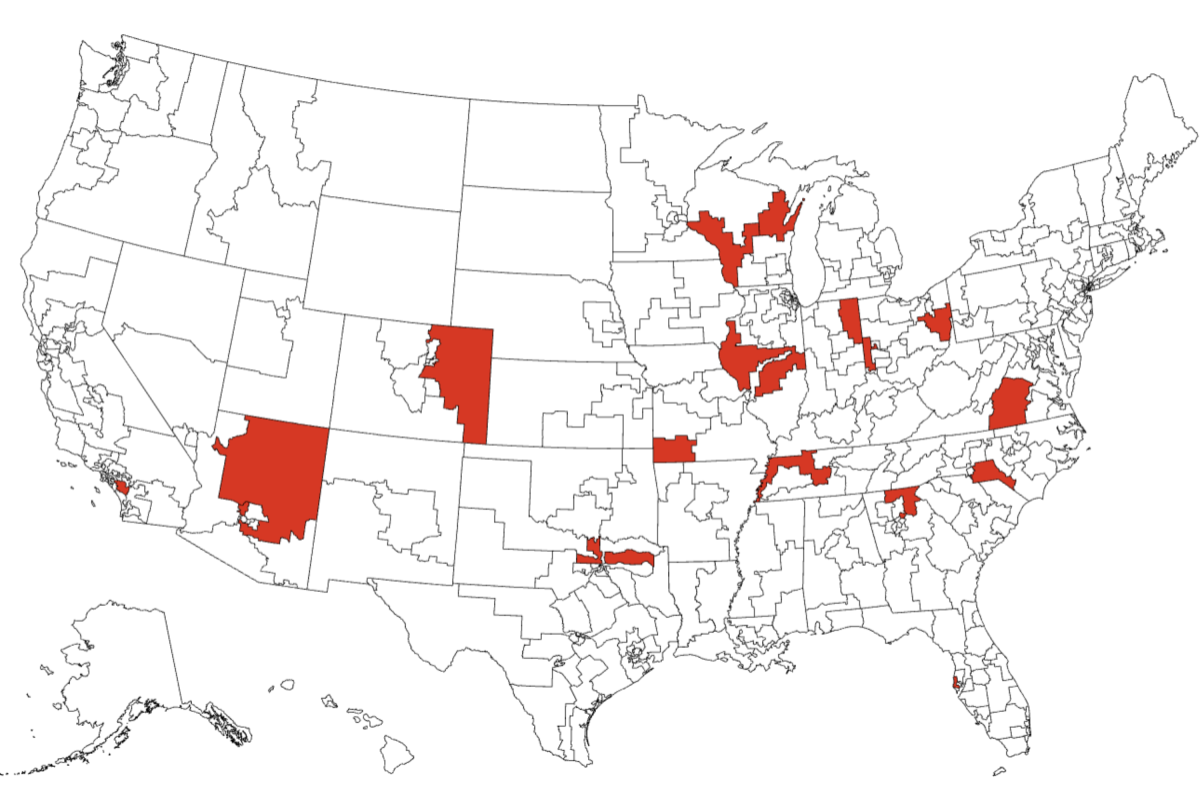
So where exactly is all this money going? The bulk of Musk’s spending has been funneled through major Republican super PACs rather than directly to individual candidates. The largest chunk, roughly $158 million, went to the Senate Leadership Fund, a group dedicated to electing Republicans in key Senate races across the country. Another $76 million was sent to America PAC, the political action committee Musk himself founded, which has supported Republican candidates in both House and Senate contests and has reported more than $52 million in federal disbursements since January 2025. Beyond those two big recipients, Musk has spread his wealth around generously. He gave $20 million to the Congressional Leadership Fund, which focuses on House races; $10 million to Lone Star Liberty PAC, which is backing Republican Senate candidate Ken Paxton in Texas; $10 million to the Republican Governors Association; and $2 million to the Republican Attorneys General Association. Earlier in the year, he also made a $5 million donation to V-PAC: Victors Not Victims, a group supporting Vivek Ramaswamy in Ohio’s gubernatorial race, and $10 million to Fight for Kentucky, a PAC that backed Nate Morris before he dropped out of Kentucky’s Senate primary. In June, he donated another $5 million to MAGA Inc., a Trump-aligned super PAC. The list of individual House Republicans who have received direct donations from Musk is long and reads like a who’s who of the conservative wing of the party. It includes familiar names like Lauren Boebert, Eli Crane, Mary Miller, Andy Ogles, Anna Paulina Luna, and Brandon Gill, along with a number of other staunchly conservative members. Most of these lawmakers represent safely Republican districts, and only a handful are facing serious challenges this year. Many are members of the House Freedom Caucus, the hard-right faction that has often clashed with party leadership. Musk’s donations to these candidates may be less about protecting vulnerable seats and more about rewarding ideological allies and maintaining influence within the party’s most vocal and powerful bloc.
Not everyone is impressed by Musk’s generosity. Senator Bernie Sanders, the independent from Vermont, took to social media to slam the spending in characteristically fiery terms. He pointed out that Musk spent a massive sum to help elect Trump in 2024, and that the investment paid off spectacularly for the tech billionaire. According to Sanders, Musk has gained roughly $696 billion in wealth since Trump’s election, becoming the world’s first trillionaire in the process. But apparently, Sanders said, that is not enough. Now Musk is spending hundreds of millions more to keep Republicans in control of Congress. “STOP MUSK. STOP OLIGARCHY,” Sanders wrote, capturing a growing anxiety among progressives and even some moderates about the outsized role that mega-donors are playing in American democracy. The criticism is not just about Musk’s politics but about the broader trend of billionaires using their fortunes to shape elections in ways that ordinary citizens cannot possibly match. Musk, for his part, has never shied away from political involvement. His relationship with Trump has been a wild rollercoaster over the past decade. In 2016, he supported Hillary Clinton and said Trump was “not the right guy” to lead the country. During Trump’s first term, he joined White House advisory councils but resigned in protest over Trump’s withdrawal from the Paris Climate Agreement. In 2020, he backed Joe Biden. But by 2022, he had shifted right, announcing his support for Republicans and describing Democrats as the “party of division and hate.” He initially backed Ron DeSantis in the 2024 Republican primary before formally endorsing Trump in July 2024, after the attempted assassination of the former president. From that point on, he became one of Trump’s most important allies and donors, spending more than $250 million on the presidential race and other Republican campaigns. After Trump’s victory, Musk was given a prominent role in the new administration, leading the so-called Department of Government Efficiency, or DOGE, where he pushed for drastic cuts to federal spending. But the honeymoon did not last. By April 2025, he was stepping back from DOGE to focus on Tesla, and by June he was publicly calling Trump’s signature tax bill a “disgusting abomination.” The two feuded openly for months, with Musk even floating the idea of a new “America Party.” Yet by late 2025, the feud had cooled, and by October 2026, Trump was awarding Musk the National Medal of Science alongside other tech leaders at the White House.
The political stakes could hardly be higher. In the House, Democrats are within striking distance of a majority, needing only a handful of seats to flip control. As of Monday, Republicans held 218 seats to the Democrats’ 214, an incredibly narrow margin. A recent Reuters/Ipsos poll taken from September 30 to October 5 showed Democrats leading Republicans by 7 points on the generic ballot, a key indicator of which party will control the House. Among registered voters, 44 percent said they planned to vote for a Democratic candidate, while only 37 percent said they would vote Republican. The Senate is a tougher battle for Democrats, since they are defending a difficult map and need to win in several states that Trump carried by double digits in 2024. Still, polls suggest they are competitive in surprising places like Alaska, Iowa, Kansas, Ohio, and Texas, all states where Democrats have historically struggled. Prediction markets have taken notice. On Kalshi, Democrats were given a 90 percent chance of winning the House and a 62 percent chance of winning the Senate. On Polymarket, those numbers were even higher, with Democrats at 91 percent for the House and 64 percent for the Senate. These markets are not infallible, but they reflect the collective judgment of traders who are putting real money behind their beliefs, and right now, they see a blue wave forming. The economy is almost certainly the reason. Voters are worried about inflation, high interest rates, and the rising cost of everyday necessities. They are looking for someone to blame, and the party in power usually fits the bill. For Republicans, the timing could not be worse. They are trying to defend their majorities while fighting against a powerful economic current that is dragging them down. And even with Musk’s hundreds of millions of dollars pouring into their campaigns, they are struggling to gain traction.
What happens next is anyone’s guess, but the coming weeks will tell the story. Early voting is already underway in several states, and candidates are making their final pitches to a weary and anxious electorate. Musk’s financial support may give Republicans a temporary boost in advertising and turnout operations, but it cannot change the underlying reality that voters are unhappy with the direction of the country. Money can buy a lot of things, but it cannot buy genuine change in people’s daily lives, and it cannot convince a voter who is struggling to pay their bills that everything is fine. The midterms will ultimately be decided by ordinary people making their way to the polls, many of them carrying a deep sense of frustration and uncertainty. They are not thinking about super PACs or billionaire donors; they are thinking about their own families, their own futures, and whether their leaders are actually fighting for them. For Musk, this spending spree is another chapter in his transformation from a celebrated innovator into a deeply polarizing political power broker. For Republicans, it is a lifeline that may or may not be enough. For Democrats, it is a reminder that the other side has enormous financial resources, but also a source of hope that the voters are on their side this year. In the end, the election will be decided not by the size of the checks written in boardrooms and private clubs, but by the quiet choices made in living rooms, coffee shops, and voting booths across the country. The billionaires will have their say, as they always do, but the final word belongs to the people. And right now, the people seem to be speaking clearly: they want change, and no amount of money may be able to stop it.