



1. The Cartoon on the Stage
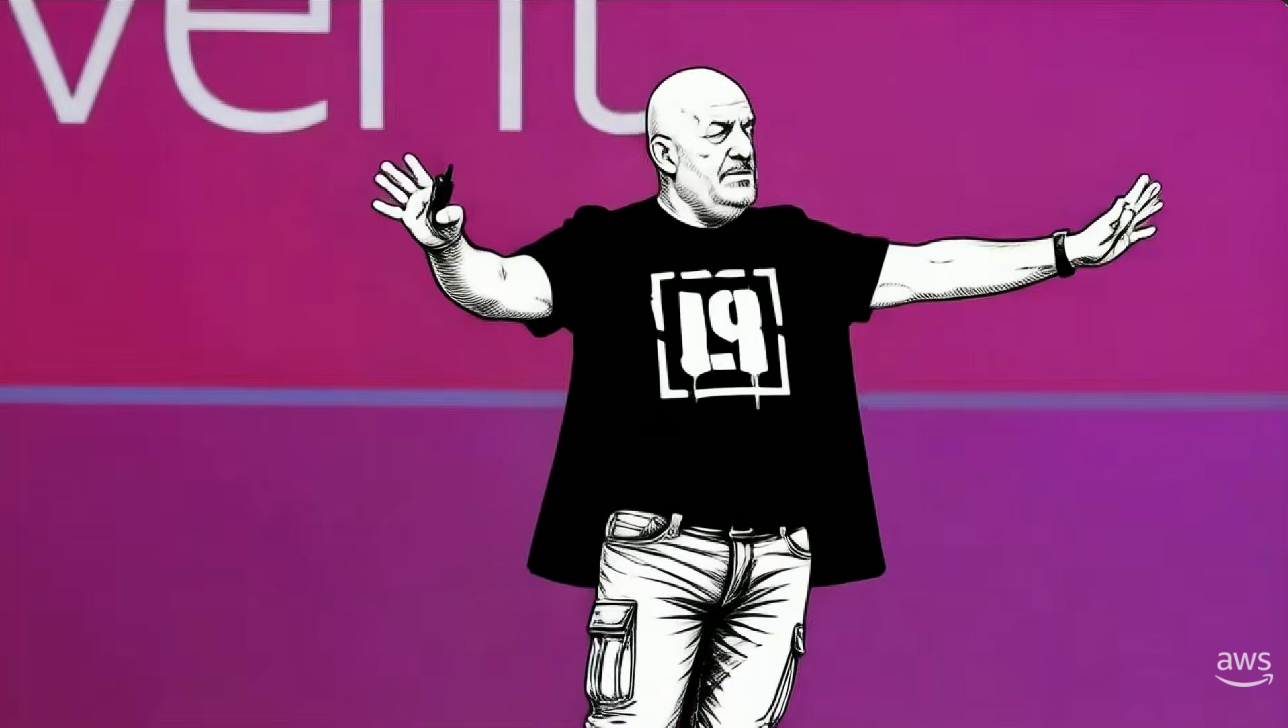
When Peter DeSantis, a senior vice president at Amazon Web Services, stepped onto the keynote stage at AWS re:Invent in Las Vegas last December, the crowd expected the familiar face of Amazon CTO Werner Vogels. Instead, the massive side screens displayed a live cartoon version of Vogels—his distinctive glasses, his easy smile, all rendered in real time, moving and reacting as DeSantis spoke. It was a playful joke about hijacking Vogels’ usual keynote slot, but it was also a quiet flex. The animation wasn’t pre-rendered; it was being generated live by Decart, a startup that had just a few months earlier been a secret in the AI world. A startup that now finds itself at the center of one of the most significant potential acquisitions in Amazon’s history. The Wall Street Journal reported on Sunday that Amazon is in talks to buy Decart for a figure that could reach around $7 billion. For a company that built its cloud business on a relentless pursuit of efficiency, this deal represents a bold bet not just on faster AI, but on the very architecture of computation itself—a direct challenge to Nvidia’s stranglehold on the AI chip market. It’s a story about how a small team of engineers, a pair of visionary brothers, and a piece of software that lets you skip the line in the hardware race, might just reshape the cloud.
2. The Size of the Bet
If the acquisition goes through at the reported valuation, it would rank among Amazon’s largest ever purchases. The e-commerce and cloud giant paid $13.7 billion for Whole Foods in 2017, $8.45 billion for MGM in 2022, and just last April agreed to buy satellite company Globalstar for $11.57 billion. A $7 billion price tag for Decart would dwarf the $350 million Amazon paid for Israeli chipmaker Annapurna Labs in 2015—the deal that laid the foundation for its entire custom silicon ambitions. The Annapurna team went on to design Trainium and Inferentia, Amazon’s custom AI chips, which are now linchpins of its strategy to offer cheaper, more efficient alternatives to Nvidia’s GPUs. But a chip is only as good as the software that runs on it, and that’s where Decart comes in. Decart doesn’t make hardware; it sells software that makes AI models run faster on chips from Nvidia, Google, and Amazon, and crucially, makes it easier for developers to switch between them. According to the Israeli business publication Globes, Decart has been profitable almost from the start, which is rare for a startup in the capital-intensive AI space. Its customers include eBay, which is also an investor, and its business, while far smaller than the valuation being discussed, is growing in a niche that Amazon desperately needs to dominate. The deal makes sense on paper, but to understand why it’s so crucial, you have to look at the walls Nvidia has built.
3. The Magic of Decart’s Software
Nvidia’s dominance in AI chips rests largely on CUDA, the software framework that developers have used for years to build and run AI models. CUDA is the invisible hand that allows programmers to talk directly to Nvidia’s GPUs, and it’s become the industry standard. Moving that work to other chips, including Amazon’s Trainium, normally takes extra engineering time—time that most AI teams don’t have. Decart’s software removes that friction. It acts as an abstraction layer, allowing models written for one chip to run on another with minimal changes, and it optimizes performance in the background. For Amazon, owning Decart would be like buying the key that unlocks its own hardware. Customers with models built for Nvidia could run them on Trainium with fewer headaches, and Amazon would get the engineers behind the technology—brothers Dean and Orian Leitersdorf and Moshe Shalev, who founded the company in 2023. But Decart is more than just a bridge. It also builds its own AI models, including Lucy, which edits live video in real time, and Oasis, which generates interactive virtual worlds. These models are not just demos; they demonstrate the incredible efficiency of Decart’s approach. On the same hardware, Decart’s models can run faster and cheaper than anything Nvidia’s stack can produce. For Amazon, this has a double benefit: it gets both the tools to make Trainium a no-brainer for developers, and a portfolio of cutting-edge AI applications that could be woven into Twitch, its streaming platform, or Amazon’s e-commerce experience, where Lucy could show shoppers how clothes look on them in real time.
4. A Relationship Already Forged
Decart’s relationship with Amazon isn’t hypothetical. The startup has already moved its own models to Trainium, and the results were on display at the re:Invent keynote. When CEO Dean Leitersdorf took the stage, the same real-time model animated him, mimicking his movements with uncanny accuracy—all generated live on Trainium3, Amazon’s newest AI chip. Leitersdorf told the audience that his team had worked closely with AWS to migrate their infrastructure to Trainium, and Amazon’s claim was bold: Decart was running real-time video four times faster on Trainium at half the cost of GPU-based systems. That kind of performance leap is the kind of proof point that Amazon needs to entice developers to switch from Nvidia. But the deal isn’t just about silicon. Decart’s software could help Amazon squeeze more performance out of the chips it already has, a goal that Anthropic—Amazon’s closest AI partner—was also pursuing when it tried to buy Decart earlier this year. According to Bloomberg, Anthropic was in talks to acquire the startup for about $6 billion, but walked away in September after due diligence. Globes reported that the founders refused Anthropic’s push to move much of the company’s team from Tel Aviv to San Francisco. Nvidia also held acquisition talks before that, and even invested in Decart’s $300 million funding round in May, which valued the startup at about $4 billion. The fact that Nvidia, the incumbent, was willing to consider a takeover speaks to how disruptive Decart’s software could be.
5. The Race to Break Nvidia’s Grip
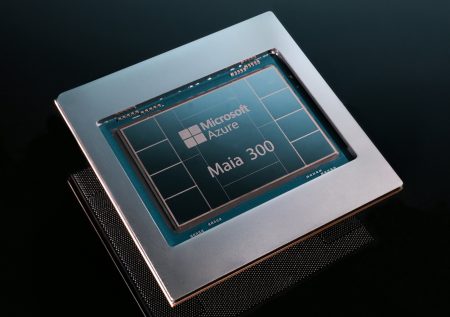
Amazon isn’t alone in trying to reduce its reliance on Nvidia. The broader tech industry is scrambling for alternatives. Microsoft just unveiled Maia 300, the third generation of its custom AI chip, and announced plans to make it the primary hardware for running AI in its own products starting in 2027. Google has its TPU chips, and OpenAI has developed a chip with Broadcom. But Nvidia’s CUDA moat is formidable. It’s not just about hardware; it’s about the entire ecosystem of libraries, tools, and trained developers that make CUDA the default choice. For Amazon, buying Decart would be a strategic masterstroke—it would give Amazon the software innovation that could lower the barrier to entry for Trainium, without needing to rebuild the CUDA ecosystem from scratch. Decart’s technology, which supports Nvidia and Google chips as well, could be positioned as a neutral layer that makes all chips interchangeable, but with Amazon ownership, it would likely be optimized for Trainium first. The deal could come together soon, according to the Journal, unless talks fall apart or another suitor emerges. One open question is whether Decart’s software would continue to support Nvidia and Google under Amazon ownership, or if it would become a proprietary advantage. That decision will have ripple effects across the AI industry.
6. A Human Story at the Center
Beyond the billion-dollar machinations, this is a story about a young startup that found itself in the center of a geopolitical and corporate battle over the future of computing. Dean and Orian Leitersdorf, two brothers with a vision, built a company that could make AI more accessible, faster, and cheaper for everyone. They saw that the true bottleneck was not chip design but software, and they set out to solve that problem. Now, with Amazon, they have the potential to scale their ideas to the largest cloud platform on Earth. For Amazon, the deal is a bet on its own ability to be the place where AI innovation happens—not just through Anshit’s $18 billion investment in Anthropic, but through owning the very plumbing that makes AI models run. The cartoon on the stage at re:Invent was a delightful moment of levity, but it also foreshadowed this: Decart’s technology is so powerful that it can make even the most complicated infrastructure look effortless. If the deal closes, it will be a signal that the era of Nvidia’s total dominance is over—and that the next decade of AI will be defined not by the chips you buy, but by the software you own. And at the heart of it all are two brothers who just wanted to make AI run a little bit faster. That’s a story worth telling, and one that Amazon is ready to bring to a close.