

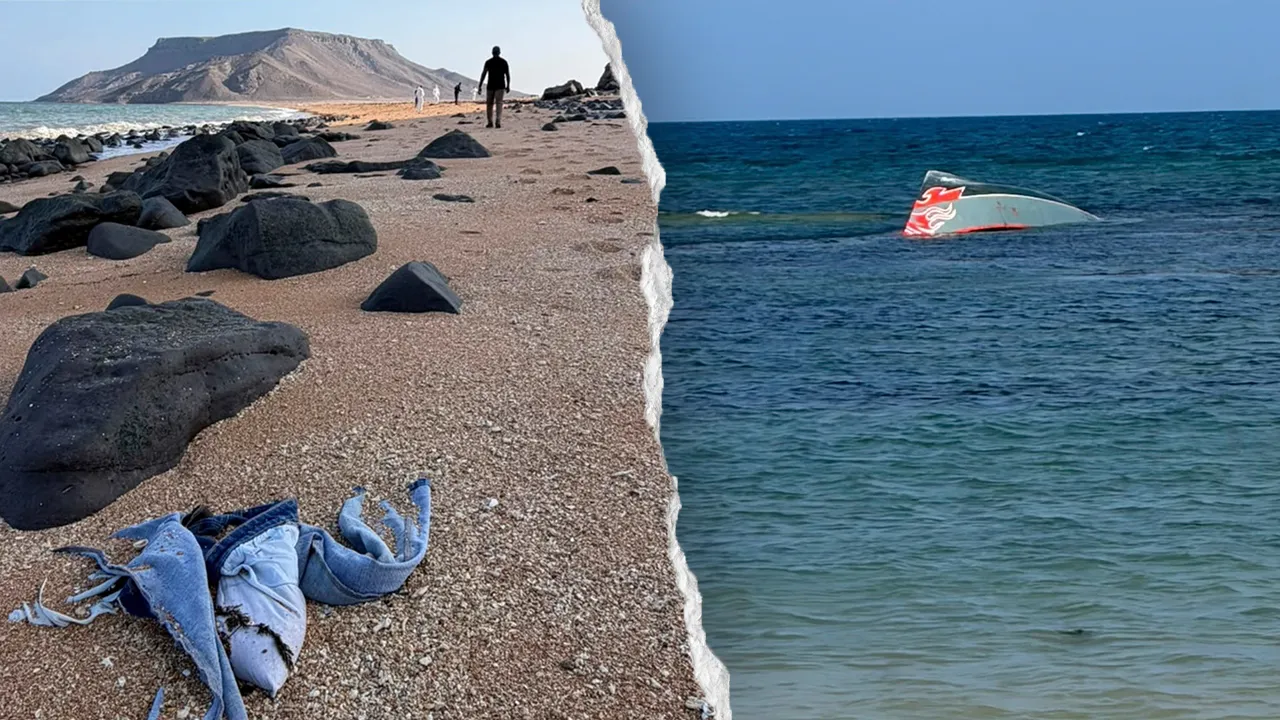
It began as a desperate bid for a better life, a journey measured not in miles but in dreams. Somewhere off the coast of Djibouti, in the dark waters of the Gulf of Aden, that dream was swallowed by the sea. At least 139 people, including 15 children, are now confirmed dead after a boat carrying more than 300 migrants capsized late Thursday night or early Friday morning near Guhere, a small coastal village north of Obock. The vessel had set out from Djibouti bound for Yemen, carrying 305 souls who believed the dangerous crossing was their only path to safety, dignity, and work. They were not cargo; they were sons and daughters, mothers and fathers, young people with names, faces, and futures that now hang in terrible uncertainty. The International Organization for Migration (IOM) reported the tragedy, but the numbers alone cannot convey the horror of what happened when the overcrowded boat went down in the dark, tossing people into the sea and scattering survivors into a night of chaos and terror. For every confirmed victim, there is a family somewhere waiting for news that may never come, and for every survivor, there is a memory that will never fade.
The survivors, all Ethiopian nationals, number just over eighty—a stark reminder of how fragile life is on such a journey. More than eighty-four people remain missing, their fates unknown, their bodies perhaps carried by currents or never to be recovered. Those who did survive were pulled from the water after swallowing seawater, exhausted, hypothermic, and in profound shock. They were brought to an IOM rescue center in Obock, where they are receiving medical treatment and psychological support. According to Alexandre Coissac, the IOM Chief of Mission in Djibouti, “They’re all in a state of shock.” One can only imagine the scenes at that center: people wrapped in blankets, staring into the distance, replaying the moment the boat capsized, wondering why they lived while others did not. They may have lost friends, siblings, or traveling companions. They may have watched strangers drown in the darkness, their cries swallowed by the waves. The physical recovery from seawater and exposure is one thing, but the emotional wounds are far deeper. These survivors now carry the weight of a catastrophe that will shape the rest of their lives, and the quiet rooms of the rescue center offer little comfort against the enormity of what they have endured.
The tragedy has prompted urgent words from the highest levels of the migration agency. IOM Director General Amy Pope released a statement that cut through the statistics with a simple, devastating truth: “No one gets into a boat like that unless they believe there is no other safe way.” Her words echo with the painful reality of the migrant experience. People do not board rickety, overcrowded vessels for adventure or recklessness; they do it because the alternatives—staying home in poverty, conflict, or hopelessness—are even more terrifying. Pope went on to say, “We cannot keep treating these deaths as normal. Safe and legal pathways save lives. I am asking governments and donors to act before the next boat goes down.” Her plea is not abstract. It is a direct challenge to a world that has grown accustomed to tragic headlines about migrants drowning at sea, a world that too often views these deaths as inevitable collateral damage rather than a preventable crisis. Every boat that sinks, every life lost, is a moral failure that demands not just mourning, but meaningful action. The words are a reminder that behind every policy debate, every border restriction, and every political argument, there are human beings whose lives depend on the choices that leaders make.
Perhaps the most haunting detail to emerge from the disaster is the fate of the dead themselves. Alexandre Coissac described the grim reality of the burial process: “What is terrible is that they were buried with no names, in a common grave, like in a war situation. They all have a mother, a father, and we may never learn what happened.” The confirmed death toll of 139 includes only those victims who were buried by authorities in Djibouti, and that number could rise as more bodies are verified. Some victims were buried by fellow migrants, but they will not be added to the official count until authorities can confirm their identities. The image of a common grave, filled with nameless bodies, is almost unbearable. These were people who left home with hopes of sending money back to their families, of building a better future. Now they lie in an unmarked resting place in a foreign land, their stories untold, their names unknown. Coissac noted that the boat sank shortly after departing on the evening of October 8, “mainly because it was overcrowded.” The cause is not a mystery; it is a predictable outcome of a system that forces people into ever more dangerous journeys. When human beings are treated as problems to be stopped rather than people to be protected, disasters like this become not accidents, but certainties.
This latest tragedy is part of a much larger pattern of suffering along one of the world’s most dangerous migration corridors. The route from the Horn of Africa to the Arabian Peninsula is a common path for migrants seeking work in the wealthy Gulf countries, but it is also a route marked by extraordinary peril. According to the IOM, more than 900 migrants died or went missing along this route last year alone. That number is not just a statistic; it represents hundreds of families shattered, hundreds of futures erased. The journey typically involves crossing the Red Sea or the Gulf of Aden, often in small, overloaded boats operated by smugglers who care little for the safety of their passengers. Once in Yemen, migrants face additional dangers, including conflict, violence, and exploitation. Yet they keep coming, because the conditions they flee are so dire that even a journey through hell seems preferable to staying. Economic hardship, lack of opportunity, political instability, and climate pressures in countries like Ethiopia push people to take risks that most of us cannot imagine. They sell what little they have, borrow money, and entrust their lives to strangers, all for the chance to earn a wage and send something back to those they love. It is a testament to human resilience, but also a devastating indictment of a global system that allows so many to feel they have no choice.
As the sun rises over the waters off Djibouti, the search for answers continues. But the deeper lesson of this tragedy is that it did not have to happen. The deaths of 139 people, including 15 children, are not an act of God or an unavoidable accident. They are the result of a world that has failed to create safe and legal pathways for people who desperately need to move. The IOM’s call for action is not merely bureaucratic language; it is a plea for humanity. Governments and donors must invest in real solutions: expanding visa and work opportunities, creating humanitarian pathways, improving conditions in countries of origin, and cracking down on smugglers in a way that protects migrants rather than criminalizes them. But beyond policy, there is a need for a fundamental shift in how we see migrants. They are not threats to be managed or burdens to be avoided. They are human beings, no different from us, who deserve to be treated with dignity and compassion. The dead in the common grave off Guhere may never be named, but they must not be forgotten. Let their memory be a call to conscience, a reason to act before the next boat goes down. For as long as people feel they must risk everything on the open sea, there will be more tragedies. The only way to honor the lives lost is to build a world where no one feels that desperate, where hope does not require a leaky boat, and where the pursuit of a better life does not end in a watery grave.