


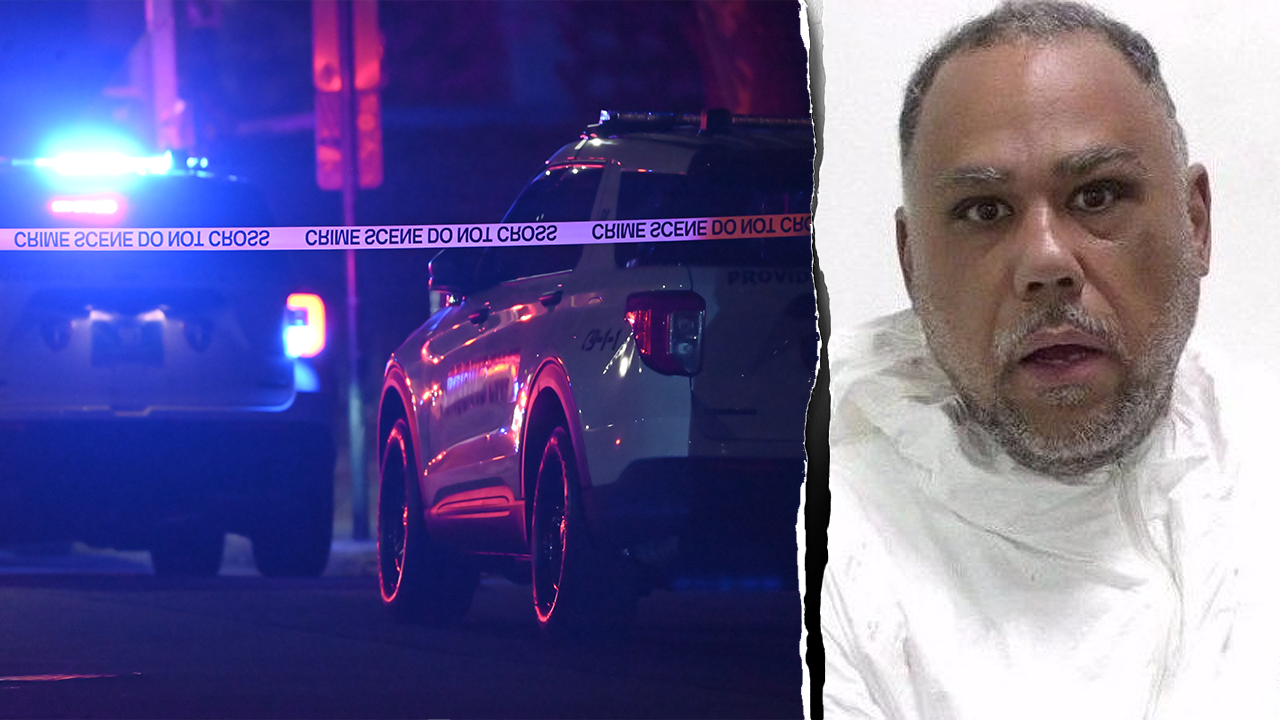
There are moments in life so unexpectedly cruel that they cleave time into before and after, and for a young mother in Providence, Rhode Island, that moment arrived on an ordinary Wednesday afternoon. She was standing near the corner of Broad and Public Streets with her two-year-old daughter in a stroller, waiting for her older children to step off the school bus. It was a scene of everyday routine, the kind of moment that millions of parents live every single day, unremarkable except for the sudden horror that swallowed it whole. According to police, a stranger named Nelson Blanco, 46, approached the mother and her child and began making insulting comments. Frightened, the mother pushed the stroller across the street to get away. But the man did not let them go. He followed, and then, in a burst of violence that no one could have anticipated, he allegedly pulled out a knife and attacked the toddler, stabbing her in the face as she sat helpless in her stroller. The mother was also stabbed in the shoulder while trying to protect her little girl. The toddler, gravely wounded, was rushed to Hasbro Children’s Hospital in critical condition. Her mother was treated and released, but the emotional wounds of that afternoon will not heal so quickly. Police said there was no evidence that Blanco knew either victim, which makes the attack even more chilling: a random moment, a chosen target, a life nearly erased for no reason at all.
The details of the attack, pieced together from surveillance video and police accounts, paint a picture of escalating terror. The mother tried to move away from Blanco, but he closed the distance, grabbed the stroller, and began striking the child repeatedly. A bystander, seeing the unthinkable unfolding, tried to intervene, and Blanco allegedly attempted to stab that person as well before fleeing the scene. The cowardice of the act is matched only by its brutality. Police soon found Blanco hiding in the basement of a nearby home, and a knife was recovered from a panel box. Authorities said he admitted to the stabbings during questioning. But perhaps the most disturbing detail came when Blanco allegedly explained why he stopped the attack: he was on a main street, in the open, where people could see. “If I was on a side street, I would have killed them. Both of them,” he reportedly told detectives. Those words reveal not a moment of spontaneous rage, but a cold awareness of discretion, a mind calculating the difference between getting caught and getting away. Blanco now faces six charges, including two counts of assault with intent to commit murder, felony assault, breaking and entering into an occupied dwelling of a person 60 or older, and two weapons charges. He appeared in Rhode Island’s 6th Division District Court, where no plea was entered. The court referred him to the public defender and requested an evaluation. He is being held without bail pending a competency hearing later this month, but for the victims and their families, that is cold comfort.
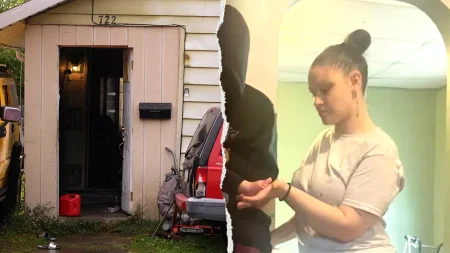
For Andy Lopez and Dave Belony, the news of Wednesday’s attack hit like a thunderbolt from a past they have tried for more than two decades to outrun. As children, they were victims of Blanco long before anyone knew his name as a repeat threat. On September 27, 2003, Lopez was six years old and Belony was seven, playing innocently in Lopez’s backyard, when Blanco emerged from a shed behind the house where he had been living. The two boys were doing what boys do: playing, laughing, lost in the simple world of childhood. Then everything changed. Belony recalled that Blanco did not say a word, that his face was blank and his eyes were fixed on them. It is the kind of memory that does not fade; it scars. Belony said Blanco charged at him, cornering him near a tree. He curled into a ball and covered his head as Blanco stabbed him again and again. Then Blanco turned to Lopez. Lopez’s brother screamed for him to run, but his frozen body would not obey. “He stabbed me twice in the eye — the first time it was blurry, and then the second time I couldn’t see anything,” Lopez later said. Both children were rushed to Hasbro Children’s Hospital, the same hospital where the toddler was taken this week, a bitter and painful coincidence. Their recoveries took three months and involved at least three surgeries each. But the surgeries could not undo the damage. Lopez was left permanently blind in his left eye, an injury that would erase his childhood dreams of becoming a police officer or a truck driver. Belony was stabbed at least five times in the stomach, back, and ribs, and he still carries the emotional weight of that day.
When Belony saw Blanco’s booking photo on social media Wednesday night, he recognized him instantly. “I knew it was him, because I will always remember that face,” he said. “My heart dropped, and it truly felt like my world had stopped.” That recognition is not just about memory; it is about a system that failed to keep a violent man off the streets. After the 2003 attack, Blanco faced two felony assault charges and a charge of possessing a knife or firearm during a crime. But the case never led to the kind of accountability the victims and their families hoped for. Court records show repeated findings that Blanco was incompetent to stand trial from September 2004 through March 2006, with docket entries repeatedly stating, “Defendant Remains Incompetent.” The case remains listed as “under review” in the court portal, a phrase that sounds administrative but carries devastating human consequences. More recently, in July, Blanco was again found incompetent to stand trial in a separate domestic violence case. A judge accepted a doctor’s recommendation allowing him to remain in outpatient treatment, based on an assessment that he was unlikely to endanger the community or himself at that time. That assessment has now been proven catastrophically wrong. In the years since his first known violent attack, Blanco has been repeatedly evaluated, repeatedly deemed incompetent, and repeatedly allowed to move through the world as if his past did not matter. The result is a toddler fighting for her life, a mother with a shoulder wound and a heart full of fear, and two grown men reliving the worst day of their childhoods.
Lopez and Belony have lived with the consequences of that failure every day. Lopez’s blindness closed doors that should have remained open. “Most of the opportunities I wanted to have in life are gone,” he said. “I’m very grateful I’m alive, but my life is restricted.” Those are the words of a man who did not choose to be a survivor, but had survival forced upon him by a stranger’s knife. Belony’s wounds are less visible but no less real. He continues to struggle emotionally, haunted by the image of a man with a blank face and the feeling of a blade against his skin. When they learned that Blanco had allegedly attacked another child, this time a two-year-old girl in a stroller, they were devastated. They were not surprised, and that is perhaps the saddest part. “It’s frustrating for us, not only because of what happened to us, but because it has happened to others,” Lopez said. “He was given a chance 23 years ago, and 23 years later, he did the same thing.” Belony echoed that frustration and turned it into a plea for justice. “We want justice for the victims,” he said. “What is it going to take for him to be held accountable for his actions?” Those questions hang in the air, unanswered, as the legal system once again tries to determine whether Blanco is competent to stand trial for the violence he allegedly committed this week.
This is not just a story about one man’s alleged crimes. It is a story about how society handles people who commit violent acts and then slip through the cracks because of competency findings, mental health assessments, and the careful language of the law. For more than twenty years, Nelson Blanco has been a known threat. He has been accused of stabbing children before. He has been accused of stabbing a two-year-old and her mother now. And yet, he was free, walking the same streets as families waiting for school buses. The mothers and fathers in Providence should not have to wonder whether a man with this history will approach them and their children. The two boys who grew up with scars and blindness should not have to see their attacker’s face on social media and feel their world stop again. The toddler in the hospital should not have to fight for her life because a man who was found incompetent to stand trial was nonetheless considered safe enough to be treated as an outpatient. The system that is supposed to protect the vulnerable failed again, and the cost was paid in blood. Fox News Digital reached out to the Providence Police Department and the Rhode Island attorney general’s office for comment, but no response could undo the damage or restore the innocence that was stolen. What happened on that street corner is a warning, a tragedy, and a failure all at once. The question now is whether anyone will listen to the voices of the victims, hear their pain, and demand a better answer. As Belony said, what will it take? The answer should not require another child in a stroller, another hospital room, another family shattered. It should not require another pair of grown men to recognize the face of their childhood nightmare and wonder why no one stopped him before. The next hearing may decide Blanco’s fate, but the real judgment belongs to the community that has been left to pick up the pieces, to the mothers who will clutch their children more tightly, and to the survivors who still remember every detail of a day that should never have happened.