


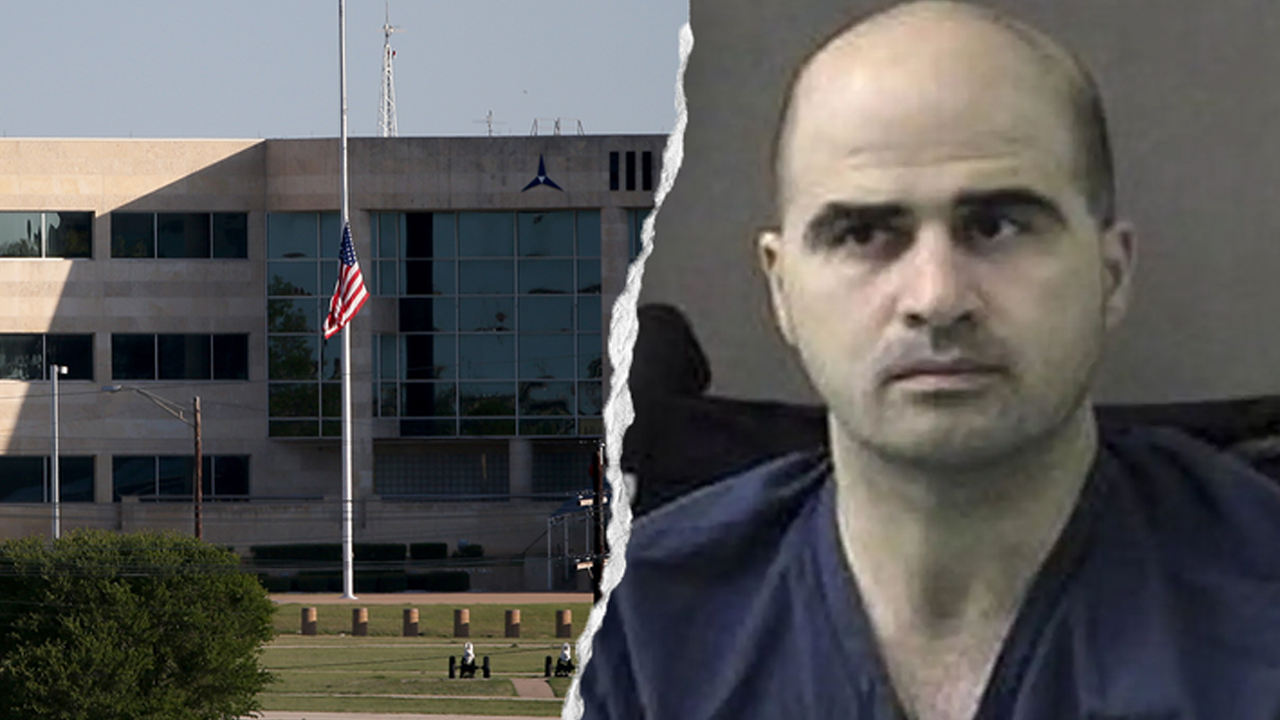
On December 3, nearly seventeen years after one of the deadliest mass shootings on American soil, Nidal Malik Hasan is scheduled to die by firing squad at a U.S. military installation. Hasan, a former Army psychiatrist, was convicted for the 2009 attack at Fort Hood, Texas, where he killed thirteen people and wounded more than thirty others. The Trump administration announced this week that Hasan’s death sentence will be carried out by a team of shooters, and the Pentagon has confirmed that the execution will be livestreamed to the public. For the victims and their families, the date has been a long time coming. Many have waited over a decade for closure, watching appeal after appeal stretch across the years. Now they face the prospect of witnessing his death in real time, a haunting but, for some, necessary final chapter. The execution itself is historic—not only because it will end the life of one of the country’s most notorious domestic terrorists, but because it will mark the first time in decades that the U.S. military has used a firing squad as its method of execution. The last military execution was in 1961, when Pvt. John A. Bennett was hanged at Fort Leavenworth for rape and attempted murder. Hasan’s execution will therefore break with long-standing practice and open a new, deeply controversial chapter in American capital punishment.
Fordham Law Professor Deborah Denno, one of the nation’s leading death penalty experts, believes the significance of this execution extends far beyond one man’s fate. In an interview with Fox News Digital, she said that if Hasan’s death goes smoothly—if the firing squad’s bullets strike quickly and he dies without visible suffering—other states may be encouraged to follow the military’s lead. “I think it’s highly likely that if firing squad is successful here… it seems conceivable that it would be used on other inmates as well,” Denno said. Her reasoning is grounded in the practical advantages of the method. Unlike lethal injection, which requires specialized medical knowledge and a cocktail of drugs that have become increasingly difficult to obtain, firing squads rely on marksmanship—a skill that is abundant in a country with a deep culture of firearms. “We have an endless supply of people who are experts in shooting, either professionally, because they’re a police officer, corrections officer, or something like that,” Denno explained. “But we also have people who are excellent, superb markspeople too, because that’s a hobby or whatever. So this is, it’s not difficult finding somebody who’s willing to do this.” This availability, combined with the perceived speed and certainty of death by gunfire, has led Denno to describe the firing squad as the most humane and effective means of execution—at least on paper. The condemned prisoner is strapped to a chair, a target is placed over the heart, and a volley of bullets is fired simultaneously. In most cases, death is nearly instantaneous, or at least far faster than the slow, chemically induced paralysis of lethal injection.
In recent years, several states have come to agree. Idaho, Utah, and South Carolina have all embraced the firing squad as a legal or practical alternative to other methods. The reasons are not ideological but logistical. Across the country, death penalty states are struggling to obtain the drugs used in lethal injections. Pharmaceutical companies, under pressure from activists and moral objections, have refused to sell their products for executions. The drugs that are available are often untested or of questionable quality, leading to a growing number of botched procedures. Last week, in Tennessee, a death row inmate survived not one but two doses of pentobarbital, becoming the first person in the modern era to survive a lethal injection attempt. His name has not been widely released, but the event sent shockwaves through the capital punishment community. If lethal injection can fail so dramatically, what does that say about the state’s ability to carry out justice? Even more troubling was the case of Christa Pike, a 50-year-old Tennessee woman sentenced to death for the 1995 torture and murder of 19-year-old Colleen Slemmer. Pike was scheduled to die on the same day as the surviving inmate but was moved to later in the evening. When the first execution failed, prison officials postponed hers indefinitely. Her attorneys later said she was in critical condition after the botched injections, though she was not the one who received them—the chaos of the night and the emotional toll had taken a heavy toll on her mental and physical state. These incidents have made one thing clear: lethal injection, once seen as the clean and clinical face of capital punishment, is no longer reliable.
The firing squad, by contrast, has a remarkably clean record in American history. Until recently, there had been only two notable incidents of botched firing squad executions—one in 1877 and another in 1951. That changing math is part of why many law-and-order advocates are pushing for a return to the firing squad. But the method is not without its own controversies. Last year, in South Carolina, the execution of 42-year-old double murderer Mikal Mahdi raised troubling questions. Mahdi was sentenced to death for killing Christopher Boggs, a store clerk he shot in the head while Boggs was checking his ID, and James Myers, an off-duty officer who was shot eight times and burned outside his own home. Mahdi had the option of choosing lethal injection, the electric chair, or a firing squad—and he chose the firing squad. But afterward, his lawyers released findings from a forensic pathologist, Dr. Jonathan Arden, who said the execution did not go as planned. “The shooters missed the intended target area and the evidence indicates that he was struck by only two bullets, not the prescribed three,” Arden said. “Consequently, the nature of the internal injuries from the gunshot wounds resulted in a more prolonged death process.” The executioners, who were presumably experienced shooters, were never publicly identified. For Denno, this is a cautionary tale. “This seems to be a really troublesome outcome,” she said, “so it’s just something to pay attention to on December 3.”
The upcoming execution of Nidal Hasan will be livestreamed, a decision that has both supporters and critics. Some argue that the public has a right to see that justice is carried out, especially in a case involving a mass murder on a U.S. military base. Others worry that livestreaming an execution turns death into entertainment, and that it may traumatize viewers or encourage copycats. But the families of Hasan’s victims have largely welcomed the decision. For them, the closing of this chapter is a release valve after years of emotional and legal turmoil. Survivors like those who were shot and left with permanent injuries have spoken about the need to witness the moment when the man who tried to destroy their lives is finally held fully accountable. One Fort Hood survivor, who was shot in the head and has devoted years to advocating for Hasan’s execution, said she intends to watch the firing squad in person. It is a sacrifice she says she must make—not out of joy, but out of duty. She wants to see, with her own eyes, that the world is finally safe from the man who once stood in a Soldier Readiness Processing Center and opened fire on unarmed soldiers. That moment, when the shots ring out and Hasan’s body slumps forward, will be the culmination of a painful chapter in American history. It will also be a test case for the future of the death penalty.
If Hasan’s execution goes as planned, the firing squad could become a more common sight in American prisons. Legal experts say that as lethal injection continues to fail, as drug shortages worsen, and as botched executions make headlines, the public’s tolerance for a method that works—even one as visceral as gunfire—may grow. The firing squad is not painless in the abstract; it is brutal. But to many, it is less cruel than strapping a person to a table, injecting them with a paralytic, and watching their bodies writhe in agony for minutes before their hearts stop. The death penalty debate has always been a strange collaboration of the macabre and the practical. For abolitionists, no method is humane, because the act itself is the problem. For advocates, the goal is to carry out the sentence with as little suffering as possible, and the firing squad might best achieve that goal. The question now is whether December 3 will mark a turning point—the moment when the United States military, the ultimate symbol of American power and authority, legitimizes a method that many states are still hesitant to adopt. As the nation watches, the world will see not just the death of a terrorist, but a statement about how this country chooses to punish its worst offenders. Whether that statement is one of justice or barbarism, one thing is certain: after December 3, the conversation about firing squads in America will never be the same.