


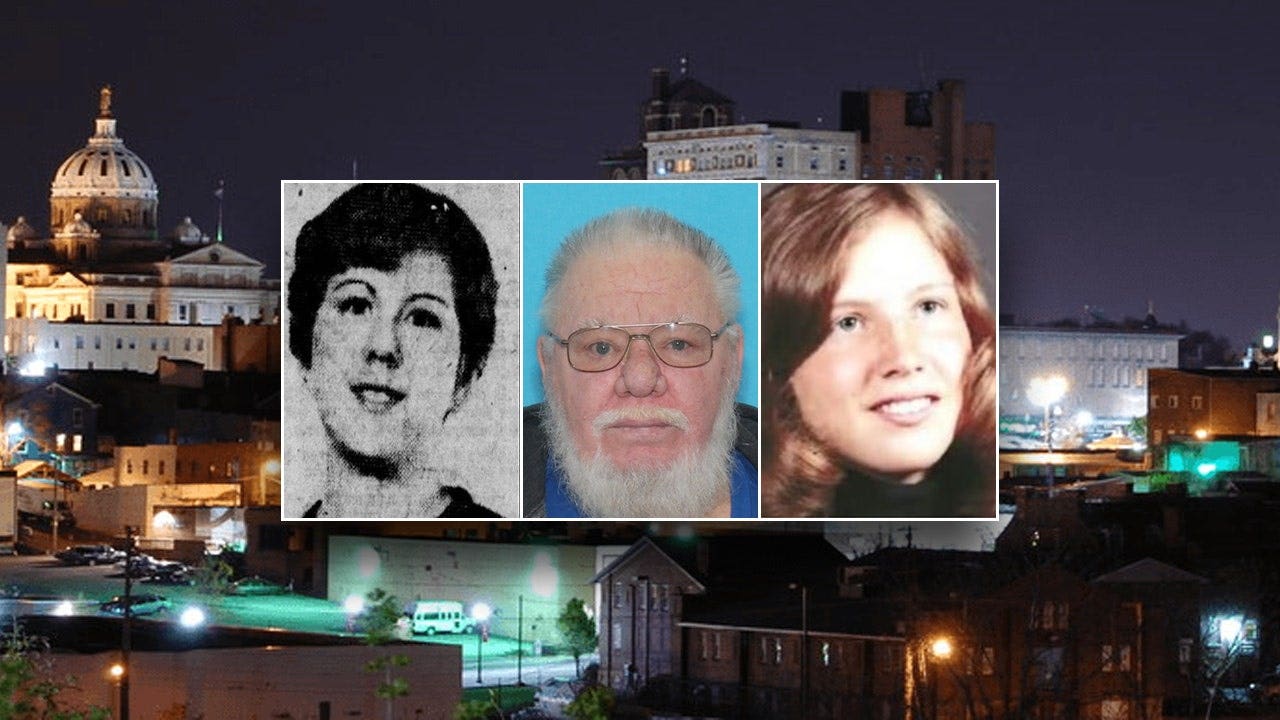
In a quiet corner of western Pennsylvania, a decades-old horror has finally been given a name, a face, and a conclusion, thanks to the relentless march of forensic science. For nearly half a century, the families of two young women—Brenda Ritter and Susan Rush—lived with the agonizing uncertainty of not knowing who had brutally cut their lives short. They grieved, they wondered, and they waited, while the men responsible for the heinous crimes walked among the living, seemingly without consequence. That all changed on a recent Thursday, when Pennsylvania State Police announced that they had finally unmasked the perpetrator, identifying him as a man who had lived a seemingly ordinary life right under their noses. This man, James Richard Clark Sr., was not a figure of public infamy or a shadowy stranger; he was a neighbor, a family man, and a person who managed to blend seamlessly into the fabric of his community, a chilling reminder that true evil often hides in the most mundane of places.
The announcement was delivered with grim solemnity, closing a chapter on two tragic stories that began with young women simply going about their routines, their lives ahead of them. The first tragedy unfolded in the fall of 1976, when nineteen-year-old Susan Rush vanished on Thanksgiving Eve. After leaving a shopping mall, seemingly full of the festive spirit of the holiday, she was supposed to meet her family at church. She never arrived. Her brother, filled with dread, discovered her car parked along a street the very next morning—Thanksgiving Day. The discovery would only get more devastating, as her body was found brutally hidden in the car’s trunk. A year later, another family was shattered when eighteen-year-old Brenda Ritter disappeared from her boyfriend’s house. Her body was later found on a hillside, and an autopsy would reveal that she had been sexually assaulted and strangled. For decades, these two cold cases sat in dusty files, generating no leads and no suspects, while their families clung to the faint hope that justice might one day find them.
Authorities are now convinced that the quiet man who died of natural causes in 2023 had been living a double life of unspeakable violence. Clark was just 19 when Susan Rush was killed and 20 when Brenda Ritter was murdered, a young man at the dawn of his adult life when he reportedly took the lives of two others. The revelation that he lived to be 66, passing away just two years before he could be publicly identified, adds a layer of profound frustration to the story. The families of the victims will never see him stand trial, never hear him answer for his crimes in a court of law, and never witness a formal reckoning. Instead, they must reconcile with the fact that their daughters’ killer enjoyed a full life, one spanning nearly five decades after the crimes, apparently free from legal consequences, while their loved ones were robbed of their futures.
The key to unlocking this mystery was not a confession or a witness, but the advancement of DNA technology. The investigation gained momentum when evidence from Brenda Ritter’s homicide was sent to the state police crime lab, yielding an unknown male DNA profile. This profile was entered into the Combined DNA Index System (CODIS), a powerful federal database, and was searched week after week to no avail, a frustrating endeavor that spanned years. The turning point came in May 2025, when sophisticated testing at Cybergenetics’ laboratory, alongside work from other firms like Identifinders International, produced a breakthrough. The advanced testing not only confirmed that the same man was responsible for both deaths but also helped investigators zero in on Clark. After further testing, the DNA evidence provided a conclusive, irrefutable match, proving that Clark had left his genetic material at both crime scenes, sealing his identity as the killer.
The case has prompted a chilling warning from those who study the darkest corners of the human psyche. Pennsylvania State Police Cpl. James Petrosky stated his firm belief that more victims could be out there, asserting that “once you’s a serial killer, you’re always a serial killer.” This sentiment is echoed by Dr. Kris Mohandie, a former LAPD psychologist and FBI behavioral analysis consultant, who explained that it is “normal and normative” for the number of known cases to be less than the true total of an offender’s crimes. According to Dr. Mohandie, these individuals often have more victims than they are ever connected to, and the reality is that justice is often incomplete. The ability of such killers to integrate into society, get married, hold jobs, and raise families while harboring such dark secrets is a terrifyingly common phenomenon, allowing them to slip through the cracks of suspicion.
The psychological profile of a killer like Clark often includes periods of ‘dormancy’ or ‘cooling off,’ which can complicate investigations and allow them to evade capture for decades. Dr. Mohandie explained that a serial killer might go silent for years, either due to a perceived increase in risk of being caught or because they have had a close call that spooked them into a strategic retreat. Their lives can also become busier and more structured with the responsibilities of work and family, which can temporarily quell their violent impulses. The eventual identification of Clark, posthumously, is a tribute to the tireless dedication of law enforcement and the power of science, but it also serves as a somber commentary on the limitations of justice. While the families of Brenda Ritter and Susan Rush can now put a name to their grief, the conclusion is bittersweet. The man who stole their daughters’ futures was never held accountable in this life, leaving a void where justice should have been served, and leaving behind a legacy of pain that will forever be tied to the quiet, unassuming face of a man who hid in plain sight.