



Paragraph 1
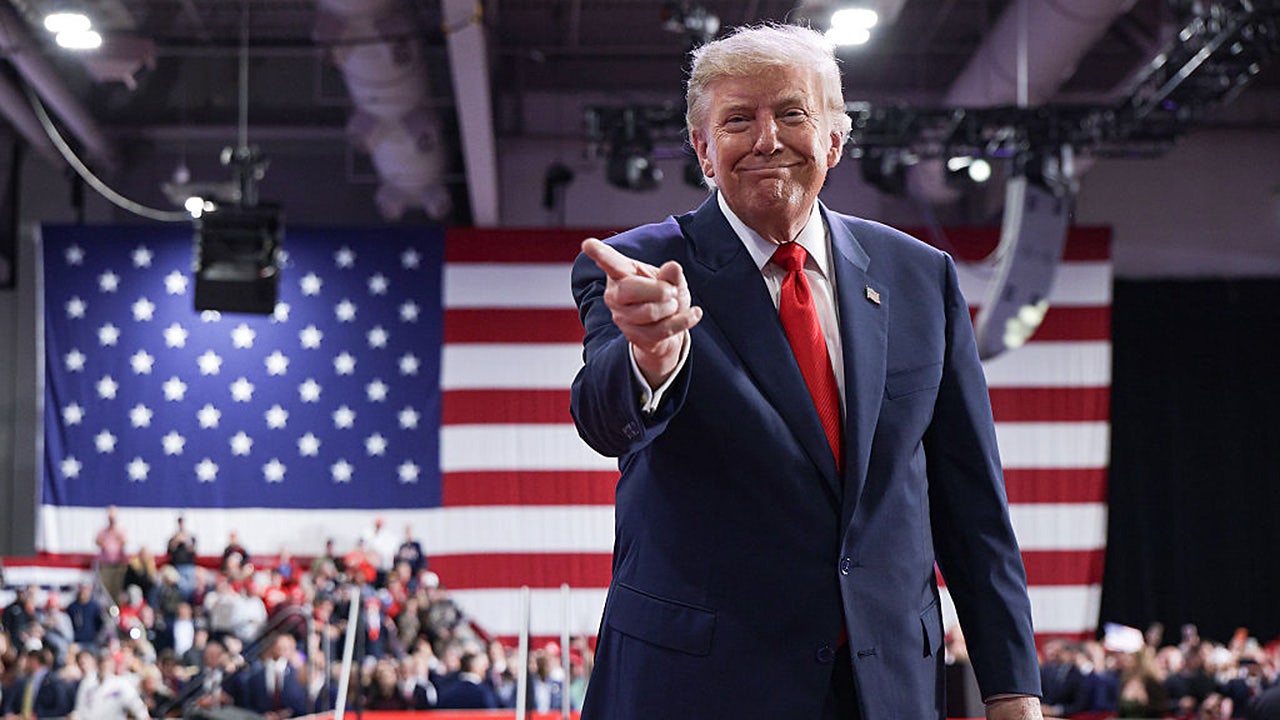
There was something electric in the air at Syracuse’s arena on Friday night, a familiar charge that has defined American politics for the better part of a decade. President Donald Trump, returning to his native New York, stepped onto the stage not as a man who once left the White House, but as a conquering hero making a homecoming pilgrimage. The crowd roared with the kind of fervor usually reserved for championship games, waving signs and chanting his name. Trump soaked it in, then gave them exactly what they wanted: a sweeping celebration of what he called America’s “New Golden Age,” a vision of economic rebirth, strengthened borders, and a nation standing tall again on the world stage. But the rally wasn’t just about nostalgia or celebration. It was a strategic mission, a final push before November’s midterm elections, with Trump using his magnetic pull to lift Republican gubernatorial candidate Bruce Blakeman in a deeply blue state. The president framed the evening as a direct challenge to New York’s Democratic leadership, promising that with the right Republicans in place, the Empire State could shed its burdens of high taxes, costly energy, and unsafe streets. For the thousands who packed the venue, it felt less like a campaign stop and more like the start of a movement—a chance to recapture something they felt had been lost, not just in their state but across the country. Trump, ever the showman, made sure every person in that room knew they were part of something bigger than a single election. He spoke of destiny, of redemption, of a nation that had been through chaos and was now finding its footing again. And at the center of it all was New York, his home turf, a place where he still deeply believes he belongs in the hearts of everyday Americans, whatever the ballots say.
Paragraph 2
The core message of the night was simple and urgent: treat this election as if Trump himself were on the ballot. “Please pretend I’m on the freaking ballot,” he implored, his voice both pleading and commanding, a hallmark of his unique connection with supporters. He warned that the gains of his administration—tax cuts, deregulation, border security, a booming pre-pandemic economy—could be erased if voters stayed home. “In a certain way, I am on the ballot because they can take away everything that we got,” he said, drawing knowing nods and applause. This was Trump framing the midterms not merely as a referendum on Joe Biden or Democrat Kathy Hochul, but as a defense of his own legacy. And he made clear that Blakeman, the Nassau County executive and long-time Republican operative, would be his instrument of change in Albany. Trump offered a direct pledge: if Blakeman wins, the White House will be his partner. “I’ll help him from the White House,” Trump promised, painting an image of Washington and Albany working in tandem to slash taxes, cut red tape, and restore law and order. It was a powerful contrast to the current state of affairs, with Hochul in charge. Trump painted Hochul as a rubber stamp for progressive policies that had driven families and businesses out of the Empire State. He spoke of her as if she were the embodiment of everything wrong with modern Democratic governance—too soft on crime, too eager to raise taxes, too distant from the struggles of working people. For the crowd, many of whom felt politically homeless in blue New York, Trump’s words were cathartic. They hadn’t heard a leader speak so directly about their frustrations in years, and they were ready to channel that energy into the ballot box.
Paragraph 3
Trump’s critique of Hochul was detailed and personal, hitting on issues that resonate deeply with New Yorkers and the broader American public. He blasted the state’s property taxes, among the highest in the nation, and cited astronomical utility costs that have made heating homes in winter a near-luxury. He highlighted a growing sense of public insecurity, especially in New York City’s subway system, where violent incidents have made headlines and frightened commuters. “Your taxes are through the roof. Your utility bills are insane. Your streets are not safe,” Trump said, summarizing the state’s woes with his characteristic bluntness. He argued that Blakeman could reverse these trends by embracing domestic energy production—something Trump has championed as a key to lowering costs for families—and by fostering a business climate that rewards risk-takers instead of punishing them. To illustrate the potential of New York, Trump pointed to a beacon of economic hope: Micron’s planned $100 billion semiconductor complex in central New York. This project, Trump noted, is expected to generate tens of thousands of jobs, including 9,000 direct jobs with Micron, and will place the region at the forefront of American technological manufacturing. “This will soon be the home to the largest semiconductor manufacturing facility ever built in the Western Hemisphere,” he declared, his voice filled with pride. It was a rare piece of good news in a state often dismissed as a failing bureaucracy, and Trump used it as a powerful talking point. He reminded voters that such investments don’t happen in a vacuum. They require leaders who understand the private sector, who view businesses as partners rather than adversaries, who can create the conditions for growth. In his telling, Hochul and her administration were simply obstacles to that vision, mired in ideological purity tests while the world moved forward. For the people in the crowd, many of whom worked blue-collar or middle-class jobs, the promise of good wages and stable employment was a lifeline. Trump’s economic narrative, though broad-stroked, hit home. He wasn’t just promising tax cuts; he was promising a return to dignity through work, a chance for young New Yorkers to build futures in their hometowns instead of fleeing to cheaper states. The applause was deafening, a signal that the economic message would be a cornerstone of the Republican campaign in the weeks ahead.
Paragraph 4
Standing shoulder to shoulder with Trump was Bruce Blakeman, a seasoned political figure who has waited for this moment. Blakeman echoed the president’s rhetoric but added his own flavor, speaking not as a Trump clone but as a pragmatic conservative who understands New York’s unique challenges. “We have to create good jobs, good benefits to keep our young people here,” he said, his tone earnest. He talked about the brain drain that has hollowed out communities across the state, as graduates pack their bags for Texas, Florida, or North Carolina. His solution was to treat business as a partner, not an enemy—a subtle but important distinction that resonated with both the working class and the entrepreneurial crowd. Blakeman promised to cut taxes and utility bills, to focus relentlessly on public safety, and to make New York attractive to families again. He spoke of a future where government is leaner, more accountable, and more respectful of the hard-earned dollars of taxpayers. The partnership between Trump and Blakeman was on full display, with the president offering not just moral support but specific promises of federal cooperation. Trump then swung his endorsement to other down-ballot races, naming Kailee Buller, a Republican challenging Democrat Rep. John Mannion in New York’s 22nd District, and Anthony Constantino, running for the open 21st District seat. Both candidates embody the new wave of Republican energy that has emerged in recent cycles—younger, diverse, and unapologetically pro-opportunity. Trump urged the crowd to send these candidates to Washington, arguing that every extra seat in the House helps him implement his agenda and counter the “radical left” in Congress. The rally was becoming a full-throated call for a united Republican ticket, from governor down to local races. Blakeman, for his part, seemed genuinely energized by the president’s presence, understanding that a Trump endorsement can both energize the base and attract independents tired of Democratic rule. He did not shy away from the national implications, instead leaning into the idea that a win in New York—even a close race—would send shockwaves across the country and demoralize the Democratic establishment. For the audience, the message was clear: this is not a hopeless fight but a winnable one, and their votes, their effort, their presence tonight are the difference makers.
Paragraph 5
The evening’s most surprising human moment came when legendary former heavyweight boxing champion Mike Tyson stepped onto the stage, invited by Trump himself. Tyson, a Brooklyn native with a complicated past and a wild history with the president, appeared genuinely moved to be there. “I’m just happy to be up here with my president, President Trump,” Tyson said, his voice softer and more thoughtful than his boxing persona suggests. “There’s no way in the world I would ever be here if it wasn’t for a president like Donald Trump. Thank you. Thank you very much.” The moment was both surreal and oddly touching, a flicker of cross-cultural connection in a highly polarized arena. Trump, always comfortable in the spotlight, laughed and made a self-deprecating joke: “I don’t want to fight him.” Then he complemented the former champion, marveling at how good Tyson looked. The exchange was brief, but it underscored Trump’s unique ability to draw personalities from all walks of life, to make everyone feel like they belong at the table. For the crowd, seeing Tyson was not just a celebrity appearance—it was validation. Tyson has long been seen as someone who overcame immense adversity, who emerged from darkness to find redemption. His endorsement, however like a cameo, carried symbolic weight. It suggested that Trump’s message of second chances and strength resonates with those who have lived through struggle, who know how easily one can be written off, and who appreciate a leader willing to stand by them. The moment also humanized Trump, showing a playful side that occasionally gets lost in the rhetoric of battles and divisions. He didn’t have to introduce Tyson; he didn’t need the buzz. But he did it anyway, because he understands that rallies are not just policy speeches—they are communal experiences, celebrations of a shared identity. And for a few minutes, the world got to see two icons from vastly different arenas, joking and laughing together, a small island of joy in the storm of campaign season. It was a reminder that politics, at its most fundamental level, is still about people, connections, and the stories that bring us together.
Paragraph 6
As the night drew to a close, Trump returned to the core message that would carry him forward into the final stretch before Election Day. “We’re going to elect a Republican House and Republican Senate,” he declared, the words rising above the crowd’s roar like a trumpeter’s call. He did not pretend that the path would be easy. He acknowledged that New York is a tough battleground, that the machine of the Democratic Party is powerful, and that the media will spin every development against them. But he urged supporters to rise above the noise, to channel their frustration into action, to organize, persuade, and vote. “We need you to make a roaring showing at the ballot box,” he said, making eye contact with different parts of the audience, as if each person could singly see the future. He spoke of family, of legacy, of the children who would inherit this country, and warned that the stakes have never been higher. For Trump, this was not just about winning seats; it was about saving a nation he believes is drifting from its founding principles. He promised to return to New York, to campaign alongside Blakeman and the other Republicans, and to ensure that the Empire State becomes a red beacon of hope once more. The rally ended with a surge of energy—people hugging, strangers high-fiving, flags waving, and chants of “USA, USA” blending with “Four more years” as if echoing a past glory and anticipating a future one. For many in the crowd, this event was not just a pit stop on a national campaign tour; it was a pilgrimage, a chance to see the man who gives voice to their anger and their dreams. They left the arena with lighter steps, believing that something real is changing, that their voices matter, that perhaps—just perhaps—the Golden Age is more than a slogan, it’s a promise that they can help bring to life. As the night settled over Syracuse, the question hung in the air: can this enthusiasm be converted into votes? Can Trump’s presence, Tyson’s star power, and Blakeman’s local appeal tip a blue state red? The answer will come soon, but for now, the roar of the crowd suggests belief—and in politics, belief is the first step toward victory.