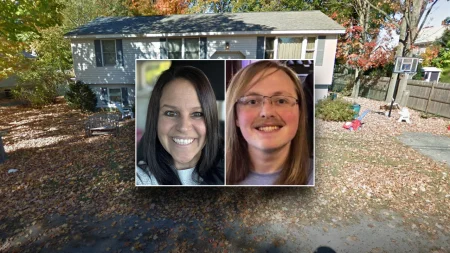





For nearly four months, the disappearance of Elena Katherine Moore haunted a small South Carolina community, leaving friends, family, and strangers to wonder what had happened to a vibrant 39-year-old fitness enthusiast who simply vanished after leaving a mental health facility. The questions were painful, the theories often dark, and the absence of answers made the waiting almost unbearable. But on Friday, the mystery was finally laid to rest with a conclusion that surprised many and saddened all. Lexington County Coroner Margaret Fisher announced that Moore died of natural causes stemming from a heart condition, specifically complications of cardiac dysrhythmia with premature ventricular contractions, a disorder in which the heart beats irregularly and can disrupt its normal rhythm. The announcement effectively ended months of speculation that Moore had been the victim of foul play, and while the resolution brought a measure of certainty, it also carried the deep sorrow of knowing that a young woman with so much life ahead of her had succumbed to a silent medical vulnerability. Fisher’s words were careful and compassionate, acknowledging the weight of the case and the emotional toll it had taken on everyone touched by it. For the community, the conclusion was not just a legal determination but the end of a painful chapter marked by fear, rumor, and grief. Elena Moore would not be coming home, but at last, those who loved her knew what had happened to her.
The autopsy findings were thorough, and Fisher was unequivocal in her assessment. There was no evidence of traumatic injuries, no broken bones, no signs of strangulation, and no indication of sexual assault. Toxicology testing detected alcohol in Moore’s system, but no other substances, and there was nothing to suggest that drugs or external intervention had contributed to her death. Fisher explained that the heart condition she identified was the cause, and she was direct in addressing the speculation that had swirled online and in the community. “We never saw anything that would indicate homicide. Nothing,” she said. “We were able to follow her path. We were able to pull her medical history, her mental history. We knew that this was not a homicide.” The coroner’s confidence was reassuring, but it also underscored how easily a medical emergency can be mistaken for something sinister, especially when a person disappears under strange circumstances. For those who had followed the case, the revelation was a reminder that not every tragedy has a villain. Sometimes the enemy is internal, a malfunctioning heart, a brain struggling with mental illness, a body that betrays its owner despite every attempt to live well. Elena Moore had been a fitness trainer, someone who represented health and strength, and the idea that her own heart had failed her was almost too cruel to process. Yet the medical evidence was clear, and the coroner’s office stood by its conclusion.
One of the most painful aspects of the case involved Moore’s husband, Brannon Slice, who had found himself at the center of public suspicion even though authorities never considered him a suspect or even a person of interest. Fisher went out of her way to address the scrutiny directed at him, and she did so with striking empathy. “The only person that really tried to help this girl to get her help through the system is her husband,” Fisher said. “He reached out. He tried many times to get her help.” These words carried enormous weight, because in the days and weeks after Moore disappeared, online sleuths and armchair detectives had pointed fingers at Slice, painting him as a figure of suspicion without evidence. The coroner’s statement was a forceful rebuttal to that narrative, describing a husband who had repeatedly attempted to navigate a mental health system that seemed to fail his wife when she needed it most. Moore had been involuntarily committed on June 5 after experiencing what she herself described as a severe mental health crisis. She remained at the facility for nearly a week, but on June 11, she was discharged and placed in a taxi, sent out into the world with no clear plan and no one to meet her. Slice had offered to pick her up, but the facility arranged transportation instead. That decision would prove devastating, as Moore was left to navigate the aftermath of a psychiatric crisis while battling a heart condition that had been documented for years.
The timeline of Moore’s final hours reads like a tragedy in slow motion, filled with confusion, fear, and missed opportunities. After being discharged from the mental health facility, the taxi took her to a CVS on Sunset Boulevard in Lexington, where she had previously worked. She entered the store and told a manager that the taxi driver was stalking her and trying to hurt her. The manager called the police, but by the time officers arrived, Moore was gone. The taxi driver also went inside looking for her after she failed to return to the cab, and the encounter, which might have been a moment of rescue, became another lost chance. Later that evening, Slice told investigators that Moore had checked into a Planet Fitness at 6:38 p.m., a detail that suggested she was trying to hold on to some sense of normalcy. She was then seen on surveillance footage walking through a Publix parking lot on Old Cherokee Road. Those were the last confirmed sightings of her alive. Her body was found on June 17, six days after she disappeared, and the search that had mobilized a community came to an end with grief and unanswered questions. In hindsight, the pieces of the puzzle seem clear: a woman in the throes of mental distress, a known heart condition, a series of system failures, and a solitary journey into the night. But for those who loved her, the clarity of the medical explanation does little to ease the pain of knowing she was alone when she died.
Fisher’s investigation delved deeply into Moore’s medical history, and what she found painted a troubling picture of a woman whose physical and mental health were intertwined in ways that should have been addressed long before that June day. Moore had experienced an irregular heartbeat since she was 14 years old, and more recent medical records documented cardiac arrhythmia, sinus tachycardia, and hypertension. These conditions were known, yet they seemed to have been treated as separate issues from her psychiatric struggles. The coroner questioned why Moore had been discharged from the mental health facility despite what she described as a documented psychiatric crisis. “This whole situation would be different if somebody at that mental health facility … they all saw her medical, her mental crisis,” Fisher said. “But yet she was released.” The frustration in her voice was unmistakable, and it echoed a broader concern about how the mental health system treats people who are in acute distress. Moore was not a statistic; she was a woman with a history, a family, and a heart condition that made her especially vulnerable. Her release into a taxi, with no follow-up, no caregiver, and no plan, was a systemic failure that may well have contributed to her death. Fisher did not say that the facility caused her death, but she made it clear that the decision to release Moore was questionable, and that a more compassionate, comprehensive approach to her care might have changed the outcome.
In the end, the story of Elena Katherine Moore is not a murder mystery, but it is still a tragedy, and it leaves behind lessons that are difficult to ignore. Her death was ruled natural, a term that somehow feels both accurate and inadequate for a 39-year-old woman whose life ended so suddenly and so quietly. The heart condition that killed her was a medical reality, but it existed alongside a mental health crisis that had been identified, documented, and then seemingly ignored at the moment of greatest need. Her husband, Brannon Slice, was cleared of any wrongdoing and was instead remembered as the person who fought hardest to get her help, a detail that should cause those who speculated about him to reflect on the damage that unfounded accusations can cause. The community that searched for Moore, prayed for her, and mourned her now has an answer, but closure is a complicated thing. The coroner’s finding closes the investigation, but it does not erase the image of a woman walking through a parking lot alone, or the thought of her heart giving out in the darkness. Elena Moore was a fitness enthusiast, a wife, a daughter, a friend, and a person who deserved a better ending. Her story is a reminder that mental illness and heart disease are not separate worlds but connected realities, and that the people who suffer from them need more than a discharge and a taxi ride. They need care, compassion, and someone to walk with them through the darkest moments. In her memory, perhaps the greatest honor would be a commitment to ensuring that no one else is released into the night without a safety net, especially not someone whose heart has been struggling since childhood.