


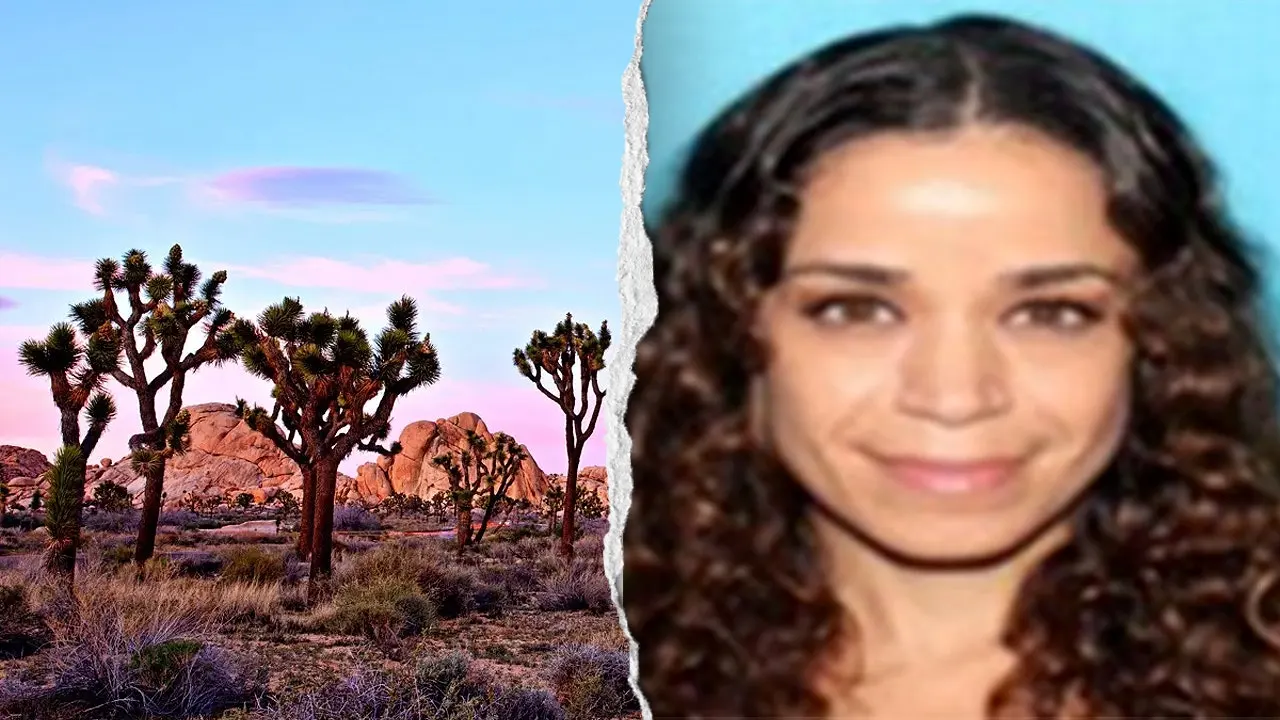
The desert stillness of Joshua Tree, with its stark rock formations and sweeping, open skies, became the backdrop for a deeply human tragedy on Friday, as Los Angeles police homicide detectives combed the rugged terrain for answers in the disappearance of Christina Lynn Downer. The search, conducted by the LAPD’s Robbery-Homicide Division, was confirmed by a department spokesperson, though officials remained tight-lipped about what exactly they were looking for—whether remains, a weapon, a piece of clothing, or some other scrap of evidence that might finally unlock the mystery of what happened to the 38-year-old woman. Downer vanished from Los Angeles’s Koreatown neighborhood in late November 2025, and for months her family has lived in a suspended state of anguish, caught between hope and despair, waiting for news that never seemed to come. Her brother, Jimmy Fowlie, a writer for “Saturday Night Live,” has become the public voice of that private pain, using his platform not for fame but for a desperate, heartfelt plea for truth. The Joshua Tree search, which took place months after her disappearance, signaled that investigators may have developed new leads, but it also underscored the cruel reality that for every step forward in a missing person’s case, there are often more questions than answers. The location itself seemed almost poetic in its loneliness—a vast, unforgiving landscape where secrets can hide for years, and where the line between life and death is often measured in miles of emptiness. For the family, the search was not just a procedural development; it was another wrenching chapter in a story they never imagined they would have to live, a story that has transformed their sister, their daughter, their loved one into a case number, a headline, and a haunting question mark.
Christina Lynn Downer was 38 years old when she disappeared, an age at which life is supposed to be full of possibility, of plans, of tomorrows. She was last seen in the Koreatown area of Los Angeles, a bustling, densely populated neighborhood known for its neon signs, late-night restaurants, and constant motion—a place where it seems almost impossible for someone to simply vanish without a trace. And yet, in late November 2025, that is exactly what happened. By December, her family had filed a missing person report, and the machinery of law enforcement began to turn, but as weeks passed, the case grew colder and more confusing. For those who loved her, the disappearance was not just an absence but a kind of emotional freefall. They replayed her last conversations, scrutinized her social media posts, and searched their memories for any sign, any clue, any explanation that might make sense of the senseless. Fowlie, who has a public profile because of his work on one of television’s most iconic comedy shows, found himself in the unimaginable position of begging strangers for help, sharing intimate details of his sister’s life in the hope that someone, somewhere, had seen something. The public nature of his plea was a stark contrast to the private grief he and his family were enduring. Behind the Instagram posts and the media interviews, there were sleepless nights, tearful conversations, and the slow, grinding realization that some questions may never be answered. The case became a part of a larger, painful pattern: families across the country who watch their loved ones disappear into thin air, who fight to keep their stories alive, and who learn that the justice system, for all its resources, cannot always provide the closure they crave.
In late April, the family received news that would shatter whatever fragile hope remained. Fowlie took to Instagram to announce that the LAPD had informed them that Christina was no longer alive, and that her case had officially shifted from a missing person investigation to a homicide investigation. His words were raw and aching, carrying the weight of a grief that had finally been given a name. “Our prayers for her to be found safely have transformed into prayers for the truth to be revealed and for those responsible to be held accountable,” he wrote. It was a statement that resonated far beyond the immediate circle of family and friends, touching anyone who has ever loved someone and feared for their safety. For Fowlie, the announcement was not just an update; it was a public surrender to a reality he had likely dreaded for months. The shift in classification meant that the case was no longer about finding Christina alive, but about finding out who had taken her life and why. It meant that somewhere in the investigation, evidence had emerged that pointed to foul play, that the circumstances surrounding her disappearance were not merely suspicious but criminal. The family’s grief, already immense, now had a new focus: the need for justice. They were no longer waiting for a miracle; they were demanding accountability. And yet, even as Fowlie shared this devastating news with the world, the LAPD did not confirm his account, creating a strange and painful limbo in which the family was told one thing privately while the public record said another. It was a dissonance that only added to their suffering, leaving them to wonder why the official narrative did not match the truth they had been given.
The LAPD’s public response to Fowlie’s announcement was careful, measured, and in some ways, confusing. While acknowledging that the circumstances of Downer’s disappearance were suspicious, the department maintained that she had not been located, and that her case remained a missing person investigation. This was a stark contrast to the family’s assertion that the case had been reclassified as a homicide. The department’s statement, reported by FOX 11 Los Angeles, seemed to walk a fine line between transparency and secrecy, offering the public just enough information to understand that something was deeply wrong, but not enough to clarify exactly what that something was. “Although the circumstances of her disappearance are suspicious, Ms. Downer has not been located,” the department said, adding that detectives would continue investigating until the case was resolved. For the family, this public contradiction was agonizing. They had been told that Christina was dead, that her case was now a murder investigation, and yet the world was being told a different, more cautious version of events. It raised difficult questions: Were investigators trying to protect the integrity of their case? Were they holding back information that could jeopardize an eventual arrest? Or was there a genuine disagreement between what the family had been told and what the evidence actually supported? Whatever the reason, the discrepancy left the public confused and the family feeling isolated in their grief. In the world of missing persons and homicide investigations, information is often treated as a precious commodity, doled out sparingly and strategically, but for the loved ones left behind, every scrap of information is a lifeline. The lack of clarity only deepened their pain, transforming their loss into a public battle over narrative and truth.
Adding another layer of mystery to the case were Fowlie’s allegations about his sister’s cellphone and social media accounts. In his emotional public statements, he claimed that someone had used those accounts to conceal her disappearance, to make it appear as though she had voluntarily gone off the grid. He described a calculated effort to deceive, with the individual or individuals in possession of her phone using it to ask for money and to create a false narrative that she was simply choosing to disappear. “The individual(s) in possession of her phone used it to hide the fact she was gone, to ask for money, and to create a false narrative that she was going ‘off the grid,’” he wrote. It was a chilling accusation, suggesting that whoever was responsible for Christina’s disappearance was not just trying to evade detection, but actively working to manipulate her digital footprint, to rewrite the story of her final days. In an age where our phones are extensions of ourselves, where our social media profiles are public records of our lives, the idea that someone else could take control of those tools and use them to deceive is deeply unsettling. It speaks to a cold, calculating mindset, one that is more concerned with covering tracks than with the life of a human being. The allegations have not been publicly confirmed by the LAPD, and they remain just that—allegations. But they paint a picture of a case that is not merely tragic but sinister, one in which the truth has been actively hidden, manipulated, and obscured. For the family, the thought of Christina’s own accounts being used against her, to fool her loved ones and the public, is a violation that compounds their grief. They are left to wonder not only what happened to her, but how many lies were told in her name, how many people were fooled, and how long the deception might have continued if they had not pushed so hard for answers.
Friday’s search in Joshua Tree raised new hopes and new fears, but it also left many questions unanswered. An LAPD media relations officer told Fox News Digital that investigators could not confirm whether detectives were looking for human remains, a suspect, or other evidence, nor whether search dogs were involved. It remains unclear what led investigators to that remote desert area, whether a tip, forensic evidence, or some digital breadcrumb pointed them there, and whether the department has changed the official classification of Downer’s case since its last public statement. For the family, each new development is a double-edged sword, offering the possibility of answers while also bringing the reality of their loss closer. The search for Christina is no longer just about finding her; it is about finding the truth, about holding someone accountable, about making sure that her life and her death are not forgotten in the vastness of the desert or the noise of the news cycle. Fox News Digital has reached out to Fowlie for comment, but the silence that surrounds the case is as loud as any headline. In the end, this is a story about a family fighting for answers, about a brother who used his voice to speak for his sister, and about a woman whose life was cut short in circumstances that remain shrouded in mystery. The search in Joshua Tree is a reminder that even in the most desolate places, hope and justice can be pursued, but it is also a reminder that some wounds may never fully heal. For Christina’s loved ones, the desert may hold the key to what happened, but it will never give them back the time they lost with her. And so they wait, in grief and in hope, for the truth to be revealed, trusting that in the end, love and justice will prevail over the darkness that took her away.