


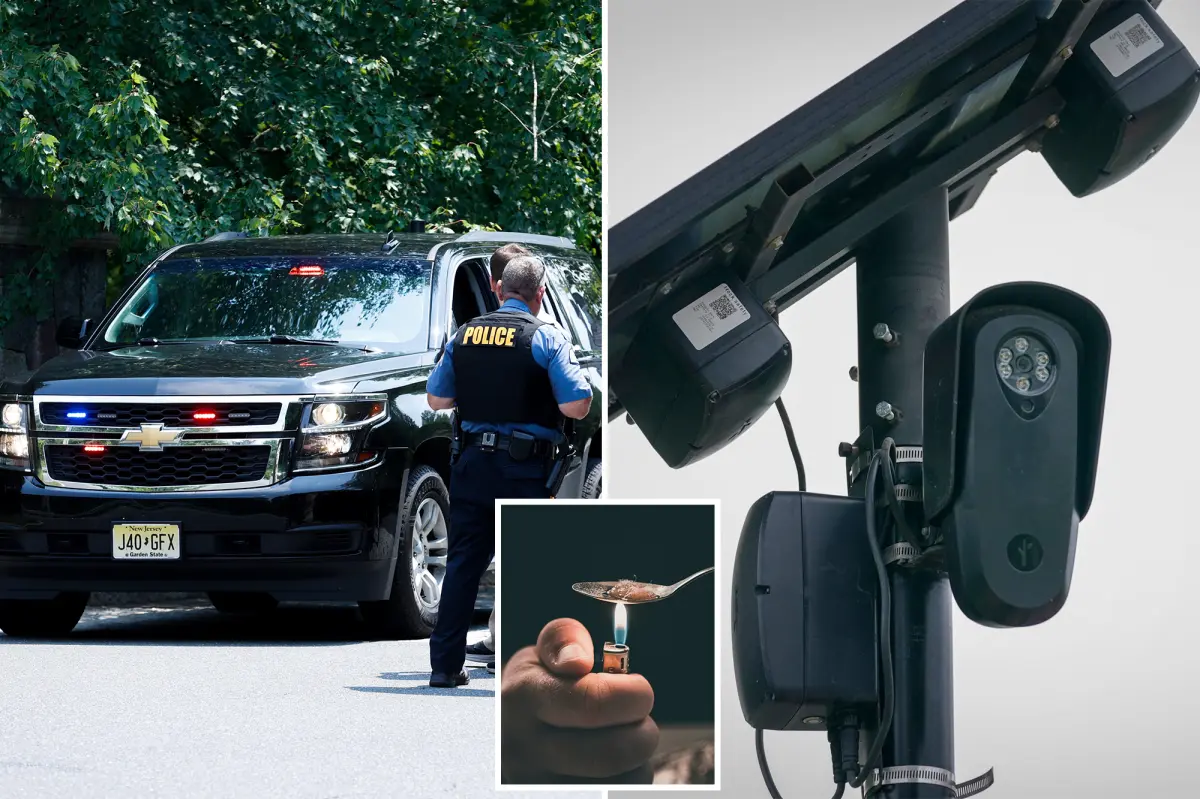
The opioid crisis did not announce itself with sirens or headlines in Washington Township, New Jersey; it crept through the community one prescription bottle at a time, leaving behind grieving families, overwhelmed first responders, and a generation of young people vulnerable to addiction. For years, residents watched neighbors, classmates, and even their own children fall into the grip of heroin and fentanyl, and they hoped that the billions of dollars in legal settlements from pharmaceutical companies would finally bring resources, treatment, and prevention to their streets. So when news broke that the township had spent more than $170,000 in settlement funds meant to fight drug addiction, the betrayal felt visceral. According to records reviewed by NJ.com, that money, earmarked for substance abuse initiatives in 2024 and 2025, was instead used to purchase 15 Flock surveillance cameras and two 2024 Chevrolet Tahoe SUVs for the police department. For residents who had watched the crisis devastate their town, this was not just a bureaucratic misstep; it was a broken promise to the living and the dead. The very equipment that was supposed to save lives had been exchanged for high-tech cameras and shiny patrol vehicles, while the people still struggling with addiction were left waiting for help that never came.
The details of the spending are as egregious as they are revealing. Washington Township officials told the state that the $170,446 was going toward substance abuse initiatives, but the actual expenditures paint a very different picture. The 15 Flock cameras, which are sophisticated automatic license plate readers, and the two Chevrolet Tahoes, which are heavy-duty, high-end SUVs, are not addiction treatment tools by any stretch of the imagination. They are law enforcement assets, useful for surveillance and patrol, but they do nothing to fund counseling, expand access to naloxone, support recovery housing, or bring prevention programs into the schools. Sandy Gibson, an addiction specialist at The College of New Jersey, did not mince words when asked about the decision. “That’s absolutely egregious,” she said, adding that the state deserves blame for failing to audit how these funds were actually used. “But I would hold the state accountable. We’re not auditing?” Her frustration underscores a broader systemic failure: when settlement dollars come with weak oversight, local governments can quietly convert money meant for healing into toys for police departments, and no one notices until a reporter digs through the paperwork. For a township that once ranked among the worst in New Jersey for addiction per capita, the choice to prioritize cameras and SUVs over people sends a chilling message: that the machinery of enforcement matters more than the work of recovery.
Sadly, Washington Township is not an outlier. An NJ.com investigation found that dozens of New Jersey communities burned through at least $2.3 million in opioid settlement money on purchases that have nothing to do with addiction, including concerts, branded clothing, and even a muscle car. These funds came from the sweeping legal settlements with major pharmaceutical companies, distributors, and pharmacies—agreements totaling more than $50 billion nationwide to resolve thousands of lawsuits over the companies’ role in fueling the epidemic. The money was supposed to be a form of restitution, a way for the industry to help repair the damage it caused. It was intended for education, prevention, and treatment—things that could actually reduce overdose deaths and support families shattered by substance use disorder. Instead, in town after town, the cash became a slush fund for municipal upgrades, street lighting projects, and branded gear. The pattern is deeply troubling because it reveals a fundamental misunderstanding of what these settlements were for. They were not meant to beautify downtowns or equip police fleets; they were meant to address one of the most devastating public health crises in American history. When communities squander that money on frivolous purchases, they are effectively telling their most vulnerable residents that they are not worth investing in.
Washington Township’s own history makes the misuse even more striking. During the height of the opioid crisis, the township recorded 5.78 cases of addiction per 1,000 people in 2019 and 5.36 in 2021, placing it in the worst 30% of New Jersey municipalities for addiction per capita. Those numbers are not abstract statistics; they represent real people—the teenager who overdosed in a bathroom stall, the mother who lost her son to a bad batch of heroin, the father who spent years in and out of rehab. According to the township’s own reporting, it claimed to have spent $134,321 on a middle school “narcotics and education” program in 2024 and another $36,125 earmarked for “early prevention” in 2025. But local records show that no such substance abuse prevention was actually delivered in the schools. Instead, the money went to the two SUVs and the cameras, leaving a void where education and early intervention should have been. Residents like Joe Junfola are left to wonder how their leaders could be so reckless. “These folks … they’re responsible for our tax dollars,” he said. “To the extent that they get grants, such as the opioid funds, they’re tasked with using that money responsibly.” His words echo the feelings of a community that has been asked to trust its officials, only to see that trust betrayed time and again.
The political blame game that followed is almost as disheartening as the spending itself. Washington Township Solicitor Matthew Thomas Rooney defended the current administration by pointing fingers at the previous one. “The current administration is committed to transparency, and it will continue to review all budgeting priorities, including the best ways to help combat the opioid crisis … and will continue to work with the state on the best path forward,” he said. “Nothing is more important to the current administration than keeping the people of Washington Township safe.” But that statement rings hollow to those who remember that the current leadership signed off on the budget that included these purchases. Former Mayor Laurie Burns, a Democrat, was quick to call out the hypocrisy. “It’s a joke that the Washington Township’s Republican Mayor and Council would now try to wash their hands of decisions they made and point the finger elsewhere,” she said. “They did it, and they have a responsibility to answer for it now.” The back-and-forth reveals a troubling dynamic in local governance: rather than owning mistakes and working to restore public trust, officials seem more interested in protecting themselves politically. Meanwhile, the people who need help most continue to wait, their struggles overshadowed by arguments over who is at fault.
Ultimately, this story is not just about a small New Jersey town or a few bad decisions; it is about what happens when society loses sight of the purpose of public money. The opioid settlement funds were supposed to be a lifeline, a chance for communities to build the kinds of support systems that prevent addiction and save lives. Instead, in Washington Township and across the state, that lifeline has been twisted into something else—a way to buy expensive equipment, to look tough on crime, to score political points. Sandy Gibson’s words should haunt every lawmaker in New Jersey: “I can’t see how there’s been no response or action taken to address that. Inaction at the level of the state is permission.” Without robust auditing, transparent reporting, and real consequences for misuse, these funds will continue to vanish into the pockets of local governments, while the addiction crisis rages on. The residents of Washington Township deserve better. The families who lost loved ones deserve better. And the young people who are still at risk deserve better than a police SUV driving past them as they struggle to find help. This is not a moment for excuses or blame-shifting; it is a moment for accountability, for leadership, and for remembering that the money was never meant to be a prize for municipalities. It was meant to be a second chance for people drowning in addiction. And that chance is slipping away, one misplaced dollar at a time.