


Earlier this week, in a quiet announcement from a Seattle startup that could easily have been overlooked in the noise of all the other space news, Kapta Space said something that deserves attention. The company is building radar sensors for satellites—not the enormous, custom-built, power-hungry radars that historically have flown in orbit, but lower-cost, software-definable, electronically steerable systems that are designed to be mass-produced, not hand-assembled. Kapta announced it had raised $24 million in a Series A round, led by Washington Harbour Partners, a defense-technology-focused investment firm,with Bison Ventures co-leading. The round drew participation from MetaVC Partners—the metamaterials-focused fund backed by Bill Gates and Nathan Myhrvold—alongside MYDA Capital, Entrada Ventures, Aurelia Foundry,and Fitz Gate Ventures. Counting an earlier $5 million seed round and a $1.8 million Department of Defense grant, Kapta has now raised roughly $30 million since its founding in 2023. But the number that really matters is not the total; it’s what the company plans to do with the money. Kapta says the fresh capital will go toward expanding manufacturing, qualifying its hardware for actual spaceflight,and preparing for initial orbital demonstration missions. That may sound incremental, but in the world of space hardware, it is everything. A prototype can impress investors;a satellite-ready radar that can survive the brutal journey to orbit and then perform in the cold, radiation-soaked environment above Earth is another species entirely. The company is betting that its approach to radar—built around engineered metamaterials—can make it possible for the United States and its allies to field constellations of sensors that are affordable enough to fly in large numbers, responsive enough to track moving targets in real time,and reliable enough to treat as infrastructure. This announcement, moreover, comes at a moment when the commercial space ecosystem in the Pacific Northwest is attracting growing attention, with Kapta operating in the same region as major satellite operations like SpaceX’s Starlink facility in Redmond and Amazon’s low-Earth-orbit satellite initiative. That is the kind of bet that takes years to resolve, but the capital and the team behind it just became a lot harder to ignore.
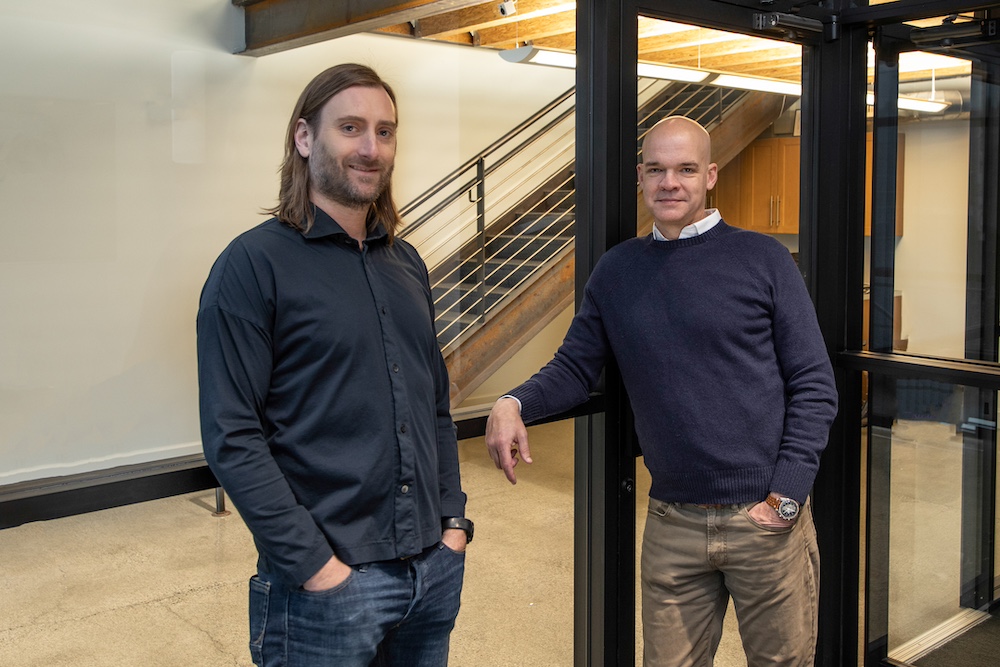
To understand why Kapta exists, start with the people. The company was founded in 2023 by Milton Perque, who serves as CEO, and Adam Bily, both of whom spent years at the intersection of radar, antennas,and hardware in the Pacific Northwest. Perque and Bily were engineering leaders at Echodyne, a radar company that pioneered a different kind of electronic scanning for ground-based and vehicle-mounted systems. Before that, Perque’s path wound through Metacept and Intellectual Ventures, the famed invention lab co-founded by Nathan Myhrvold,which is a reminder that the Pacific Northwest has its own tradition of deep, sometimes eccentric, technology research. Bily, for his part, worked as an antenna engineer at Apple and at the satellite startup Astranis,so he understands both the consumer-electronics drive for manufacturability and the unforgiving constraints of spacecraft design. That combination matters, because Kapta is trying to do something that sounds almost contradictory: make space radar both better and cheaper. Traditional synthetic aperture radar satellites are often described as the size of a school bus, requiring enormous power, intricate mechanical structures,and price tags that run into the hundreds of millions of dollars. They can produce stunning images, but they are not the kind of thing you can build in dozens or hundreds. Kapta’s core idea is to use metamaterials—materials engineered at microscopic scale to manipulate electromagnetic waves in ways that bulk materials do not—to create a radar antenna that can steer its beam electronically without the heavy, complex, expensive phase-shifting hardware that conventional phased arrays require. The company calls this architecture MESA,short for Metamaterial Electronically Scanned Array. According to Kapta, this approach delivers high-resolution geospatial imageryand ground-target tracking,but without the extreme cost, power demands,and manufacturing complexity that have historically made space radar a luxury tool rather than a workhorse capability. In plain English, they are trying to shrink something enormous and expensive into something modular and producible,without sacrificing the capability that makes it valuable. That is the kind of problem that sounds simple on paperand brutal in practice, which is why having founders who have spent years building radar and antennas matters. They know exactly where the costs and complexities hide.
The new round is, in many ways, a recognition that the company has reached the point where engineering promise needs to become manufacturing reality. In its announcement, Kapta said the money will be used to expand production, qualify hardware for spaceflight,and prepare for initial orbital demonstration missions. That last piece is crucial: before the U.S. military or commercial customers are going to trust a new radar architecture, they want to see it work in orbit,not just in a lab. The funding is essentially a bridge from “we have built something that works on a bench” to “we can build many of themand they will survive space.” Milton Perque, Kapta’s co-founder and CEO, framed the company’s mission in broader terms: “The mission calls for persistent awareness,and that requires us to rethink how radar has to work at constellation scale. Traditional architectures are cost-prohibitiveand were never designed for the scale these missions now demand.” That quote captures the strategic wager behind Kapta. It is not enough to build one great radar; the mission of persistent awareness—the ability to keep watching a target across the planet,in real time,without losing track of it—requires constellations of sensors. And constellations require manufacturing economics,not just physics breakthroughs. Mina Faltas, founder and CEO of Washington Harbour Partners,the firm that led the round,echoed that sentiment.“Kapta’s MESA architecture changes that equation with a modular, highly manufacturable approach to electronically steerable radar,” she said.“We believe its combination of performance, cost,and scalability will make Kapta a foundational supplier to the next generation of U.S.and allied space architectures,and we’re thrilled to lead the Series A.” For someone like Faltas,whose firm focuses on defense technology,Kapta sits at the intersection of two of the most sought-after outcomes in modern military capability: space-based sensing that is resilient because it is distributed,and manufacturing supply chains that can actually scale. The fact that multiple investors from different corners—from Gates-backed metamaterials loyalists to defense specialists—all joined the same round suggests that there is a gathering consensus around Kapta’s approach. But the money also comes with expectations: Kapta now has to execute on the difficult march from prototype to orbit. That requires not only engineering rigor but organizational maturity,because scaling a hardware company is a fundamentally different challenge from inventing a new antenna. The Series A is,in that sense,both a validation and a test.
Kapta’s success would also be a win for a region that has quietly become a significant force in commercial space. The Pacific Northwest—and Seattle in particular—has long been known for software, cloud computing,and aerospace manufacturing,but over the past decade it has also grown into a genuine hub for satellite development. SpaceX operates a major Starlink facilityin Redmond,where it builds and tests satellite systems and user terminals for its broadband constellation. Amazon is building its own low-Earth-orbit satellite initiative in the same region,developing the hardware and network architecture for what will be a massive constellation of communications satellites. Around those giants,a growing cluster of venture-backed startups has emerged,focused on the hard physical infrastructure of space: propulsion,communications,materials,sensors. Kapta is part of that wave,and its new funding round is a concrete sign that investors see the region as a place where space hardware companies can be built,not just software platforms that serve them. The company’s roots are deeply local,too. Its founders cut their teeth at regional institutionsand companies,and its work draws on a talent pool shaped by aerospaceand technology companies that have long called the Seattle area home. It has also already attracted government attention,including a Department of Defense grant,which came before the Series Aand helped validate the underlying technology with actual defense end-users. That mix—commercial capital from defense-specialized investors,local engineering culture,and early government backing—is exactly the combination that has helped other regional space companies move from research curiosity to operational supplier. The broader ecosystem argument goes something like this: if America is going to build space systems that are more responsive,more distributed,and more affordable than the traditional mega-satellites of the Cold War era,it will need places where people know how to build hardware quicklyand well. Seattle,with its deep bench in software,semiconductors,aerospace,and now satellite operations,has as good a claim as any region in the country to be that place. The presence of giants like SpaceXand Amazon also creates a gravitational pull for talentand suppliers;many of the engineers who have worked on those massive programs at one point or another end up founding or joining startups,taking with them hard-won knowledge about how to design,test,and manufacture space hardware at scale. Kapta’s own founders are exactly that kind of alumni,except from the radar world rather than the internet-connectivity world. The region’s venture community,too,has grown more comfortable with long-horizon hardware bets,aided by investors like MetaVC who are willing to back deep scienceand materials platforms rather than just app-layer software. Kapta’s round is not the largest space investment ever,but it is another data pointthat the Pacific Northwestis becoming a center of gravity for the new space economy—one that doesn’t just launch rocketsor operate networks,but builds the sensorsand instruments that make space useful.
What exactly does Kapta’s radar do that existing systems can’t? The short answer: it makes the idea of “persistent awareness” practical. Radar from space has long been one of the most powerful remote-sensing tools available. It can see through clouds,at night,and over vast stretches of terrain,making it invaluable for mapping,reconnaissance,and tracking. But the classic radar satellite is more like a giant,expensive camera that takes a picture when it passes over a targetand then is dark until it passes again. To track a moving target—a convoy,a ship,an aircraft—across timeand space,you need either a lot of satellitesor a radar that can rapidly shift its gaze. Traditional phased-array radars can do the latter,but they are heavy,power-hungry,and costly,and they were designed for exquisite,one-off platforms,not for constellations of small spacecraft. Kapta’s MESA architecture takes a different path,using metamaterials to create an electronically scanned arraythat can steer its beam quicklyand efficiently without the bulkand expense of conventional systems. Because it is software-defined,the same hardware can be reconfigured for different tasks—wide-area search,high-resolution imaging,or persistent tracking of a specific target—depending on what the mission demands in that moment. The company says this makes it feasible to put radar on many satellites,not just a handful of national treasures,and to operate them as a coordinated constellation capable of detecting,identifying,and maintaining custody of moving targets across air,sea,and land. For defenseand intelligence customers,this is something like the difference between a lighthouse sweeping its beam every thirty secondsanda row of searchlights that can all swing toward the same ship simultaneouslyand follow it wherever it goes. It is also why the phrase “defense intelligence contracts” appears in the company’s description of the funding round:the demand for this kind of capability is not hypothetical. Adversaries are fielding mobile missiles,ships,and vehicles that are hard to findand track;space-based radar that can stare persistently from orbit is one of the most promising answers. Kapta’s bet is that the answer won’t be a handful of billion-dollar satellites,but a larger number of affordable sensors,smartly networked,that can make the entire planeta little harder to hide anything from. That is a mission with clear urgency,and it is exactly the kind of thing that can motivate engineers to spend years on thankless problems like radiation hardeningand thermal management. It is also the kind of mission that cannot be accomplished by one dramatic launch or one shiny spacecraft. It requires a different mindset, one in which the sensor is not a masterpiece but a building block, and in which the network matters more than any single node. That shift—from exquisite hardware to resilient,scalable constellations—is at the heart of what Kapta is trying to build. And it is why the company’s founders keep coming back to the word “persistent.” They are not trying to take better pictures;they are trying to create a capability that never blinks。
So what comes next?Kapta has a clear roadmap:scale up manufacturing,take its hardware through the brutal process of spaceflight qualification,and launch initial orbital demonstration missions. The word “qualification” may sound bureaucratic,but in space engineering it means proving that every component can survive vibration,vacuum,temperature extremes,and radiation—and then doing it again with the actual flight design. The company will also need to show customersthat its radar imagesand tracking data meetthe demanding standards of the defense community,which tends to be skeptical of any new architecture until it has proven itself on orbit. If those demonstrations go well,Kapta could become one of the quiet,foundational suppliers that larger prime contractorsand space agencies rely on—the kind of company that doesn’t make headlines with rockets,but whose sensors are subtly embedded in the architecture of national security space systems. Mina Faltas’s phrase “foundational supplier” is telling. The investors are not betting on a single dramatic product so much as on a platformthat could underpin many future systems. That is why they brought together such a mix of capital:defense specialists who understand government acquisition,venture funds that understand deep tech,and investors tied to the metamaterials worldthat believe the underlying science has broad applications. For Milton Perqueand Adam Bily,the journey from engineering leaders at other companiesto founders of their own space-hardware startup has been swift,but the hardest part is just beginning. They are trying to prove that a small company can take a novel approach to one of the most difficult sensing problems in orbitand turn it into something that can be built in volume. If they pull it off,Kapta will have helped change the economics of space radar,and in doing so,changed what constellations of satellites can do for the people who rely on them. That is a long shot,butthe $30 million in backing suggestsa lot of sophisticated people believe those odds are worth taking. And in the Pacific Northwest,where a growing community of engineersand entrepreneurs is building the hardware for the next era of space,Kapta’s success would be more than a company milestone;it would be a regional one. The company’s future, if it works,will be a small but important proof that the business of space is no longer just about rockets and launches, but about sensors and data and the quiet,persistent machinery that helps the world understand what is happening on the ground below. That is a future worth investing in,and Kapta just took a significant step toward making it real.