


Zcash Moves to Fortify Wallets Against AI and Quantum Threats as ‘Bunker Mode’ Warning Rattles Crypto Markets
Privacy-focused Zcash proposes fresh-address system to shield keys ahead of spending, responding to Ethereum researcher Justin Drake’s alarming forecast of AI-driven cryptographic breaks.
Zcash, the privacy-focused cryptocurrency that has long positioned itself as the secure alternative to bitcoin, has unveiled a new security proposal aimed at keeping wallet keys hidden until the very moment funds are spent — a preemptive defense against the rapidly converging threats of quantum computing and artificial intelligence. The proposal, outlined in a technical post by the pseudonymous developer known as Zakura, urges users to generate a fresh address for every transaction and pairs that practice with a novel signature scheme designed to safeguard payments once a spending approval is broadcast to the public ledger. The timing is anything but coincidental. The announcement follows a dramatic warning from Justin Drake, a prominent researcher at the Ethereum Foundation, who on Thursday urged holders of bitcoin and ether to prepare for a so-called “bunker mode.” Drake’s message was blunt: artificial intelligence, he warned, could conceivably discover a mathematical shortcut through the cryptography protecting wallet keys in a worst-case scenario measured “in months, not years.” The words landed with the force of a seismic event in the cryptocurrency world, which has long regarded quantum threats as a distant, theoretical concern. The market reacted swiftly. ZEC, Zcash’s native token, ended Thursday near $1,185, down about 11% over the preceding week — the steepest decline among major cryptocurrencies — as Drake’s warning ricocheted across X, the social media platform formerly known as Twitter. For an industry built on the promise of cryptographic certainty, the sudden convergence of AI’s relentless advancement and the public alarm of a respected Ethereum researcher made the future feel uncomfortably close. Even hardened crypto veterans, accustomed to crashes and hacks, began reassessing the fundamental assumptions underpinning their entire sector. Zcash, which launched in 2016 as a fork of the bitcoin protocol, has always walked a distinctive path, championing privacy as a basic human right. Its decision to confront the quantum-AI threat head-on, with a practical proposal rather than a defensive statement, underscores just how seriously the industry is beginning to take the warnings.
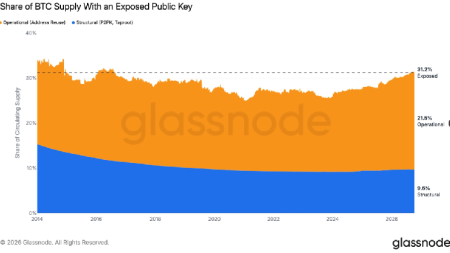
The technical details of Zcash’s proposal reflect a network grappling with its own split personality. Zcash supports two fundamentally different kinds of payments. Shielded payments, which leverage zero-knowledge proofs known as zk-SNARKs, conceal the sender, the recipient, and the amount, offering a degree of privacy that is rare even among so-called privacy coins. Transparent payments, by contrast, work much like bitcoin transactions: addresses and amounts are visible to anyone with an internet connection, permanently etched into the public blockchain. The January security plan focuses squarely on that transparent side of the network. The rationale is simple. Transparent addresses are exposed to the world, and any future adversary capable of breaking elliptic curve cryptography — the mathematical foundation of most blockchain wallets — could potentially link a public address to its private key and drain funds with impunity. The proposal’s solution is to make address usage ephemeral. Instead of reusing a single address, users would generate a fresh one for each incoming payment, keeping the associated key securely offline until the exact instant a transaction is signed. That practice, long recommended by security-conscious bitcoin users, minimizes the window during which a key is connected to a known, visible address. But Zcash’s plan goes a step further. The proposed signature scheme is engineered to ensure that when a transaction’s approval is made public — an unavoidable requirement of blockchain consensus — the underlying key material remains protected. An attacker who captures the broadcast data would not be able to reverse-engineer the key, closing a vulnerability that has been a source of concern for privacy advocates and security researchers alike. The proposal also addresses the practical realities of the transparent pool, where many coins sit in exchange-controlled wallets, a fact that makes the fresh-address approach particularly relevant for institutional custodians seeking to minimize their exposure. In essence, the proposal treats the transparent pool not as a permanent home for value, but as a transient waypoint — a place where funds should spend as little time as possible, and where every moment of exposure must be carefully managed. The proposal, if adopted, would mark a notable philosophical shift for a network that has often prioritized privacy over convenience. Yet it recognizes a hard truth: in a world of advancing computational power, privacy and security are inseparable.
The urgency propelling Zcash’s proposal can be traced directly to Justin Drake’s incendiary warning, which spread through the crypto community with remarkable speed. Drake, a researcher at the Ethereum Foundation, is not known for alarmism; his technical contributions to Ethereum’s roadmap are widely respected, which made his decision to invoke “bunker mode” all the more striking. In the context of blockchain networks, bunker mode is not a formal technical term but rather an evocative shorthand for emergency preparedness — the kind of drastic measures that might be needed if the cryptographic foundations of bitcoin and ether suddenly came under active threat. Drake’s specific fear centers on the possibility that AI could find a mathematical shortcut through the elliptic curve cryptography that secures wallet keys. Traditional quantum computers, when they eventually mature, are expected to pose a serious threat to this cryptography through Shor’s algorithm. But Drake’s warning suggests AI could accelerate the timeline dramatically, either by discovering novel attacks that run on classical hardware or by optimizing quantum algorithms in ways that bring the threat forward by years. His worst-case estimate — months, not years — sent a jolt through the market, in part because it came from someone with the technical authority to make such a claim credible. The post went viral on X within hours, spawning thousands of replies, reposts, and panic-stricken threads about the future of digital assets. In a sector where security is the ultimate selling point, the idea that the math itself might be crackable struck at the very heart of investor confidence. Some commentators pushed back, arguing that Drake’s warning was overly pessimistic and that practical quantum-AI attacks remain a distant prospect. But the very fact that the debate was happening — at the highest levels of the cryptocurrency ecosystem, in real time — marked a significant shift in the industry’s collective understanding of its own vulnerabilities. The term “bunker mode” itself quickly became a rallying cry across social media, adopted by both genuine security experts and opportunistic memers, further amplifying the sense of urgency. It was, by any measure, an extraordinary moment: one of the most respected minds in Ethereum publicly advising the world to prepare for the worst, while the market responded with a collective gulp.
For all the alarm, however, the threat remains theoretical — for now. No practical attack on wallet keys has been demonstrated to date, and the world’s leading cryptographic minds continue to view the quantum computing timeline as a matter of decades rather than months. Ethereum’s own roadmap reflects that cautious approach: the network’s broader migration to quantum-resistant cryptography has a target date of December 2029, a timeline that suggests a deliberate, methodical transition rather than a panicked scramble. Standards bodies such as the National Institute of Standards and Technology (NIST) have been working on post-quantum cryptographic standards for years, and several have already been finalized. These include lattice-based schemes like CRYSTALS-Kyber and CRYSTALS-Dilithium, which are designed to resist both classical and quantum attacks. The challenge for blockchain networks, however, is that upgrading cryptography is not a simple software patch. It requires consensus among stakeholders, coordination across exchanges and wallets, and careful handling of the transition period to avoid creating new vulnerabilities. Ethereum’s December 2029 target is a recognition of that complexity. Zcash’s fresh-address proposal, by contrast, is a lighter-touch measure that can be adopted by users immediately, without waiting for the entire network to upgrade. It is, in effect, a bridge strategy — a way to reduce the attack surface in the present while the longer-term migration to quantum-resistant algorithms proceeds in the background. Experts caution that the AI threat is real but uncertain; the prudent response, they argue, is to prepare for a range of scenarios rather than to assume the worst. There is also the so-called “harvest now, decrypt later” problem to consider: adversaries may already be collecting encrypted data in the hope of decrypting it once quantum technology matures, which adds a layer of urgency even to threats that are not yet operational. The race, in other words, is not just between attackers and defenders; it is between the pace of technological change and the speed at which a notoriously decentralized industry can agree on anything. For the average holder, the guidance is reassuringly straightforward: use fresh addresses, move funds out of transparent pools where possible, and keep abreast of network upgrades.
The market’s reaction to Drake’s warning was swift and measurable, and Zcash found itself at the center of the storm. ZEC, which had been trading in a relatively narrow range amid broader market turbulence, shed roughly 11% of its value over the week, closing Thursday near $1,185. That decline led a drop among top cryptocurrencies, with bitcoin and ether also slipping, though their losses were more contained. The disparity makes sense. Bitcoin and ether, as the largest and most liquid assets in the space, have deeper market depth and a broader base of institutional holders who are less likely to flee on the strength of a single researcher’s warning. Zcash, with its smaller market capitalization and its identity as a privacy-focused project, is inherently more sensitive to security narratives. Any suggestion that wallet keys could be exposed cuts to the very heart of its value proposition — a proposition built on the promise of absolute cryptographic privacy. The fact that the Zcash team responded with a concrete, well-reasoned proposal within days of Drake’s post, rather than issuing a comforting statement and hoping the storm would pass, signals that the network’s developers understand the stakes. In a market where reputation is everything, and where a single well-publicized exploit can permanently damage a project’s credibility, proactive security measures are not just good engineering — they are a competitive necessity. The decision to focus on the transparent pool, in particular, suggests a willingness to confront the network’s vulnerabilities head-on, rather than hiding behind the privacy of its shielded transactions. Historically, Zcash has faced its share of security challenges, from the discovery of a critical vulnerability in its zero-knowledge proving system in 2018 to ongoing debates over the distribution of its founder’s reward. Each episode shaped the project’s evolution, and the current proposal can be seen as another chapter in that story — a recognition that in the world of cryptocurrency, security is not a destination but a continuous process. The week’s trading data painted a picture of a market on edge, with volumes spiking on major exchanges as traders rushed to adjust positions, while the broader market felt the ripple effects of a threat that suddenly seemed all too real.
The scale of the challenge is best illustrated by a simple statistic. According to CoinDesk’s calculation from ZecStats data, approximately 11.96 million of the 16.98 million ZEC issued were sitting in the transparent pool on Thursday — roughly seven out of every ten coins in circulation. That means the overwhelming majority of Zcash’s supply is currently held in the network’s most exposed environment, a public ledger where addresses and balances are visible to anyone, including future adversaries equipped with technologies that do not yet exist. The January plan’s focus on that public side of the network is a tacit acknowledgment that privacy, in the cryptographic sense, cannot be taken for granted. Shielding a transaction is powerful, but if the keys controlling the underlying coins are vulnerable through address reuse or weak signature schemes, the privacy layer becomes little more than a facade. By pushing users toward fresh addresses and deploying more robust signature protections, Zcash is betting that operational discipline can buy precious time until the broader ecosystem makes the leap to quantum-resistant cryptography. Whether the quantum-AI threat materializes in months, years, or decades, the message emanating from Zcash and Ethereum alike is unambiguous: the era of assuming elliptic curve cryptography will endure forever is over. The crypto industry is entering a new chapter, one in which the mathematics of security is no longer a static given but an evolving battleground. And for the investors, developers, and users who have bet their futures on this technology, the only viable response is vigilance — and preparation. Zcash’s proposal, modest though it may seem, is a reminder that sometimes the most effective defense against an uncertain future is not a single grand solution but a series of small, practical steps taken consistently over time. The 70% figure, striking as it is, also points to a deeper structural issue: until shielded-by-default becomes the norm, the transparent pool will remain the weakest link in Zcash’s privacy chain. In the months ahead, as the January plan moves from proposal to implementation, the eyes of the cryptocurrency world will be watching to see whether the rest of the industry follows suit. Whether the threat is months or decades away, the time to address that weakness is now.