



On paper, Nscale’s Bellevue story hasn’t started yet. The doors to its new office at The Eight tower in downtown Bellevue are not scheduled to open until January 2027, and the company’s Seattle-area team is still only about 50 people. But if you look at the real estate, the story is already in motion. Earlier this year, Nscale leased a single floor in the newly developed tower. Now, before even welcoming a single employee into that space, the London-based AI infrastructure startup has signed for a second floor, bringing its total footprint at The Eight to roughly 46,000 rentable square feet, according to a report from The Broderick Group. The expansion is a firm signal that Nscale’s primary U.S. engineering hub is not just a simple regional office but a strategic priority. The original 24,000-square-foot lease was designed to accommodate up to 250 employees. With the extra floor, the company now has room to scale its local team well beyond that number, even though it currently employs about 50 people in the Seattle area. The first floor is set to open in January 2027, with the second scheduled to follow in June, according to The Puget Sound Business Journal. That phased timeline gives Nscale time to grow into the space, but the decision to commit to it now suggests the company expects to need it. For a business that has not yet opened its doors, this is not a cautious first step. It is a declaration of intent, made in the language of square footage and construction schedules. The Eight tower is itself a symbol of Bellevue’s reinvention, a new landmark rising in a city that has become one of the most important technology hubs in the country. By taking two floors there, Nscale is signaling not only to potential employees but also to competitors, customers, and the broader market that it has arrived.
To understand why Nscale is moving with such force, it helps to understand how fast the company itself has grown. Founded in 2024, Nscale is still only about two years old, yet it has already become one of the most heavily financed players in the AI infrastructure business. Earlier this year, the company raised a $2 billion Series C round at a $14.6 billion valuation, a staggering number for a startup with such a short track record. The round was backed by an unusually broad group of investors, including Nvidia, Dell, Citadel, Jane Street, and Point72. Alongside the equity raise, Nscale also secured a $900 million credit line, putting billions of dollars at its disposal. This matters because AI infrastructure is one of the most capital-intensive sectors in the modern economy. Building the data centers, high-performance compute clusters, cooling systems, and network backbones required to train and run large models costs enormous sums of money, and the appetite for those systems is growing faster than the supply. Nscale operates as a cloud provider for AI workloads, which means it is building the foundations that other companies rely on when they develop and deploy models. The fact that investors with such different backgrounds—a major AI chipmaker, a global hardware giant, and some of the most respected names in finance—have all lined up behind Nscale says a great deal about the opportunity they see in front of them. Nvidia’s involvement is particularly telling. The company’s GPUs are central to almost every AI operation on the planet, and Nvidia does not hand out endorsements casually. Its decision to invest in Nscale suggests a deeper strategic relationship, one that could help Nscale secure access to the hardware it needs. Dell, meanwhile, brings credibility on the systems and infrastructure side. The financial firms bring patience and capital, and they rarely invest in startups unless they believe in long-term demand. For Nscale, that combination of backers is a powerful vote of confidence, and a reminder that the race to build AI infrastructure is not just about algorithms; it is about money, physical assets, and relationships.
Another sign of Nscale’s ambition is the person it chose to lead its AI infrastructure work from the Seattle area. Nidhi Chappell, a former corporate vice president at Microsoft, joined Nscale earlier this year as president of AI infrastructure. At Microsoft, Chappell led Azure AI and high-performance computing, including the supercomputers that power ChatGPT. That experience puts her at the very center of the modern AI boom, and it gives Nscale a leader who has already solved some of the hardest technical problems in the field. Her move to a startup that is not yet two years old is a signal to the market that Nscale is serious. In a LinkedIn post earlier this year, announcing the company’s first onboarding event in Seattle, Chappell explained what drew her to this work. “I’ve had a front-row seat to some of the biggest moments in AI over the past several years, but one thing has always stood out: the world remembers the breakthroughs, but it’s the people building the infrastructure behind the scenes who make them possible,” she wrote. That line captures not just Chappell’s personal view, but Nscale’s entire reason for being. The company is not chasing headlines with consumer-facing products. It is building the systems underneath them. Chappell’s presence in the Seattle area gives Nscale a credible, high-profile leader who can attract engineering talent, talk to enterprise customers, and represent the company in a region where Microsoft and Amazon have trained thousands of infrastructure engineers. Her job will be to oversee global engineering and data center operations, which means she is responsible not only for the office in Bellevue but for the way Nscale serves customers around the world. That is an enormous responsibility for any executive, let alone one at a young company. But it is also exactly the kind of challenge that has defined her career. She has already helped build the infrastructure behind one of the most significant technologies of our time. Now she is doing it again, from a base in Bellevue.
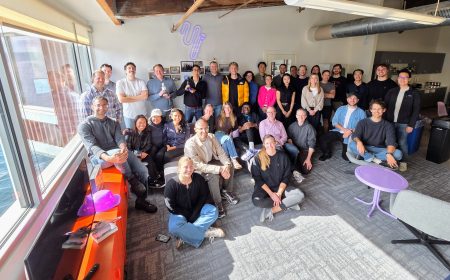
The physical space in Bellevue is beginning to reflect that mission. Nscale’s initial lease at The Eight was one floor of roughly 24,000 square feet, sized for a team of 250. The second floor will essentially double that, giving Nscale much more room to hire. The question on many people’s minds is how quickly the company can fill it. Nscale currently has about 50 employees in the Seattle area, so there is a long way to go between today and the opening of the first floor in January 2027. But the company is clearly planning for significant growth. The second floor, scheduled to open in June, gives the office an expansion phase built into its design. That staggered schedule may reflect a practical approach to construction and leasing, but it also suggests Nscale expects to be hiring steadily in waves. Engineering hubs like this one are not just back offices. They are the places where the company will design, manage, and improve the systems that run AI workloads for its customers. That requires teams with deep expertise in distributed systems, fault tolerance, power management, networking, and security. The Seattle area is one of the few places in the world with a deep enough pool of that talent to support such an ambitious plan. An office expansion of this size also sends a message to the market. In the competitive world of AI infrastructure, talent is scarce and perceptions matter. A large, modern office in a desirable location can help Nscale recruit senior engineers who might otherwise choose to join Microsoft, Amazon, OpenAI, or CoreWeave. The fact that Nscale has already secured two floors in a brand-new tower shows that it is willing to make long-term commitments. It also suggests that the company is not counting on remote work alone; it wants people in the same room, working side by side on problems that are hard to solve over video calls.
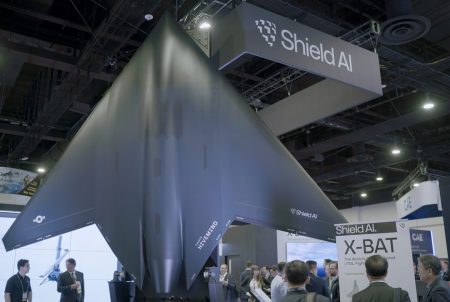
Nscale is also arriving in Bellevue at a time when the city has become a genuine hub for AI companies. The surrounding ecosystem includes some of the most important names in the industry. OpenAI, xAI, Databricks, CoreWeave, Armada, and Anduril have all established a presence on the Eastside, according to the reporting that accompanied Nscale’s expansion. Some of these companies build foundation models, others build data platforms, and still others, like Nscale, build the cloud infrastructure that makes AI possible. Together, they are turning Bellevue into a kind of AI colony, dense with engineers, investors, and entrepreneurs who are trying to solve the same kinds of problems. This is not an accident. The broader Puget Sound region has been a center for cloud computing and enterprise software for decades. Microsoft, Amazon, and a long tail of companies trained in their shadow have created a workforce that understands how to build complex systems at enormous scale. For an AI infrastructure startup, that workforce is more valuable than a famous address in Silicon Valley. Bellevue also offers practical attractions: new office buildings like The Eight, a walkable downtown, proximity to Seattle and the Eastside’s technology campuses, and a business climate that welcomes out-of-town companies. As more AI companies arrive, the ecosystem becomes more attractive to others, creating a virtuous cycle. Each new office and each new hire adds to a talent pool that future companies can draw on. Nscale’s decision to expand before opening is part of that dynamic. The company is not just moving to Bellevue because it needs a place to put desks; it is moving to Bellevue because that is where the future of infrastructure engineering is taking shape.
The broader story here is easy to miss if you focus only on square footage and lease terms. Nscale’s expansion is a reminder that artificial intelligence is not just an abstract idea or a series of viral demos. It is a physical industry, built by people who install servers, pull cable, manage power, and write the software that keeps thousands of GPUs busy. The world tends to remember the breakthroughs—the dramatic model releases, the stunning results, the headlines. But behind those moments are companies like Nscale, working to make sure the computing capacity exists in the first place. That work is becoming more important and more fiercely competitive by the day. Nscale’s funding, its leadership, and its real estate choices all point to a company that wants to be a serious player in the infrastructure layer of AI. The expansion in Bellevue is not just about accommodating a larger engineering team. It is about securing a position in one of the most important new technology hubs in the world. By the time the first floor opens in January 2027, Nscale will have spent more than two years preparing for life in the Seattle area. By the time the second floor opens in June, the company may already be planning its next move. If Chappell’s observation is right—that the people building the infrastructure are the ones who make breakthroughs possible—then the work happening in this office will matter far more than most people realize. The doors have not opened yet, but the future of AI is already being designed inside. And that is perhaps the most human aspect of this story. Behind every billion-dollar valuation, every data center, every lease deal, there is a group of people who believe that the technology we use in the future depends on the choices they make today. Nscale’s employees, investors, and leaders are building something that most users will never see, but without which none of the magic would work. The expansion at The Eight is an early, concrete symbol of that belief, written in two floors of glass and steel above the streets of Bellevue.