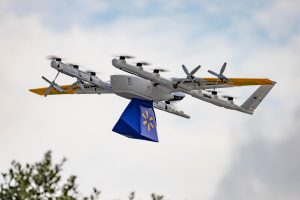


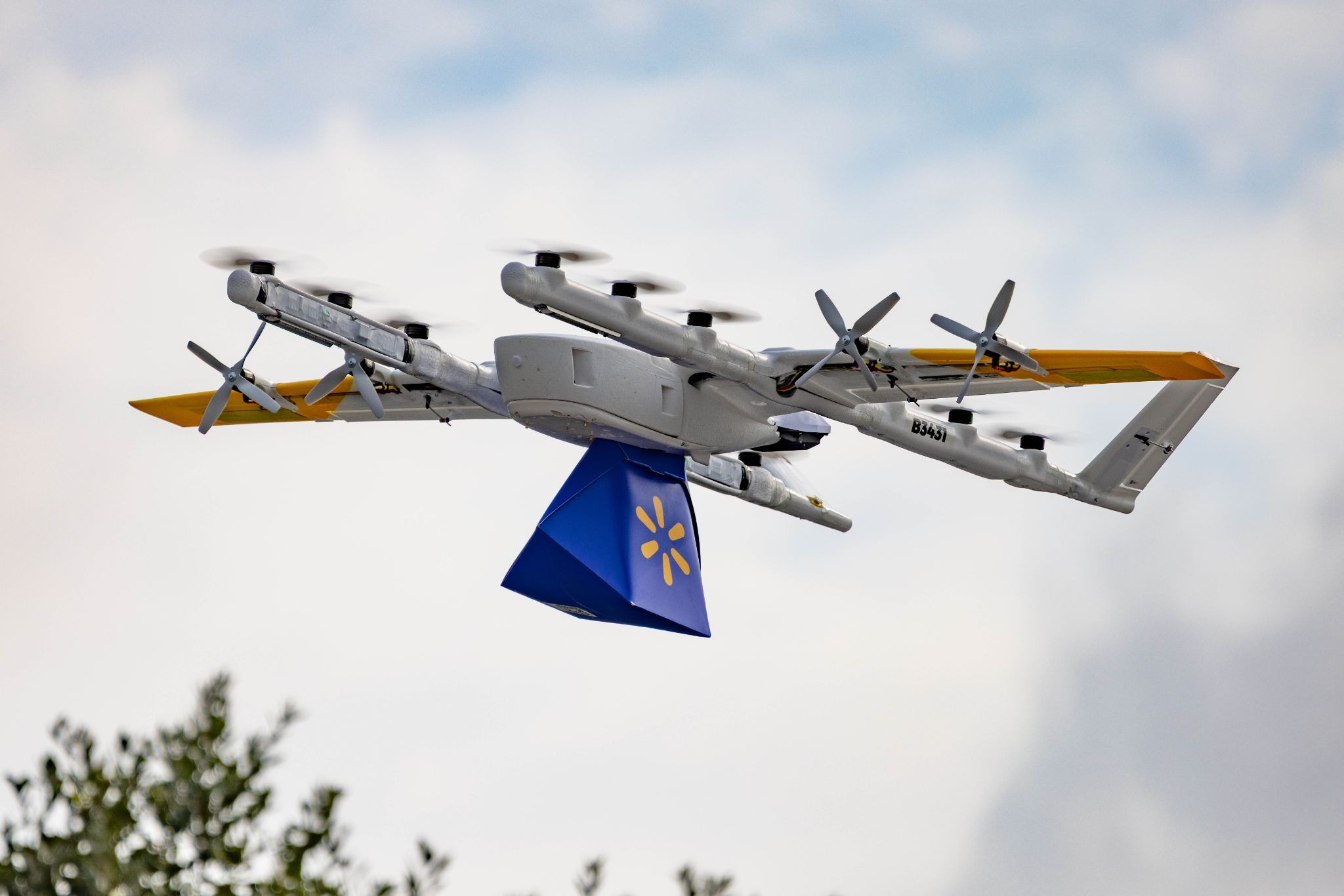
Picture this: you’re standing in your driveway on a lazy Sunday afternoon, phone in hand, when you hear a faint hum overhead. A small white aircraft appears above the roofline, hovers for a moment, then lowers a box of groceries and a couple of forgotten birthday candles onto the ground in front of you. No driving, no waiting in line, no wrestling with shopping carts. That scene is about to become ordinary in communities across the United States, because Walmart and Wing—the drone delivery company owned by Google parent Alphabet—are charging ahead with one of the most ambitious aerial delivery rollouts yet. And here’s the twist: Walmart is moving into the Seattle area, Amazon’s own backyard, before Amazon has managed to launch a single commercial drone flight there. The company announced plans to bring drone delivery to the Pacific Northwest in 2027, part of a broader nationwide expansion spanning nearly twenty U.S. metropolitan areas. By adding Seattle and Denver to the map, the Walmart-Wing partnership says it will eventually offer half-hour delivery by air from more than 270 Walmart stores, bringing the service within reach of over 40 million potential customers. That’s not just a test program anymore; that’s the beginning of a retail revolution.
For anyone who has watched the drone delivery race from a distance, the move feels both surprising and inevitable. Amazon has spent years promising a future where Prime Air packages drop from the sky in minutes, yet its actual commercial operations have been concentrated in a handful of states far from Seattle—places like Arizona, Texas, and Florida. Walmart, meanwhile, has been quietly building a logistics network that leans on physical stores as launchpads. The decision to target the Seattle area is a calculated jab, but it’s also practical. There are no Walmart stores inside Seattle’s city limits, which presents an immediate hurdle. Yet The Seattle Times reported that permit filings point to early groundwork at store locations in Federal Way and Tacoma, two cities just south of Seattle. Federal Way Mayor Jim Ferrell is clearly thrilled, saying his community is looking forward to bringing the region “an incredible new convenience.” He put it even more colorfully in the announcement: “The future has arrived and it’s being delivered by Walmart by drone!” The excitement makes sense when you consider the details. Wing’s electric aircraft fly at speeds up to 60 miles per hour, operate within about six miles of a store, and can carry payloads up to five pounds. That’s enough for groceries, over-the-counter meds, a forgotten charger, or that one ingredient for dinner. And when the service goes live, customers who shop through the Walmart or Wing app will see “drone delivery” appear as a checkout option, making the whole experience feel as natural as choosing express shipping.
Local television station KIRO 7 got a live demonstration in Bellevue this week, showing exactly how the system works. The drones take off vertically, climb to a cruising altitude, and then lower orders on a tether rather than dropping them carelessly onto someone’s lawn. It’s a careful, deliberate ballet of spinning blades and sensors, designed to reassure people who have never seen a package arrive from above. The idea is that ordering a tube of toothpaste or a few apples should be as effortless as hailing a ride, and the technology has finally caught up to the promise. But while the convenience is undeniable, the rollout is not without turbulence. Amazon may be losing the first-mover advantage in its own hometown, but it isn’t standing still. According to the Portland Business Journal, Amazon recently filed permit applications to build a Prime Air hub at a North Portland facility, with an eye toward launching there in early 2027. That timeline puts the company in direct competition with Walmart’s Seattle-area plans, but it also signals that Amazon is finally paying attention to the Pacific Northwest—not just as a corporate headquarters, but as a market for drone delivery. The question is whether local communities are ready to live under the buzz.
Noise is the quiet problem that won’t stay quiet. As more drones take to the skies in residential neighborhoods, the constant low-altitude hum has become a real source of friction. In Richardson, Texas, residents living beneath Amazon’s drone flight paths have complained about the relentless buzz interrupting their suburban peace. The New York Times and others reported last month on how the aircraft’s whine has become part of the background soundtrack of daily life—and not everyone is happy about it. The same pushback is beginning to appear elsewhere, and it’s not just about annoyance. People worry about safety, about drones failing and falling onto cars or playgrounds, about delivery aircraft hovering over their backyards and invading what little privacy remains in modern life. The Richardson residents aren’t opposed to technology; they’re opposed to the noise of it all. The constant low-altitude hum, they say, cuts through the quiet in a way that makes suburban living feel like living next to a miniature airport. It’s a reminder that the drone delivery future isn’t just an engineering challenge—it’s an emotional and social one.
Wing is trying to get ahead of that backlash. The company says it has re-engineered its latest drones with custom propellers designed to reduce the high-pitched whine that makes people look up in annoyance. The noise profile is noticeably better: roughly 43 to 50 decibels at cruising altitude, and around 62 decibels during the noisier hover-and-drop phase. For comparison, Wing claims that’s quieter than a standard delivery truck, which rumbles and backs up with beeping alarms. The idea is to make drones sound less like giant angry bees and more like the gentle buzz of a passing electric scooter. But no matter how quiet the technology becomes, not everyone is ready to welcome drones to the skies. In metro Atlanta, county leaders voted to shut down a proposed Walmart drone hub after more than a thousand nearby residents signed a petition raising concerns about noise, safety, and privacy. In the Seattle area, where residents are already sensitive about the roar of aircraft from Sea-Tac and the constant hum of traffic, the arrival of low-flying delivery drones may not be met with universal open arms. Still, the promise is hard to ignore: a delivery network that takes cars off the road, cuts wait times to minutes, and turns a chore into something almost magical.
Amazon, for its part, hasn’t ignored the Pacific Northwest. The Portland Business Journal reported last month that Amazon filed permit applications for a Prime Air hub at a North Portland facility, with an early 2027 launch in its sights. But even before construction begins, the project has drawn pushback from residents worried about noise and safety. That same tension has become a familiar story in established test markets. The New York Times and other outlets reported on communities in Richardson, Texas, where people living beneath Amazon’s flight paths say the constant low-altitude buzz of delivery drones has disrupted the suburban calm they once took for granted. Imagine trying to enjoy your morning coffee on the porch and hearing an electric lawnmower hovering overhead every few minutes. That’s the complaint echoing across neighborhoods where drone testing has become part of daily life. It’s a reminder that for all the talk of convenience, the real world is full of people who value their quiet. The sound of progress, it turns out, is not always welcome.
Noise has become the central battleground in the drone delivery wars, and Wing is working hard to make sure it isn’t the next company blamed for wrecking the neighborhood’s peace and quiet. The company says it has re-engineered its latest aircraft with custom propellers designed to reduce the high-pitched whine that makes drones so annoying. At cruising altitude, the sound is roughly 43 to 50 decibels—about the level of a quiet conversation or a refrigerator hum. During hovering drops, when the aircraft is closest to the ground and most noticeable, Wing claims the noise stays around 62 decibels, which it says is quieter than a standard delivery truck idling outside your house. That’s a smart public relations move, because noise is shaping up to be one of the biggest obstacles for the entire drone industry. The New York Times and other outlets recently reported on residents living beneath Amazon’s drone flight paths in Richardson, Texas, who have grown tired of the constant low-altitude buzz interrupting their suburban calm. It’s one thing to order a new pair of sneakers by drone; it’s quite another to hear that high-pitched whine every time your neighbor does. Wing clearly understands the concern, which is why its latest aircraft come with custom propellers designed to soften the sound. The company says the drones produce sound levels around 43 to 50 decibels while cruising at altitude, and about 62 decibels during a hovering drop. To put that in perspective, that’s quieter than a standard delivery truck rumbling down the street—but whether that reassurance will win over skeptical neighbors remains an open question.
The noise issue is far from hypothetical, and both companies have seen exactly what can happen when communities feel blindsided. In Richardson, Texas, residents living under Amazon’s drone flight paths have taken exception to the constant low-altitude buzz of delivery aircraft, and the New York Times and other outlets recently reported on their complaints. It’s not hard to understand why: a suburban backyard should feel like a refuge, not an air traffic corridor. The whine of a delivery drone overhead, even for just a minute, is the kind of thing that gets under your skin when it happens all day long. Wing has tried to get ahead of that problem by redesigning its aircraft’s sound profile. The company says its latest drones use custom propellers specifically shaped to reduce the high-pitched whine that makes drones so irritating. The result, according to Wing, is a noise level of roughly 43 to 50 decibels at cruising altitude and around 62 decibels while hovering and lowering a package. That’s quieter than a standard delivery truck driving down the street, at least according to the company’s numbers. But not everyone is buying it. In metro Atlanta, county leaders shut down a proposed Walmart drone hub after more than a thousand nearby residents signed a petition objecting to noise, safety, and privacy concerns. So while the tech may be ready, the public trust is still a work in progress.
Wing has actually been paying close attention to the noise problem for years, and it’s become something of a design obsession. The company says its latest drones feature custom propellers specifically engineered to reduce the high-pitched whine that made early delivery drones sound like giant angry hornets. The result, according to Wing, is a noise profile around 43 to 50 decibels when cruising at altitude, and roughly 62 decibels while hovering for a delivery drop. To put that in perspective, a quiet library sits around 40 decibels, a normal conversation around 60, and a standard delivery truck idling nearby might push closer to 70. In other words, these machines are meant to be heard as a faint whisper of the future rather than a constant nuisance. That matters, because noise has become the most explosive issue in drone delivery. The New York Times and other outlets recently reported on residents in Richardson, Texas, who live under Amazon’s flight paths and have grown fed up with the low-altitude buzz of delivery aircraft interrupting their suburban calm. It’s one thing to enjoy the novelty of drone delivery, quite another to have a high-pitched whine drilling into your skull every time you sit down in your own backyard. Wing has tried to get ahead of that anger by redesigning its propellers specifically to reduce the high-pitched whine that made earlier drones so annoying. The company says its latest aircraft produce sound levels around 43 to 50 decibels at cruising altitude and roughly 62 decibels while hovering to drop a package—quieter, by their measure, than a standard delivery truck sitting at the curb.
Still, no matter how quiet the technology becomes, the rollout hasn’t been frictionless. In the Atlanta area, county leaders voted to shut down a proposed Walmart drone hub after more than a thousand neighbors signed a petition citing noise, safety, and privacy concerns. It’s a reminder that the hardest part of this revolution isn’t building the drone or navigating the Federal Aviation Administration; it’s convincing people to live beneath the flight path. In Richardson, Texas, The New York Times reported, residents who live under Amazon’s drone routes have grown fed up with the constant low-altitude buzz. They describe a suburban soundtrack of high-pitched whines, a faint but persistent reminder that the future has arrived—and that it’s loud. This is the central tension of drone delivery: people want convenience, but they don’t necessarily want their quiet neighborhoods turned into airspace. Wing has tried to get ahead of those complaints by redesigning its propellers to reduce the high-pitched whine that annoys human ears. The company says its latest drones produce sound levels around 43 to 50 decibels at cruising altitude and about 62 decibels during a hovering drop—quieter, by comparison, than a standard delivery truck, though still noticeable.
That effort to soften the sound may be essential, because the backlash against low-flying delivery drones is already growing louder. In Richardson, Texas, residents who live beneath Amazon’s flight paths have complained to the New York Times about the constant buzzing above their homes, saying it has disrupted the quiet rhythm of suburban life. It’s one thing to watch a drone fly overhead on a video; it’s another to hear the electric whine every few minutes while you’re trying to enjoy your backyard. The noise issue has become one of the biggest hurdles facing the entire drone delivery industry. People like the convenience in theory, but they don’t love the idea of their neighborhood feeling like an airport approach path. Wing has tried to get ahead of this anxiety by redesigning its aircraft to sound less annoying. The company says its latest drones use custom propellers that reduce high-pitched whines, keeping noise around 43 to 50 decibels at cruising altitude—about the level of a quiet suburban street—and roughly 62 decibels during a hover-drop, which they claim is actually quieter than a standard delivery truck backing up a driveway. That’s a clever engineering move, but no amount of decibel engineering has stopped the backlash in some communities.
Noise, it turns out, is one of the most personal and persistent concerns surrounding drone delivery. In Richardson, Texas, residents living under Amazon’s Prime Air flight paths have complained about the constant low-altitude buzz of delivery aircraft breaking the suburban calm. The New York Times and other outlets documented the growing frustration as the hum of rotors became a soundtrack to daily life—drowning out conversations, scaring pets, and puncturing the quiet that drew many people to the neighborhood in the first place. The complaints are a reminder that drone delivery may be convenient, but it also changes the soundscape of communities in ways people didn’t sign up for. Wing has tried to get ahead of that backlash with what it calls a redesigned acoustic profile. Its latest drones use custom propellers engineered to reduce the high-pitched whine that makes delivery aircraft feel like giant angry mosquitoes. The company says its newest aircraft generate roughly 43 to 50 decibels while cruising at altitude and about 62 decibels while hovering to lower a package—somewhere between a quiet conversation and a normal office hum. Wing is careful to note that’s quieter than a standard delivery truck idling at the curb, a reminder that noise is relative. But decibel ratings don’t tell the whole story; a quiet, high-frequency whine can still grate on nerves, especially when it happens repeatedly through the day.
The tension between convenience and quiet life is playing out in communities across the country. In Richardson, Texas, residents living under Amazon’s drone flight paths have complained about the constant low-altitude buzz of delivery aircraft, with the New York Times and other outlets documenting the frustration of suburbanites whose skies are no longer their own. In metro Atlanta, the friction has been even more direct: county leaders shut down a proposed Walmart drone hub after more than a thousand nearby residents signed a petition citing noise, safety, and privacy concerns. These stories highlight a central challenge of the drone delivery boom. The technology works, but it has to live with real human beings on the ground. A drone might seem like a marvel from the ground, but for the person trying to enjoy a quiet morning in their backyard, the constant whine of a delivery aircraft can feel like an invasion. Wing insists it has heard those complaints. The company says its latest drones are engineered with custom propellers designed to soften high-pitched tones, bringing noise down to around 43 to 50 decibels while cruising and about 62 decibels during hovering drops—quieter, they say, than a standard delivery truck. Still, no amount of engineering can eliminate the central tension: people like getting things fast, but they don’t always want the sky buzzing above their homes.
This tension is playing out in real time across the country. In Richardson, Texas, where Amazon has been operating drone deliveries, residents living beneath the flight paths have complained about the constant low-altitude hum, describing it as an unwelcome soundtrack to suburban life. The New York Times and other outlets have documented the growing frustration in test markets, where the novelty of watching a package descend from the sky fades quickly when it happens again and again throughout the day. Amazon’s own expansion hasn’t been frictionless either. In Portland, Oregon, the company filed permit applications for a Prime Air hub at a North Portland facility, targeting an early 2027 launch—but neighbors are already organizing against the noise and safety questions, a familiar refrain for anyone who has followed the drone delivery story. Wing, for its part, has been listening. The company has redesigned its aircraft with custom propellers meant to lower the high-pitched whine that has fueled complaints in communities like Richardson, Texas, where residents have described the constant buzz of Amazon drones disrupting their suburban peace. Wing says its latest drones hum at about 43 to 50 decibels while cruising—roughly the sound of a quiet room or a whisper—and around 62 decibels while hovering for a drop. That’s quieter than a typical delivery truck, but decibel readings don’t always capture how annoying a sound can feel when you’re trying to enjoy your backyard.
The noise question is becoming the central issue for the entire drone delivery industry. It’s one thing to watch a futuristic aircraft lower a package in a promotional video; it’s another thing to hear that high-pitched whine every hour of every day, especially in quiet suburban neighborhoods. In Richardson, Texas, residents living beneath Amazon’s drone flight paths have complained to The New York Times and other outlets about the constant low-altitude buzz disrupting the peace. They signed up for convenience, they say, not for the soundtrack of a miniature air force. Those complaints have forced drone companies to take the acoustic side of the equation much more seriously. Wing, for example, says its latest aircraft have been re-engineered with custom propellers designed to reduce the high-pitched whine that makes drones feel so invasive. The company says its new drones produce between roughly 43 and 50 decibels at cruising altitude—about the volume of a quiet conversation or a refrigerator hum—and around 62 decibels while hovering to lower a package. Wing claims that’s quieter than a standard delivery truck pulling up your driveway. That’s an important selling point, because noise is one of the biggest barriers to public acceptance.
Still, no matter how quiet the propellers get, the idea of drones zipping over houses makes people nervous. In Richardson, Texas, residents living beneath Amazon’s flight paths have complained about the constant low-altitude buzz disrupting their suburban peace. That story, reported by The New York Times and others, captured a growing anxiety that delivery drones aren’t just an occasional novelty—they could become a constant, humming presence in everyday life. Wing and Walmart have learned this lesson the hard way. In metro Atlanta, county leaders shut down a proposed Walmart drone hub after more than a thousand nearby residents signed a petition citing noise, safety, and privacy concerns. Even the most enthusiastic technologist has to respect the fact that a buzzing aircraft hovering over a backyard pool or a sleeping baby can feel like an invasion. Wing has tried to get ahead of the criticism by re-engineering its drones to be quieter. The company says its latest aircraft use custom propellers specifically designed to reduce the high-pitched whine that made earlier models so annoying. According to Wing, sound levels hover between 43 and 50 decibels at cruising altitude—about the level of a quiet conversation—and around 62 decibels during the noisier hovering-and-lowering phase. The company likes to point out that’s quieter than a standard delivery truck pulling up your driveway. But decibels are only part of the story. A quiet hum at noon is one thing; a swarm of drones over your backyard at dinnertime is another. In Richardson, Texas, residents living under Amazon’s flight paths have complained about the constant low-altitude buzz disrupting their suburban peace, and similar concerns are emerging in other test markets. Community resistance is already stiff in some areas. In metro Atlanta, county leaders shut down a proposed Walmart drone hub after more than a thousand neighbors signed a petition citing noise, safety, and privacy worries.
What’s striking about the pushback is how familiar it feels. Every new technology—from the automobile to the smartphone—has brought both convenience and disruption, and drone delivery is no exception. The image of a tiny aircraft dropping off a package is charming in concept, but the sound of several buzzing overhead every hour can wear thin fast. In Richardson, Texas, residents living beneath Amazon’s flight paths have complained to The New York Times about the constant low-altitude buzz of delivery drones disrupting their daily lives. That “buzz” isn’t just a minor annoyance; it’s a daily reminder that the skies above suburban backyards are no longer empty. Wing has tried to get ahead of the criticism by redesigning its propellers to reduce the high-pitched whine that makes drones so noticeable. The company says its latest models operate at around 43 to 50 decibels at cruising altitude—quieter than a normal conversation—and roughly 62 decibels while hovering to lower a package, which it claims is quieter than a standard delivery truck. Still, the technology’s noise footprint remains one of the biggest public concerns. In metro Atlanta, county leaders actually shut down a proposed Walmart drone hub after more than a thousand nearby residents signed a petition citing noise, safety, and privacy worries. That tension between innovation and neighborhood peace is likely to shape how quickly drone delivery becomes mainstream.
The comparison with Amazon makes this story even more fascinating. Amazon has spent years selling the dream of drone delivery, and its Prime Air program has expanded to hundreds of cities and towns. But in Seattle, where the company was born and still keeps its corporate headquarters, the skies remain conspicuously quiet. Instead, Amazon is looking south to Portland, where The Portland Business Journal reported that the company has filed permits for a Prime Air hub at a North Portland facility, with an early 2027 target. That plan has already drawn early pushback from nearby residents worried about noise and safety. It’s a familiar story. In Richardson, Texas, The New York Times and other outlets reported on residents living beneath Amazon’s drone flight paths who have grown tired of the constant low-altitude buzz interrupting their days. Suburban life was supposed to be peaceful, and the steady hum of delivery drones overhead feels like an invasion. Wing, for its part, has been trying to get ahead of the noise problem. The company says its latest drones use custom propellers designed to reduce high-pitched whines, keeping sound around 43 to 50 decibels while cruising and roughly 62 decibels during a hovering drop—quieter, they claim, than a standard delivery truck. Whether that’s enough to win over skeptical neighbors is another question. In metro Atlanta, county leaders actually shut down a proposed Walmart drone hub after more than a thousand residents signed a petition citing noise, safety, and privacy concerns.
The pushback reveals a fundamental tension in the drone delivery boom: the technology may be ready, but people aren’t always. It’s easy to love the convenience of a drone showing up with a hot meal or a forgotten bag of dog food, but it’s much harder to love the constant buzzing overhead, the idea of cameras peering into backyards, or the thought of a five-pound package falling from the sky onto a child’s head. In Richardson, Texas, residents living beneath Amazon’s flight paths have complained about the relentless low-altitude drone buzz disturbing their suburban peace. The New York Times and other outlets have documented how the novelty of drone delivery wears off quickly when it becomes part of the daily soundscape. Wing, for its part, has tried to get ahead of the noise problem before it starts. The company says its latest drones use custom propellers designed to reduce high-pitched whines, bringing sound to roughly 43 to 50 decibels while cruising and about 62 decibels during hovering drops—quieter than a standard delivery truck, by Wing’s comparison. That engineering matters, because public tolerance is a big risk for drone delivery. People might love the idea of instant convenience, but they hate the idea of a constant buzzsaw hum over their backyards.
The tension between convenience and quiet enjoyment has already boiled over in communities that have lived with drones for a while. The New York Times and other outlets reported last month on residents in Richardson, Texas, who say they’re fed up with the relentless low-altitude buzz of Amazon delivery aircraft circling above their homes. What once seemed like a futuristic novelty has become, for some, a daily nuisance—a constant reminder that the sky above their neighborhood isn’t entirely theirs anymore. That sense of invasion is powerful, and it’s not limited to Amazon. In metro Atlanta, county leaders voted to shut down a proposed Walmart drone hub after more than a thousand residents signed a petition citing noise, safety, and privacy concerns. Even in communities that want the convenience, the fear of buzzing propellers and the feeling of being watched from above can outweigh the appeal of instant delivery. This is the human side of the drone revolution that press releases and launch events rarely mention: it’s not just about whether drones can fly, but whether neighborhoods will accept them.
Wing is trying hard to solve that problem before it grows any larger. The company says its latest drones have been re-engineered with sound in mind. Custom propellers reduce the high-pitched whine that made earlier models annoying, and Wing claims their aircraft produce around 43 to 50 decibels at cruising altitude—about the level of a quiet room or a soft rainfall—and roughly 62 decibels during the hovering drop, which they say is quieter than a standard delivery truck pulling up to the curb. That’s a meaningful improvement in the battle for public acceptance, because noise has become one of the biggest hurdles to drone delivery’s mainstream future. Residents living under Amazon’s flight paths in Richardson, Texas, have complained about the constant low-altitude buzz disrupting their suburban peace, and those concerns have grown loud enough to make national headlines. In metro Atlanta, county leaders actually shut down a proposed Walmart drone hub after more than 1,000 nearby residents signed a petition raising alarms about noise, safety, and privacy. For all the technology’s promise, the sound of a drone hovering outside your kitchen window still feels alien to many people, and the “future of delivery” isn’t welcome in every neighborhood.
Wing is trying to get ahead of the noise problem in a clever way: by engineering quieter drones. The company says its latest aircraft use custom propellers designed to reduce the high-pitched whine that makes drones so annoying. At cruising altitude, the sound hovers around 43 to 50 decibels, and during a hover-drop it’s roughly 62 decibels. To put that in perspective, Wing claims its delivery drone is quieter than a standard delivery truck rumbling down the street. That distinction matters, because noise has become one of the biggest flashpoints in the drone delivery industry. In Richardson, Texas, a suburb in the Dallas area, residents living under Amazon’s drone flight paths have complained about the constant low-altitude buzz disrupting their peace. The New York Times recently highlighted those complaints, and similar stories are emerging in other test markets. People don’t necessarily hate the idea of drone delivery, but they hate the idea of living underneath a highway in the sky. The whine, the propellers, the sense that your neighborhood has become an airfield—none of that goes over well when you’re trying to enjoy your backyard. Wing knows this, and it has been working on the sound profile of its aircraft. The company says its newest drones feature custom propellers designed to reduce the high-pitched whine that made earlier models so irritating. At cruising altitude, the sound level is around 43 to 50 decibels, and during a hover drop it reaches roughly 62 decibels—quieter, according to Wing, than a standard delivery truck pulling up to the curb. But no matter how quiet the engineering, not everyone is convinced.
Amazon’s hometown advantage has yet to translate into hometown drone service. While Seattle-based Amazon has been aggressively expanding Prime Air to nearly 500 U.S. cities and towns, those operations remain concentrated in places like Arizona, Texas, and Florida. The company has not launched commercial drone deliveries in its own backyard, which is striking given how much of its brand is built on being at the cutting edge. Amazon isn’t ignoring the Pacific Northwest, though. The Portland Business Journal reported last month that Amazon filed permit applications to build a Prime Air hub at a North Portland facility, with a target launch in early 2027. But even that plan has already drawn early opposition from nearby residents who are worried about noise and safety. It’s a familiar pattern. In Richardson, Texas, residents living under Amazon’s drone flight paths have complained about the constant low-altitude buzz of delivery aircraft. They describe a suburban quiet shattered by a persistent whine that makes being outside feel like standing under a hive of mechanical bees. The New York Times and others have documented this growing backlash, and it highlights the challenge facing every company trying to build an aerial delivery network: the technology works, but it still has to live with the neighbors.
That’s why Wing is working hard to soften its sound profile before expanding further. The company’s latest drones come with custom propellers designed to reduce the high-pitched whine that makes small aircraft so intrusive. Wing says the new models are noticeably quieter, producing around 43 to 50 decibels at cruising altitude—about the level of a quiet room or a gentle rainfall—and roughly 62 decibels when hovering to lower a package. To put that in context, the company claims that’s quieter than a standard delivery truck idling at the curb. That kind of engineering matters, because noise is quickly becoming the biggest public relations problem for drone delivery. In Richardson, Texas, residents living under Amazon’s flight path have complained about the constant low-altitude buzz disrupting their suburban peace. The New York Times and other outlets have documented the growing friction as delivery drones become a regular fixture overhead. Amazon, for its part, is also pushing deeper into the Northwest. According to the Portland Business Journal, the company has filed permit applications to build a Prime Air hub at a North Portland facility, with a target launch in early 2027—a plan that has already drawn early resistance from nearby residents who worry about noise and safety. Those worries echo what’s happening in Texas, where people who once welcomed the novelty of drone delivery now say the humming is more than a minor annoyance; it’s a constant low-altitude buzz disrupting their suburban peace.
Wing, for its part, has been trying to get ahead of the noise problem before it becomes a public relations disaster. The company says its latest drones have been re-engineered from the rotors up, with custom propellers specifically designed to reduce high-pitched whines. According to Wing, the new aircraft produce sound levels around 43 to 50 decibels while cruising at altitude—about the volume of a quiet conversation or a refrigerator hum—and roughly 62 decibels during a hovering delivery drop. That, the company says, is quieter than a standard delivery truck pulling up your driveway. The engineering matters because noise has become the biggest flashpoint in the drone delivery debate. In Richardson, Texas, residents living beneath Amazon’s flight paths have complained about the constant low-altitude buzz disrupting their quiet suburban lives, and their complaints made national news. Wing is clearly hoping to avoid that kind of backlash by designing propellers that reduce the high-pitched whine that makes drones feel like giant angry hornets. But even a quieter hum isn’t enough to win over every community. In metro Atlanta, county leaders actually shut down a proposed Walmart drone hub after more than a thousand nearby residents signed a petition opposing it, citing noise, safety, and privacy worries. It’s a reminder that technology can move fast, but people don’t always move with it.
That tension between innovation and neighborhood resistance is shaping the drone delivery industry in real time. The loudest objections almost always center on noise, privacy, and the uneasy feeling of machines buzzing overhead. The New York Times and other outlets recently reported on residents in Richardson, Texas, who live beneath Amazon’s drone flight paths and are fed up with the constant low-altitude hum disrupting their daily lives. It’s easy to dismiss those complaints as inevitable friction—change is loud, literally—but they also represent a real challenge for companies trying to win over communities. If drone delivery is going to become as common as the delivery truck, it needs to be accepted by the people living under the flight paths, not just by the people receiving the packages. Wing seems to understand this. The company says its latest drones have been re-engineered with custom propellers designed to reduce the high-pitched whine that makes delivery aircraft feel like giant angry hornets. The new models generate around 43 to 50 decibels at cruising altitude and about 62 decibels during a hovering drop—quieter, Wing says, than a standard delivery truck pulling up to the curb. That’s a meaningful improvement, because the first generation of delivery drones was often compared to a swarm of lawnmowers, and that whine quickly grated on nerves.
Still, no amount of engineering can erase the anxiety that comes with the sound of a machine buzzing over your backyard, and Walmart and Wing have already hit turbulence in other communities. In metro Atlanta, county leaders actually shut down a proposed Walmart drone hub after more than a thousand nearby residents signed a petition citing noise, safety, and privacy concerns. That kind of pushback is becoming a familiar pattern. The New York Times and other outlets reported last month on residents in Richardson, Texas, living beneath Amazon’s drone flight paths who have grown tired of the constant low-altitude buzz overhead. It’s easy to dismiss these complaints as NIMBY-ism, but imagine hearing a leaf blower hover outside your kitchen window every time you order a sandwich. The convenience of drone delivery is obvious to the person placing the order; it’s the people on the ground below who pay the hidden cost. That’s why Wing has invested heavily in making its drones quieter. The company says its latest aircraft feature custom propellers designed to reduce the high-pitched whine that makes drone noise so irritating. The result is a sound profile around 43 to 50 decibels at cruising altitude, and roughly 62 decibels during hovering drops—quieter, they say, than a standard delivery truck pulling up to the curb. Still, engineering fixes can only go so far. In metro Atlanta, county leaders pulled the plug on a proposed Walmart drone hub after more than a thousand nearby residents signed a petition raising concerns about noise, safety, and privacy. For every community that sees drones as a vision of the future, there’s another that hears nothing but unwanted buzzing and worries about what else might be flying overhead.
What makes the Walmart-Wing expansion particularly fascinating is the collision between two very different versions of the future. Amazon, the original architect of the drone-delivery dream, has been laser-focused on building Prime Air into a massive operation, with plans to reach nearly 500 U.S. cities and towns. But despite all that momentum, the company has not launched commercial drone delivery in Seattle, its own headquarters city. Instead, Amazon has pushed into markets like Arizona, Texas, and Florida, where regulations and airspace conditions made sense. That’s left an opening for Walmart to make a symbolic incursion into the Pacific Northwest, and the company is clearly enjoying the irony. At the same time, Amazon isn’t sitting still. According to the Portland Business Journal, the company filed permit applications to build a Prime Air hub at a North Portland facility, with an eye toward launching sometime in early 2027. That plan has already drawn early resistance from nearby residents who worry about drones buzzing over their neighborhoods, raising questions about noise, safety, and privacy. The tension is familiar to anyone who has watched the drone delivery debate unfold: the convenience of 30-minute shipping is attractive, but the reality of living under a flight path can feel very different.
The noise issue has become one of the biggest obstacles for the entire industry. In Richardson, Texas, residents living beneath Amazon’s drone routes have made headlines for complaining about the constant low-altitude buzz of delivery aircraft. It’s not a faint whine in the distance; it’s a persistent, irritating presence that disrupts otherwise quiet suburban afternoons. The New York Times and other outlets recently documented how the novelty of a drone landing in the backyard has worn off for people who now feel like they’re living near a small, buzzing airport. Those complaints are exactly what Wing is trying to avoid. The company says it has re-engineered its latest drones with custom propellers designed to reduce the high-pitched whine that makes small electric aircraft so easy to hear. According to Wing, sound levels now hover between 43 and 50 decibels while cruising at altitude, roughly the volume of a quiet indoor conversation or a gentle rainfall, and peak at about 62 decibels during hovering drops. That’s quieter than a typical delivery truck, the company points out. But for all the engineering, the company has still found itself in the middle of local battles. In metro Atlanta, county leaders shut down a proposed Walmart drone hub after more than a thousand nearby residents signed a petition citing noise, safety, and privacy concerns. It’s a reminder that no matter how efficient or futuristic drone delivery sounds, the people living beneath the flight paths get a say too.
The tension between innovation and community buy-in is perhaps the central challenge of the drone delivery boom. In Richardson, Texas, residents living beneath Amazon’s drone flight paths have complained about the constant low-altitude buzz disrupting their suburban peace, and The New York Times recently highlighted their frustration. It’s a familiar story: technology races ahead, regulators scramble to keep up, and ordinary people are left to weigh convenience against quality of life. Wing has tried to get ahead of the backlash by redesigning its aircraft to be quieter. Its latest drones use custom propellers engineered to reduce high-pitched whines, with sound levels around 43 to 50 decibels at cruising altitude and roughly 62 decibels during the hover-and-lower phase. To put that in context, 60 decibels is about the level of a normal conversation or a dishwasher—quieter than a standard delivery truck rumbling down the street. But not everyone is convinced. In metro Atlanta, county leaders shut down a proposed Walmart drone hub after more than a thousand nearby residents signed a petition citing noise, safety, and privacy concerns. That tension between innovation and everyday life is exactly the balance that will determine whether drone delivery becomes as routine as package delivery or stalls as a niche convenience. For every mayor who sees the future, there’s a neighborhood group that sees an invasion of its airspace. The companies insist the technology is safe and the noise is manageable, but they’re learning that the last mile of public acceptance is harder to navigate than any flight path. Still, the momentum is real. With Walmart and Wing now pushing into twenty metro areas, and Amazon reportedly planning a Prime Air hub in Portland by early 2027, the drone era is no longer a futuristic fantasy. It’s coming to a driveway near you—humming softly, hovering for a moment, and then lowering the future down to earth.