


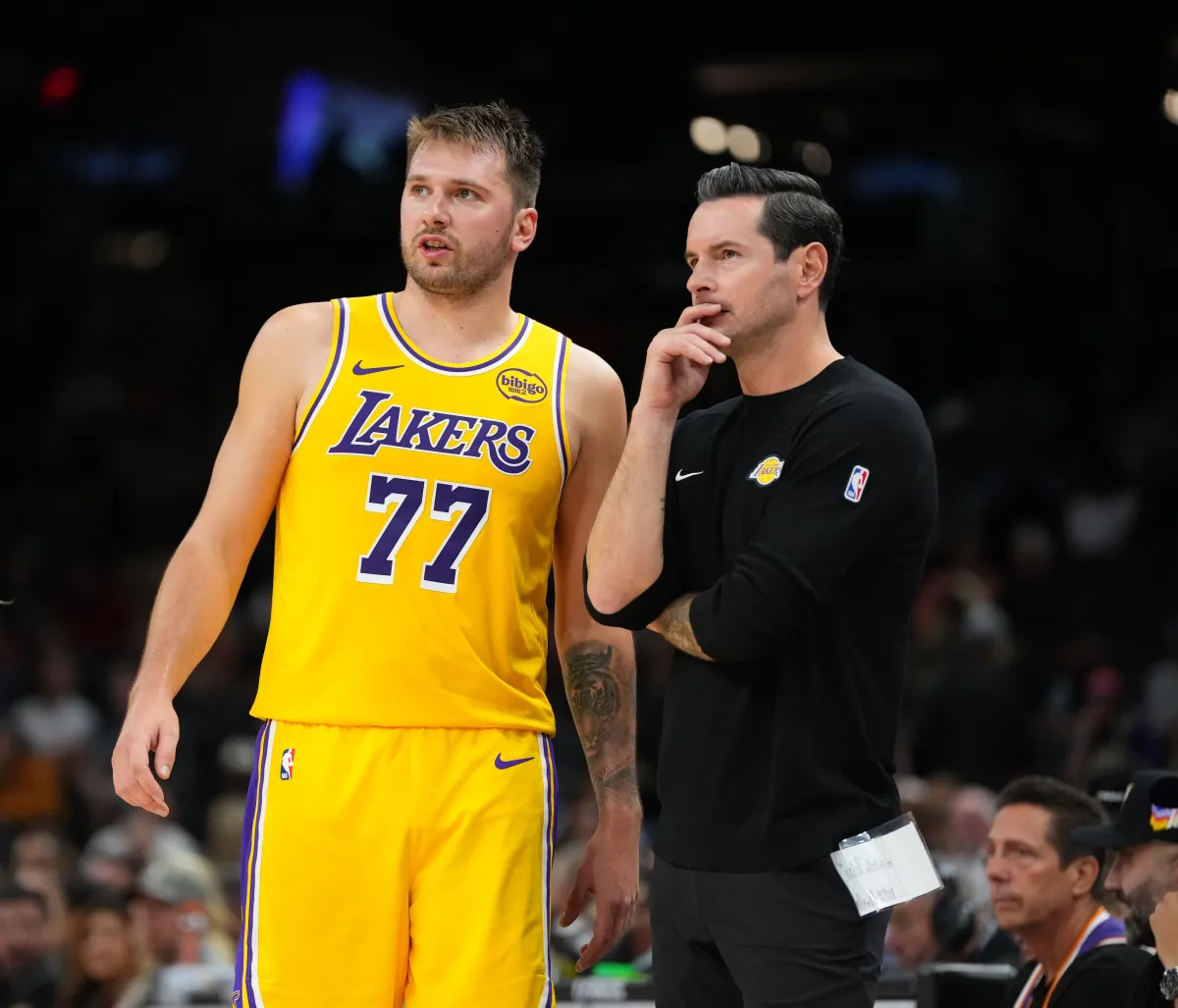
There is a kind of confidence that sounds like defiance, and another that sounds like hope. JJ Redick is speaking in the first language right now. The Los Angeles Lakers head coach has spent the offseason watching his team change shape, and he has not once backed away from the word that usually makes coaches flinch: championship. This is a franchise in transition, after all. LeBron James is gone. Luka Doncic is now unquestionably the face of the Lakers. The roster is full of new names, new roles, and new questions. And yet Redick stood at the edge of training camp and told reporters exactly what he expects: a championship-level team. It would have been easy for him to soften the message, to say something safe about growth and building good habits and taking it one game at a time. Instead, he did the opposite. “You’ve got to get things out in the open,” Redick told The Athletic. “We look at this every day. I don’t sugarcoat it.” That is the voice of a coach who understands that a team with this much change needs a clear identity, not a cautious one. It is also the voice of someone who is tired of waiting. The Lakers have been through so much drama, so much noise, so many shifting lineups, that simply sliding into the season without a firm conviction would feel like a wasted opportunity. Redick is refusing to let that happen. He is not pretending that the roster is flawless, and he is not pretending that the teams around them are not dangerous. But he is also not willing to let outside opinions determine the internal temperature of the locker room. For Redick, expectation is not a burden. It is the whole point.
Of course, expectation alone does not win basketball games. The Lakers needed more than belief, and that is why the front office spent the summer reshaping the roster around Doncic and Austin Reaves. The list of additions reads like an intentional, almost surgical answer to every flaw that plagued the team last season. Walker Kessler arrived to give the Lakers the rim protection they had been missing for years, a tall, reliable anchor in the paint who can erase mistakes and make opposing drivers think twice. Quentin Grimes brought shooting and toughness. Collin Sexton brought downhill aggression and another player who can create his own offense. Matisse Thybulle and Ziaire Williams added length, athleticism, and defensive versatility, particularly on the perimeter. None of these names will dominate headlines the way a superstar acquisition would, but together they address something Redick has lacked for much of his first two seasons in Los Angeles: genuine depth. The Lakers used to rely on a small group of players to carry almost everything, and when fatigue or injuries hit, the whole structure wobbled. Now Redick looks at his roster and sees options. He sees multiple ballhandlers who can share the playmaking load when Doncic or Reaves sits down. He sees shooters spaced around the floor who can punish teams for collapsing on the star. He sees an elite rim protector behind the defense and enough athletic wings to pressure the ball without constantly fearing the consequences. That kind of versatility is not just about having more good players. It changes the way a coach can think. Redick can mix and match lineups based on matchups, ride the hot hand, go small or go big, and trust that the group on the floor will not be easy to exploit.
The most exciting part, at least for a coach obsessed with details, might be the defensive potential. Last season, the Lakers won 53 games and finished fourth in the Western Conference, which was already a far better result than most people expected. But hidden inside that success was an uncomfortable truth. They were only 20th in defensive rating. They could score with almost anyone, but they could not always stop the teams that mattered most. Redick knew that was not sustainable if the franchise truly wanted to compete for a title. He also knew the issue was not effort, at least not entirely. It was personnel. The Lakers needed guards who could chase ball screens without falling behind, wings who could switch across positions and still contest three-pointers, and a big man behind them who could protect the rim even when the first line of defense got broken. The additions this summer were designed to fix all of those things at once. Redick has been overt about what he believes in. “I really believe in our wing group,” he said. “I believe in their defense. I believe in their ability to make open 3s.” That combination matters more than ever in a league where teams often pack the paint around elite playmakers and dare everyone else to shoot. If the Lakers can defend, rebound, and make enough open shots, they become a completely different animal. Kessler, for his part, is already on board. The 25-year-old center did not hesitate when asked whether he believed the Lakers could compete for a championship. “No question,” he said. “Undoubtedly.” There is something almost infectious about that certainty. It is one thing to hear a coach talk about potential; it is another thing for a player, especially a new arrival, to look around the locker room and immediately see the same future.
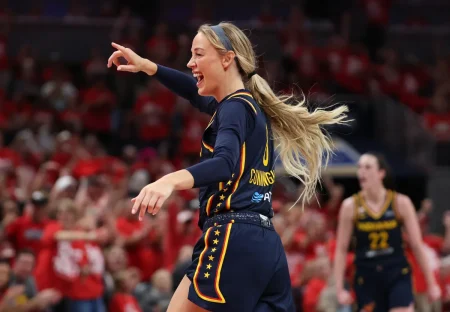
The centerpiece of that future is Doncic, who is entering this season healthy and motivated after finishing fourth in MVP voting last year. That alone is reason for optimism. Doncic has done almost everything a player can do in this league. He has carried offenses, hit impossible shots, controlled games with his pace, and made his teammates better just by forcing defenses to pay attention to him. But he has never done it in Los Angeles, and he has never done it with a roster built specifically to maximize his gifts. The Lakers are hoping that he can be the same player he has always been while also finally shedding the burden of having to do everything. That is where Reaves comes in. Reaves has grown from an undrafted surprise into a reliable, creative, and fearless scorer, and his re-signing this summer was just as important as any new addition. Together, Doncic and Reaves give the Lakers two high-level offensive minds who can take turns running the show. Surround them with shooters, put an athletic rim roller in the middle, and stock the wings with defenders, and you have the shape of a modern, dangerous team. There is a real passing-of-the-torch feeling to all of this. LeBron James was the identity of the Lakers for years, the engine of everything they did. Now, for the first time in a long time, the franchise belongs to someone else. Doncic is only 27, still just entering the prime of his career, and the front office has made it clear that they want to build this version of the Lakers around him. That is both exciting and delicate. Nobody knows yet what this era will look like, and the pressure on Doncic to lead, not just score, has never been greater.
Redick, though, understands the difference between potential and reality better than most. He has been around the game long enough to know that championships are not handed out based on roster construction in September. They are earned through months of competition, injuries, adjustments, tough losses, and small improvements. “You don’t become a championship team [in late September],” Redick told The Athletic. “You have to become one throughout the season.” That is a vital part of his message, because it separates arrogance from ambition. Redick is not claiming that the Lakers deserve to be handed the trophy. He is saying that the path to the trophy is the standard he is using to measure everything. There are still plenty of reasons for outsiders to be skeptical. The Lakers are adjusting to life without James, which is not simply a basketball challenge. It is a cultural and emotional challenge. For two decades, James has been the gravitational center of almost every team he has played on, and replacing that presence is impossible. Several of the new pieces have never played alongside one another, and chemistry takes time. The defense may be better on paper, but paper does not stop a pick-and-roll. The Western Conference is also loaded with teams that have earned the benefit of the doubt. The New York Knicks, San Antonio Spurs, and Oklahoma City Thunder are all considered contenders or rising forces, and they have every right to be mentioned before the Lakers in any preseason conversation. Redick acknowledged that as well, but he did not seem bothered by it. “Those teams deserve to be perceived that way, but I don’t care,” he said. “It doesn’t matter — the perception of us. We’re on our own path. We are on our journey. That’s exciting to me.” The word exciting is doing a lot of work there. It suggests that Redick is not scared of the unknowns facing his team. He is energized by them.
That is the underlying human story here. The Lakers are no longer chasing history the way they did with James, and they are no longer pretending to be something they are not. This is a new group, a new era, and for the first time in a long time, nobody really knows what they are going to become. Redick is determined to make sure that ambiguity does not turn into caution. He has set a target that is clear enough to guide every practice, every film session, and every difficult conversation. It is not about controlling what the rest of the NBA thinks. It is about building an internal culture where anything less than a championship feels like a letdown. Maybe the Lakers will get there. Maybe they will fall short, as so many teams do. But they will not fail because they aimed too low. Redick has already made sure of that. He has looked at a roster full of new faces, at a young superstar who is ready to carry the franchise, at role players who have something to prove, and he has decided that the only acceptable destination is the top. Whether or not the rest of the league believes it, the Lakers believe it. And for now, that is enough. This is a team that wants to be measured by the highest possible standard, not comforted by low expectations. Redick is not sugarcoating anything, and he is not looking for approval. He is simply building a culture where the word championship is not a forbidden topic or a distant dream. It is the daily standard. That is the sort of belief that can either lift a team to greatness or break it under the weight of its own ambitions. But for the third-year Lakers coach, there is no other way to live. The path is uncertain, the roster is new, and the stakes are enormous. That is exactly how he wants it to be. The Lakers are on their own journey, and JJ Redick just wants to see how far it will take them.