


Paragraph 1
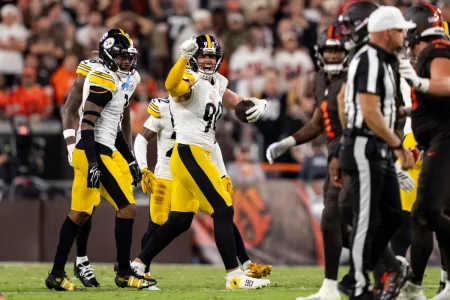
In the gladiatorial coliseum of the National Football League, where titans collide with bone-jarring force and split-second athleticism dictates the difference between victory and defeat, one would think the league’s primary concern would be player safety, strategic excellence, or perhaps the integrity of the game itself. However, over the past few weeks, the league’s disciplinary apparatus has turned its attention to a matter of profound, almost existential silliness: the act of pretending to drink a beverage. Yes, you read that correctly. The NFL, a multi-billion-dollar entertainment behemoth that gleefully airs beer commercials during every commercial break, has decided to wage a war against its players for pantomiming the consumption of an alcoholic drink during moments of unbridled joy. This has resulted in a bizarre, yet utterly human, courtroom drama playing out across the country, where gridiron warriors are forced to conjure increasingly creative, innocent, and frankly hilarious defenses to save their hard-earned paychecks. Under the league’s stringent celebration rules, the universal gesture of tipping your head back and chugging an invisible substance is apparently a heinous crime, punishable by fines that would make the average American wince. But the players, embodying the same grit they display on the field, are refusing to go quietly into that good night, choosing instead to fight the system with puns, logic, and a healthy dose of absurdity, transforming a mundane moment of sportsmanship into a nationwide conversation about what exactly constitutes a forbidden sip. This is a story about bureaucracy versus emotion, where the humanity of the players clashes with the corporation that employs them, resulting in the most delightful and illogical legal battles the sporting world has seen in years. It all began with a fullback who had a very specific beverage in mind.
Paragraph 2
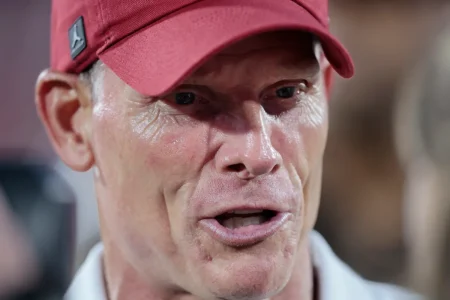
The opening salvo in this war on fake intoxication was fired by Kyle Juszczyk, the San Francisco 49ers’ Pro Bowl fullback, a man whose very nickname, “Juice,” would become his greatest legal weapon. During a Week 2 matchup against the Miami Dolphins, Juszczyk hauled in a catch and, overcome with the thrill of the moment, mimicked chugging a beer with gusto. It was a typical, spontaneous celebration seen across football fields on any given Sunday—a gesture of pure, unadulterated happiness. The NFL, however, saw a violation of their “violent or non-approved” celebration policy and swiftly levied a fine of $14,926. For a player of Juszczyk’s caliber, the monetary hit was a mere dent in his wallet, but the insult to his intelligence was a different matter entirely. Refusing to simply hand over his cash to appease the league’s arbitrary moral compass, Juszczyk appealed the fine, and his argument was so beautifully simple, so wonderfully on-the-nose, that it was almost poetic. He argued that he wasn’t chugging beer, a substance the league frowns upon, but rather, he was chugging his own namesake—juice. The logic was undeniable. A man nicknamed “Juice” pretending to drink juice is not a violation of policy; it is a form of personal branding, a wholesome tribute to his identity, and an endorsement of the non-alcoholic beverage industry. The NFL, likely realizing the sheer absurdity of fining a man for referencing his own moniker, rescinded the fine, granting Juszczyk a resounding victory. This triumph sent shockwaves through the league, establishing a precedent that any player with a food- or drink-related nickname could legally celebrate by mimicking the consumption of that item. It was a stunning defeat for the league’s bureaucracy and a glorious celebration of common sense and wordplay, proving that sometimes the best defense is a good pun.
Paragraph 3
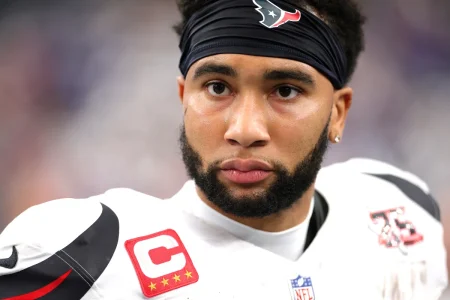
Hot on Juszczyk’s heels, carrying the torch of absurdity into the end zone, was Dallas Cowboys tight end Jake Ferguson, a two-time Pro Bowler who found himself in the crosshairs of the league’s beverage police for a strikingly similar act. Ferguson’s fine, a hefty $13,611, was issued for his own fake-chugging celebration during Week 2, a spontaneous gesture he likely performed without a second thought, before the league snatched it up and transformed it into a financial penalty. While Juszczyk relied on his nickname, Ferguson took a more philosophical approach to his appeal. He argued that his gesture—tilting his head back and making a drinking motion—was inherently ambiguous. How could the league definitively prove he was mimicking beer? Why couldn’t he be simulating the consumption of water, Gatorade, or perhaps even a sweet iced tea? In a stroke of legal genius, Ferguson posited that the contents of the invisible container were utterly unknowable, and thus, his celebration was merely a reference to the universal act of hydration. It was a defense rooted in the principles of logic and the limits of human perception. The NFL, faced with the impossibility of proving the hydration status of his imaginary beverage, conceded defeat and rescinded his fine as well. Together, Juszczyk and Ferguson formed an unbreakable alliance of the tilted chin, demonstrating that the league’s intolerance for simulated intoxication could be dismantled by simple claims of thirst-quenching innocence. Their victories ignited a firestorm of online memes and fan commentary, with images of players chugging imaginary oat milk, kombucha, or cold medicine flooding social media. The joke was on the league, and the players were the comedians, proving that you can fine a man for his actions, but you cannot fine him for his imagination.
Paragraph 4
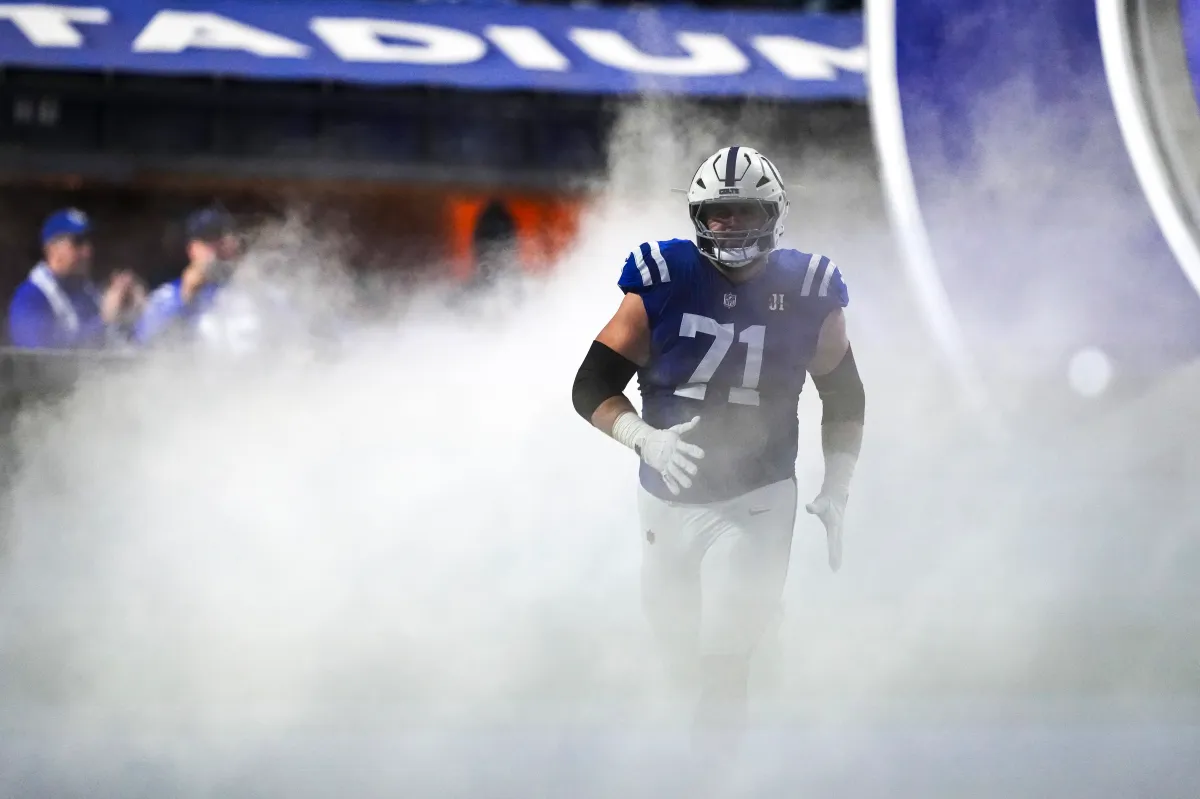
Now, the saga enters its most recent, and perhaps most relatable, chapter, starring Indianapolis Colts offensive guard Matt Goncalves. A 25-year-old former third-round pick out of the University of Pittsburgh, Goncalves is a position player defined by anonymity—his job is to stay in the trenches, quell defenders, and protect his quarterback, rarely finding himself in the end zone. But when his teammate, tight end Tyler Warren, scored a touchdown in Week 2, Goncalves allowed himself a moment of pure, shared elation. He mimicked taking a deep drink from a vessel—tipping it back like a parched man who had just crossed a desert—and in doing so, he earned the ire of the league. The NFL, applying its rigid and illogical policy with unwavering consistency, slapped Goncalves with an $8,847 fine, assuming his celebration was a nod to the anarchic realm of beer drinking. However, Goncalves, displaying the same protective instincts he shows his quarterback, refused to let the league steamroll him. In a statement that instantly endeared him to fans across the country, he revealed his defense, claiming that he wasn’t chugging beer, but a crisp, refreshing Coca-Cola. That’s it. No elaborate pun, no philosophical debate about the nature of invisible liquids—just a simple, deeply human admission that a big, sweaty offensive lineman, celebrating his teammate’s touchdown, was craving a cold, sugary soft drink. There is something innately wholesome, almost comforting, about his defense. In a world of complex legal arguments, Goncalves offered the straightforward truth: everyone gets thirsty, and sometimes a Coke is the only answer. His claim framed his celebration not as an endorsement of vice, but as a relatable moment of human thirst, stripping the league of its moral high ground by injecting a dose of everyday, family-friendly consumerism into the equation.
Paragraph 5
The broader context of this fine-and-appeal circus reveals a deep, systemic hypocrisy that highlights the human side of the conflict. The NFL and the NFL Players Association released a joint statement on Wednesday that seemed to foreshadow Goncalves’ victory, hinting strongly that his fine would likely be rescinded, much to the delight of fans who view him as the underdog in this fight. But why, one might ask, does the league engage in this prohibitionist theater at all? The answer lies in a tangled web of image management. The NFL is steadfastly dedicated to projecting a family-friendly brand, convincing parents that their children are watching a sport of pure virtue, not one whose players might celebrate by pretending to drink alcohol. Yet, this sanitized image is a facade, as the league cashes checks from major beer sponsors who plaster their logos all over stadiums and broadcast graphics. The hypocrisy is so glaring it’s almost blinding, yet it fits a distinctly corporate, nonsensical logic. By fining players, the league can point to its strict rules and say, “Look how wholesome we are!” while simultaneously raking in billions from the very substance they are policing. In this absurd landscape, Goncalves, Juszczyk, and Ferguson become modern-day heroes, using their wit to dismantle the league’s performative moralizing. For Goncalves specifically, this fight is about more than eight thousand dollars; it is about the principle of being allowed to feel joy. As an offensive lineman, he toils in anonymity, thriving on the dirty work that allows others to shine. When he finally gets a moment in the spotlight, a moment of genuine celebration with his brothers, the league’s first instinct is to reach into his pocket and take his money. It feels deeply unjust, a violation of the basic human right to cheer for your own success.
Paragraph 6
In the final analysis, the saga of the Chugging Trilogy—the Juice Man, the Philosopher, and the Coca-Cola enthusiast—transcends the sport of football to become a heartwarming testament to the resilience of the human spirit in the face of bureaucratic absurdity. Goncalves will almost certainly get his $8,847 back, and the football world will move on to the next viral controversy, but the legacy of these players will endure. They have gifted the public a narrative of underdogs triumphing over a faceless, hypocritical giant, using nothing more than wit, stubbornness, and a love for non-alcoholic beverages. Juszczyk, drinking his namesake juice; Ferguson, sipping on the enigmatic elixir of ambiguity; and Goncalves, chugging a hearty dose of Coca-Cola—they have collectively poked a hole in the NFL’s armor of somber enforcement, demonstrating that a little creativity can overcome even the most powerful institutions. The league fined them for acting human, for being overcome with emotion, and for celebrating the very game that generates immense revenue. But the players fought back, proving that while the NFL controls the checkbook, the players alone possess the power of imagination. So, the next time you see a player fake a drink after scoring a touchdown, pause for a moment. It might not be beer; it could be a crisp apple juice, a Gatorade, or a beautifully cold Coca-Cola. The NFL might be blind to the humor, but the fans see it clearly, and we eagerly await the next player to step up to the podium and defend their celebration with an even more absurd culinary alibi—perhaps a warm glass of milk, a soothing chamomile tea, or a tangy glass of lemonade. The league may have lost this battle, but the players have achieved a far greater victory: the vindication of genuine, spontaneous, and wonderfully human self-expression, one imaginary sip at a time.