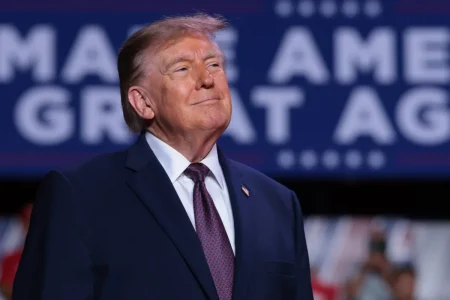



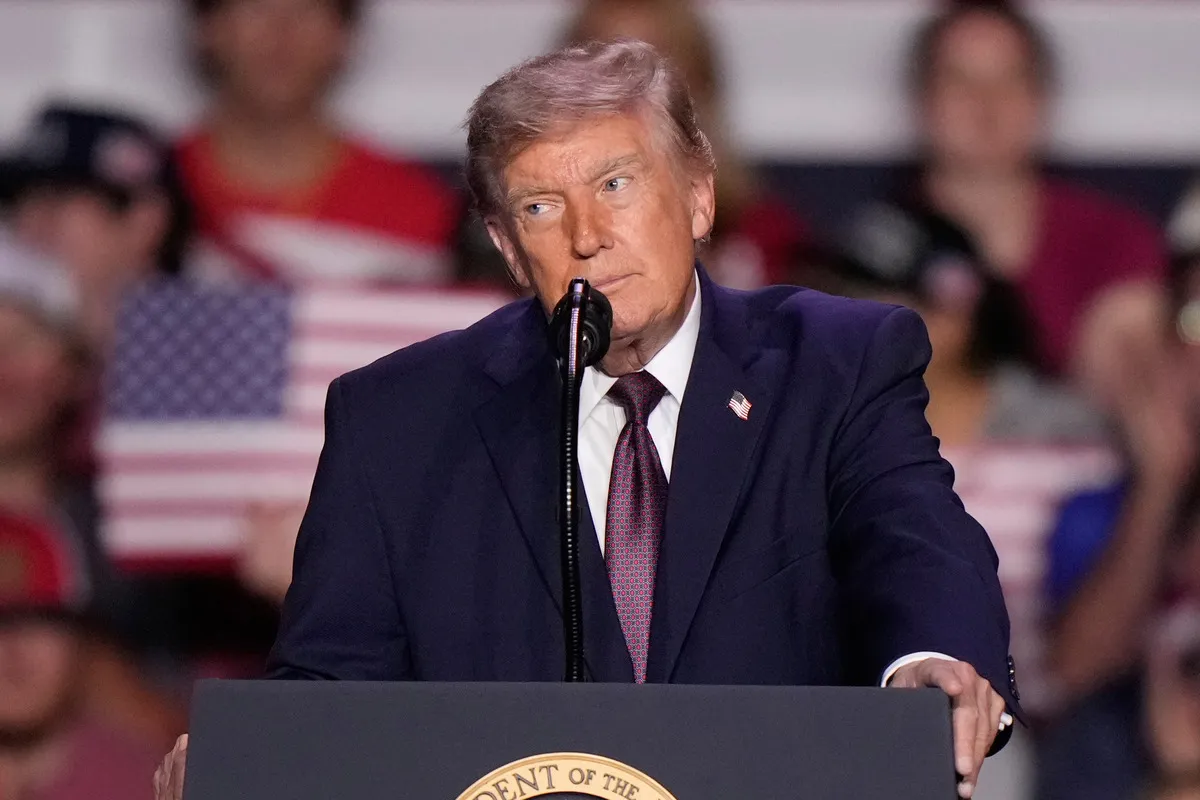
For a few agonizing hours, Christa Pike lay strapped to a gurney in a Tennessee death chamber, her body convulsing and her breath rattling in the silence of the execution room. Then, instead of being declared dead, the 50-year-old woman was cut loose, rushed to a hospital, and put on a ventilator with burned, blistered arms and a phalanx of unanswered questions. Her lawyers described her as “critically ill,” still unconscious, as medical staff tried to flush the caustic drug from her system. Pike, a woman who had spent more than three decades in prison after being convicted of a brutal murder as a teenager, had somehow survived the state’s attempt to kill her. Days later, President Donald Trump stood before a cheering crowd in Mobile, Alabama, and promised to expand the machinery of death. “We will pass the death penalty for large-scale drug dealers, human traffickers, and anyone who kills a police officer,” he said, his voice carrying over the applause. The timing was brutal and revealing: in the same week that a botched execution exposed the raw, physical horror of lethal injection, the most powerful political figure in the country renewed his pledge to use state killing more aggressively, not less.
The case of Christa Pike is not a simple one, and it never has been. In 1995, she was an 18-year-old student at a Knoxville Job Corps facility when she and her boyfriend, Tadaryl Shipp, killed 19-year-old Colleen Slemmer, a classmate whom Pike allegedly viewed as a romantic rival. The crime was gruesome and chilling: Slemmer was tortured, beaten, and killed, and prosecutors said a satanic symbol was left on her body. Pike did not deny killing Slemmer, but her lawyers argued that her childhood was a relentless landscape of trauma and sexual abuse, and that her sentence should be reduced to life in prison. Shipp, who was 17 at the time, received a life sentence. Pike’s case has been tangled in appeals and legal challenges for decades, and she was later convicted of attempting to murder another inmate in 2001. Still, her advocates insisted that the broken girl who committed a monstrous act had spent her adult life in prison, and that executing her would be another act of violence, not justice. In a system that often treats people as the worst thing they have ever done, Pike became a symbol of the unresolved questions about punishment, redemption, and whether the state should ever take a life.
The botched execution itself unfolded with a nightmare logic. Pike’s lawyers had warned that she would suffer “unnecessary and superadded pain and suffering, terror, and disgrace” because of her small veins and a history of post-traumatic stress disorder. The Supreme Court declined to halt the execution, and Tennessee’s governor, Bill Lee, refused to grant clemency. On the day of the execution, a federal appeals court granted a stay for several hours, but the state pushed forward. What followed was a scene that haunted even seasoned observers of capital punishment. At least seven needles were used in an attempt to establish an IV line. At one point, Pike herself reportedly offered guidance on where the execution team might find a vein. Witnesses could hear her crying, whimpering, and breathing loudly. She snored as the drugs began to flow. But the IV lines were not placed correctly, or they had blown, and the pentobarbital leaked into her tissue rather than her bloodstream. Her lawyers later said no one on the execution team seemed to realize the procedure was going wrong. By the time she was wheeled out of the death chamber, she was alive—barely. Her mother’s pain, Colleen Slemmer’s mother, May Martinez, erupted in grief and rage: “I didn’t get justice for my daughter.” Governor Lee temporarily halted all executions in Tennessee for the rest of 2026 and ordered an independent investigation, but the damage was done.
This was not an isolated failure. Earlier in the year, Tennessee officials had been unable to find a viable vein for another condemned man, Tony Carruthers, and stopped after more than an hour. Across the country, states have struggled with lethal injection protocols, with drugs in short supply and execution teams often untrained in the delicate, life-or-death task of IV placement. Robin Maher, executive director of the Death Penalty Information Center, called Pike’s failed execution “the worst we’ve ever seen and unlike any other botched execution in the modern era.” Sandra Babcock, a Cornell scholar who advised Pike’s legal team, described the events as “unimaginably barbaric.” Bryan Stevenson, the renowned death penalty lawyer and founder of the Equal Justice Initiative, put it even more plainly: “We should stop the misguided policy of killing people to show that killing is wrong.” Their words echo a larger shift in American public opinion. Gallup polling from 2025 showed that 52 percent of Americans still support the death penalty for murder, but that is a dramatic drop from 80 percent in 1994. Opposition now stands at 44 percent, the highest level since 1966. And for the first time, a majority of Americans under 55 oppose capital punishment entirely. The death penalty, once a rock-solid political stance, is cracking under the weight of botched executions, wrongful convictions, and a growing recognition that the system is not nearly as clean or just as its supporters imagine.
The political response, however, has been to double down. On the first day of his second administration, President Trump signed an executive order instructing the attorney general to pursue the death penalty for all crimes “of a severity demanding its use,” and directed prosecutors to seek capital punishment in federal cases involving the killing of law enforcement officers or crimes committed by people in the country illegally. He also called for overruling Supreme Court precedents that have limited state and federal death penalty practices. The Department of Justice has since signaled that it will bring back firing squads, with a return to electrocution and lethal gas also on the table. These are not abstract policies; they are methods of killing, ones that society once thought it had outgrown. And they arrive at a moment when executions across the United States have surged to a 16-year high: 47 men were put to death in 2025 alone. The message from Washington is clear, but it stands in stark contrast to the reality in Tennessee and other states, where the machinery of death is failing both in practice and in the hearts of the American people. Elected officials, the Death Penalty Information Center observed, are scheduling executions “in search of diminishing political benefits,” while the public is turning away.
At the center of all of this are human beings—not statistics, not legal abstractions. Colleen Slemmer was a young woman with her whole life ahead of her, and her murder was a cruelty that no sentence can undo. Christa Pike was once a child who was broken long before she broke someone else, and she lay in a hospital bed this week, her arms swollen and her body fighting the poison meant to end her. The mother of the victim is left with a wound that will never heal, and a bitter sense that even a failed execution has not brought her the justice she craves. The men and women who carry out these executions are also caught in the machinery, doing work that leaves its own scars. And the public, increasingly unsure about the death penalty, is left to ask what kind of society we become when we choose to answer violence with more violence. In a country where a sitting president promises to expand the death penalty even as a botched execution makes headlines, the question is not simply whether capital punishment works. It is whether we have the courage to see the humanity in everyone, even those who have done terrible things, and to build a justice system that does not require death to prove that life matters.