


It is so easy to look away. Every day, we pass by suffering—the abandoned animal shivering on the roadside, the hungry family standing in line at the food bank, the isolated neighbor who hasn’t spoken to anyone in weeks, the struggling community where opportunity feels like a rumor. And in that moment, a quiet voice offers us an exit: “It’s not your job to fix this. The problem is too vast. Your contribution would be too small. Someone else with more money, more time, more power will take care of it.” We nod, we walk on, and we tell ourselves that caring is enough. But that is exactly how suffering becomes normal. When enough people convince themselves that compassion does not require action, when apathy becomes acceptable simply because we doubt our own power to make a difference, we become part of the problem. We become witnesses to pain who choose to be spectators. The hard truth is that witnessing suffering and doing nothing about it is itself a decision—a decision to accept the unacceptable, to let the weight fall on someone else, to let the world grow colder. What might happen, I wonder, if we stopped looking away? What if we decided that seeing is the beginning of responsibility, not the end of it?
Taking action does not have to be grandiose, and that is one of the most liberating lessons I have ever learned. There are many forms of action, and they all matter. The very first act is to truly see: to look at a suffering being and refuse to turn away. That awareness is already a kind of giving, because it strips away anonymity. The animal is no longer invisible. The family is no longer a statistic. The neighbor is no longer a stranger. When you see someone—really see them—you have already begun to give them their humanity back. And then there is the act of speaking up. So many beings are voiceless, powerless, and choiceless. They cannot ask for help, cannot explain their pain, cannot demand justice. When we speak up for them, we lend them our voice, our privilege, our place in the world. And beyond seeing and speaking, there are tangible gifts: volunteering your time, donating your money, giving your energy. I used to believe that giving meant giving big, that only people with fortunes to spare could truly help. I was wrong. Donating is not reserved for the wealthy, and its meaning is not found in the number on a check. It begins with the simple decision to see a need, along with the intention to do something about it. Those are actions. And action is the antidote to apathy. It is the path to change.
br>
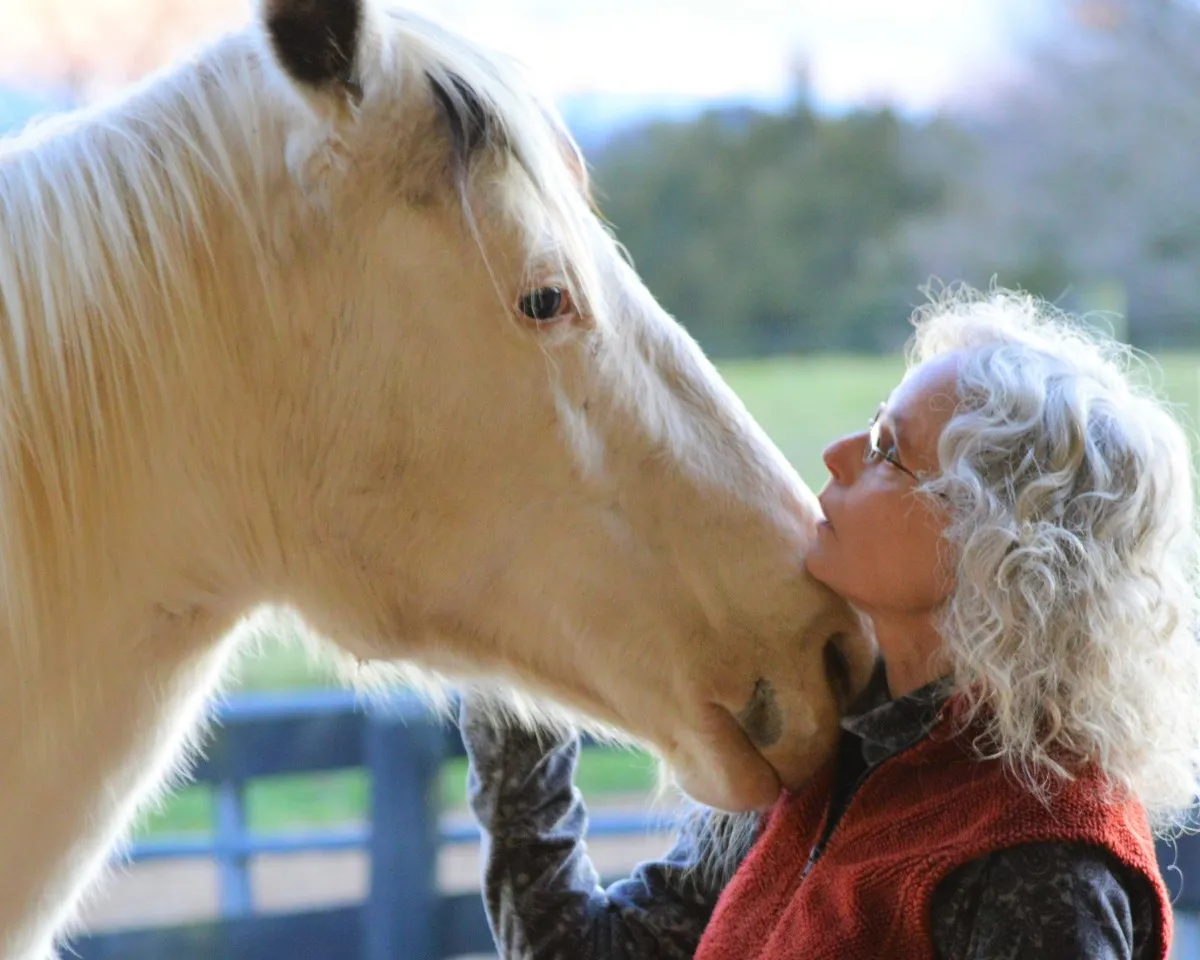
I learned that lesson through horses, though the truth of it reaches far beyond any barn. Recently, my nonprofit learned about four elderly broodmares—mothers whose entire lives had been devoted to producing the next generation of racehorses. Between them, they had given 38 foals to an industry that valued them only as long as their bodies could produce. When their tired, worn-out bodies could no longer carry babies, they were cast aside: abandoned, exhausted, starving, terrified. One was blind in one eye. Another was still lactating, her body still mourning the last baby who had been torn from her. When I heard their story, I had enough funds to save exactly one mare. I could have saved one, called it a success, and felt good about myself. But I had seen all of them. I had looked into their eyes from the photographs, heard their histories, imagined their fear. And once you see something like that, you cannot pretend you don’t know. You cannot unsee it. So I did the only thing I could do: I asked my donors to help. And they did. Together, we saved all four mares. It did not take one wealthy savior. It took a community of people who decided to care enough to act. Some gave a little, some gave more, but every single gift mattered. And quickly, the mares’ bodies began to heal. Their eyes, once hollow with despair, became hopeful as they slowly realized that their lives had been returned to them. The people who helped—many of whom had only a few dollars to give—saw something extraordinary. Their contributions had not just made a small dent in a giant problem. They had helped create a complete transformation, from terror to peace, from starvation to health, from abandonment to belonging. They were not passive spectators to a rescue. They were rescuers. Whether they gave $5 or $100, they saved those lives. That is a committed community in action. Not one hero, but a group of ordinary people who cared, and who were willing to back that care up with action.
That is what we so often miss when we think helping is only worth doing if we have a great deal to spare. A large gift can fund enormous work, yes. But a small gift can create something equally important: participation. It tells the recipient that they are no longer anonymous. Someone sees the suffering. Someone decided they were worth a little bit of their own comfort, their own hard-earned money, their own precious time. That participation is a message that echoes outward. It tells the giver that their choices make a difference, that they are not powerless, and that they are capable of bringing light into darkness. And when people see others acting, they feel empowered to act too. Small gifts add up incredibly quickly. When many people act, problems that seem intractably huge begin to diminish. And if enough people act, the burden becomes light for everyone. That is the quiet power of community. We don’t always realize how much generosity already exists in this country. According to Giving USA, Americans gave an estimated $617.2 billion to charitable causes in 2025—including $394.2 billion from individual donors. Giving specifically to environment and animal organizations reached $24.57 billion. Those are enormous numbers, but behind them are millions of individual decisions to help, millions of people choosing to participate in something larger than themselves. Each of those decisions began with a moment of seeing, a moment of choosing not to look away.
That participation matters now more than ever, because traditional sources of support are under tremendous strain. A 2025 study of more than 2,600 nonprofit leaders and 100 philanthropy executives found that two-thirds of organizations are struggling to stay afloat amid federal funding cuts. Nearly 40 percent have reduced staff, and more than 40 percent have cut or delayed programs. Nonprofits are being asked to do more with less, to stretch already thin resources, to keep serving communities while the ground shifts beneath them. In moments like these, community participation cannot be an afterthought, a nice bonus, or something to do if we have extra time. It is absolutely essential. It is the fuel that allows the work to continue. It is the message that tells worn-out, exhausted nonprofit workers that they are not alone. It is the proof that ordinary people still believe that extraordinary change is possible. Your $5, your hour of volunteering, your phone call of support—these are not insignificant. They are the very threads that hold the fabric of social good together when systems fail. They are what allow rescues to keep rescuing, food banks to keep feeding, families to keep hoping
Giving not only changes the lives of recipients; it can profoundly benefit the giver as well. We tend to think of generosity as a one-way street, a transfer of resources from those who have to those who have not. But research shows that giving is also a gift to yourself. The Cleveland Clinic cites research linking generosity and volunteering with lower stress, greater connection, and a more positive mood. A study published in the American Journal of Preventive Medicine found that volunteering is associated with optimism, a stronger sense of purpose, and even lowered risks of mortality. Another study indexed by the National Library of Medicine notes that helping others can benefit physical health by lowering blood pressure and decreasing stress levels. Giving is not a magic cure for your personal challenges, of course. It cannot erase your bills, your grief, your anxiety. But it reminds you of something essential: that you always have the ability to make someone else’s life better. That knowledge is empowering. It pulls us out of our own heads, out of our own spirals of worry, and connects us to something bigger. It reminds us that we are not helpless. It reminds us that we are part of a human community, and that our actions ripple outward in ways we may never fully know. Meanwhile, apathy takes a toll on both you personally and your community. When we choose not to act, we are not preserving our energy or protecting our peace. We are quietly accepting a world where suffering is allowed to flourish. That apathy is costly. It costs the abandoned animal a chance at life. It costs the hungry family a meal. It costs the isolated neighbor a connection. It costs the struggling community a possibility of change. It costs us, too, because every time we turn away, we reinforce our own belief that we are powerless. Every time we look away from suffering, the world becomes a little more fragmented, and we become a little more disconnected from each other.
So what do we do with this knowledge? We do not act because we believe we can fix everything. We act because we refuse to accept that nothing can change. We find the suffering we cannot ignore—the cause that stays in our mind after we have turned away, the image that haunts us, the injustice that keeps us awake at night. And then we do something. Anything. We listen to someone who needs to be heard. We give an hour of our time. We make a phone call. We donate $5. We feed someone. We help a neighbor. We support a rescue like the one that saved those four mares. We bring another person into the effort, and suddenly we are no longer alone. There are always two possible outcomes. We can turn away from suffering, indirectly supporting neglect and abuse by our inaction, allowing big problems to grow even bigger. Or we can reject apathy by speaking up, by acting, by choosing to change what happens next. We can restore an animal’s dignity, steady a family’s footing, strengthen a community’s spirit, or give one person a reason to believe that someone in this world cares about them. We do not act because we can do everything. We act because we can do something. And here is a secret I have learned from the mares, from the donors, from the community that gathered around them: if all of us help as we can, when we can, then the problems we thought were impossible will begin to melt away. Nothing can stand in the way of a committed community. Not apathy, not neglect, not even cruelty. The best time to act is always now. The suffering is already waiting. The only question is whether we will choose to see it—and then to do something about it.