


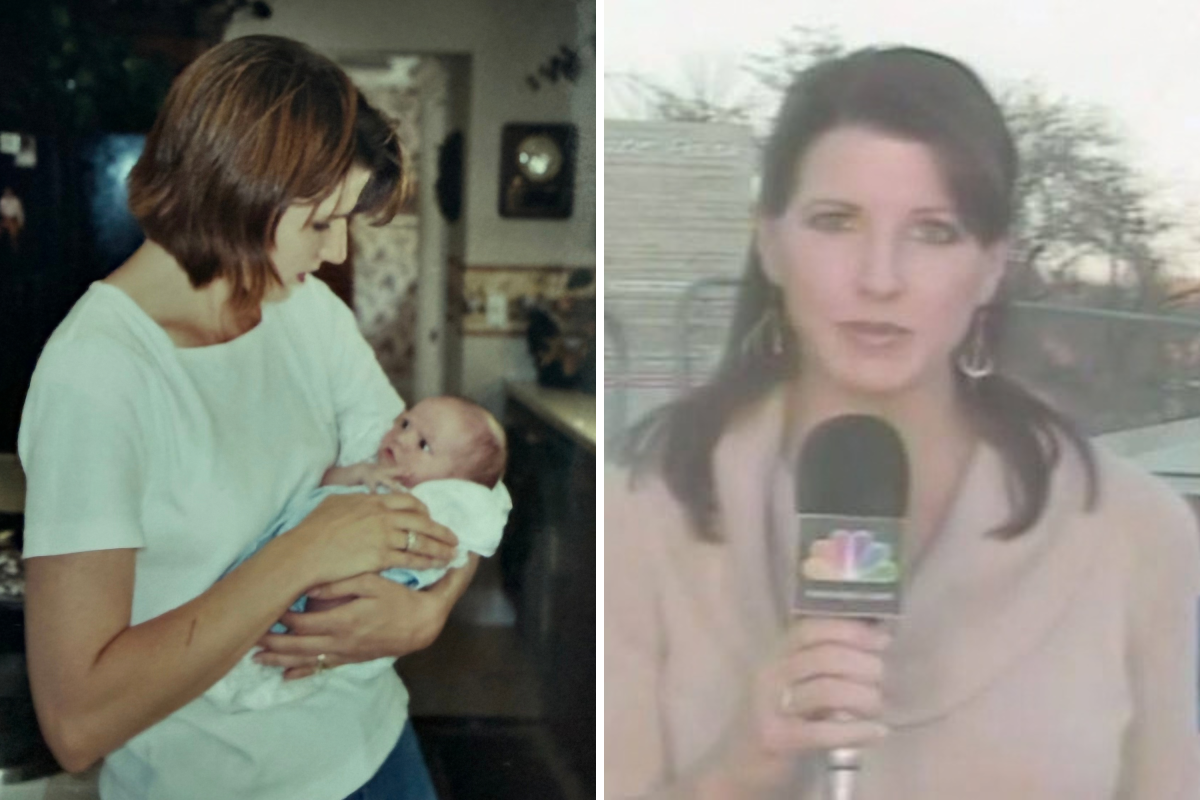
It was a crisp, sunny October morning in 2000, the kind of morning that made Idaho Falls feel almost impossibly beautiful, with the Snake River valley bathed in golden light and the mountains standing sharp against a bright blue sky. I had just walked into the television news bureau where I served as bureau chief, coffee in hand, mentally running through the day’s assignments, when the phone rang. It was a police sergeant I had come to know over years of covering crime and court stories. His voice was low, measured, the way it always was when something serious had happened. A man who had been collecting aluminum cans from the dumpsters behind a nearby strip mall had found what he thought was a doll. But when he looked closer, he realized with horror that it was the body of an infant. “You need to get over here,” the sergeant said. I grabbed my notepad and headed out, my reporter’s instincts taking over even as my heart began to pound. When we arrived, an officer was stretching yellow crime scene tape across the gravel alley. Detectives stood in a loose circle around a large dumpster, their faces grim. At the end of the block, a funeral home van waited, engine running, a quiet and chilling reminder of what this call really meant. I watched one of the detectives climb into the dumpster and carefully hand out a small bundle wrapped in towels. A man from the funeral home took it, placed it gently in the van, and drove away. I stood there behind the tape, trying to prepare for my live shot, but my mind refused to cooperate. All I could think was: who could feel so desperate that this seemed like the only option? And then the question hit me somewhere much deeper, much more personal. My husband and I had been married for seven years, and we had been trying to have a baby the whole time. Just weeks earlier, we had been told we would never conceive. Standing in that alley, watching a tiny life be carried away in a funeral home van, I felt the weight of that news crush me all over again. That little bundle in the towels could have been the child I so desperately wanted. I had no idea then that this story would change my life in ways I could never have imagined.
In the days that followed, the details of the case emerged, and they were heartbreaking in their loneliness. An eighteen-year-old woman had managed to hide her pregnancy from her father and her brother, carrying her secret alone through months of fear and denial. When the time came, she delivered the baby by herself in the family bathroom, in pain and terror, with no one to help her. Then, in a state of panic and despair, she wrapped the newborn in towels and left him in a dumpster. The autopsy suggested that the baby had never taken a breath, which brought a small, bittersweet measure of comfort to those of us who had been haunted by the thought of his suffering. A few days later, I interviewed the young woman’s father. He was shattered, overwhelmed by grief and guilt, searching for some explanation for the tragedy that had torn his family apart. During our conversation, he mentioned something I had never heard of before: a baby safe haven law. These laws allow parents in crisis to safely and legally relinquish their newborn babies, no questions asked, usually at a hospital, fire station, or other designated location. Idaho did not have such a law. He told me he wondered whether things might have gone differently if his daughter had known she could surrender her baby at the fire station just a few blocks away, where firefighters would have taken the child and made sure he was safe. I remember standing there, listening to him, and thinking: Idaho needs that law. And I knew someone I could call. Senator Bart Davis had been a source of mine for years, a thoughtful and compassionate legislator who genuinely listened. I contacted him, and to his immense credit, he took the idea and ran with it. I kept reporting as the bill moved through the Idaho House and Senate, watching something beautiful grow out of something so tragic. In the spring of 2001, Idaho’s safe haven law was signed at a fire station in Idaho Falls, a symbolic choice that felt exactly right. I was covering the ceremony when then-Governor Dirk Kempthorne called me to the front of the room, handed me one of the signing pens, and told me my fingerprints were all over the law. I laughed, but I also felt a deep, quiet pride. Maybe, just maybe, we had built a bridge that would save the next baby.
Two years passed, and life had settled into a rhythm, though the ache of our childlessness never really went away. Then one day, the same police sergeant called with very different news. A woman had given birth to a baby girl at the hospital and left a handwritten note surrendering her under the safe haven law. He knew about my connection to the law, but he also knew something else: my husband and I desperately wanted to adopt. My heart nearly stopped. I spent the entire afternoon leaving messages for our adoption caseworker, my voice getting more and more urgent with every call. But no one called back. By the time we went to bed that night, I was certain the baby would go to another family. I told myself that was probably how it should be, that getting my hopes up had been foolish. The next morning, as we were getting ready to leave for work, the phone rang. I stood frozen in the kitchen while I heard my husband answer it and begin asking questions in a voice that sounded both stunned and reverent. “A little girl? Bring a car seat? You need a baby name?” I couldn’t believe what I was hearing. My grandmother Lillian had died six weeks earlier, and we had made a quiet promise to each other that if we ever adopted a girl, we would name her Lillie, to carry on my grandmother’s memory. We gave the hospital her name, grabbed a car seat, and drove there in a daze. She was beautiful, bright-eyed, and weighed five pounds, three ounces. She was perfect. An hour later, we carried her out of the hospital and took her home. I often say I became a mother in a phone call, and it’s true. The wait had been long and painful, but the moment I held that little girl, all the years of longing and heartbreak fell away. She was our daughter. She was Lillie.
Lillie always knew she was adopted. It was simply a part of our family story, told with love and honesty from the very beginning. When she was very young, I explained that my tummy was broken and that a kind woman, someone I called her tummy mommy, had kindly shared her with us. I told her that her tummy mommy had loved her so much that she had made sure she was safe and taken care of, and that we felt grateful to her every single day. Safe haven surrenders are anonymous by design, a feature intended to protect the privacy and safety of birth mothers, and I assumed that was all we would ever know. I had made peace with that. But years later, an unexpected DNA test match opened a door we had never anticipated. Through the match, we were able to find Lillie’s biological mother, a woman named Laina. Lillie was sixteen by then, old enough to understand the complexities and old enough to make her own choices. I told her she could meet Laina whenever she was ready, and I promised I would support her however she wanted to handle it. A few weeks later, Lillie told me she was ready. I drove her to the meeting, my hands trembling on the steering wheel, not knowing what to expect. When Laina walked in, she and Lillie looked at each other with the same eyes, the same shape of their faces. There were tears, lots of them, and then Laina held her daughter again for the first time in sixteen years. It was a moment of profound grace and healing. Laina has since come to Lillie’s graduation and to her eighteenth birthday, and Lillie has met several half-sisters she never knew she had. Their relationship is still growing, still finding its shape, but the love is real. I have thought a lot about Laina over the years, about the courage it must have taken to surrender her baby, and the courage it took to meet her years later. She gave Lillie life, and she gave us the family we had always dreamed of. I will never be able to fully repay that gift, but I can spend my life trying to honor it.
Safe haven laws are now in all fifty states, and that is genuinely good news. It means that no matter where a mother finds herself in crisis, there is a legal path to safely surrender her newborn. But the good news comes with a warning. Too many people still do not know these laws exist. I have met mothers, fathers, grandparents, and teenagers who had never heard of safe haven laws until I told them. The laws also vary widely from state to state, including how many days after birth a baby may be surrendered, which makes it even more important that a parent in crisis understands the law in their state and their options. That is why I believe education is the most critical piece of the puzzle. Imagine if every student in grades seven through twelve spent just five minutes a year learning about the safe haven law in their state. They would grow up knowing that if they, or someone they know, ever faced a crisis with a newborn, there is a safe and legal option, a place to go, a person to call. No baby should be left in a dumpster, a restaurant bathroom, or outside a truck stop because someone did not know help existed. I now serve as Director of Media Relations for the National Safe Haven Alliance, which runs a twenty-four-hour crisis line. Sometimes a mother who calls the crisis line wants to surrender her baby, and we help her understand what that process looks like and how to do it safely. But surrender is not always the answer. Sometimes a mother calls because she desperately wants to keep her baby but feels she has no way to make it work. In those moments, we help her find the support and resources she needs to be that baby’s parent. Every call is different, but every call is rooted in the same thing: a person in crisis who needs to know they are not alone.
Twenty-six years ago, I stood behind yellow tape staring at a dumpster, wondering who could feel so desperate that they would leave a newborn there. Sometimes I am still asking that question. I have come to understand that desperation can be a fierce and blinding thing, a place where fear squeezes out every other thought. But I have also come to believe in the power of knowledge and compassion to break through that fear. The law we helped pass in Idaho has saved lives. The safe haven laws across the country have given countless babies a chance at life and countless families the gift of a child. I think of Lillie, now a young woman with a future as bright as her eyes, and I think of Laina, who made a brave and loving choice at the most difficult moment of her life. I think of the mothers who call our crisis line, searching for a way forward, and I am grateful that they found us before it was too late. I will continue working to make sure everyone knows there is another option, that no newborn ever has to be left alone and no mother ever has to feel that she has nowhere to turn. I still write children’s books and I live in Florida now, but part of my heart will always be in that gravel alley in Idaho Falls, frozen in a moment of sorrow and determination. That moment turned me into an advocate, and it taught me that even out of the darkest tragedy, something redemptive can be born. If my story can help one desperate parent, if it can save one baby, then the pain of that October morning will have found its purpose.