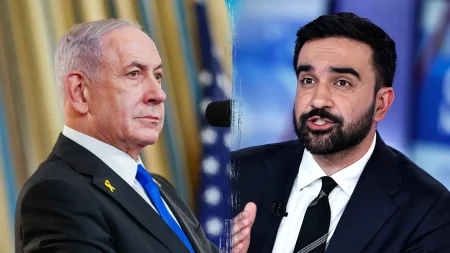



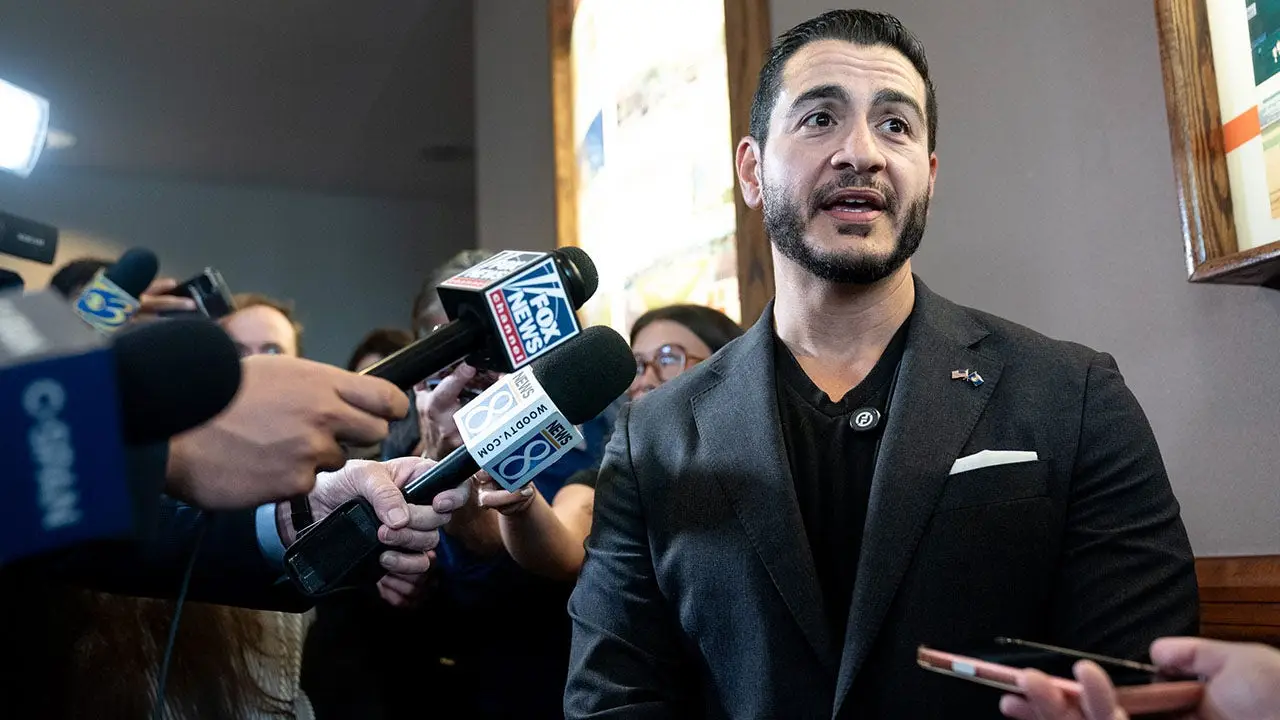
Abdul El-Sayed has spent much of his public life navigating the intersection of faith, identity, and politics, but few moments captured that tension more vividly than a 2018 gubernatorial forum in Michigan. Facing a pointed question about his religious affiliations, the Democratic nominee for U.S. Senate didn’t offer a cautious, poll-tested answer. Instead, he fired back with frustration that had clearly been simmering. “Now, you may not hate Muslims. But I’ll tell you, Muslims definitely hate you,” he said, responding to state legislator Patrick Colbeck, who had raised questions about El-Sayed’s ties to the Muslim Brotherhood. The remark was sharp, even confrontational, but it also revealed something deeply human: the exhaustion of a candidate who felt his faith was being weaponized against him. For El-Sayed, the question wasn’t really about organizations or affiliations. It was about belonging. To be a Muslim in American public life, especially after decades of rhetoric linking Islam to foreign threats, often means having to prove that you are not an enemy. His defiant words were less a jab at Colbeck personally than a plea for the audience to see the absurdity of the premise—that his prayer life could be translated into a takeover of American legal institutions. That moment, however, did not fade away. It has become a flashpoint in his current Senate race, raising questions not only about what El-Sayed believes, but about how Americans talk about religion, loyalty, and law in a country growing more diverse every year.
The accusation that sparked El-Sayed’s outburst was not a casual smear. Colbeck, a Republican candidate for governor at the time, focused on El-Sayed’s involvement with the Muslim Students Association, or MSA, while El-Sayed was a senior at the University of Michigan in 2007. Colbeck pointed to a strategy memorandum written by one Muslim Brotherhood member, Mohamed Akram, that listed the MSA and a wide range of other groups as part of a conceptual framework for Muslim activism in North America. For Colbeck, that was enough to raise the specter of a conspiracy. “This is very serious stuff, guys. This is about civilization jihad,” he warned. The implications were clear: El-Sayed, by virtue of having served as vice president of his campus MSA chapter, was somehow connected to an organization that calls for a global Islamic order. But the evidence does not support that leap. Fox News Digital has found no ties between El-Sayed and the Muslim Brotherhood. The memorandum itself is far more sweeping than Colbeck suggested, listing everything from an Islamic book service to the Association of Muslim Scientists and Engineers. If listing meant allegiance, the list would encompass a huge swath of ordinary Muslim community life. The reality is that Muslim student groups are common on college campuses, serving as spaces for prayer, community, and socializing—not as cells for political indoctrination. El-Sayed’s role in the MSA is less a sign of radicalism than a reflection of the way many young Muslims find community in an environment where they are a minority. Yet the accusation stuck, because in today’s political climate, the word “Sharia” is enough to trigger deep anxieties about national identity, cultural change, and the rule of law.
The moderator at that 2018 forum took the controversy seriously and asked El-Sayed directly whether Sharia law might become a real concern in Michigan. The question itself reveals how far removed the debate had become from the candidate’s actual record. Sharia, which encompasses a complex system of moral and religious guidance for Muslims, is not a single legal code that any official could simply enact over a state legislature. For centuries, Islamic scholars have debated its meanings and applications, and most Muslim Americans treat it as a personal matter of conscience. El-Sayed, for his part, answered in a way that grounded the discussion in the institution he was seeking to serve. “I solemnly swear to uphold the Constitution of the United States and the Constitution of this state—that’s the oath that if any one of us is elected, we will swear,” he said. He went on to explain why he took that oath so seriously: it guarantees him the right to pray as he chooses. He concluded bluntly, “Sharia law is not in question in this state.” Those words were an appeal to a shared civic compact. However much Americans disagree about culture and values, elected officials swear to uphold the Constitution, not their personal scriptures. El-Sayed was not asking for special treatment. He was asking to be judged on the same terms as every other candidate. His response also underscored a simple but often overlooked point: for a religious minority, the protection of religious freedom is not a loophole to exploit but a lifeline that ensures no single faith becomes the official law of the land. The emotional edge in his voice—the sense that he was defending not just himself but his whole community—reflected the reality that Muslim candidates constantly face questions that other candidates never do.
The broader political landscape only amplified the significance of these exchanges. The Muslim Brotherhood is a complicated organization with a long, contested history. It was founded in Egypt in 1928 and has been banned by several countries, including Egypt, Saudi Arabia, the United Arab Emirates, Bahrain, and Russia, all of which cite its history of armed activity. The group renounced violence in the 1970s, yet it continues to advocate for incorporating Muslim religious beliefs into government and society. In a 2012 document, the Brotherhood declared its commitment to Sharia, calling it “the most important issue that preoccupies us and which we seek to establish in society, and for which we have offered our dear brothers for martyrdom, imprisonment and persecution over long decades.” That language is disturbing to many, and it is not surprising that lawmakers and commentators worry about the influence of such ideologies. But the existence of authoritarian governments that ban the Muslim Brotherhood does not prove that every Muslim student group in America is a front for extremism. The conflation of broad religious identity with political radicalism is not new; it has been a recurring theme in American immigration debates since the 19th century, when Catholics were accused of owing loyalty to the Pope, and later when Irish, Italian, and Jewish immigrants were each, in turn, deemed incapable of democratic citizenship. For Muslim Americans, that pattern has re-emerged with particular intensity. The difference now is that social media and cable news amplify every accusation, and political candidates can build entire careers on fear. What makes El-Sayed’s story more complex is that he is not an outsider looking in. He is an Ivy League-educated physician, a former city health official, and a policy expert who speaks about inequality and health care as fluently as anyone in the Democratic Party. His presence in politics is itself a refutation of the idea that Muslims are incapable of participating in American democracy.
Yet critics continue to invoke the specter of Sharia as a threat to American values. Rep. Chip Roy, a Texas Republican, issued a 2025 press release warning that “America is facing a threat that directly attacks our Constitution and our Western values: the spread of Sharia law.” He spoke of refugees masquerading as asylum seekers, of sleeper cells connected to terrorist organizations, and of a political ideology seeking to replace the legal system. “Under Sharia law, there is no freedom of speech, religion or women’s rights,” Roy asserted. Those fears are not confined to Washington. In Dearborn, Michigan, a city where a majority of residents reported Middle Eastern or North African ancestry in the 2020 census, Pastor Lorenzo Sewell addressed a town council meeting and declared that the city had been lost to a legal order other than the Constitution. “America, we have lost this city. This is a city that is no longer up under American laws; we are up under Sharia law. We will not have it anymore,” he said, calling on councilmembers to denounce what he called the Muslim code. In reality, Dearborn operates under the same state and federal laws as every other American city. Its residents pay taxes, send their children to public schools, and elect officials who take the same oaths of office. What has changed is demographics, not law. When a community becomes majority-Muslim, some Americans interpret that as a loss, rather than an expansion, of civic life. But the Constitution does not require a particular ethnic or religious group to hold a majority in order for the law to apply equally. It does not even require residents to abandon their values when they enter the voting booth. The very purpose of a secular legal system is to allow people of all faiths to participate without asking them to leave their souls at the door. The fear of Sharia, in this sense, is not really about law at all. It is about discomfort with a changing country, and a reluctance to trust that shared political institutions can hold together a pluralistic society.
As El-Sayed now campaigns for the U.S. Senate, he is once again confronting the same accusations that shaped that 2018 debate. When asked about Sharia law and its implementation in the United States, a spokesperson for his campaign responded with a clear, succinct position: “Abdul believes in the separation of church and state. While he personally lives by the rules of his faith, as many Americans of various faiths do, Abdul opposes any effort by any religious community to write their faith laws into the laws of our country.” That answer may not satisfy those who see Islam itself as incompatible with democracy. But it reflects a principle that has long been central to American pluralism: the state does not dictate what people believe, and religious communities do not dictate what the state enacts. El-Sayed’s personal story complicates the caricature of the sinister Muslim politician. He is a practicing Muslim with deep roots in the United States, a man who wears his faith openly while also promising fidelity to the Constitution. That combination may be difficult for some to reconcile, but it is hardly unique. American history is full of politicians who held deep religious convictions, from Catholic presidents navigating anti-Catholic prejudice to Jewish lawmakers who resisted assimilation pressures. What distinguishes the Sharia panic from those earlier debates is the intensity with which it is tied to foreign conflict. The United States has been at war in majority-Muslim countries for decades, and that conflict has blurred the lines between radicalism, tradition, and ordinary piety. In such a climate, every Muslim public figure becomes a test case. El-Sayed’s defense of his faith and his candidacy is not merely a personal struggle; it is a proxy for a broader question about whether the United States can truly be a nation where citizenship is not dependent on religious conformity. His 2018 remark—“Muslims definitely hate you”—might have been rhetorical and angry, but it was also an invitation. It was the exasperated voice of someone who has spent years explaining the obvious, and who refuses to apologize for believing that democracy is strong enough to handle his presence. The real measure of American democracy will not be whether El-Sayed wins his race, but whether voters can listen to him speak before they judge his soul. In the end, the fight over Sharia law is not about legal codes. It is about whether the American Dream can be shared by all—or whether it will be reserved for those who fit a fading image of what an American is supposed to look like.