


On the Lyndon B. Johnson Freeway in Dallas, the sounds of rush-hour traffic filled the air as a Dallas Independent School District police officer made a routine stop. The officer was on patrol when a coworker of another man flagged him down, frantic and looking for help. In the center median, the officer found Jose Santiago Pantoja-Morales, a 27-year-old Mexican national who, according to federal prosecutors, was in the United States illegally. The man had allegedly jumped out of his coworker’s car and ended up stranded on the freeway, surrounded by speeding traffic and nowhere to go. In that moment, the officer saw someone who needed assistance. He was a school police officer, someone whose job is fundamentally about protection—protecting children, teachers, and campuses across Dallas. He was not in a high-speed chase or making a dramatic arrest; he was doing something much more human: extending kindness to a stranger in a vulnerable situation. He offered Pantoja-Morales a ride to a safer location, a gesture that might have gone unnoticed in a world less willing to help. But this was not an ordinary encounter. Somewhere between that open patrol car door and the highway median, an act of goodwill turned into a nightmare, and the officer’s simple choice to help would nearly cost him his life.
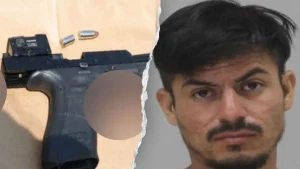
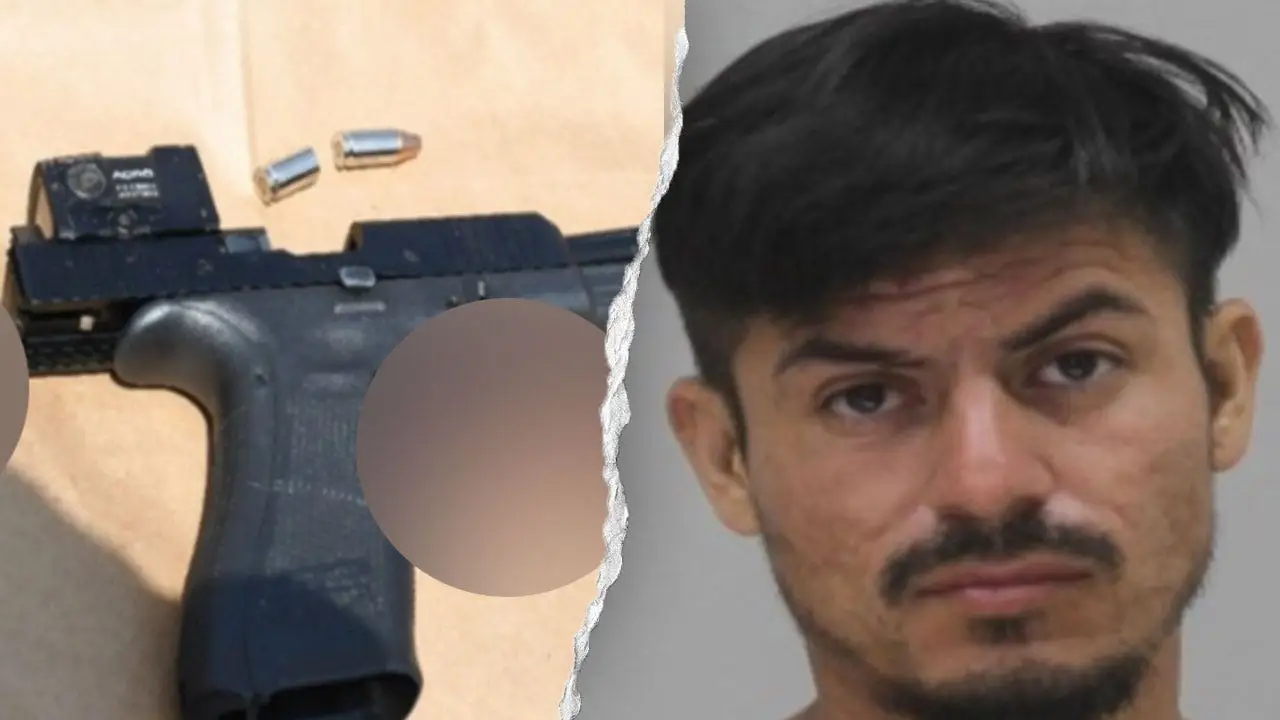
The details of the criminal complaint paint a deeply unsettling picture of how quickly violence can explode out of a normal moment. During the ride, prosecutors say Pantoja-Morales began going through the officer’s bag in the back seat. The officer, realizing that something was wrong, pulled the car over and tried to remove him. What followed was a physical struggle, the kind of fast, chaotic, terrifying fight that no amount of training can truly prepare you for. In the scuffle, Pantoja-Morales allegedly grabbed the officer’s own gun and fired it once. The bullet sliced through the officer’s right leg, striking his femoral artery—a deep, critical blood vessel that can lead to catastrophic bleeding and death in a matter of minutes if not treated immediately. This was not just a wound; it was a potential death sentence. The officer had offered help, and in return, he was shot with his own weapon. The betrayal is almost incomprehensible. For the officer, the moment must have crystallized into something surreal: the person he was trying to aid, the very reason he had opened his door, had turned into a threat trying to end his life. And for the suspect, whatever thought process led him to that moment, the result was the same—an attack on a person whose only mistake was stopping to help.
What followed was nothing short of heroic. Despite the searing pain and the devastating wound to his leg, the officer somehow managed to regain control of his firearm. Pantoja-Morales, realizing the gun was no longer his, fled the scene and ran into the path of responding law enforcement, who quickly captured him. Meanwhile, another DISD officer on the scene took immediate action, applying emergency medical treatment before the wounded officer was rushed to Parkland Hospital, the same renowned trauma center that has saved countless lives in Dallas. The officer survived, but survival is only the first chapter of a much longer story. A gunshot wound to the femoral artery is not something you simply walk away from. There is surgery, blood loss, recovery, and the slow return to a body that no longer feels safe. There are also the invisible wounds: the memory of the struggle, the sound of the gunshot, the sickening realization that a person you tried to help wanted you dead. The officer will carry this day with him forever. His family will carry it too—the phone call that no family wants to receive, the hours waiting for news, the relief mixed with anger and fear. And his fellow officers will also be changed. They will continue to pin on their badges and put on their uniforms, but they will do it knowing that a simple act of kindness on a highway can end in blood.
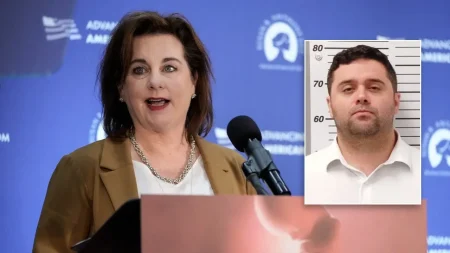
Now the legal system is stepping in to hold the accused accountable. On September 16, a federal grand jury returned an indictment charging Jose Santiago Pantoja-Morales with possession of a firearm by an illegal alien. Because federal law prohibits people who are in the country without lawful status from possessing firearms, the allegation that he grabbed and fired the officer’s gun provides a direct basis for the federal charge. U.S. Attorney Ryan Raybould delivered a powerful statement alongside the indictment, saying, “The illegal alien’s alleged actions in this case represent an attack on the rule of law and a direct threat to public safety. Every day, we ask the men and women who wear the badge to stand between good and evil. It is my duty—and the duty of this office—to do all we can to protect those who protect us.” Raybould also said that violence against an officer will not be tolerated and that his office would pursue the prosecution with “the utmost rigor to ensure full accountability.” If convicted on the federal firearms charge, Pantoja-Morales faces up to 15 years in federal prison. The charge is specific, but the deeper message is broader: when someone shoots a law enforcement officer, they strike at the heart of public order. An indictment is not a conviction, and the accused is presumed innocent until proven guilty, but the weight of this case is unmistakable.
The case is being prosecuted by Assistant U.S. Attorney Nadin-Sarah Salkic, and the investigation was led by the ATF’s Dallas Field Office together with the Dallas Police Department. Pantoja-Morales is currently awaiting transfer to federal custody under a writ of habeas corpus filed Wednesday. The legal machinery is moving deliberately, ensuring that due process is followed. But for everyone watching, this case is about more than a single charge. It is about the vulnerability of police officers who are expected to be helpers, protectors, and guardians in a world that can turn hostile in seconds. School district police officers, in particular, live in the in-between: they are not always seen as “real” police officers by some, and yet they carry the same risks, face the same dangers, and make the same split-second judgments. They protect our children, and they also protect strangers on freeway medians. This incident reminds us that police work is not just about enforcing the law; it is about being the first person to arrive when no one else is there. The investigation and prosecution reflect a community’s refusal to accept violence against those who serve. It also raises larger questions about public safety, border enforcement, and the consequences that follow when someone who is in the country illegally commits a violent act. Those conversations will continue, but in the meantime, the law is doing what it must.
At its heart, this story is about the collision of compassion and violence. A Dallas ISD officer saw someone in trouble and stopped to help. That is the kind of action that restores faith in humanity—and it is also the kind of action that can be punished with a bullet. The alleged actions of Jose Santiago Pantoja-Morales are an example of how quickly trust can be shattered. But the story does not end with the gunshot. It ends with an officer who refused to give up, a colleague who provided lifesaving care, a hospital staff that fought for his life, and a legal system that has promised to seek justice. The wounded officer will continue to heal, both physically and emotionally, and he will carry the scars of that day with him for the rest of his life. His courage should not be forgotten, and neither should the danger that officers face every day. They are not abstract symbols or blue walls of silence; they are mothers and fathers, sons and daughters, people who chose a profession that requires them to run toward danger while the rest of us run away. We owe them more than words. We owe them our support, our gratitude, and our determination to hold violent offenders accountable. On that Dallas freeway, a simple act of kindness was met with a gunshot. In the end, justice may not erase the pain, but it can remind us all that those who protect us will not stand alone.