

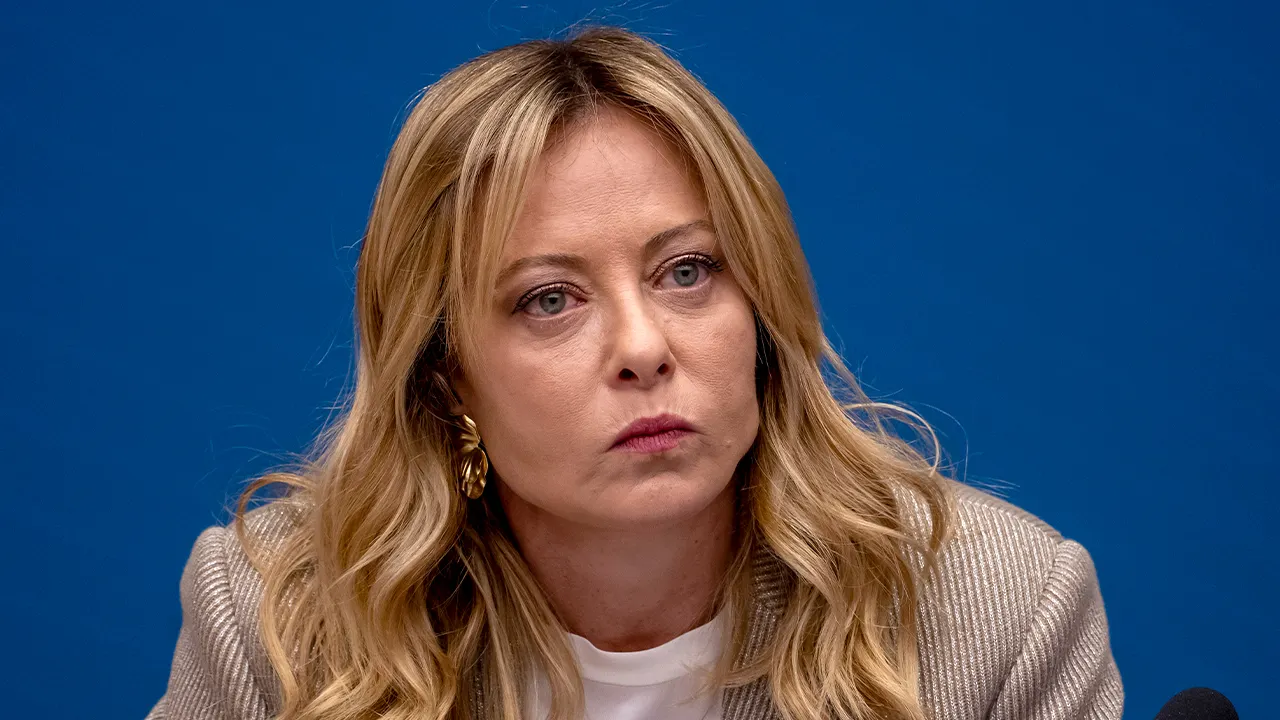
On a warm September evening in Rome, Italian Prime Minister Giorgia Meloni stood before a crowded hall of young conservatives and spoke about something that touches every family: the classroom. She talked about children, not just policies, and about the quiet fear many parents feel when they look at their child’s school and no longer recognize the world their son or daughter is growing up in. Her answer, announced on September 20, was a proposed law that would cap the number of foreign students in Italian classrooms, require parents of foreign pupils with serious integration difficulties to learn Italian, and ban full-face veils such as burqas and niqabs in schools. For Meloni, these measures are not about closing doors but about making integration real and honest. She argued that when too many non-Italian speakers are crowded into one room, nobody wins. The newcomers do not learn the language properly, teachers are stretched beyond their limits, and native-born children can end up feeling like strangers in their own country. “There’s no way that in an Italian classroom, the ones who feel marginalized are Italian children because they have become a minority,” she said during her speech to Gioventù Nazionale, the youth wing of her conservative Brothers of Italy party. The words were direct, and they were meant to be. They spoke to a deep anxiety that many Italians feel but rarely say out loud: that their culture, their language, and their sense of home are slipping away. Meloni framed her proposal as a defense of Italian identity, but also as a form of compassion. She insisted that anyone who comes to Italy and wants to build a future there must learn the language, understand the culture, and respect the rules. “It is the only serious way to welcome them,” she said. The announcement immediately divided opinion, with supporters praising her clarity and critics warning of discrimination. But beneath the political noise lay a human question that every modern society is trying to answer: how do we live together without losing ourselves?
The heart of Meloni’s proposal is the classroom, and her logic is simple enough for any parent to understand. Under the plan, individual classrooms would have a limit on the number of non-Italian students, though she did not specify an exact number. The goal is to prevent high concentrations of foreign pupils in particular schools or districts, which she says can turn integration into abandonment. She painted a vivid picture: if a classroom has just one child who does not understand Italian, that child can lean on teachers and classmates, pick up the language quickly, and find a path into the community. But when there are many such children, or even a majority, the dynamic changes. The classroom becomes fragmented, teachers are overwhelmed, and the children who need the most help are left to struggle on their own. Meloni called this “abandonment,” not integration, and her words carried an emotional weight that resonated with many Italian families. She also proposed mandatory Italian-language lessons for parents of foreign pupils who struggle to integrate. This is a significant step, because it acknowledges that integration is not just a school problem but a family problem. A child can learn Italian in the classroom, but if they go home to a world where no one speaks the language, the lessons fade. By requiring parents to learn Italian, Meloni is trying to reach beyond the school gates and into the home. She framed it as a matter of respect: if you choose to live in Italy, you should make an effort to understand its language and culture. For many Italians, this resonates deeply. They see neighborhoods and schools changing rapidly, and they worry that their own culture is being diluted. Meloni’s message is that integration must be a two-way street—newcomers must adapt, and the state must create the conditions for that adaptation to succeed. Whether the policy will work is another question, but the emotional appeal is clear: no child should feel like a stranger in their own classroom, and no parent should feel like their home has become foreign to them.
The numbers behind the proposal give it weight and urgency. According to Italy’s Education Ministry, cited by the ISMU ETS Foundation, students who do not hold Italian citizenship make up about 11.6 percent of national school enrollment. That is not a small number, and in some urban areas, the concentration is much higher. Meloni’s concern is that when foreign students cluster in certain schools, the balance tips. Italian children can become a minority in their own classrooms, and that, she argues, is unacceptable. She wants to ensure that no Italian child feels sidelined in their own country. This is a deeply emotional issue, and Meloni knows it. She is tapping into a fear that many parents feel but rarely articulate: that their children will grow up in a country that no longer feels like theirs. The proposal also touches on Italy’s citizenship laws, which are among the most restrictive in Europe. Children born in Italy to foreign parents do not automatically become citizens. They must wait until they turn 18 to apply, and even then, the process is not guaranteed. This creates a strange paradox: a child can be born in Italy, speak Italian perfectly, attend Italian schools, and still be considered a foreigner. Meloni’s proposal does not address this directly, but it is part of the broader debate about who belongs in Italy. For many immigrant families, the classroom cap feels like another barrier, a signal that they are not truly welcome. For many native-born Italians, it feels like a necessary correction, a way to protect their culture and ensure that their children are not lost in the shuffle. Both sides have legitimate fears, and the challenge for any leader is to address those fears without tearing the social fabric apart. Meloni’s approach is bold and controversial, but it is also a reflection of the anxieties that are sweeping across Europe, where migration, identity, and belonging have become the defining political questions of our time.
The second part of Meloni’s proposal targets religious face coverings, and it is just as controversial. The legislation would explicitly ban burqas and niqabs in educational institutions, while allowing other forms of Islamic dress, such as the hijab. This is a careful distinction. Meloni is not trying to ban all religious symbols; she is drawing a line at the full-face veil. Her party’s message on social media was blunt: “School is attended with one’s face uncovered. No tradition can impose on a young woman the obligation to hide herself.” This framing is deliberate. It casts the ban not as an attack on Islam, but as a defense of women’s freedom and the values of openness and transparency that schools are supposed to teach. The hijab, which covers the hair but not the face, is allowed, which suggests that the government is trying to respect religious expression while drawing a clear boundary. For many Italians, this is a common-sense measure. They see the full-face veil as a symbol of female subjugation and a barrier to communication. For others, it is an infringement on religious liberty and a form of discrimination that targets Muslim women. The debate is not new. France and Belgium have already imposed bans on face-coverings in public places, though the legal frameworks and enforcement vary. Italy’s proposal is narrower, focusing on schools, but it carries the same symbolic weight. Meloni is positioning herself as a defender of Western values and women’s rights, and she is using the language of liberation to justify the ban. Whether that argument holds up in court or in the court of public opinion remains to be seen. But the message is clear: in Italy, the classroom is a place where faces should be seen, where communication should be open, and where no tradition has the right to hide a young woman from the world. It is a message that resonates with many, but it also raises difficult questions about religious freedom, cultural sensitivity, and the limits of state power.
The proposed legislation now moves through Italy’s political system, and the road ahead is uncertain. It is expected to be considered by the Council of Ministers before being sent to Parliament for debate. That process could take months, and the final version may look different from the initial proposal. But the political signal is already strong. Meloni has led the Brothers of Italy party since 2014 and has been prime minister since 2022. Her government recently surpassed the record set by Silvio Berlusconi to become the longest-serving uninterrupted government in modern Italian history. That is a remarkable achievement in a country known for political instability, and it gives her the authority to push forward with her agenda. She is also a prominent figure on the European stage, having served as president of the European Conservatives and Reformists Party from 2020 to 2025. Her allies in Europe are watching closely. Some see her as a model for conservative leaders who want to take a harder line on immigration and cultural integration. Others see her as a warning. The comparison with France and Belgium is important because it shows that Italy is not acting in isolation. Across Europe, countries are grappling with the same questions about migration, identity, and social cohesion. Meloni’s proposal is part of a broader shift toward stricter integration policies. But it is also uniquely Italian, rooted in the country’s specific anxieties about demographic change and cultural preservation. The debate over the legislation will be intense, and it will likely be challenged in the courts. But for now, Meloni has succeeded in putting the issue at the center of Italian politics. She has given voice to a segment of the population that feels ignored by the political establishment, and she has done so with the language of common sense and national pride. Whether her policies will achieve their goals is uncertain, but there is no doubt that she has changed the conversation, not just in Italy, but across the continent.
At its core, this is a story about belonging. Meloni’s proposal is not just a set of rules; it is a response to a deep human need for identity and security. The parents who worry about their children’s classrooms are not necessarily bigots. They are people who want their kids to grow up in a world that makes sense to them, where they can speak their own language and feel at home. The immigrant parents who came to Italy for a better life are not necessarily enemies of Italian culture. They are people who want their children to succeed, to learn, to be accepted. The challenge is to find a way for both groups to coexist without fear. Meloni’s answer is to insist on integration through language, culture, and rules. She believes that the best way to welcome newcomers is to require them to adapt, not to let them drift into separate communities. Her critics say that the policy is punitive and that it will stigmatize immigrant children. They argue that the real solution is more resources for schools, more support for families, and a more generous path to citizenship. There is truth in both perspectives. Integration is hard work, and it requires effort from everyone involved. It requires patience, empathy, and a willingness to see the world through other people’s eyes. It also requires a sense of shared identity, a common language, and a set of rules that everyone can agree on. Meloni’s proposal is an attempt to create those conditions, but it is also a political gamble. It could bring Italians together, or it could drive them apart. The answer will depend not just on the law, but on the people who live it. In the end, the classroom is a small world, a place where the future is shaped. What happens there matters far beyond the walls of the school. And the question of who belongs, who is included, and who gets to feel at home is one that no law can fully answer. It is a question that every society must face, again and again, with courage and compassion.