



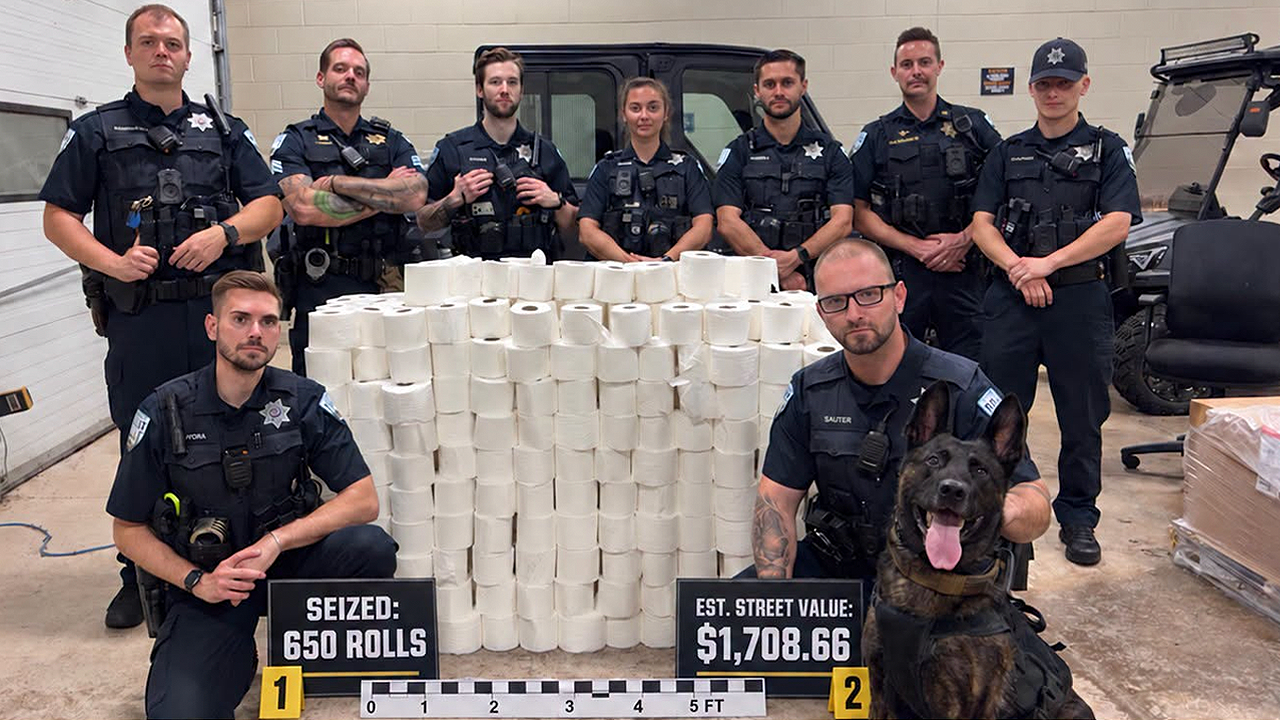
It was supposed to be the kind of week that high school students remember for years—the float-building, the pep rally, the game under the lights, the dance afterward. But in Plainfield, Illinois, homecoming week took a turn that no one expected, and it wasn’t because of a last-minute touchdown or a surprise halftime show. It was because of toilet paper. Lots and lots of toilet paper. In fact, exactly 650 rolls of it, according to the local police department, which found itself in the unusual position of counting bathroom tissue like evidence in a drug bust. The discovery came after residents near Plainfield North High School reported masked groups of teenagers roaming their neighborhoods at night, targeting homes and vehicles with everything from toilet paper to eggs, ketchup, detergent pods, and other messy projectiles. What began as what some kids probably thought was harmless fun had quickly become a community-wide nuisance, and the police were not laughing. They were, however, keeping their sense of humor, posing the massive toilet paper haul under an “Operation Clean Sweep” banner and jokingly giving it an estimated “street value” of $1,708.66. But beneath the joke was a serious message: homecoming is not a license to disrespect the people who live around the school.
The trouble unfolded over two nights, Monday and Tuesday, during a two-hour window beginning just after 7 p.m. Police said they received double-digit calls for service from the neighborhoods surrounding Plainfield North High School. It wasn’t just one or two kids TP-ing a friend’s yard as a classic coming-of-age prank. According to the department, groups of 20 to 25 people wearing hoodies and ski masks would “pull up” in multiple vehicles at the same time, jump out, and cause chaos before disappearing into the night. They targeted homes and vehicles with materials that went far beyond the relatively harmless tradition of toilet paper in trees. Eggs smashed against windows, ketchup smeared on doors, detergent pods thrown like snowballs—these aren’t the kinds of pranks that make for funny yearbook memories. They create real messes, real damage, and real fear. What made it worse was that the targets weren’t always students or their friends. Some of the homes belonged to families with small children. Some belonged to residents with no connection to the high school at all—people who just happened to live in the neighborhood and found themselves cleaning up someone else’s idea of fun at midnight. As the police later wrote, “At this point, we are seeing property damage and significant cleanup, and residents are understandably frustrated.” That frustration is easy to understand. Imagine waking up to find your car covered in sticky, smelly substances, or your front yard looking like a roll of paper towels exploded, when you have to be at work by 7 a.m. It stops being a prank and starts being an invasion.
The police department’s response was a masterclass in mixing humor with accountability. They could have simply issued a stern press release and moved on. Instead, they took a photo of the confiscated toilet paper—all 650 rolls, stacked and displayed like a seizure from a black-market bathroom tissue ring—and shared it with the public under the banner “Operation Clean Sweep.” They even gave it a mock street value, which added a layer of irony to the whole situation. But they also made their position unmistakably clear. “Homecoming is not a free pass to damage someone else’s property or disrupt their quality of life,” the department wrote on Facebook. That single sentence cut through the noise. It acknowledged the excitement of the season while drawing a bright line between youthful high spirits and outright disrespect. The post went on to note that officers had seen enough. Two consecutive nights of nonsense meant two consecutive nights of dispatching officers to the same neighborhoods, chasing shadows, calming angry residents, and documenting damage that would likely never be fully repaid by the teenagers responsible. And while the toilet paper stash was certainly impressive in its sheer volume, the department made it clear that the real cost wasn’t measured in dollars. It was measured in lost trust, frayed patience, and the feeling of safety being eroded in a place where people just wanted to live their lives in peace.
Perhaps the most humanizing part of the police department’s message was what they revealed about the rest of their week. While officers were busy intercepting suspicious packages of toilet paper and breaking up groups of teens in ski masks, they were also responding to calls that actually mattered in life-or-death ways. The department shared a glimpse of their call log from those same nights, and it was sobering. Officers assisted firefighters at a structure fire. They helped Illinois State Police with a separate incident. They made a DUI arrest. They responded to car crashes. They dealt with intoxicated individuals, violations of protection orders, and a family in the middle of a mental health crisis. In other words, real emergencies were happening all around them, and every prank call meant an officer was pulled away from something potentially far more serious. As the department put it, with a weariness that any first responder can relate to, “In short, we DO have better things to do. So PLEASE, be respectful of your community and let us!” That plea was not just about toilet paper. It was about priorities. It was about the quiet frustration of a profession that spends its days and nights trying to keep people safe, only to have to interrupt that work to investigate why someone’s garage door is covered in ketchup. It was a reminder that behind the badges and the patrol cars are human beings who are tired, stretched thin, and genuinely asking the community to help them help everyone else.
What made this particular story resonate far beyond Illinois was how familiar it felt. Homecoming pranks have been a part of American high school culture for generations, and every year, police departments across the country issue warnings ahead of the festivities. In recent months, there have been stark warnings about so-called “senior assassin” games, where students chase each other with water guns or paintball guns, sometimes with tragic consequences. Schools and law enforcement agencies have increasingly found themselves walking a delicate line between allowing teenagers to have fun and preventing that fun from spiraling into property damage, injuries, or worse. The Plainfield police department seemed acutely aware of this tension. They didn’t want to be the villains of homecoming week. They didn’t want to stamp out school spirit or stop kids from making memories. In fact, they said as much, urging parents to talk to their children before the festivities began. Their message was not “don’t have fun.” It was “have fun, make memories, but do it with respect.” That’s a message that resonates with parents, teachers, and anyone who has ever been a teenager. The best pranks are the ones that make everyone laugh—including the person being pranked. They don’t leave families with small children feeling frightened. They don’t leave older residents scrubbing egg yolk off their siding. They don’t require police officers to choose between a structure fire and a teenager with a toilet paper roll.
In the end, the police department did not say exactly where the toilet paper was found, nor did they announce whether any arrests had been made or charges filed in connection with the damage. That ambiguity felt intentional, perhaps giving the students involved a chance to reflect before their names became part of a cautionary tale. But the image of those 650 rolls, stacked under a banner that made the whole operation look like a crackdown on organized crime, will likely stick with the community for a long time. It was funny, yes, but it was also a warning. The phrase “it was just a prank” doesn’t erase consequences, as the department had cautioned earlier in the week. It doesn’t clean up the mess. It doesn’t repair damaged property. And it doesn’t bring back an evening that an officer had to spend writing a report about toilet paper instead of helping someone else in need. Homecoming is a tradition, and traditions can be beautiful. They connect generations. They build school pride. They create stories that people tell for decades. But traditions are also living things, and they need to evolve when they start causing harm. The students in Plainfield will have other homecomings, other chances to celebrate. The residents of those neighborhoods, though, live there every day. They deserve to feel safe in their own homes. If this story has a lesson, it’s that the best way to make memories is not to make victims. So to every teenager reading this: have fun. Go to the game. Go to the dance. Laugh with your friends. But leave the ketchup in the fridge, leave the detergent in the laundry room, and leave the toilet paper on the roll where it belongs. The kind of homecoming that people remember fondly isn’t the one where they caused the most chaos—it’s the one where they showed they could have a great time without making someone else’s life miserable. That’s a tradition worth keeping.